Necklace Jellyfish Care: Cleaning Resin & Glass Pieces
Learn essential necklace jellyfish care tips. Discover how to safely clean resin, glass, and preserved pendants without damaging delicate tentacles.

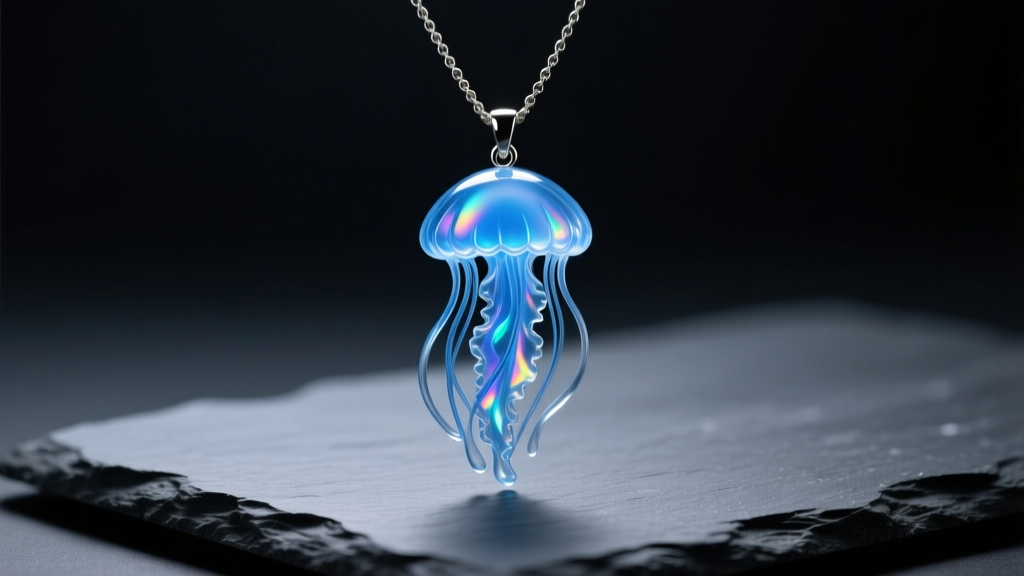
Understanding the Anatomy of a Necklace Jellyfish Pendant
The term necklace jellyfish has become the industry shorthand for a highly specific, intricate category of oceanic jewelry. Unlike standard gemstone pendants, these pieces feature delicate, sprawling tentacles and bell-shaped canopies that are notoriously difficult to maintain. Whether your pendant is crafted from hand-poured epoxy resin, kiln-formed borosilicate glass, or features real biological specimens suspended in glycerin, the cleaning protocols are vastly different from traditional metals. The primary challenge lies in the extreme fragility of the tentacle structures and the chemical sensitivity of the encapsulation materials.
According to the Gemological Institute of America (GIA), organic and synthetic composite jewelry requires specialized care to prevent micro-abrasions and chemical clouding. In this comprehensive guide, we break down the exact material science, cleaning solutions, and storage frameworks required to keep your jellyfish pendant pristine for decades.
Material Science: Resin vs. Glass Vulnerabilities
Before applying any cleaning agent, you must identify the primary material of your pendant. The two most common materials used for jellyfish pendants are epoxy/UV resin and borosilicate glass, each with distinct physical properties.
The Mohs Hardness Factor
Epoxy and UV resins typically sit at a 2.0 to 3.0 on the Mohs hardness scale. This makes them softer than a copper coin and highly susceptible to micro-scratches from dust (which contains quartz, Mohs 7.0). Glass jellyfish pendants, usually made from borosilicate, sit much higher at 6.0 to 6.5. While glass resists scratching, it is highly vulnerable to thermal shock and impact fractures along the thin tentacle tips.
Photodegradation and UV Yellowing
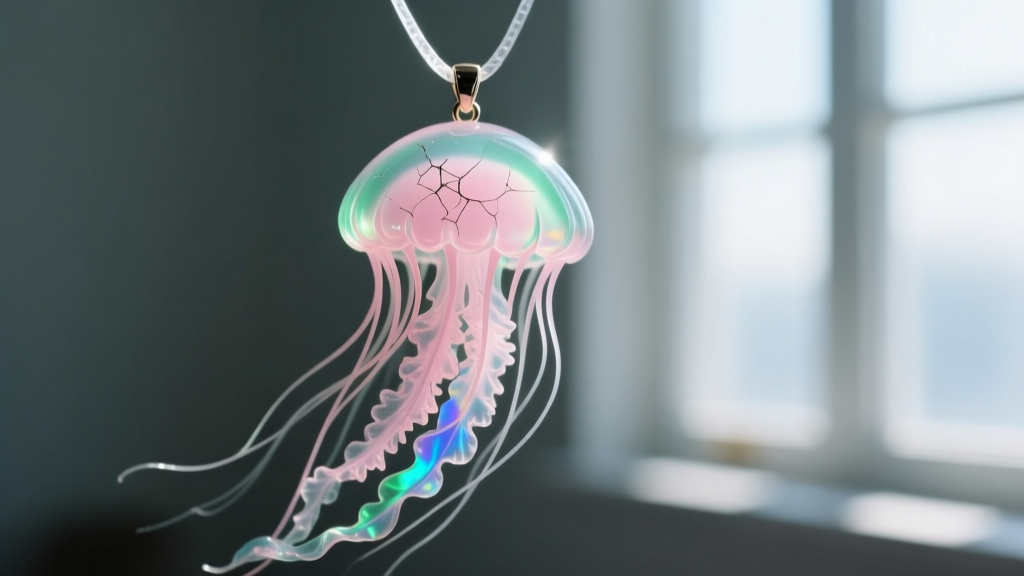
Resin pendants often suffer from photodegradation. Even high-grade jewelry resins infused with UV stabilizers (like HALS or Tinuvin) will eventually yellow when exposed to direct sunlight. This yellowing is an irreversible chemical reaction within the polymer chains. While you cannot reverse yellowing, proper cleaning and storage can drastically delay its onset. For deeper technical insights on polymer degradation, ArtResin's technical guidelines emphasize avoiding all alcohol-based solvents, which cause crazing (micro-fractures) on the resin surface.
The Step-by-Step Cleaning Protocol
Never use ultrasonic jewelry cleaners on a necklace jellyfish pendant. The high-frequency cavitation bubbles can easily snap delicate resin tentacles or shatter glass canopies. Instead, follow this manual, low-impact cleaning protocol.
Tools Required
- Cleaning Agent: pH-neutral, lotion-free dish soap (e.g., original blue Dawn Ultra). Avoid moisturizing soaps, which leave a lipid film.
- Water: Distilled or filtered lukewarm water (never hot, to avoid thermal expansion mismatches between metal bails and resin).
- Applicator: Ultra-soft makeup brush (like a goat-hair blending brush) to navigate the crevices between tentacles.
- Drying: Lint-free microfiber cloth (0.05 micron weave) and a can of compressed air.
Execution Steps
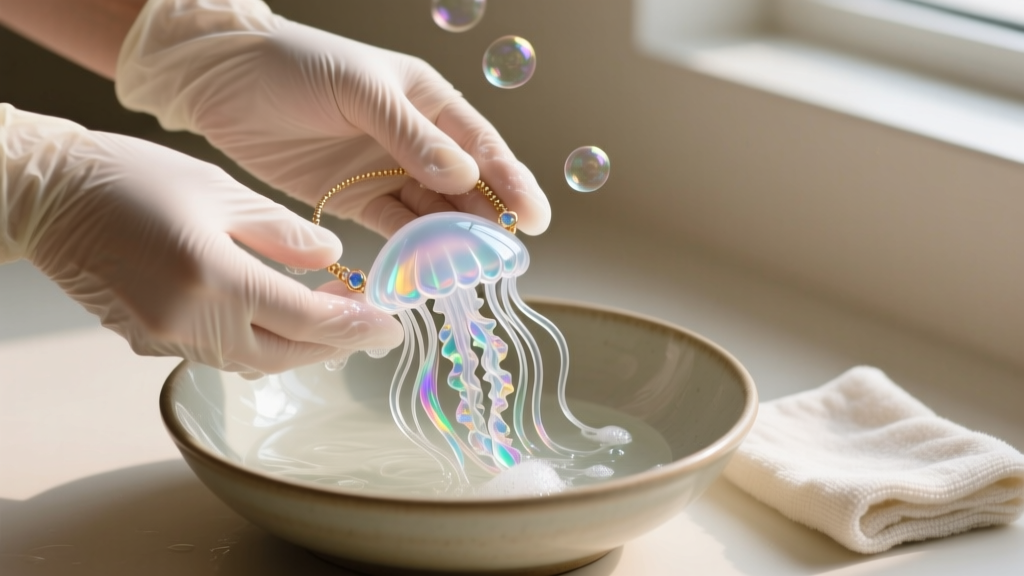
- Prep the Bath: Mix three drops of pH-neutral soap into a ceramic bowl filled with lukewarm distilled water. Avoid plastic bowls, which can harbor microscopic abrasive debris.
- Submerge and Soak: Submerge the pendant (detach it from the chain first) for exactly 3 to 5 minutes. This loosens sebum and skin oils without degrading the material.
- Agitate Gently: Use the goat-hair brush to gently sweep between the tentacles. Do not apply downward pressure; let the bristles do the work.
- Rinse: Rinse under a gentle stream of lukewarm distilled water to prevent hard water spots.
- Dry: Use compressed air to blow water out from under the bell canopy, then gently pat the main body with the microfiber cloth.
Material-Specific Maintenance and Troubleshooting Chart
Use the following diagnostic table to address specific issues based on your pendant's exact composition.
| Issue / Symptom | Epoxy / UV Resin | Borosilicate Glass | Preserved Biological |
|---|---|---|---|
| Surface Cloudiness | Caused by micro-scratches. Polish with Novus Plastic Polish #2. | Caused by hard water. Wipe with 50/50 distilled vinegar and water. | Seal failure. Requires professional re-encapsulation. |
| Yellowing Tint | Irreversible UV damage. Store in dark, cool environments. | Rare. Check if the metal bail is oxidizing and leaching. | Glycerin breakdown. Keep away from all heat sources. |
| Sticky Residue | Incomplete curing or lipid buildup. Wash with Dawn Ultra. | Adhesive failure from the bail. Re-glue with E6000. | Resin weeping due to high ambient humidity. |
| Ultrasonic Safe? | NO (Causes micro-fractures) | NO (Snaps thin tentacles) | NO (Shatters the seal) |
Chain Care and Clasp Lubrication
A necklace jellyfish pendant is only as secure as its chain and clasp. Because these pendants are often front-heavy due to the dense resin or glass canopy, they place undue stress on the jump ring and clasp mechanism.
Sterling Silver and Gold-Filled Chains
Sterling silver (925) is highly prone to tarnishing (silver sulfide formation) when exposed to the sulfur compounds in human sweat. To maintain your chain, wipe it down with a treated silver polishing cloth after every wear. Do not use liquid silver dips, as the harsh thiourea chemicals can splash onto your resin pendant and cause permanent chemical burns on the surface. For gold-filled chains, a simple wipe with a damp microfiber cloth is sufficient to remove daily oils.
Lobster Clasp Maintenance
The internal spring of a lobster clasp can become stiff or sticky over time. If your clasp is difficult to open, do not use WD-40 or oil-based lubricants, which will attract dust and ruin the jewelry's finish. Instead, use a mechanical pencil to deposit a tiny amount of graphite powder into the clasp hinge. Work the lever back and forth a few times to distribute the dry lubricant, then wipe away any excess.
Storage Solutions to Prevent Micro-Scratches
How you store your necklace jellyfish is just as critical as how you clean it. Tossing this piece into a communal jewelry box is a guaranteed way to snap a tentacle or scratch the resin canopy.
- Individual Polyethylene Bags: Store the pendant in a ziplock bag made of polyethylene. Never use PVC bags, as PVC off-gasses plasticizers that can react with epoxy resins, causing a permanent sticky film on the surface.
- Anti-Tarnish Strips: Drop a 3M anti-tarnish strip into the bag to absorb atmospheric sulfur and protect the metal bail and chain.
- Rigid Compartmentalization: If using a jewelry box, ensure the pendant sits in a velvet-lined compartment that is slightly larger than the piece itself, preventing the tentacles from pressing against hard walls.
Final Thoughts on Long-Term Preservation
Caring for a necklace jellyfish pendant requires a shift in mindset from traditional jewelry maintenance. By respecting the material limitations of soft resins and fragile glass, avoiding harsh chemical solvents, and implementing a strict, low-impact cleaning routine, you can preserve the intricate beauty of these oceanic masterpieces. Always prioritize gentle, manual cleaning over automated machinery, and remember that preventative storage is your best defense against environmental degradation.


