How to Make a Custom Medallion Like the Chris Chan Necklace
Learn how to design, cast, and enamel a large custom character pendant. Our step-by-step guide to recreating the iconic Chris Chan necklace style.

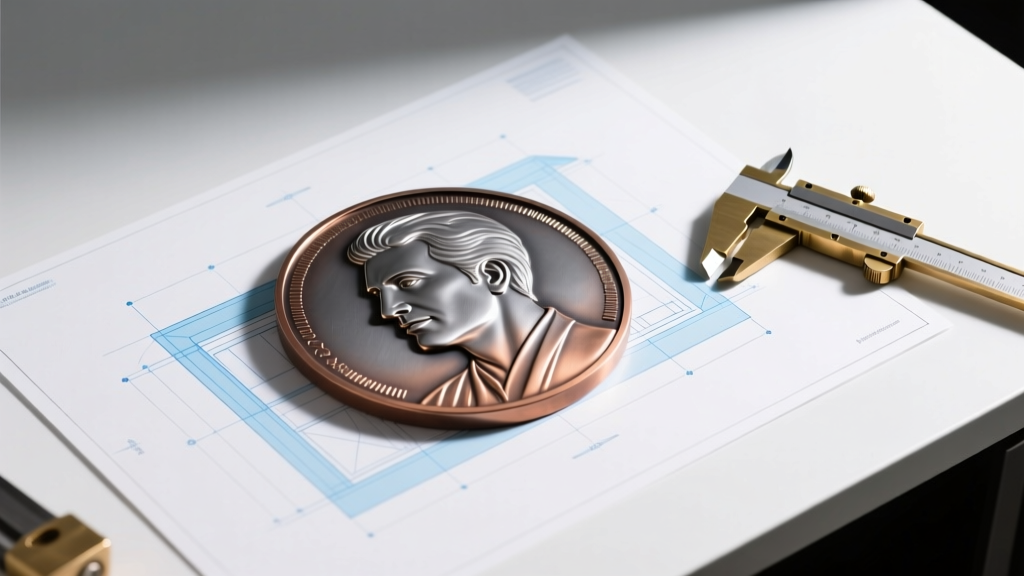
The Anatomy of an Iconic Character Medallion
When discussing large, iconic, character-driven jewelry, the chris chan necklace (featuring the highly recognizable Sonichu medallion) remains one of the most documented examples of custom internet-culture pendants. From a purely metallurgical and jewelry-making perspective, this piece represents a classic heavy-duty enameled medallion. It requires specific manufacturing techniques to balance weight, durability, and vibrant color retention.
As of 2026, advancements in desktop 3D printing and small-batch spin casting have made it entirely possible for independent jewelers and hobbyists to manufacture museum-quality character medallions from home. This guide breaks down the exact step-by-step process for designing, casting, enameling, and assembling a large-scale custom pendant that mirrors the structural integrity of famous pop-culture necklaces.
Phase 1: Vector Design and Mold Preparation
The foundation of any enameled medallion is the line art. Unlike standard printing, enamel requires physical metal walls (cloisons) to separate different colors. If these walls are too thin, the enamel will bleed; if they are too thick, the design loses detail.
Design Rules for Enamel Pendants
- Metal Line Thickness: Maintain a minimum metal line width of 0.3mm (0.012 inches). Anything thinner risks breaking during the casting or polishing phase.
- Color Cavities: Each recessed area meant for enamel must be at least 0.5mm deep to hold the pigment securely.
- Recessed vs. Raised Elements: For a medallion exceeding 50mm in diameter, incorporate a raised outer bezel (at least 1.5mm thick) to protect the enamel from impact damage.
Once your 2D vector file is finalized in Adobe Illustrator, it is sent to a CNC engraving machine to carve a master mold into steel or brass. Alternatively, modern jewelers use 8K resin 3D printers to create a master positive, which is then encased in vulcanized rubber to create a spin-casting mold.
Phase 2: Choosing the Right Base Metal
The base metal dictates the weight, cost, and finishing process of your medallion. The original iterations of fan-made character medallions often relied on cheap pot metals that degraded quickly. For a piece meant to last decades, you must choose an appropriate alloy.
| Metal Alloy | Weight (50mm Pendant) | Enamel Compatibility | Estimated Cost per Unit |
|---|---|---|---|
| Zamak 3 (Zinc Alloy) | ~45 grams | Excellent (requires电镀 plating first) | $4.00 - $8.00 |
| Jeweler's Brass | ~55 grams | Superior (ideal for hard enamel) | $12.00 - $18.00 |
| 925 Sterling Silver | ~62 grams | Superior (requires depletion gilding) | $65.00 - $90.00 |
| 316L Stainless Steel | ~50 grams | Poor (enamel adhesion issues) | $10.00 - $15.00 |
For large character pendants, Jeweler's Brass is the industry standard. It provides the necessary heft to hang properly on a chain without flipping over, and its copper-zinc composition bonds flawlessly with both soft and hard enamels. According to the experts at Ganoksin, brass must be thoroughly cleaned and sometimes pre-plated with a flash of silver or nickel to ensure the enamel adheres without bubbling during the kiln firing process.
Phase 3: The Enameling Process
There are two primary methods for coloring a custom medallion: Cloisonné (hard enamel) and Soft Enamel with an epoxy dome. The choice dramatically alters the final texture and durability of the piece.
Soft Enamel with Epoxy Doming
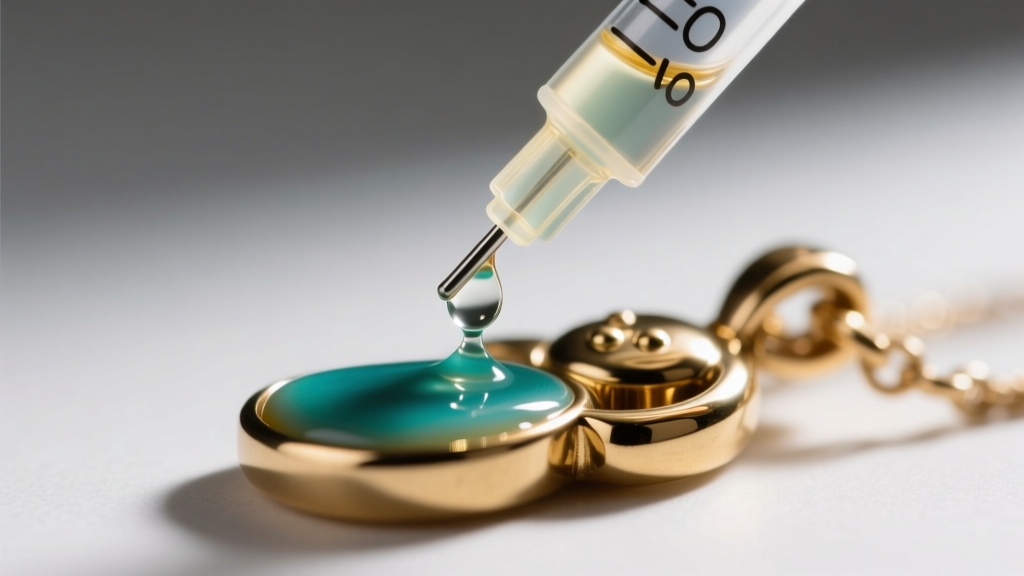
Soft enamel involves injecting liquid pigment into the recessed cavities of the metal casting. Once cured, the enamel sits slightly below the metal lines, creating a textured, tactile surface. To protect the soft enamel and give the medallion a smooth, glass-like finish, jewelers apply a layer of clear epoxy resin (doming). This is highly recommended for complex character art with gradient-like color blocking.
Cloisonné (Hard Enamel)
Hard enamel uses finely ground glass frit packed into the cavities and fired in a kiln at approximately 1,400°F (760°C). After firing, the pendant is ground down with diamond lapping wheels until the enamel is perfectly flush with the metal lines, then polished to a high mirror shine. While more expensive and limited in color palette (Pantone matching is difficult with glass frit), hard enamel is virtually scratch-proof and will outlast the wearer.
Phase 4: Selecting the Heavy-Duty Chain and Bail
A common failure point in large custom pendants is the hardware. A 50mm+ solid brass medallion can easily weigh over 60 grams. Standard jewelry chains will snap under this dynamic load. You must engineer the suspension system to handle the weight.
Chain Specifications
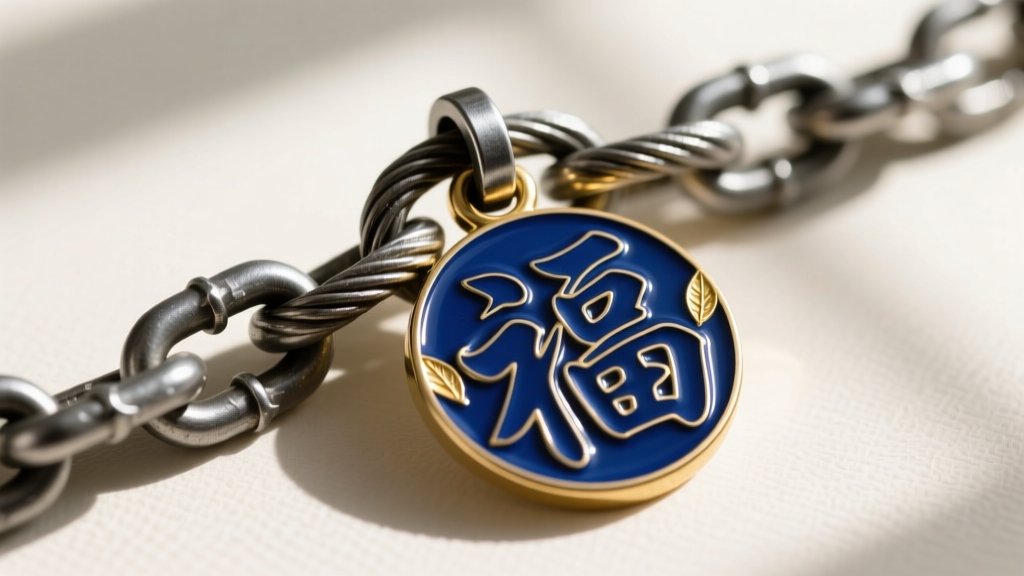
Opt for a 5mm to 6mm width cable, curb, or Figaro chain. Materials should be 316L stainless steel or solid 925 sterling silver. Avoid hollow-core chains or anything plated over brass, as the friction from the heavy pendant will wear through the plating within months.
Bail and Jump Ring Engineering
Do not rely on a simple glued-on bail. For a medallion of this scale, the bail must be cast as part of the pendant body or soldered using high-temperature silver solder. If using a jump ring to connect the pendant to the chain, it must be a 10-gauge (2.5mm wire thickness) heavy-duty jump ring. As noted in the Rio Grande jump ring guide, the jump ring must be soldered completely shut; an open jump ring will inevitably pull apart under the pendulum-like swinging motion of a heavy medallion.
Troubleshooting Common Medallion Flaws
Even experienced jewelers encounter issues when scaling up to large-format pendants. Here is how to troubleshoot the most common manufacturing defects:
- Enamel Bleeding: Caused by metal lines thinner than 0.3mm or surface tension issues during soft enamel injection. Fix: Increase line thickness in the CAD file and use a higher viscosity enamel.
- Porosity in Casting: Tiny pits appear on the metal surface after polishing, ruining the mirror finish. Fix: Ensure your spin-casting rubber mold is properly vented to allow air to escape, and increase the centrifugal force during the pour.
- Epoxy Yellowing: The clear dome over the soft enamel turns yellow after a year of UV exposure. Fix: Switch to a UV-stabilized, non-yellowing jewelry-grade epoxy resin, or upgrade to kiln-fired hard enamel.
- Chain Tangling: Heavy pendants on certain chain styles (like box chains) can cause the chain to twist and knot. Fix: Use a rounded cable or rope chain, which naturally untwists under the weight of the pendant.
Final Assembly and Quality Control
The final step in recreating a high-quality custom character necklace is rigorous quality control. Inspect the bail for micro-fractures using a 10x jeweler's loupe. Test the clasp mechanism to ensure the spring tension is strong enough to hold the 60+ gram weight without accidentally depressing the trigger. Finally, apply a micro-crystalline wax or anti-tarnish coating to any exposed brass or silver to prevent oxidation from skin contact.
By adhering to these precise metallurgical and structural guidelines, you can craft a custom enameled medallion that possesses the same cultural weight and physical durability as the most famous character necklaces on the internet, ensuring it remains a wearable piece of art for decades to come.


