Half Pearl Half Chain Necklace: Fix Sliding & Breakage
Is your half pearl half chain necklace sliding or breaking? Learn expert troubleshooting for weight imbalance, junction tension, and drape issues.

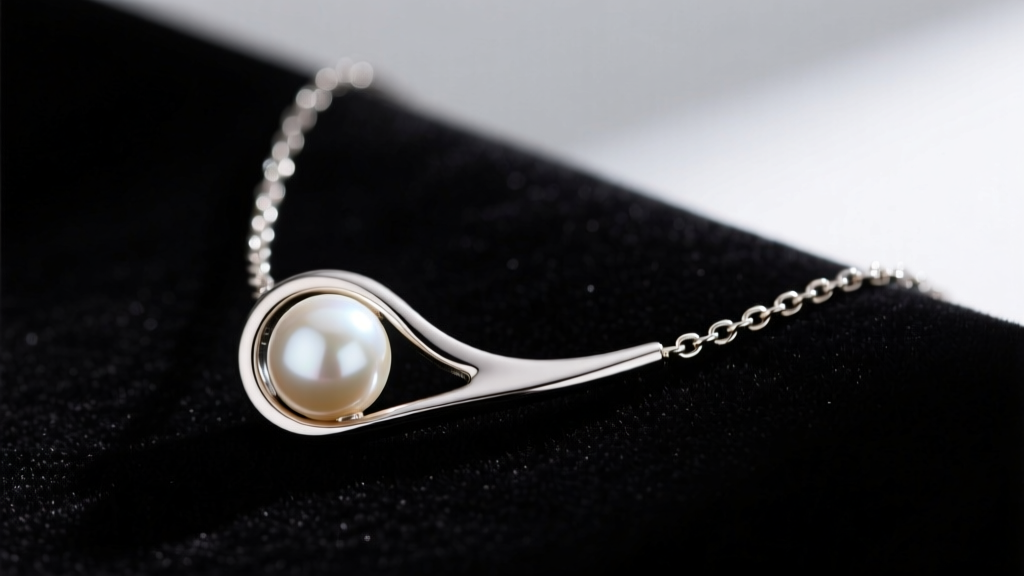
The Physics of Asymmetry: Why Your Necklace Slides
The half pearl half chain necklace is a masterclass in modern contrast, blending organic luster with industrial metallic edges. However, this striking aesthetic introduces a fundamental physics flaw: severe weight imbalance. To troubleshoot this design, we must first understand the center of mass. A standard 16-inch strand of 7.5mm Akoya pearls contains roughly 50 pearls, weighing approximately 35 grams. Conversely, a 16-inch 14k gold cable chain (1.2mm thickness) weighs a mere 4 grams. The pearl side is nearly nine times heavier than the chain side.
Gravity dictates that the heavier side will seek the lowest point on the décolletage. As the pearl strand settles at the base of the neck, it pulls the lighter chain side downward, forcing the entire piece to rotate until the clasp migrates to the front of your throat. This is not a defect in your specific piece; it is an inherent mechanical reality of asymmetrical jewelry design.
Solution 1: Counterweight Integration
The most effective way to stop clasp migration is to artificially increase the mass of the chain side. You can achieve this by integrating a dense counterweight. Adding a solid 14k gold charm (weighing at least 3-5 grams) near the clasp helps anchor the back of the neck. Alternatively, swapping the delicate cable chain for a denser profile, such as a 2.5mm rolo or figaro chain, naturally redistributes the weight without compromising the mixed-media aesthetic.
Solution 2: Silicone Clasp Stays
If altering the hardware is not an option, utilize a silicone necklace stay or a specialized magnetic clasp converter. These discreet, skin-toned silicone loops grip the chain and the clasp, creating friction against the skin and preventing the metal from sliding over the nape of the neck.
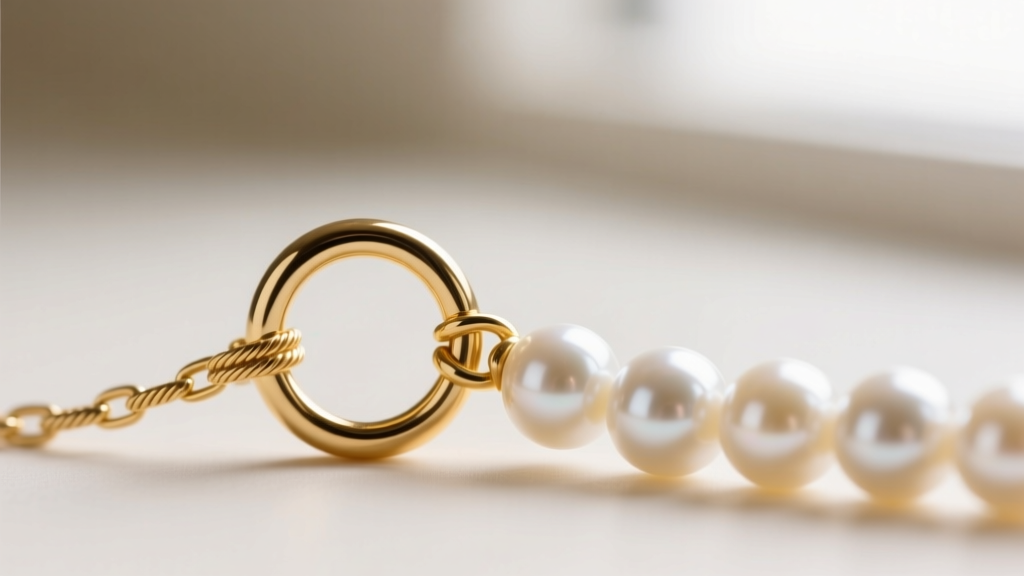
Reinforcing the Junction: Preventing Snaps and Fraying
The most catastrophic failure point on any half pearl half chain necklace is the junction where the organic strand meets the metallic links. This transition zone endures immense lateral tension and friction. Many mass-market manufacturers connect a silk-strung pearl strand directly to an open jump ring using a simple crimp or a clamshell knot cover. This is a structural error.
Silk thread is highly susceptible to abrasion. When the sharp inner edge of a standard metal jump rubs against the silk during wear, the fibers fray, leading to sudden strand failure and lost pearls. Furthermore, standard open jump rings can easily pull apart under the 35-gram dynamic load of a swinging pearl strand.
The Professional Hardware Upgrade
To permanently resolve junction tension, the hardware must be upgraded to professional bench-jeweler standards. According to technical specifications from Rio Grande jewelry supply, you should never use open jump rings for heavy asymmetrical loads. Instead, the chain must terminate in a 20-gauge or 18-gauge soldered jump ring. Because the ring is soldered shut, it cannot pull apart under tension.
Additionally, if the pearls are strung on silk, the termination must be protected with French wire (also known as gimp or bullion). This microscopic coiled metal spring acts as a sacrificial barrier, preventing the silk from touching the hard metal of the soldered jump ring. For modern restringing, bypassing silk entirely in favor of a 49-strand, .019-inch diameter Soft Flex beading wire secured with a sterling silver crimp tube offers vastly superior tensile strength and abrasion resistance.
| Stringing Material | Tensile Strength | Junction Protection Required | Common Failure Mode |
|---|---|---|---|
| Silk Thread (Size F) | Low (approx. 12 lbs) | French wire (gimp) & knot covers | Fraying from metal abrasion |
| Nylon Bead Cord | Medium (approx. 25 lbs) | Wire guards or crimp covers | Stretching and sagging over time |
| 49-Strand Beading Wire (.019") | High (approx. 40 lbs) | Proper crimping with 2x2mm tubes | Kinking if bent at a sharp angle |
Maintenance: Managing Dual-Material Degradation
Troubleshooting a mixed-media necklace extends beyond structural integrity; it requires navigating the conflicting chemical needs of nacre and metal. Pearls are organic, porous structures made of calcium carbonate and conchiolin. Metals like sterling silver or brass are prone to oxidation and sulfur-induced tarnishing.
The most common mistake owners make is attempting to clean the entire piece simultaneously using commercial silver dips or ultrasonic cleaners. According to the Gemological Institute of America (GIA), ultrasonic cavitation can literally shatter the nacre of a pearl or strip the delicate dye from treated freshwater pearls. Conversely, the harsh acids in silver dip will permanently etch and dull the pearl's luster.

The Split-Cleaning Protocol
To maintain a half pearl half chain necklace, you must adopt a split-cleaning protocol:
- For the Chain: Use a dedicated polishing cloth impregnated with jeweler's rouge to buff the metallic half. If the chain is heavily tarnished, remove it from the pearl strand (if the design features a detachable clasp) and use a mild liquid silver cleaner, ensuring it is thoroughly rinsed and dried before reattachment.
- For the Pearls: Wipe the pearl strand down after every wear with a clean, slightly damp microfiber cloth to remove acidic skin oils and perspiration. Never use chemical sprays, perfumes, or hairsprays while wearing the necklace, as the aerosolized alcohols will dehydrate the nacre, leading to crazing (micro-cracking).
Sizing and Drape: Correcting the Stiffness Mismatch
A frequent aesthetic complaint with asymmetrical necklaces is the "kink" that occurs at the junction. The pearl side, especially if tightly strung on thick wire, forms a rigid, structured arc. The chain side, however, is entirely fluid and collapses against the collarbone. Where these two distinct drape profiles meet, the necklace often buckles or sticks out awkwardly from the skin.
To solve the stiffness mismatch, the pearl strand must be strung with intentional "drape." If using silk, the jeweler should leave microscopic gaps between each pearl rather than pulling the knots drum-tight. If using beading wire, the wire must be flexed and worked in by hand before crimping to remove the factory-induced memory coil. Finally, ensuring the necklace is sized correctly to the wearer's exact neck circumference—rather than relying on a standard 16-inch or 18-inch generic length—ensures that the rigid pearl arc aligns perfectly with the natural curve of the clavicle, allowing the chain to fall seamlessly.
Final Verdict: When to DIY vs. See a Jeweler
While you can easily fix clasp sliding at home using silicone stays or by attaching a small counterweight charm, structural junction failures require professional intervention. If you notice the silk thread fraying near the jump ring, or if the metal link connecting the chain to the pearls looks distorted or stretched, remove the necklace immediately. Take it to a bench jeweler to be restrung with French wire and a soldered jump ring. Investing in proper structural troubleshooting will ensure your asymmetrical masterpiece remains as secure as it is stylish.


