How to Clean and Care for Your Mini Squash Blossom Necklace
Learn expert care, cleaning, and storage tips to protect the delicate turquoise and sterling silver of your mini squash blossom necklace.

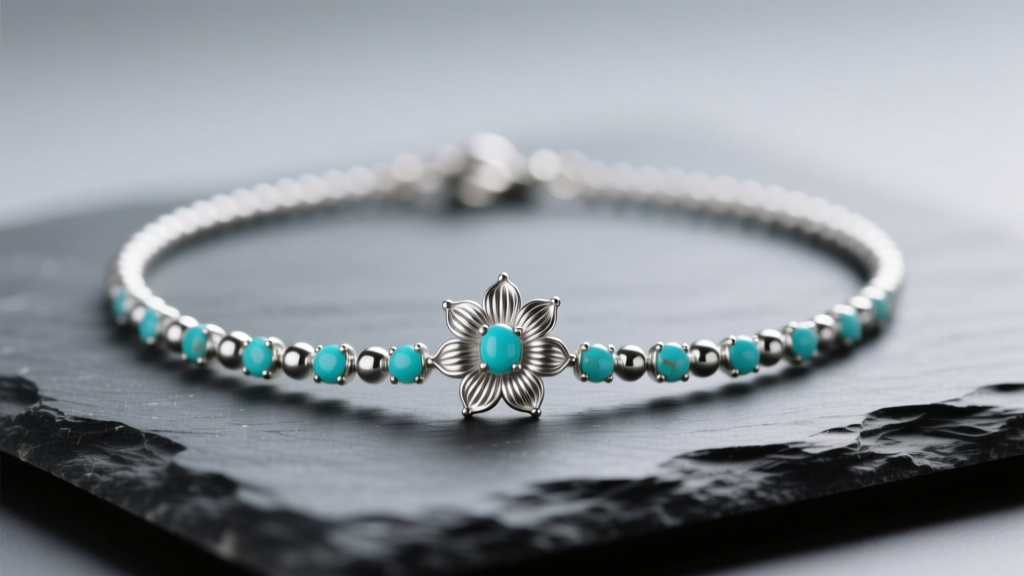
The squash blossom necklace is a cornerstone of Native American jewelry, traditionally crafted by Navajo, Zuni, and Hopi artisans. In recent years, the 'mini' squash blossom necklace has surged in popularity, offering a lightweight, versatile alternative to the heavy, ceremonial vintage pieces. However, scaling down this iconic design introduces unique structural vulnerabilities. The miniature naja pendants, tiny fluted beads, and micro-cabochons require a highly specialized approach to maintenance. If you own one of these delicate masterpieces, understanding the metallurgy and gemology behind it is critical to preserving its value and beauty.
The Unique Vulnerabilities of Miniature Native American Jewelry
When artisans scale down a traditional squash blossom necklace, they must use significantly thinner materials. While a vintage heavyweight piece might utilize 18-gauge or 20-gauge sterling silver shanks and thick bezels, a mini squash blossom necklace often relies on 24-gauge or even 26-gauge dead-soft sterling silver wire for its bezels and jump rings. This makes the miniature components highly susceptible to bending, snagging, and warping under minimal tension.
Furthermore, the turquoise used in these pieces is inherently fragile. Turquoise is a hydrous phosphate of copper and aluminum, ranking between 5 and 6 on the Mohs hardness scale. Its porous nature means it readily absorbs oils, lotions, and environmental chemicals. According to the Gemological Institute of America (GIA), prolonged exposure to skin acids and cosmetics can permanently alter the color of natural turquoise from a vibrant sky blue to a muddy green. While stabilized turquoise (treated with epoxy resins) is harder and less porous, it remains vulnerable to harsh solvents that can degrade the resin matrix over time.
Step-by-Step Cleaning Guide for Sterling Silver and Turquoise
Cleaning a mini squash blossom necklace requires a bifurcated approach: you must treat the sterling silver and the turquoise stones as two entirely different materials with opposing needs. Never submerge the entire necklace in liquid, as water can become trapped beneath the tiny bezels, leading to oxidation and eventual stone pop-outs.
The Sunshine Cloth Method for Silver
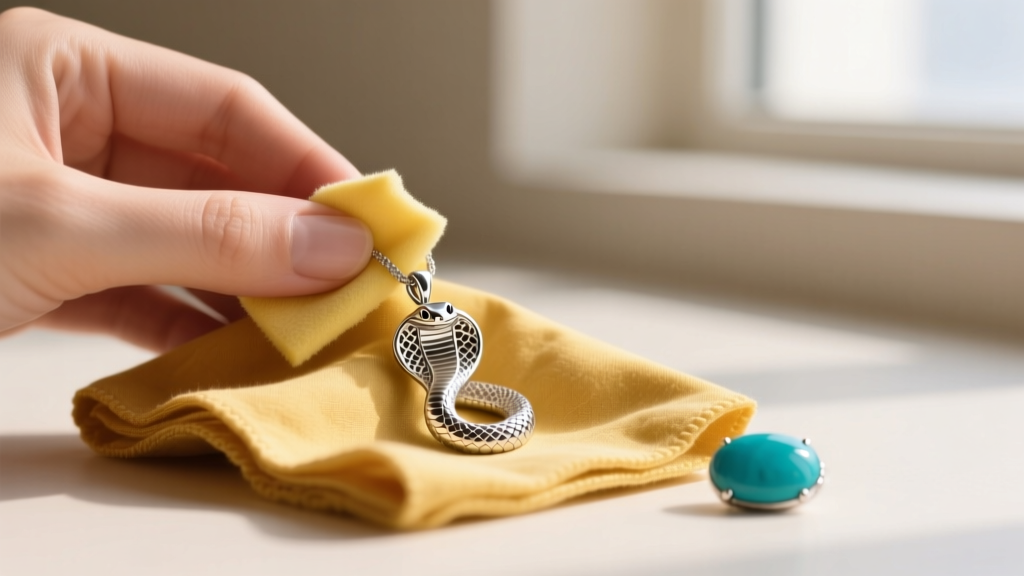
For the sterling silver components (the chain, the naja, and the fluted blossom beads), use a high-quality jeweler's polishing cloth, such as a Sunshine Cloth. These cloths are impregnated with micro-abrasives and anti-tarnish agents. Gently pinch the silver components between the cloth and rub back and forth. Crucial: Keep the cloth away from the turquoise cabochons. The micro-abrasives can scratch the polish right off the stone, leaving a dull, hazy finish that requires professional lapidary work to fix.
Washing the Turquoise Cabochons
To clean the turquoise stones, you need a gentle, non-chemical approach. Mix a few drops of plain, unscented dish soap (avoid formulas with added moisturizers or citrus degreasers) into a bowl of distilled water. Distilled water is vital, as tap water contains chlorine and minerals that can leave micro-deposits on the stone. Dip a soft-bristled baby toothbrush into the solution, shake off the excess moisture so it is only damp, and gently brush the surface of the turquoise. Immediately dry the stone with a lint-free microfiber cloth.
Cleaning Agents: What is Safe vs. Unsafe
| Cleaning Agent | Effect on Sterling Silver | Effect on Turquoise | Verdict |
|---|---|---|---|
| Liquid Silver Dip (e.g., Tarn-X) | Strips tarnish instantly but removes antique patina | Severe chemical burn; destroys stone matrix | NEVER USE |
| Ultrasonic Cleaners | Safe for plain silver chains | High-frequency vibrations will shatter the stone | NEVER USE |
| Baking Soda & Aluminum Foil | Excellent for heavy tarnish removal | Alkaline solution can discolor porous stones | Avoid on set jewelry |
| Mild Dish Soap & Distilled Water | Mild cleaning, won't remove heavy tarnish | Safe for surface dirt and oil removal | SAFE & RECOMMENDED |
Bezel Security and the 'Tap Test'
Because mini squash blossom necklaces use such fine bezel wire, the stones are at a high risk of becoming loose. A snag on a sweater or a bump against a steering wheel can pull a 26-gauge bezel away from the cabochon. To check the security of your stones, perform the 'tap test'.
'Hold the necklace close to your ear and gently tap the naja pendant and the blossom beads with your fingernail. If you hear a faint clicking or rattling sound, the bezel has pulled away from the stone, and the piece must be retired from wear until a jeweler can re-burnish the silver.' - Master Silversmith Maintenance Guidelines
If a stone is loose, do not attempt to push the silver back down with your fingernail. The oil from your skin will transfer to the stone, and the uneven pressure can crack the turquoise. Take it to a professional who specializes in Native American jewelry and uses a bezel pusher or burnisher with a polished steel tip to gently fold the silver back over the stone's edge.
Proper Storage to Prevent Tarnish and Stone Dehydration
How you store your mini squash blossom necklace is just as important as how you clean it. Sterling silver (an alloy of 92.5% silver and 7.5% copper) tarnishes when the copper reacts with hydrogen sulfide and moisture in the air. The Silver Institute recommends storing silver in airtight environments with anti-tarnish agents, but turquoise requires a slightly different approach to avoid dehydration and chemical reactions.
- Avoid PVC Plastics: Never store your necklace in standard plastic ziplock bags. Polyvinyl chloride (PVC) off-gases chemicals that can cause rapid, severe tarnishing and can even react with the epoxy used in stabilized turquoise.
- Use Pacific Silvercloth: Store the necklace in a pouch made of Pacific Silvercloth or a similar tarnish-preventative flannel. These fabrics are embedded with microscopic silver particles that intercept corrosive gases before they reach your jewelry.
- Include Silica Gel Packs: Moisture is the enemy of both silver oxidation and turquoise stability. Place a small, fresh silica gel desiccant packet in the storage drawer or box to maintain a dry micro-climate.
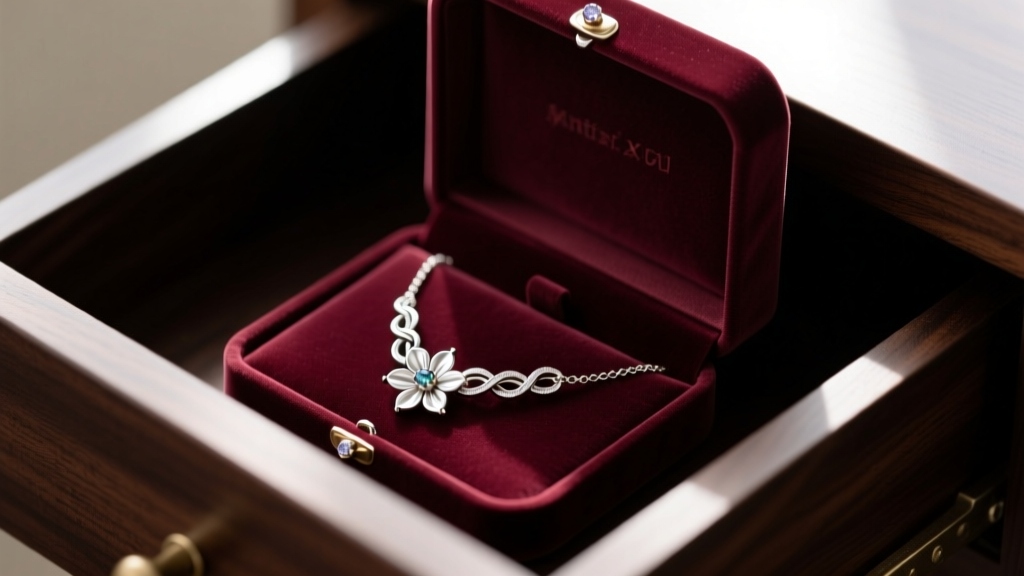
- Lay Flat or Hang Properly: Because the chain on a mini squash blossom is often a delicate 1mm or 1.5mm rope or box chain, hanging it on a standard jewelry hook can stress the clasp and jump rings. Lay it flat in a velvet-lined drawer, or use a padded hanger specifically designed for lightweight chains.
The Top 5 Enemies of the Mini Squash Blossom
To ensure your necklace survives for generations, memorize the primary hazards that cause irreversible damage to these specific pieces:
- Hairspray and Perfume: The alcohol and aerosol propellants in hair and body products can strip the polish from turquoise and accelerate silver tarnish. Always put your jewelry on after applying cosmetics.
- Chlorine and Salt Water: Swimming pools and the ocean are strictly off-limits. Chlorine can permanently pit sterling silver, while salt water can degrade the structural integrity of the stone's matrix.
- Hard Knocks: Turquoise is brittle. Dropping the naja pendant on a tile floor can easily cause internal fracturing, even if the silver bezel remains perfectly intact.
- Extreme Heat: Leaving your necklace on a car dashboard in the summer can cause the moisture trapped inside natural turquoise to expand, leading to surface crazing (a network of fine cracks).
- Household Cleaners: Ammonia and bleach will instantly discolor turquoise and cause aggressive, localized pitting on the silver blossom beads.
Routine Maintenance Schedule
Establishing a routine will keep your mini squash blossom necklace in pristine condition without requiring deep, risky cleaning sessions. After every wear, take 10 seconds to wipe the turquoise stones with a dry, clean microfiber cloth to remove skin oils and sweat. Once a month, use your Sunshine cloth to polish the silver chain and naja pendant. Finally, once a year, inspect the jump rings connecting the squash blossom beads to the main chain. If you notice any thinning or stretching in the 3mm or 4mm jump rings, have a jeweler replace them with heavier, soldered jump rings to prevent a catastrophic break and the loss of your miniature beads.


