Darry Necklace Troubleshooting: Fixing Chains & Clasps
Expert troubleshooting guide for your Darry necklace. Learn how to fix micro-knots, stiff clasps, loose melee diamonds, and rhodium wear.

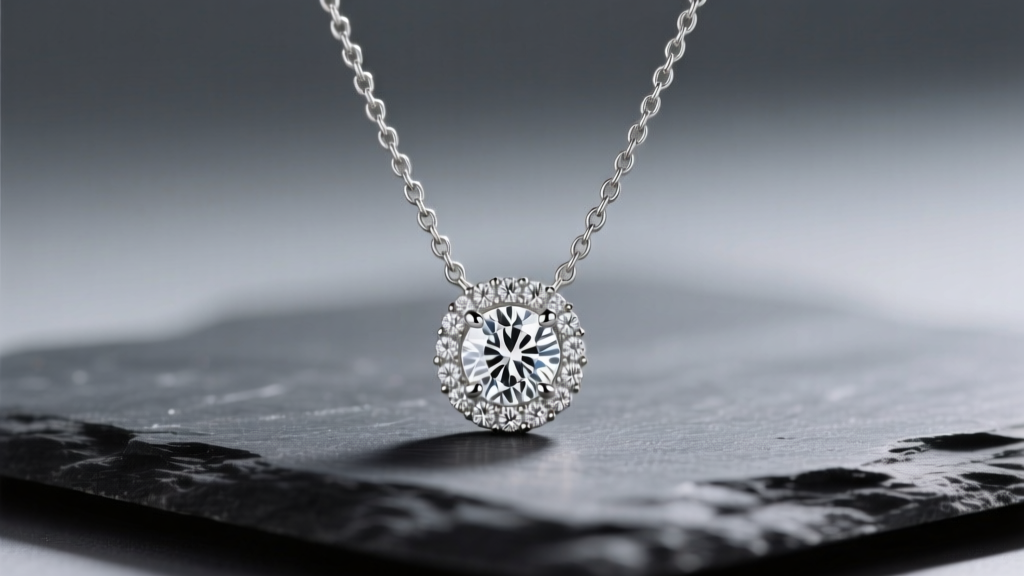
Understanding the Architecture of a Darry Necklace
The Darry necklace is celebrated for its elegant, lightweight aesthetic and intricate micro-pave diamond settings. However, the very design elements that make it stunning—ultra-fine chains, delicate spring-ring clasps, and microscopic prong work—also make it susceptible to specific mechanical failures. As a bench jeweler, I see these pieces frequently for what owners perceive as 'unfixable' damage. In reality, 90% of Darry necklace issues can be resolved with the right troubleshooting framework, specific micro-tools, and an understanding of the metallurgy involved.
Whether you are dealing with a hopelessly tangled 22-gauge cable chain, a stiff clasp, or a missing melee stone in the halo setting, this comprehensive troubleshooting guide will walk you through the exact diagnostics and solutions required to restore your jewelry.
Troubleshooting Micro-Knots in Ultra-Fine Chains
Most Darry necklaces utilize a 20-gauge to 22-gauge cable or box chain (measuring between 0.6mm and 0.8mm in thickness). While visually delicate, these chains are prone to 'micro-knots'—tangles so tight they resemble a solid bead of metal. Pulling on these knots will work-harden the gold or platinum, leading to catastrophic chain failure.
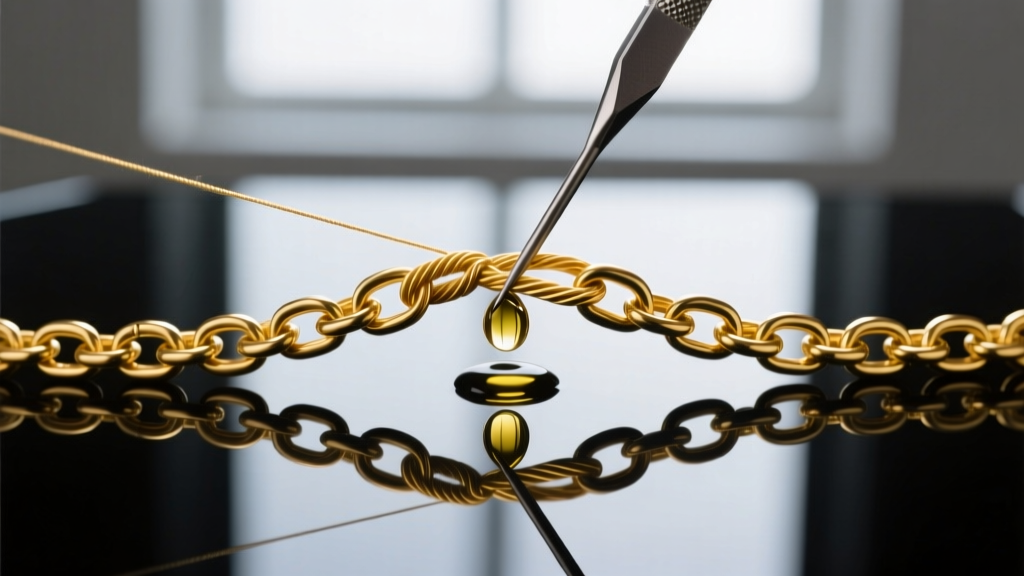
The Tungsten Needle & Lubricant Method
Do not use standard sewing needles or safety pins; they are too thick and will stretch the chain links. Instead, use the following professional protocol:
- Preparation: Lay the necklace flat on a non-porous, high-contrast surface (like a piece of dark glass or acrylic).
- Lubrication: Apply a single drop of mineral oil or non-toxic baby oil directly to the knot. Avoid olive oil or synthetic lubricants, which can leave gummy residues that attract dirt.
- Tool Selection: Use a 0.10mm tungsten carbide scribe or needle. Tungsten is rigid enough not to bend under pressure but smooth enough not to scratch 18k gold.
- Execution: Insert the needle into the exact center of the knot. Gently vibrate the needle (do not push or pull) to loosen the tension. Once the center link yields, use two needles to gently coax the outer links outward.
Expert Warning: Never use ultrasonic cleaners on a tangled chain. The high-frequency vibrations (typically 35kHz to 40kHz) will only tighten the knot and potentially fracture the links.
Fixing Stiff or Broken Spring-Ring Clasps
The clasp is the most common point of failure on any fine necklace. Darry necklaces typically employ either a 5mm spring-ring or a micro-lobster clasp. When the clasp becomes stiff, fails to snap shut, or pops open unexpectedly, the issue usually lies in the internal mechanism.
| Clasp Type | Common Gauge Match | Primary Failure Mode | DIY Fixable? |
|---|---|---|---|
| 5mm Spring Ring | 20g - 22g | Internal steel spring fatigue or loss of tension | No (Requires Replacement) |
| Micro-Lobster | 18g - 20g | Lever hinge misalignment or debris blockage | Yes (Clean & Realign) |
| Magnetic Barrel | 16g - 18g | Neodymium magnet degradation or glue failure | No (Requires Replacement) |
Restoring Tension and Cleaning Debris
If your micro-lobster clasp is stiff, it is likely clogged with microscopic skin cells, lotion, or dust. Soak the clasp in a solution of warm distilled water and a drop of mild dish soap for five minutes. Use a soft-bristled baby toothbrush to gently scrub the lever hinge. If the spring ring has lost its 'snap' and no longer returns to the closed position, the internal steel spring has experienced metal fatigue. Because the exterior is 18k gold or platinum and the interior is hardened steel, you cannot repair this yourself. A professional jeweler must laser-weld a new spring ring onto the existing jump ring.
Addressing Loose Melee Diamonds in Pave Settings
The pendant of a Darry necklace often features a halo or micro-pave setting utilizing melee diamonds ranging from 0.8mm to 1.2mm in diameter. These stones are held in place by tiny beads of metal pushed over the girdle of the diamond. Over time, friction from clothing and microscopic impacts can wear these beads down.
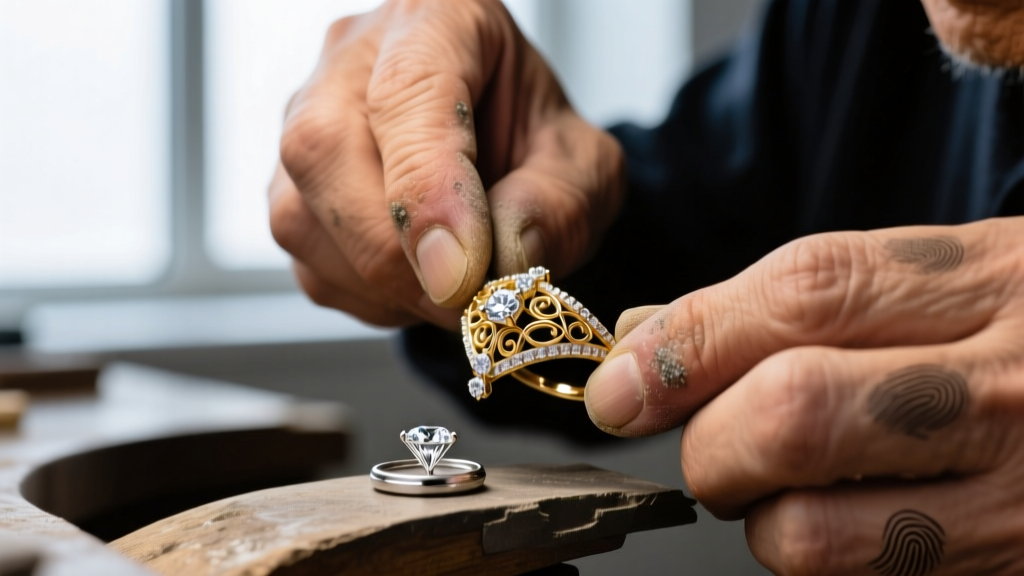
Diagnostic Steps for Loose Stones
To check for loose melee diamonds, use a 10x triplet loupe. Look for stones that sit slightly higher than their neighbors or exhibit a 'wobble' when gently tapped with a wooden pegwood stick. According to the Gemological Institute of America (GIA), melee diamonds are particularly vulnerable to chipping if the prong beads are worn flat.
If you identify a loose stone, stop wearing the necklace immediately. Do not attempt to push the metal beads back over the diamond yourself using household tools; the pressure required is highly specific, and slipping will result in a scratched diamond table or a crushed girdle. A bench jeweler will use a specialized beading tool and a graver to re-seat the stone and raise new metal beads to secure it.
Restoring Rhodium Plating on 18k White Gold
If your Darry necklace is crafted from 18k white gold, you may notice a yellowish tint developing on the back of the pendant or around the clasp over time. This is not tarnish; it is the natural color of the white gold alloy (which is mixed with yellow gold, nickel, or palladium) showing through as the rhodium plating wears away.
Rhodium is a platinum-group metal electroplated onto white gold to provide a bright, reflective, hypoallergenic surface. The friction from your neck and the oils from your skin naturally wear this plating down, typically within 12 to 18 months of daily wear. To restore the necklace, it must undergo professional rhodium re-plating. The Jewelers of America recommends having white gold pieces polished and re-plated by a professional rather than using abrasive DIY polishing cloths, which will strip the remaining rhodium layer prematurely.
When to Seek Professional Bench Jeweler Help
While micro-knots and dirty clasps can be managed at home with patience and the right supplies, certain issues require the precision of a professional bench jeweler equipped with a laser welder and a microscope. Seek professional help if:
- The chain is kinked or stretched: A stretched link cannot be squeezed back into shape; it must be cut out and laser-welded.
- A diamond is missing: Sourcing a matched 1mm melee diamond with the same color (typically F-G) and clarity (VS-SI) requires a gemologist's inventory.
- The jump ring is open: The jump ring connecting the clasp to the chain is a structural weak point. If it has pulled open, it must be soldered or laser-welded shut to prevent total loss of the pendant.
By understanding the specific mechanical vulnerabilities of your Darry necklace, you can transition from panic to proactive maintenance, ensuring the piece remains secure and brilliant for decades.


