Technical Guide: Crafting & Styling a Bubble Necklace Letter
An expert technical deep dive into the bubble necklace letter, covering casting methods, metal alloys, chain pairings, and structural integrity.

The Anatomy and Evolution of the Bubble Necklace Letter
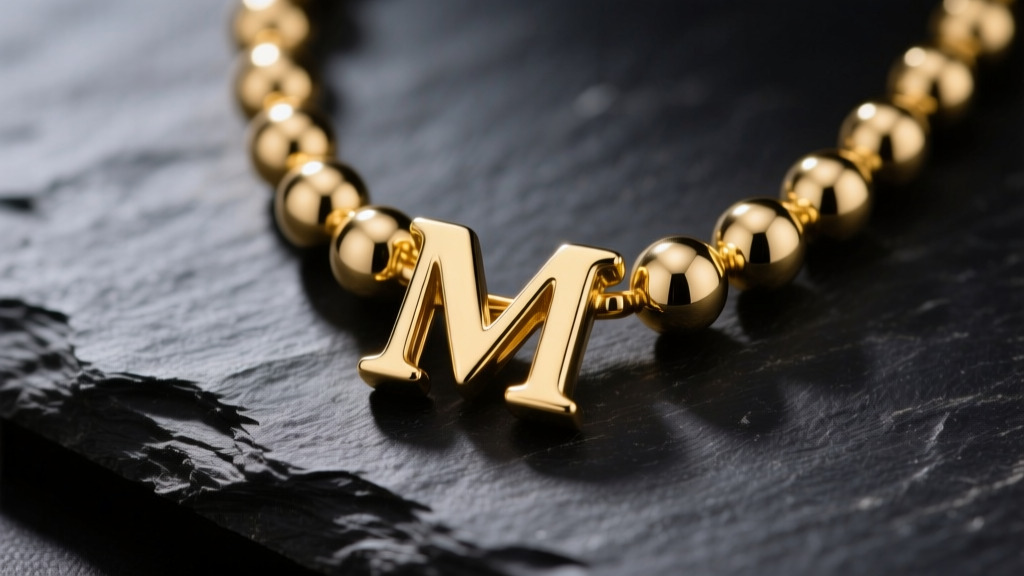
The bubble necklace letter—often referred to in the trade as a puffed or dome initial pendant—represents a fascinating intersection of nostalgic Y2K aesthetics and advanced modern metallurgy. Unlike flat, stamped initial pendants, a true bubble letter is a three-dimensional, hollow or semi-solid form that catches light across a continuous curved surface. As of 2026, the resurgence of this style has pushed jewelry manufacturers to adopt aerospace-grade CAD techniques to perfect the dome curvature. The defining characteristic of a high-quality bubble letter is G2 continuous curvature, meaning the reflection of light glides smoothly across the face of the letter without abrupt optical breaks. This requires precise digital sculpting in software like MatrixGold before the piece ever reaches the casting tree.
Manufacturing Techniques: Lost-Wax Casting vs. Stamping
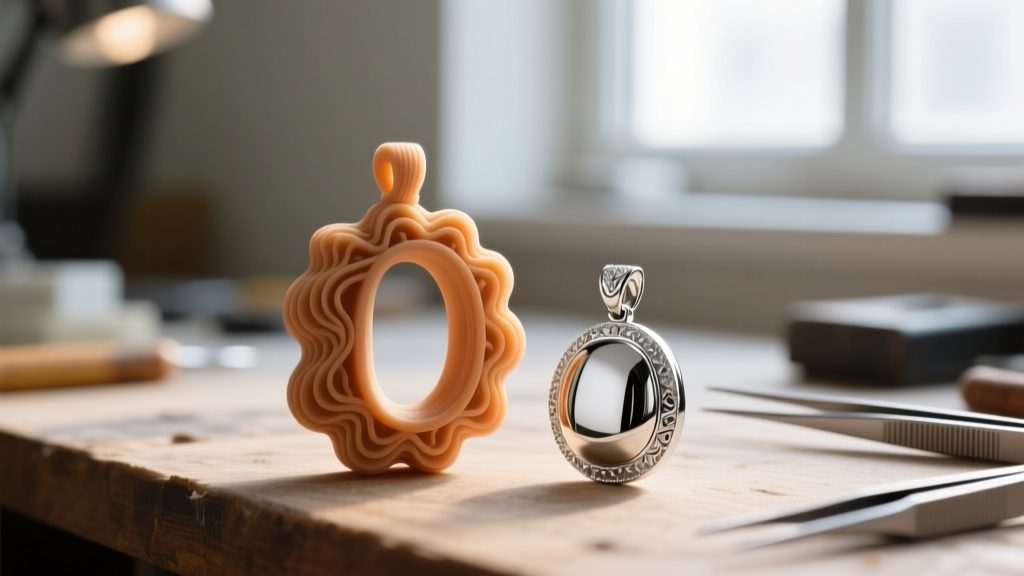
To achieve the voluminous, inflated look of a bubble necklace letter, jewelers predominantly rely on lost-wax casting rather than traditional sheet metal stamping. Stamping is limited to shallow reliefs and cannot produce the deep, 360-degree domes required for authentic puffed letters. The casting process begins with a high-resolution 3D-printed wax model. This model is sprued, invested in a plaster-like flask, and burned out in a kiln at approximately 1350°F (732°C) to leave a perfect negative cavity.
Wall Thickness and Porosity Challenges
The most critical technical challenge in casting a hollow bubble letter is maintaining uniform wall thickness. If the walls are too thick, the pendant becomes excessively heavy and expensive; if too thin, the metal cools too rapidly during casting, leading to porosity or incomplete fills. Expert foundries target a wall thickness between 0.6mm and 0.9mm for 14k gold bubble letters. According to casting data from Rio Grande, maintaining the flask temperature and using centrifugal or vacuum casting equipment is mandatory to force the molten alloy into the thin, expansive cavities of a puffed letter without trapping gas bubbles.
Metal Alloys and Structural Durability
Not all gold karats behave identically when formed into a thin-walled, hollow bubble structure. The Vickers hardness (HV) of the alloy directly dictates how well the pendant will resist denting from everyday impacts. Below is a technical comparison of common alloys used for puffed initial necklaces.
| Metal Alloy | Avg. Vickers Hardness | Pros for Bubble Casting | Cons & Failure Modes |
|---|---|---|---|
| 10k Gold (41.7%) | ~130 HV | Highly durable, resists crushing and denting. | Lower gold content, paler color, higher tarnish risk. |
| 14k Gold (58.5%) | ~115 HV | Ideal balance of rich color and structural rigidity. | Can still dent under severe point-impact pressure. |
| 18k Gold (75.0%) | ~90 HV | Superior luster, hypoallergenic, premium market value. | Too soft for thin-walled hollow forms; dents easily. |
| 925 Sterling Silver | ~75 HV | Cost-effective, excellent reflectivity when polished. | Highly prone to crushing; requires thicker 1.2mm walls. |
For a daily-wear bubble necklace letter, 14k gold remains the industry standard. It provides enough yield strength to survive minor drops and impacts without collapsing the dome.
Bail Engineering and Laser Welding
The bail—the loop that connects the letter to the chain—is the primary structural vulnerability of any puffed pendant. In flat pendants, bails can be soldered easily. However, applying a traditional torch flame to a hollow bubble letter can cause the trapped air inside to expand, blowing out the thin metal walls or melting the delicate curves. To circumvent this, master jewelers utilize laser welding. Laser welders, as detailed in technical guides by the Ganoksin Project, focus a microscopic beam of light to fuse the bail to the letter's surface in a fraction of a second. This localized heat transfer ensures the interior of the bubble letter remains completely unaffected, preserving the structural integrity of the dome while creating a tensile bond capable of supporting the pendant's dynamic weight.
Chain Pairing: Gauge, Physics, and Clasp Selection
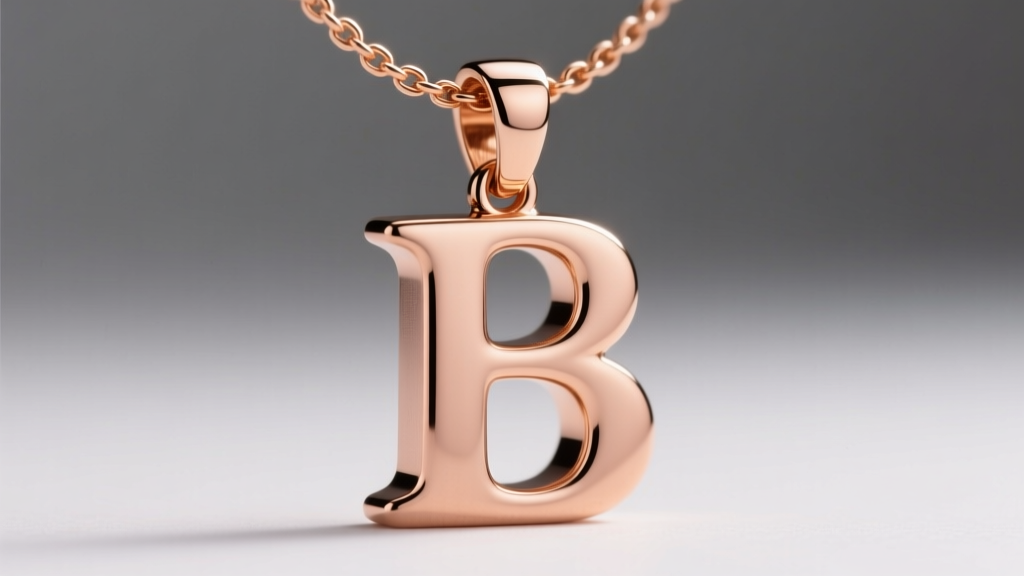
A common failure point in bubble necklace letter styling is pairing a heavy, voluminous pendant with an inadequate chain. The physics of a pendant necklace involve a pendulum effect; every time the wearer moves, the bubble letter swings, generating kinetic stress at the jump ring and clasp. To mitigate this, adhere to the following chain engineering guidelines:
- Chain Gauge: For a standard 15mm to 20mm bubble letter weighing between 2.5g and 5g, use a chain no thinner than 1.2mm. A 1.5mm rope chain or a 2.0mm Cuban curb chain is optimal for distributing the dynamic load.
- Jump Ring Integrity: The jump ring connecting the bail to the chain must be soldered closed or feature a heavy-duty split-ring mechanism. Standard open jump rings will inevitably pull apart under the swinging weight of a 3D puffed letter.
- Clasp Mechanics: Avoid spring ring clasps, which possess weak internal springs that fail under tension. Always opt for a 5mm or 6mm lobster clasp with a stainless steel internal spring for secure retention.
Sizing, Typography, and Kerning
When designing or purchasing a multi-letter bubble necklace (such as a full first name), typography and kerning become critical engineering factors. Serif fonts with sharp, thin tails (like Times New Roman) are notoriously difficult to cast in a puffed 3D format, as the thin extremities cool too quickly and become brittle. Sans-serif or modified block fonts (like Futura or Helvetica Rounded) are vastly superior for bubble letters because their uniform stroke widths ensure consistent metal flow during casting and even structural strength across the entire word. Furthermore, the letters must be connected via hidden structural bridges on the backplate to prevent them from folding over one another when worn.
Maintenance and Repair Protocols
Despite optimal alloy selection, hollow bubble letters can occasionally suffer from crush damage if subjected to extreme pressure (e.g., being sat on or caught in heavy machinery). Repairing a crushed puffed letter requires specialized horological and jewelry techniques. A skilled bench jeweler will not simply hammer the piece, which will stretch and tear the thin metal. Instead, they use custom-turned steel mandrels and rawhide mallets to gently massage the dent outward from the inside, sometimes drilling a microscopic 0.5mm access hole in an inconspicuous area to insert a specialized hook tool, reshaping the dome before laser-welding the access hole shut and re-polishing the surface to a mirror finish.
Expert Insight: Never attempt to clean a hollow bubble necklace letter in an ultrasonic cleaner if you suspect there is a microscopic crack or porous hole in the casting. The cleaning solution will become trapped inside the hollow chamber, leading to internal corrosion and eventual metal degradation.
By understanding the intricate metallurgy, CAD design, and structural engineering behind the bubble necklace letter, collectors and enthusiasts can make informed decisions, ensuring their puffed initial pendants remain pristine and structurally sound for decades.


