How to Restore and Fix a Fading J Crew Black Necklace
Is your J Crew black necklace fading or chipping? Learn expert troubleshooting tips to restore the finish, fix clasps, and style it flawlessly.

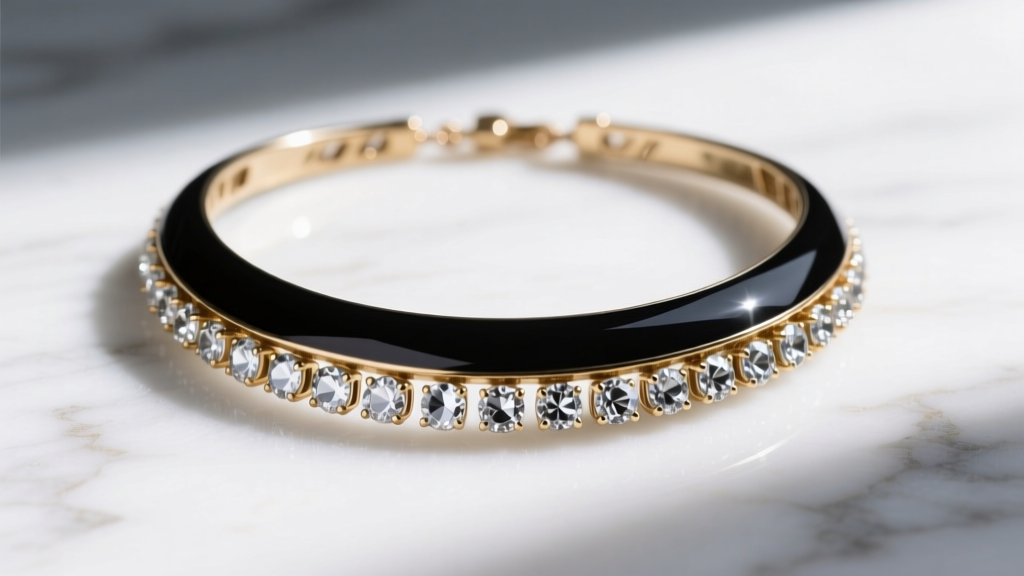
The iconic J Crew black necklace—whether it is a vintage-inspired black enamel and crystal collar from the brand's golden era or a sleek, blackened brass chain—remains a staple in many jewelry boxes. However, fashion jewelry from this era is notorious for specific wear-and-tear issues. Black rhodium plating rubs off onto collars, enamel chips from minor impacts, and standard brass lobster clasps inevitably fail. In 2026, the sustainable fashion movement heavily favors restoring and repairing high-quality statement pieces rather than discarding them for fast-fashion alternatives. If your favorite dark-toned necklace is showing its age, this comprehensive troubleshooting guide will help you diagnose the material, execute professional-grade at-home repairs, and modernize your styling.
Identifying the Material: The Crucial First Step
Before applying any chemical or abrasive to your jewelry, you must identify the exact material. J Crew has utilized several different manufacturing techniques for their black necklaces over the years. Misidentifying the base metal or the blackening agent can result in irreversible damage. For instance, treating a black rhodium flash-plated brass chain with a silver oxidizer will strip the plating entirely, leaving you with a patchy, brassy mess.
According to the metallurgical guidelines from Rio Grande Jewelry Supply, black finishes in fashion jewelry generally fall into three categories: black rhodium electroplating, baked black enamel, or chemical oxidation (liver of sulfur) applied to sterling silver. Here is a troubleshooting matrix to help you identify your necklace's specific failure mode and the corresponding repair strategy.
| Issue | Root Cause | Material Type | Best At-Home Fix |
|---|---|---|---|
| Black rubbing on skin | Flash plating wear | Black Rhodium over Brass | Seal with ProtectaClear |
| Chipping / Flaking | Impact / Thermal shock | Baked Enamel over Brass | Tinted jewelry epoxy |
| Patchy fading | Friction / Chemical exposure | Oxidized Sterling Silver | Liver of Sulfur gel dip |
| Cloudy stones | Sebum / Lotion buildup | Black Crystal / Onyx | Dawn dish soap soak |
Troubleshooting Black Plating and Enamel Wear
The most common complaint with a J Crew black necklace is the finish wearing away at the nape of the neck or the clasp connection points. This happens because the friction from clothing and the natural acidity of human skin break down the microscopic layers of flash plating or enamel.
Fixing Worn Black Rhodium Plating
If your necklace is brass with a black rhodium finish that is rubbing off and turning your skin green or grey, you need to seal the remaining metal. Do not attempt to re-plate this at home without specialized electroplating equipment. Instead, clean the chain thoroughly with isopropyl alcohol to remove all skin oils. Once dry, apply a micro-thin coat of Everbrite ProtectaClear. This is a professional-grade, skin-safe polyurethane coating used by jewelers to seal copper and brass. It dries completely invisible, locks in the remaining black finish, and prevents skin discoloration. Avoid using clear nail polish, as it contains solvents that can react with brass and eventually yellow or peel in thick, unsightly flakes.
Repairing Chipped Black Enamel
Enamel is essentially powdered glass fused to metal. When it chips, you cannot simply 'melt' it back together at home. For deep chips on a statement collar, use a two-part jewelry epoxy (like Devcon 5-Minute Epoxy). Mix the epoxy on a ceramic tile and use a toothpick to stir in a tiny amount of black mica powder or black resin pigment. Carefully fill the chip, ensuring it sits just a fraction of a millimeter below the surface of the surrounding enamel. Once cured for 24 hours, gently buff the spot with a 3000-grit micro-mesh pad to blend the repair.
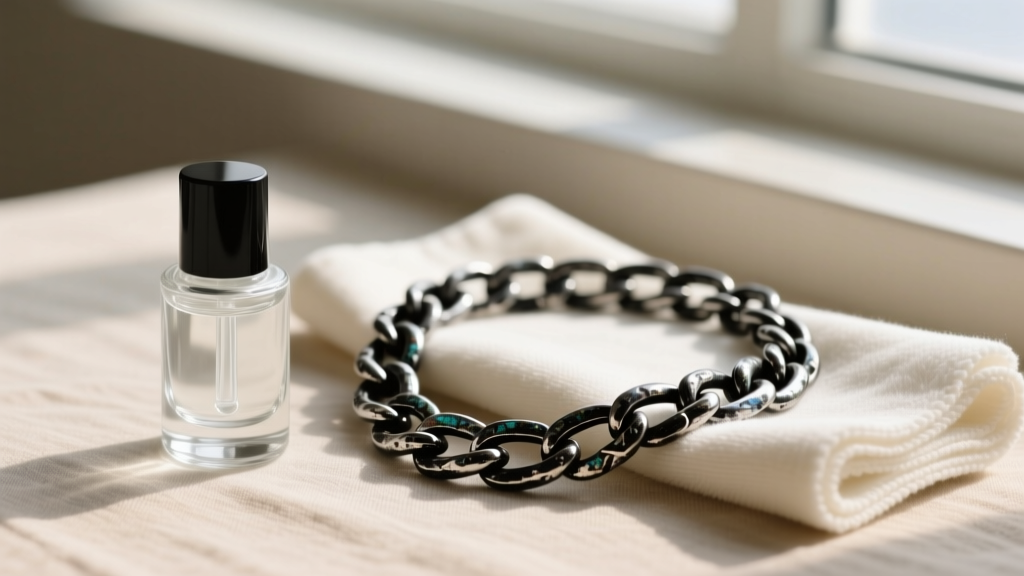
Restoring Cloudy Black Crystals and Stones
Many J Crew statement necklaces feature black acrylic, glass crystals, or dyed onyx cabochons. Over time, these stones become cloudy and dull due to a buildup of body oils, perfume, and lotions. The Gemological Institute of America (GIA) warns against using harsh chemicals, ultrasonic cleaners, or steam on porous or glued fashion jewelry stones, as the vibrations can shatter the adhesive bond, causing the stones to fall out of their bezels.
To safely restore the deep black luster of your crystals, create a lukewarm bath using distilled water and a few drops of pH-neutral dish soap (like Dawn). Let the necklace soak for exactly 10 minutes. Use a baby hair toothbrush to gently agitate the dirt trapped around the bezel settings. Rinse under a gentle stream of distilled water and immediately dry with a microfiber cloth. Never air-dry, as hard water spots will permanently etch into softer acrylic stones.
Upgrading the Hardware and Clasps
A frequent point of failure on older fashion jewelry is the hardware. The standard brass lobster clasps and jump rings used in the 2010s are prone to metal fatigue, tarnishing, and snapping under the weight of heavy statement pieces. Upgrading the hardware is a simple, high-impact repair that extends the life of your necklace by decades.
Step-by-Step Clasp Replacement
To upgrade your clasp, you will need a pair of chain-nose pliers, flush cutters, and replacement hardware. Most J Crew chains utilize 18-gauge or 20-gauge jump rings. Purchase a 925 sterling silver or titanium lobster clasp and a pack of 20-gauge, 5mm closed jump rings. Using your flush cutters, carefully snip the old, tarnished jump ring connecting the clasp to the chain. Thread the chain through the new 5mm jump ring, and then attach the sterling silver clasp. Using two pairs of chain-nose pliers, twist the jump ring closed laterally—never pull it apart outward, as this distorts the circle and weakens the metal. This upgrade not only prevents accidental loss but also adds a subtle touch of fine jewelry quality to a fashion piece.
Modernizing the Styling: Solving the 'Costume' Look
Beyond physical repairs, the most common 'problem' with a vintage J Crew black necklace is that it can feel visually heavy or dated if worn exactly as it was styled a decade ago. The key to wearing these pieces in 2026 is strategic juxtaposition.
The secret to styling heavy, dark-toned fashion jewelry is to anchor it with fine, modern metals. The contrast elevates the statement piece from 'costume' to 'curated'.
Avoid wearing a thick black enamel collar alone over a high neckline, which can look restrictive and overly formal. Instead, layer the black necklace over a deep V-neck or unbuttoned silk blouse, and intertwine it with two or three delicate 14k yellow gold satellite chains (ranging from 18 to 24 inches). The warmth of the yellow gold against the stark black enamel creates a striking, contemporary aesthetic. If your necklace is a long, blackened brass pendant chain, knot it loosely at the sternum to create a faux-lariat silhouette, pairing it with minimalist gold hoop earrings to balance the visual weight.


