The Puka Shell Necklace 70s Era: Technical Guide to Vintage Beads
Master the technical details of the puka shell necklace 70s revival. Learn to authenticate vintage Conus litteratus beads, stringing methods, and grading.

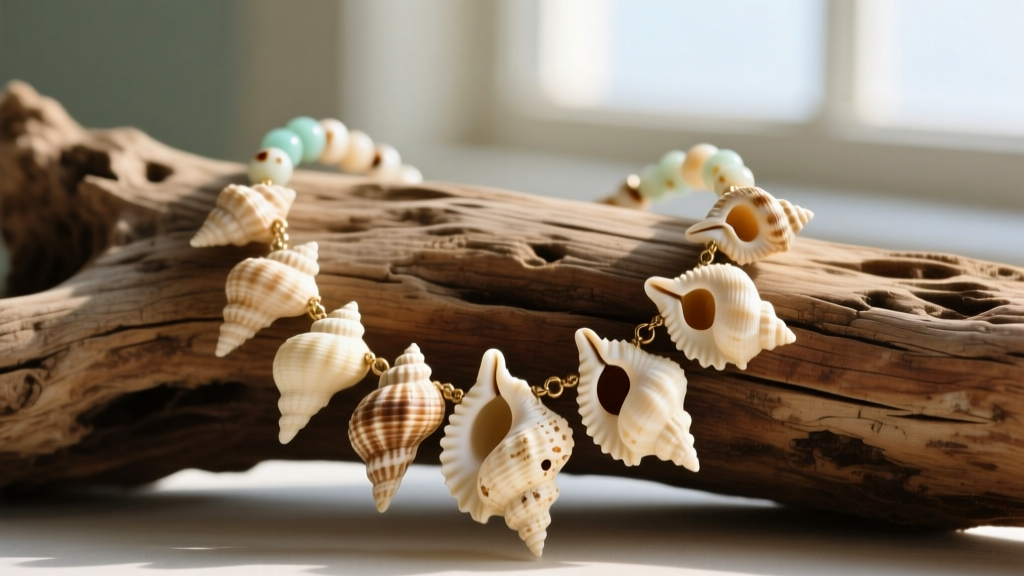
The resurgence of 1970s surf and skate culture has propelled vintage organic jewelry back into the spotlight. However, the modern market is heavily saturated with mass-produced imitations. Identifying an authentic puka shell necklace 70s original requires a trained eye, an understanding of marine biology, and a grasp of mid-century jewelry crafting techniques. This expert deep dive explores the material science, structural authentication, and conservation of genuine vintage puka shells.
The Anatomy of a True 1970s Puka Shell
The word 'puka' translates to 'hole' in Hawaiian. True puka shells are not carved; they are the naturally occurring, ocean-tumbled apexes of the Conus litteratus (the lettered cone snail). According to Encyclopedia Britannica's taxonomy on Conidae, these marine gastropods possess a distinct conical spire. When the snail dies and the shell tumbles in the surf for years, the fragile tip breaks away, leaving a naturally smooth, cone-shaped hole.
From a material science perspective, genuine vintage puka is composed of aragonite, a crystalline form of calcium carbonate. As noted in the GIA's overview of organic gem materials, aragonite registers at a mere 2.5 to 3.0 on the Mohs hardness scale. This relative softness means that authentic 50-year-old vintage beads will exhibit microscopic surface pitting, subtle asymmetrical wear patterns, and a distinct, non-glassy luster that modern tumbling machines fail to replicate.
Conus Litteratus vs. Modern Substitutes
Modern manufacturers rarely use Conus litteratus due to the labor-intensive beachcombing required. Instead, they utilize the Turbo petholatus (tapestry turban) shell, which is thicker and flatter, or they cast beads from calcium-filled epoxy resins. To differentiate, examine the cross-section. Genuine cone snail puka has a distinct convex curve on one side and a flatter, slightly concave profile on the other. Substitutes are often uniformly flat or perfectly symmetrical.
Technical Authentication: Natural vs. Drilled Holes
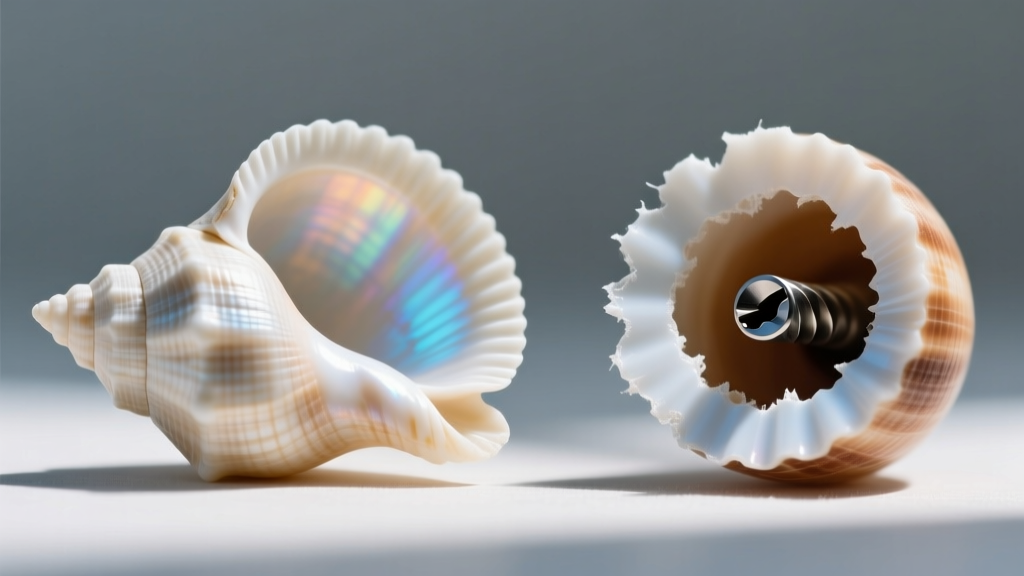
The most critical authentication metric for any puka shell necklace 70s era piece is the morphology of the hole itself. Because the hole is formed by the natural spire of the cone snail, it is inherently tapered. It resembles a truncated cone, wider at the base of the shell and narrowing toward the apex.
- Natural Holes: Tapered, asymmetrical, with a smooth, rolled 'lip' where the ocean surf has polished the calcium carbonate edge over decades.
- Mechanically Drilled Holes: Perfectly cylindrical. Under a 10x jeweler's loupe, the entry and exit points of a drilled hole will reveal micro-chipping, striations from the drill bit, and sharp, unpolished 90-degree edges.
Furthermore, modern fakes are often coated in a clear polymer to simulate the ocean-polished luster. Using a 365nm UV flashlight will instantly reveal these treated beads; the polymer coating will fluoresce a bright milky blue or green, whereas natural, untreated aragonite will remain largely inert or show only faint, patchy organic fluorescence.
Stringing Architecture: Nylon, Silk, and the O-ring Clasp
The structural integrity of a vintage necklace relies heavily on its stringing material. In the 1970s, jewelers and surfers primarily strung puka beads on heavy-duty waxed cotton, braided nylon (similar to Mason line), or early iterations of synthetic silk. If you are purchasing a purported vintage piece that is still on its original 1970s cotton cord, do not wear it. Half a century of exposure to UV light, sweat, and ambient humidity causes natural fibers to undergo severe polymer chain degradation. The cord is a catastrophic failure risk waiting to happen.
The Macramé Closure Technique
Authentic 1970s pieces rarely featured modern lobster clasps. The quintessential closure was the sliding square knot (macramé) or a simple sterling silver hook-and-eye toggle. When restoring a vintage piece, use a 1.5mm to 2.0mm waxed linen or high-density polyethylene (HDPE) micro-braided cord. This thickness provides the necessary tensile strength while still sliding smoothly through the tapered holes of 8mm to 10mm beads without causing internal friction.
Grading and Sizing Matrix for Vintage Puka
Sizing in vintage puka is notoriously inconsistent because the beads are natural ocean finds, not factory-calibrated. However, professional graders categorize them by their average diameter and the corresponding hole size, which dictates the stringing gauge. Below is the technical grading matrix for authentic Conus litteratus beads.
| Grade Category | Bead Diameter | Natural Hole Diameter | Rarity Factor | Est. Price per Inch (USD) |
|---|---|---|---|---|
| Micro / Chip | 4mm - 6mm | 1.0mm - 1.5mm | Common | $2.00 - $4.00 |
| Standard | 7mm - 9mm | 1.5mm - 2.5mm | Moderate | $5.00 - $9.00 |
| Large / Surf | 10mm - 13mm | 2.5mm - 4.0mm | Scarce | $12.00 - $20.00 |
| Collector / Jumbo | 14mm+ | 4.0mm+ | Rare | $25.00 - $50.00+ |
When evaluating a complete necklace, measure the beads at three different points along the strand. A genuine vintage strand will show a variance of up to 1.5mm between individual beads. A strand where every bead measures exactly 8.0mm is a mathematical impossibility for natural ocean-tumbled shells and indicates a machine-cut substitute.

Conservation and Wearability in 2026
As organic gemstones, puka shells require specific conservation protocols to prevent structural and cosmetic degradation. Aragonite is highly susceptible to acidic environments. The natural pH of human sweat, combined with modern cosmetics, perfumes, and aerosolized sunscreens, will slowly etch the surface of the shell, leaving it chalky and brittle.
To clean a vintage puka necklace, never use ultrasonic cleaners or chemical jewelry dips. The high-frequency cavitation of an ultrasonic bath can cause micro-fractures along the natural fault lines of the calcium carbonate structure. Instead, use a soft-bristled detailing brush, lukewarm distilled water, and a pH-neutral castile soap. Gently agitate the surface, rinse thoroughly, and allow the beads to air dry completely on a microfiber towel before restringing or storing.
For long-term archival storage, keep the necklace in a breathable cotton pouch rather than an airtight plastic bag. Trapped moisture in a sealed environment can promote the growth of mold spores on residual organic proteins trapped within the shell's porous matrix. According to National Geographic's marine biology archives, the complex micro-structures of cone snail shells are marvels of natural engineering, but they remain entirely dependent on proper environmental stewardship once removed from the ocean.
Conclusion
The allure of the 1970s puka shell necklace lies in its imperfections. Every bead is a geological timestamp, shaped by the relentless kinetic energy of the Pacific surf. By understanding the morphological differences between natural spires and drilled holes, recognizing the degradation limits of vintage stringing materials, and applying proper aragonite conservation techniques, collectors and jewelers can preserve these iconic artifacts of surf culture for decades to come. True vintage puka is not just an accessory; it is a masterclass in natural, unforced design.


