The True Cost of a DIY Shell Necklace: Budget & Value Guide
Discover the true cost of making a DIY shell necklace. We break down material prices, hardware grades, and compare DIY value to retail.

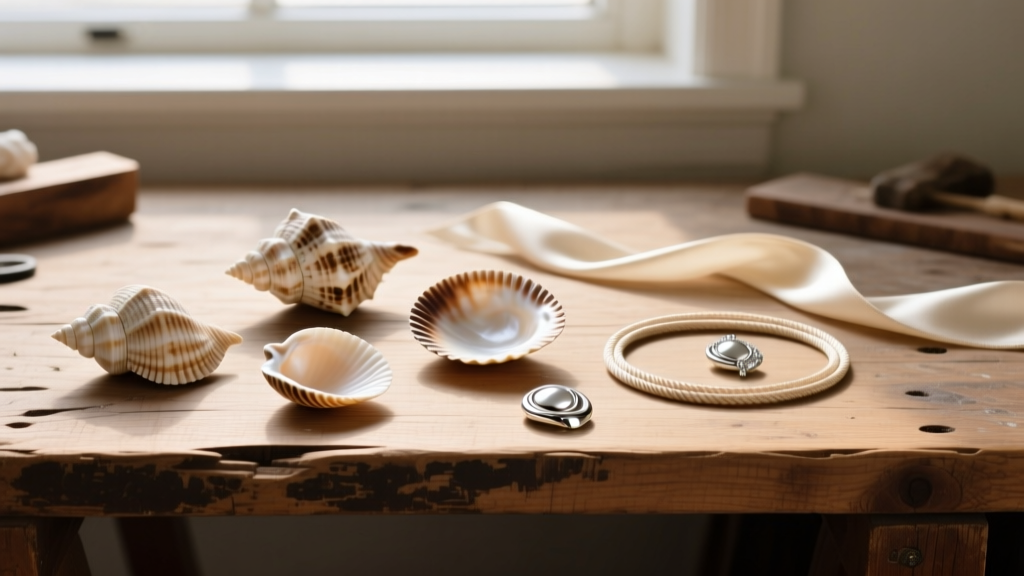
The Real Economics of Crafting Your Own Shell Jewelry
The coastal aesthetic has firmly cemented itself in contemporary jewelry design, making the diy shell necklace a staple for both casual beachwear and elevated resort attire. However, beneath the romanticized vision of crafting jewelry on a sunlit porch lies a complex matrix of material costs, ethical sourcing considerations, and hardware investments. As of 2026, the global push for marine conservation has tightened restrictions on wild-harvested shells, fundamentally shifting the pricing landscape for organic jewelry materials.
Whether you are a hobbyist looking to save money or an aspiring artisan calculating profit margins, understanding the true budget and value assessment of shell jewelry is critical. This guide dissects the exact costs of shells, stringing mediums, and metallurgical findings, proving that a successful DIY project requires strategic financial planning, not just creative vision.
Sourcing Shells: Market Prices and Ethical Considerations
The foundation of your necklace dictates the baseline of your budget. Shells are organic gemstones, and their pricing is heavily influenced by harvesting methods, scarcity, and international trade regulations. According to the Gemological Institute of America (GIA), organic gems require specialized care and ethical sourcing verification to maintain their market value.
Puka, Heishi, and Mother of Pearl (MOP)
- Natural Puka Shells: Genuine, naturally tumbled puka shells (not dyed or machine-drilled imitations) cost between $12 and $25 per 16-inch strand. Synthetic or bleached alternatives drop this to $3–$5, but they severely degrade the perceived value of the final piece.
- Mother of Pearl (MOP) Heishi: Unbleached, ethically sourced MOP discs range from $8 to $18 per strand. The iridescence of high-grade MOP is unmatched, making it a premium choice for luxury DIY projects.
- Dyed Howlite Imitations: Often sold as 'puka' for $2 per strand. Avoid these if you are building a high-value portfolio; they chip easily and fade in sunlight.
Statement Shells: Cowrie and Conch
Large focal shells require a different budgeting approach. Cowrie shells, widely available and culturally significant, average $0.75 to $2.50 each for medium-sized specimens. However, statement shells like the Queen Conch (Strombus gigas) are strictly regulated under CITES (Convention on International Trade in Endangered Species). Legally sourced, pre-ban vintage conch shells can command $30 to $75 per piece on the secondary market. Always demand a certificate of origin when purchasing large, exotic statement shells to ensure you are not inadvertently funding illegal poaching operations.
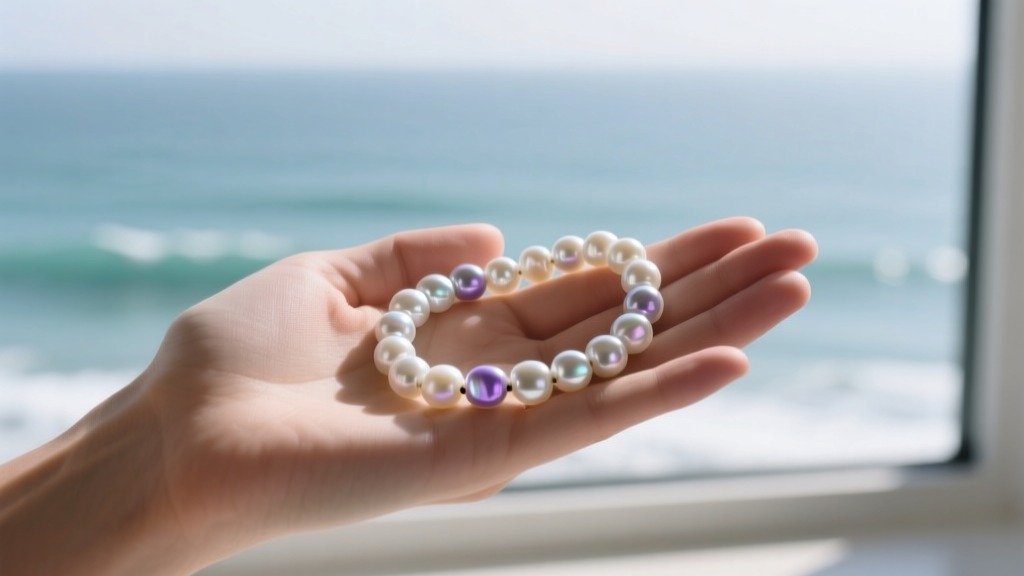
Stringing Materials: The Hidden Cost of Durability
A common pitfall in DIY jewelry is allocating the entire budget to the focal beads while neglecting the stringing medium. Shells, particularly those with unpolished drill holes like natural puka, act like microscopic saws. They will fray and snap weak cords within weeks of wear. The Fire Mountain Gems Encyclopedia emphasizes matching the tensile strength of your cord to the abrasiveness of your beads.
Material Comparison and Pricing
- Griffin Natural Silk Cord (Size F, 0.35mm): The traditional choice for knotting. Costs approximately $4.50 per 2-meter card. It offers a beautiful drape but requires French wire (bullion) at the clasp to prevent fraying. Best for lightweight MOP and polished cowries.
- C-Lon Nylon Micro Cord (Size D, 0.115mm): Priced at $3.00 per 10-yard spool. Nylon offers superior tensile strength and water resistance compared to silk, making it ideal for beachwear necklaces that will be exposed to saltwater and sunscreen.
- 49-Strand Coated Stainless Steel Wire (0.018-inch gauge): Costs around $12.00 for a 30-foot spool. This is the ultimate choice for heavy, abrasive shell strands. The 49-strand construction provides a fluid, thread-like drape while offering a 40-pound break strength.
Expert Insight: Never use cheap, single-strand monofilament fishing line for shell jewelry. It degrades under UV light exposure and lacks the flexibility required for a comfortable necklace drape, leading to catastrophic failure and lost materials.
Hardware and Findings: Investing in the Right Alloys
The clasp and jump rings are the mechanical failure points of any necklace. Skimping on findings will ruin an otherwise beautiful shell arrangement. When assessing value, you must balance upfront cost against longevity and skin-safety.
Alloy Breakdown
- 316L Surgical Stainless Steel: The most budget-friendly, hypoallergenic option. A 10mm lobster clasp and two 5mm, 20-gauge jump rings will cost roughly $0.80 to $1.20 per set. Ideal for casual, surf-style shell chokers.
- 925 Sterling Silver: A step up in luxury, costing $3.50 to $6.00 per clasp set. Sterling silver pairs beautifully with the cool undertones of MOP and white cowrie shells, though it requires occasional polishing to remove sulfide tarnish.
- 14/20 Gold-Filled: The premier choice for high-value artisan pieces. Unlike gold-plated brass (which will flake and expose base metals within a season), 14k gold-filled findings contain a thick, mechanically bonded layer of gold. Expect to pay $5.00 to $9.00 per clasp set, but the return on investment in perceived retail value is massive.
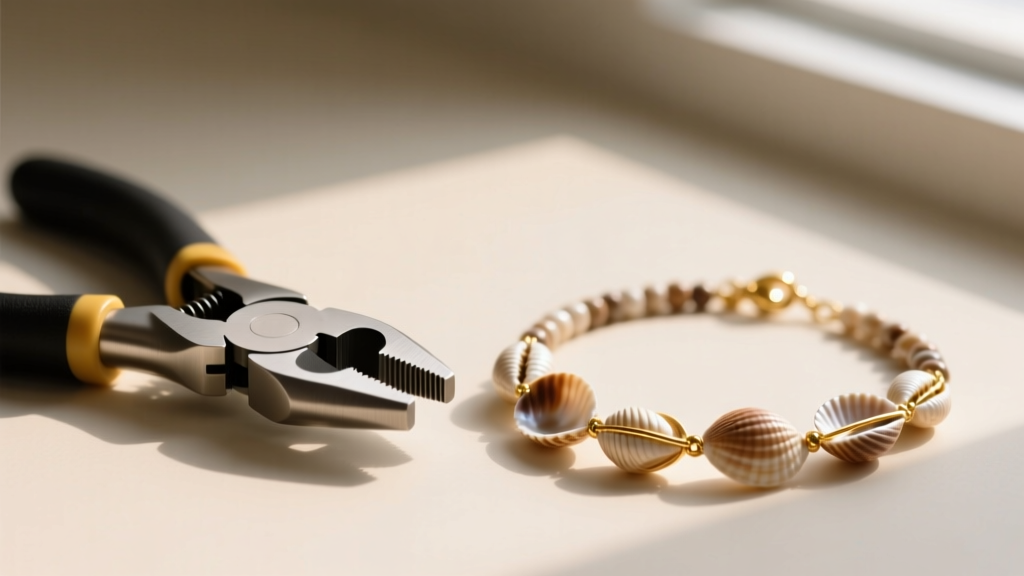
The Financial Breakdown: DIY vs. Retail in 2026
To truly understand the value of a DIY shell necklace, we must compare the cost of raw materials against current retail market prices. The table below illustrates the cost variance between a mass-produced fast-fashion necklace, a high-end artisan piece, and a premium DIY build.
| Category | Materials Used | Estimated Cost | Retail Equivalent |
|---|---|---|---|
| Fast-Fashion Retail | Dyed howlite, brass alloy, nylon thread | $2.50 (Wholesale) | $18.00 - $28.00 |
| Artisan Boutique Retail | Natural Puka, 14k Gold-Filled, Silk | $35.00 (Wholesale) | $120.00 - $180.00 |
| Premium DIY Build | Natural Puka, 14k Gold-Filled, Silk | $22.00 (Retail DIY) | N/A (Personal Value) |
As the data reveals, constructing your own premium necklace yields an immediate equity gain of roughly 80% compared to purchasing an equivalent artisan piece. However, this assumes you have already amortized the cost of your jewelry tools.
Essential Tools: Amortizing Your Initial Investment
You cannot execute professional-grade jewelry assembly with household scissors and standard pliers. The initial tool investment for a DIY shell necklace setup ranges from $35 to $60, but these are one-time costs that depreciate over hundreds of projects.
- Beadsmith 1-Step Crimper ($14.00): Essential for securing metal crimp beads on stainless steel wire. It folds the crimp into a neat, rounded bead rather than leaving a sharp, flattened edge that scratches the skin.
- Flush Cutters ($12.00): Necessary for trimming wire and cord perfectly flush against the crimp or knot, preventing sharp protrusions.
- Knotting Tweezers / Awl ($8.00): If you are knotting silk between MOP beads, an awl is mandatory for tightening the knots within millimeters of the shell.
Pro Tips for Maximizing Long-Term Value
To ensure your DIY shell necklace retains its structural integrity and aesthetic value, implement these professional finishing techniques:
1. Protect the Cord with French Wire
If using silk or nylon, always thread the cord through a 3mm piece of French wire (also known as bullion) before attaching the jump ring. This creates a metal barrier that prevents the clasp from sawing through the organic fibers during daily wear.
2. Seal Porous Shells
Many wild-harvested shells are highly porous and will absorb body oils, sunscreen, and sweat, leading to discoloration. Apply a micro-thin coat of clear, UV-resistant cyanoacrylate adhesive or specialized jewelry sealant to the interior and edges of the shells. This preserves their natural luster and prevents the degradation of the calcium carbonate structure.
3. Use Wire Guardians
When using coated stainless steel wire with lobster clasps, thread the wire through a sterling silver or gold-filled wire guardian (horseshoe) before crimping. This prevents the sharp edge of the jump ring from cutting into the nylon coating of the wire, vastly extending the lifespan of the necklace.


