The Meaning of the Tree of Life Necklace: A Complete Buying Guide
Discover the meaning of the tree of life necklace. Our buying guide covers metals, symbolism, chain styles, and pricing to help you choose the perfect piece.

The Deep-Rooted Meaning of the Tree of Life Necklace
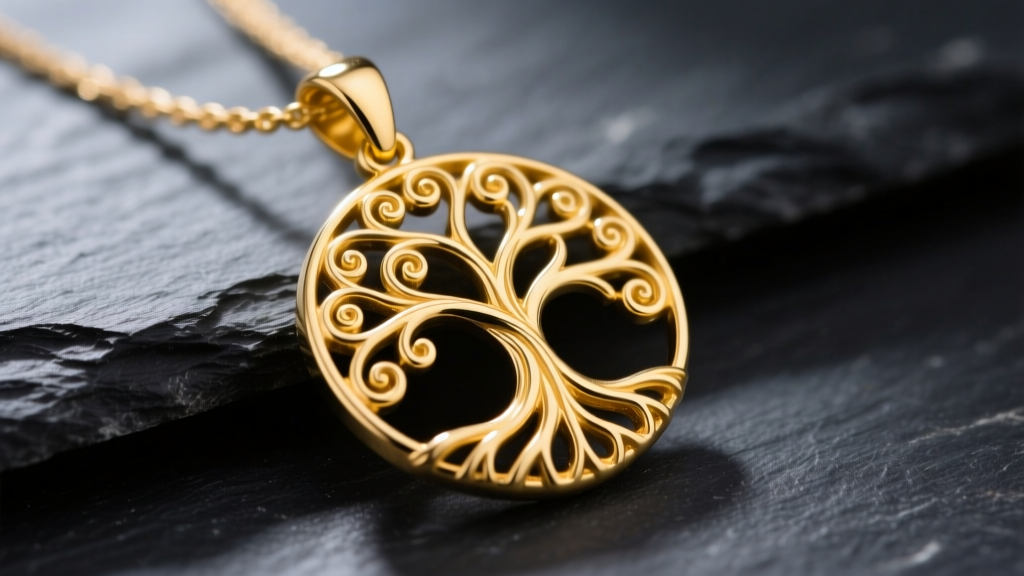
When researching the meaning of the tree of life necklace, buyers often discover a motif that transcends fleeting jewelry trends, rooting itself deeply in ancient global mythologies. The tree of life is not merely a decorative botanical; it is a profound symbol of interconnectedness, ancestry, and spiritual growth. In Norse mythology, it is known as Yggdrasil, the immense cosmic ash tree that connects the Nine Worlds. In Celtic tradition, the Crann Bethadh represents the balance of nature and the bridge between the earthly realm and the divine. According to Britannica, the motif also appears prominently in Kabbalistic teachings, representing the ten emanations through which the Infinite reveals itself.
For the modern jewelry buyer, understanding this rich historical context elevates the purchase from a simple accessory to a meaningful talisman. Whether you are buying a piece to commemorate a family milestone, honor your heritage, or mark a period of personal growth, the tree of life serves as a wearable reminder of resilience and deep roots. However, translating this heavy symbolism into a physical piece of jewelry requires a keen eye for metallurgy, structural integrity, and craftsmanship. This guide will walk you through the exact specifications you need to look for when investing in a high-quality tree of life pendant.
Material Grades & Metal Choices: What to Look For
The intricate, sprawling branches of a tree of life pendant demand specific metallurgical properties. A metal that is too soft will result in bent branches and lost gemstone 'leaves,' while a metal that is too brittle may snap under tension. Here is how to evaluate your metal options based on the Gemological Institute of America (GIA) standards.
Solid 14k vs. 18k Gold
While 18k gold (75% pure gold) offers a richer, warmer yellow hue, it is inherently softer due to the higher gold content. For a tree of life pendant featuring delicate, extended filigree branches, 14k gold (58.5% pure gold) is the superior structural choice. The higher alloy content (mixed with copper, silver, or zinc) provides the tensile strength necessary to prevent the thin branches from warping when caught on clothing. If you prefer the color of 18k gold, ensure the pendant is cast with a thicker gauge at the branch joints.
Sterling Silver and Rhodium Plating
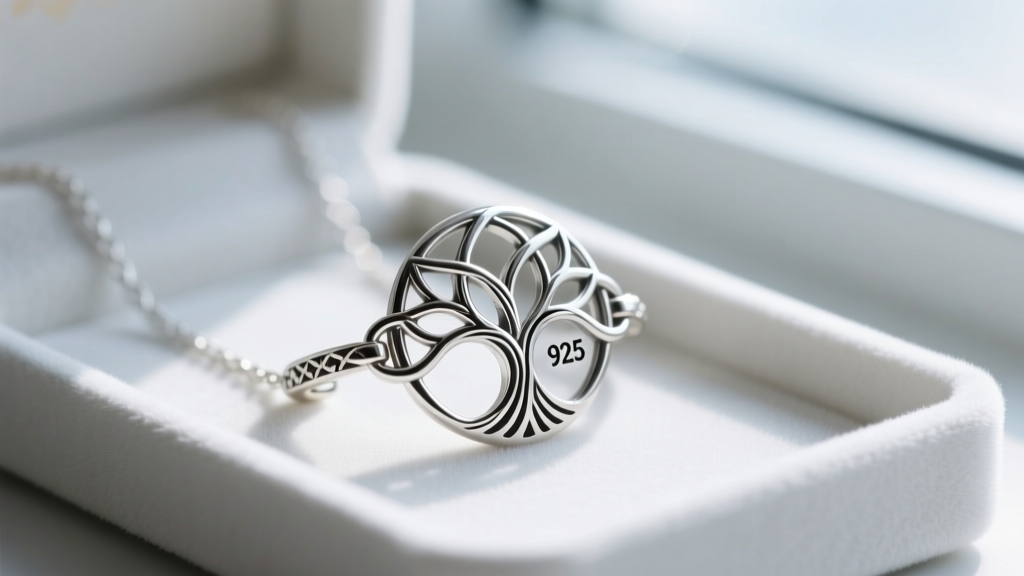
Sterling silver (925) is an excellent, affordable choice, but it is prone to oxidation. When buying silver, look for pieces that feature a rhodium flash plating. Rhodium is a platinum-group metal that provides a brilliant, tarnish-resistant white finish. Be aware that rhodium plating on high-friction areas (like the bail where the chain rubs) will eventually wear off, requiring re-plating every few years.
The Vermeil Standard
If you are considering gold vermeil, you must verify the thickness of the gold layer. By FTC guidelines, true vermeil requires a base of sterling silver plated with at least 2.5 microns of 10k, 14k, or 18k gold. Standard 'gold plated' jewelry often features a mere 0.5 microns of gold over brass, which will wear through to the base metal within months of daily wear.
Evaluating Craftsmanship: Casting vs. Laser-Cutting
The manufacturing method drastically alters the look, feel, and durability of the pendant. You will generally encounter two main construction types in the market:
- Lost-Wax Casting (3D): This traditional method creates a three-dimensional, sculptural pendant. The branches will have rounded edges and a distinct front and back. High-end cast pieces will feature laser-welded joints where the thinnest branches meet the trunk, eliminating the porosity and weak points common in cheaper cast molds.
- Laser-Cut or Die-Struck (2D): These pendants are stamped or cut from a flat sheet of metal. They are lightweight, modern, and sit perfectly flush against the collarbone. When buying a laser-cut piece, run your finger along the edges. The edges should be perfectly smooth and slightly beveled; rough or sharp edges indicate poor finishing that will fray your silk blouses and catch on knitwear.
If the pendant features gemstone 'leaves' or 'fruit' (such as emeralds, sapphires, or diamonds), inspect the settings. Avoid glued-in stones. Look for micro-prong or flush (gypsy) settings, which secure the stones mechanically into the metal branches, ensuring they survive daily wear.
Chain Styles, Lengths, and Neckline Pairing
A tree of life pendant is heavily symbolic, and its visual weight must be balanced by the correct chain. The bail (the loop connecting the pendant to the chain) on these necklaces is often wide to accommodate the top canopy of the tree. Therefore, chains with bulky links or rigid structures may not fit through the bail or will cause the pendant to sit awkwardly.
| Chain Style | Best For | Durability & Bail Compatibility |
|---|---|---|
| Box Chain | Everyday wear, casual necklines | Highly durable, flat links slide easily through wide bails. Resists kinking. |
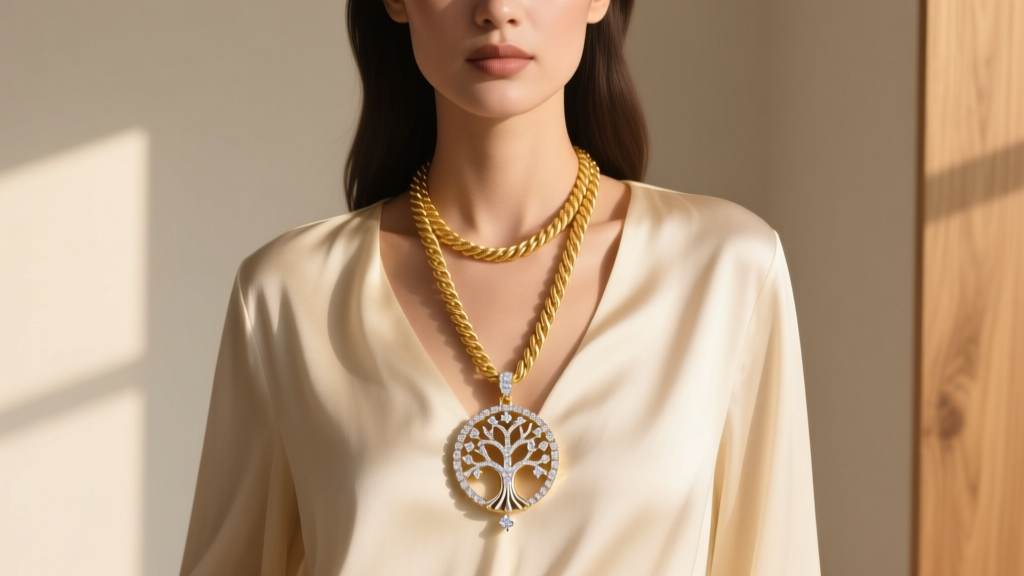
| Rope Chain | Statement pieces, V-neck tops | Excellent tensile strength. The twisted links reflect light, complementing diamond accents. |
| Cable Chain | Delicate, minimalist pendants | Best for lightweight, laser-cut silver trees. Can stretch if the pendant is too heavy. |
| Wheat (Spiga) Chain | Heavy, 3D cast gold pendants | Woven oval links provide immense strength and a luxurious, textured appearance. |
For the most flattering placement, an 18-inch chain is the universal standard, allowing the tree's roots to rest just below the collarbone. If you are layering the necklace, opt for a 16-inch choker length paired with a 20-inch or 22-inch secondary chain featuring a simpler geometric pendant.
Pricing Tiers: What You Should Actually Pay
Navigating the pricing landscape requires an understanding of material costs and labor intensity. Intricate branch work requires significant bench time for polishing and stone-setting. Here is a realistic pricing framework for the current market:
- Fashion & Plated ($30 - $80): Typically brass or copper base metals with thin gold plating and cubic zirconia accents. Expect a lifespan of 1-2 years before tarnishing or plating loss occurs.
- Demi-Fine ($120 - $350): Solid 925 sterling silver, high-quality gold vermeil (2.5+ microns), or solid 10k/14k gold with minimal gemstone accents. This is the sweet spot for everyday durability and meaningful gifting.
- Fine Jewelry ($600 - $2,500+): Solid 14k or 18k gold, hand-soldered 3D branches, and natural, ethically sourced gemstones (e.g., tsavorite garnet leaves, diamond roots). These pieces are heirloom-quality and retain intrinsic metal value.
Care Instructions for Intricate Branches and Gemstone Leaves
The very design that makes the tree of life necklace beautiful—its sprawling, delicate branches and clustered stones—also makes it a magnet for dust, lotions, and skin oils. Proper maintenance is non-negotiable.
Avoid Ultrasonic Cleaners: If your pendant features porous or heavily included gemstones as leaves (such as turquoise, opal, emerald, or lapis lazuli), never place it in an ultrasonic cleaner. The high-frequency vibrations can easily shatter these stones or shake them loose from their micro-prongs.
The Soak and Brush Method: Instead, create a lukewarm bath of water and a few drops of mild, phosphate-free dish soap. Let the pendant soak for 10 minutes to loosen trapped sebum and cosmetics from the branch crevices. Use a soft-bristled baby toothbrush to gently sweep behind the trunk and under the stone settings. Rinse thoroughly under a gentle stream of lukewarm water, ensuring the drain is closed, and pat dry with a lint-free microfiber cloth. Store the necklace flat or hung to prevent the chain from tangling within the pendant's branches.


