Josh Gates Necklace Style: Technical Guide to Explorer Pendants
Analyze the Josh Gates necklace style with our technical deep dive into explorer pendants, chain metallurgy, gauge sizes, and field-ready clasp engineering.


The Anatomy of the Explorer Aesthetic
When viewers tune into Expedition Unknown or Destination Truth, the focus is naturally on the archaeology, the cryptids, and the remote locations. However, from a jewelry design perspective, the Josh Gates necklace style has quietly defined a highly functional, rugged subcategory of men's jewelry: the Explorer Pendant. Unlike high-polish luxury chains designed for boardrooms or red carpets, field-ready jewelry must withstand high humidity, abrasive dust, extreme temperature fluctuations, and physical snags. As we move through 2026, the demand for 'functional field jewelry' has pushed manufacturers to adopt aerospace-grade titanium, CNC-machined 316L steel, and intentional oxidation techniques. This expert deep dive breaks down the exact metallurgy, chain engineering, and clasp mechanics required to replicate and understand this rugged aesthetic.
Metallurgy of the Field: 316L vs. Oxidized 925
The core of any expedition-style necklace lies in its material science. Standard yellow gold or high-polish platinum are entirely unsuited for fieldwork due to their low scratch resistance and high replacement cost. Instead, the explorer aesthetic relies on two primary alloys:
316L Surgical Stainless Steel
Often referred to as marine-grade steel, 316L contains molybdenum, which drastically increases its resistance to pitting and crevice corrosion in chloride-rich environments (like sweat or ocean spray). According to materials science documentation on 316L, this alloy boasts a Vickers hardness (HV) of approximately 150-190, making it highly resistant to the micro-abrasions caused by sand and rock dust. It is the premier choice for heavy-duty chain links and machined compass housings.
Oxidized Sterling Silver (925)
While pure silver is too soft for field gear, 925 sterling silver (92.5% silver, 7.5% copper) offers a work-hardened HV of up to 140. However, the copper content makes it highly susceptible to sulfur-induced tarnish, particularly in jungle environments or volcanic geothermal zones. Rather than fighting this, the Josh Gates necklace style embraces it through intentional oxidation. Using liver of sulfur (potassium polysulfide), jewelers force a blackened patina into the recesses of artifact-replica pendants, highlighting the topography of the casting while providing a matte, non-reflective finish that won't catch the sun in the field. For a deeper understanding of silver alloy behaviors, the Gemological Institute of America (GIA) provides extensive data on silver tarnishing and alloy composition.
Chain Weave and Tensile Strength
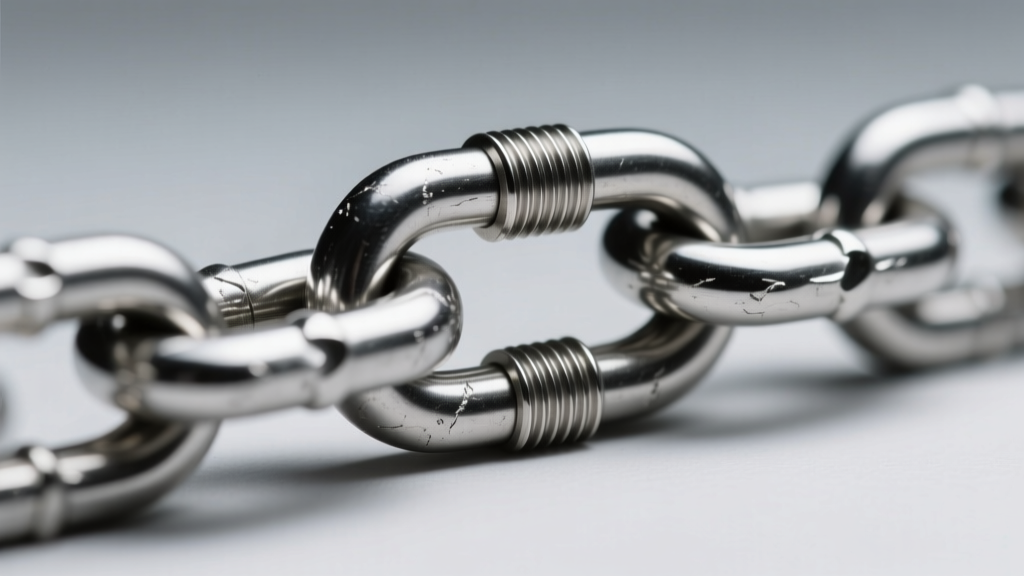
A pendant is only as secure as the chain holding it. In the field, a necklace is likely to be snagged on equipment, brush, or rock faces. Therefore, the structural integrity of the chain weave is paramount. The explorer aesthetic heavily favors chains with high lateral stability and thick gauge profiles (typically 4mm to 7mm).
The Mariner (Anchor) Chain
The Mariner chain, characterized by its oval links and central stabilizing bar, is the gold standard for expedition jewelry. The center bar distributes tensile load evenly across the link, preventing the metal from collapsing inward under lateral stress. A 5mm solid 316L Mariner chain can withstand upwards of 180 lbs of tensile force before permanent link deformation occurs.
The Rope Chain
While visually striking and highly reflective, traditional rope chains are composed of dozens of tiny, intertwined links. In dusty or muddy environments, these micro-crevices trap abrasive particulates, acting like sandpaper against the metal and accelerating wear at the solder points. For true field use, rope chains should be avoided in favor of Curb, Mariner, or solid Box chains.
Clasp Engineering: Surviving the Elements
The most common point of failure in any necklace is the clasp. Standard spring-ring clasps and lightweight lobster clasps rely on tiny internal brass springs that rapidly corrode when exposed to acidic sweat and high humidity. To achieve the technical reliability seen in high-end explorer gear, alternative locking mechanisms are required.
| Clasp Type | Material | Field Durability | Failure Mode |
|---|---|---|---|
| Standard Lobster | 925 Silver / Brass Spring | Low | Internal spring corrosion; accidental snags. |
| Screw-Barrel | Solid 316L Steel | Extreme | Thread stripping (rare); requires two hands. |
| Magnetic Lock | Neodymium Core / Steel Shell | High | Lateral shear force detachment. |
| Heavy Toggle | Cast Bronze or Steel | Medium | Bar slipping through ring during dynamic movement. |
The screw-barrel clasp is the undisputed champion for expedition necklaces. By utilizing precision-machined internal threads rather than a tension spring, it is entirely immune to moisture and sweat corrosion. Manufacturing resources like Rio Grande frequently supply these specialized threaded findings for heavy-gauge chain assemblies.
Pendant Bail and Artifact Mounting
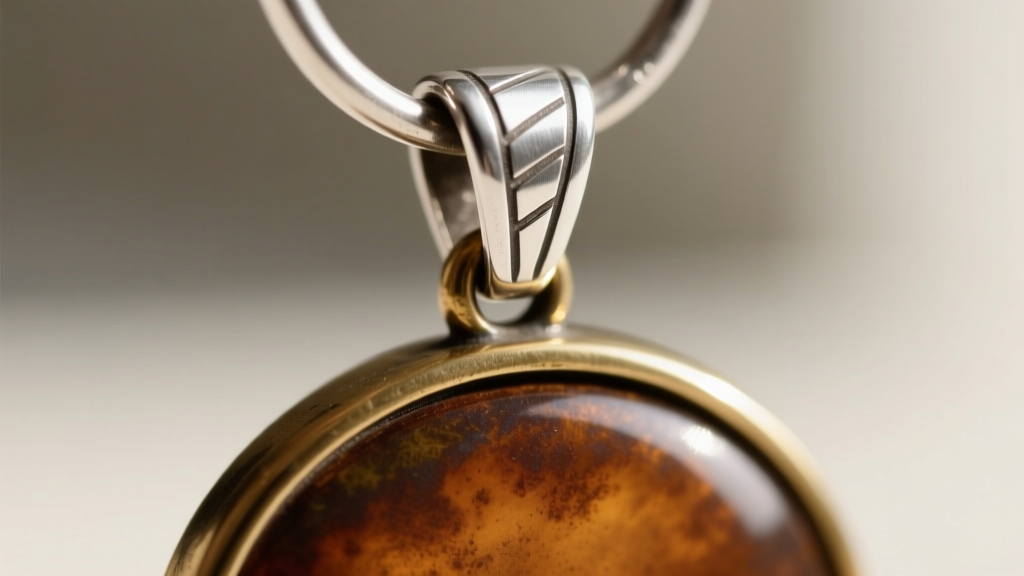
Many necklaces in the 'explorer' category feature irregularly shaped pendants, such as replica artifacts, vintage compasses, or custom-cast topographical maps. Attaching these to a heavy 5mm chain requires specialized bail engineering.
Soldering Grades and Structural Integrity
Adhesives like cyanoacrylate or two-part epoxies will inevitably fail under the thermal expansion and contraction cycles experienced in desert or alpine environments. Professional jewelers use hard-grade silver solder (melting point ~1450°F / 788°C) to fuse a heavy sterling silver or steel bail directly to the pendant's mounting loop. This creates a metallurgical bond that is as strong as the parent metal itself. When designing an explorer pendant, the bail's inner diameter must be at least 1.5x the width of the chain to allow for fluid articulation, preventing the chain from kinking and snapping under tension.
Sizing and Layering for Field Gear
The final technical consideration is drop length. A standard 18-inch chain sits at the collarbone, which is ideal for dress shirts but entirely impractical for field gear. The Josh Gates necklace style typically utilizes a 22-inch to 24-inch drop. This specific length allows the pendant to rest comfortably over heavy henleys, flannel shirts, or lightweight field jackets without the chain pulling tightly against the trapezius muscles during dynamic movement. Furthermore, a 24-inch drop keeps the pendant in the 'mid-sternum' zone, allowing it to be easily tucked beneath an outer shell when navigating dense brush or crawling through tight subterranean spaces, yet easily pulled out for inspection or aesthetic display.
Conclusion
The rugged jewelry aesthetic popularized by television explorers is not merely a fashion choice; it is a masterclass in functional design. By prioritizing the corrosion resistance of 316L steel, the intentional patina of oxidized silver, the tensile stability of Mariner weaves, and the fail-safe engineering of screw-barrel clasps, the modern explorer necklace bridges the gap between horological-level tool gear and personal adornment. Whether you are navigating a remote jungle or simply navigating the urban concrete, understanding these technical specifications ensures your jewelry is built to survive the expedition.


