Cat Moon Necklace Troubleshooting: Tarnish, Flipping & Repairs
Is your cat moon necklace tarnishing or flipping? Discover expert troubleshooting tips, metal grading guides, and repair solutions for celestial pendants.

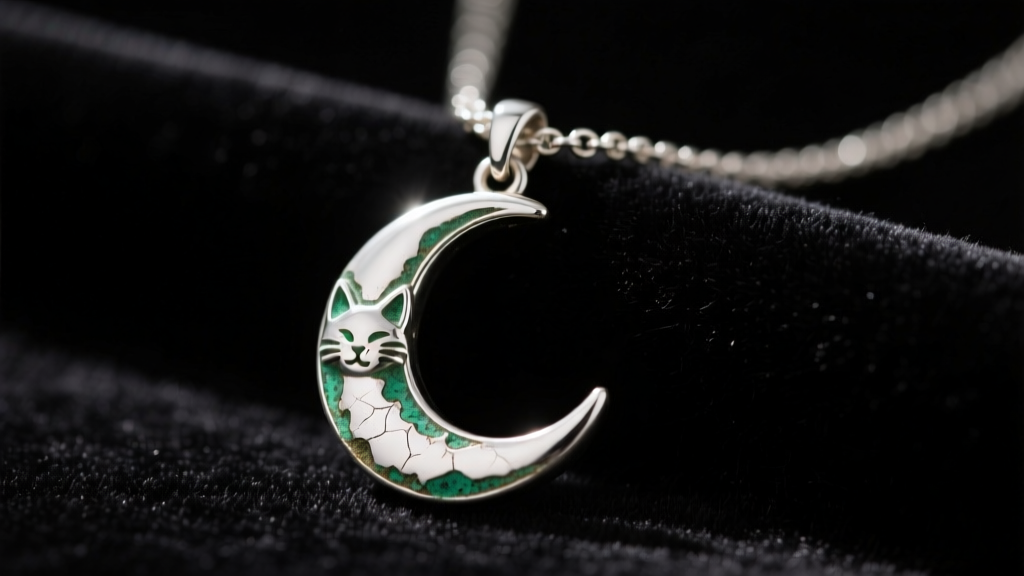
The celestial jewelry trend has firmly cemented the cat moon necklace as a staple in boho, gothic, and everyday minimalist wardrobes. Featuring a feline silhouette intertwined with a crescent moon, this design is visually striking but notoriously difficult to manufacture correctly. Because the market is flooded with mass-produced, fast-fashion versions, jewelry enthusiasts frequently encounter a host of structural and chemical failures. From pendants that refuse to lay flat to base metals that turn the skin green, owning a cat moon necklace often requires a bit of mechanical troubleshooting.
As a jewelry specialist, I see these specific celestial pendants returned for repair more than almost any other novelty design. The unique geometry of the cat’s ears and the moon’s points creates distinct center-of-gravity issues, while the intricate recessed areas trap moisture and accelerate tarnish. In this comprehensive troubleshooting guide, we will diagnose the most common failures of the cat moon necklace and provide actionable, professional-grade solutions to fix, maintain, and correctly purchase these pieces.
The Anatomy of a Cat Moon Necklace Failure
Before attempting repairs, it is crucial to understand why this specific pendant shape is so prone to damage. The issues generally fall into three categories: kinetic imbalance, metallurgical degradation, and enamel delamination.
- Kinetic Imbalance (The Flip): The asymmetric weight distribution caused by the cat’s tail or ears often shifts the center of mass away from the bail (the loop that holds the chain). This causes the pendant to continuously flip upside down against the chest.
- Metallurgical Degradation: Many affordable cat moon necklaces are cast from Zamak (a zinc alloy) and plated with a microscopic layer of silver or gold. Once the plating wears off at high-friction points, the underlying copper and nickel react with skin pH, causing severe tarnish and contact dermatitis.
- Enamel Delamination: To achieve the deep blacks and midnight blues of the night sky, manufacturers use cold enamel (epoxy resin). Over time, temperature fluctuations cause the metal to expand and contract at a different rate than the resin, leading to cracking and chipping.
Troubleshooting Pendant Flipping & Balance Issues
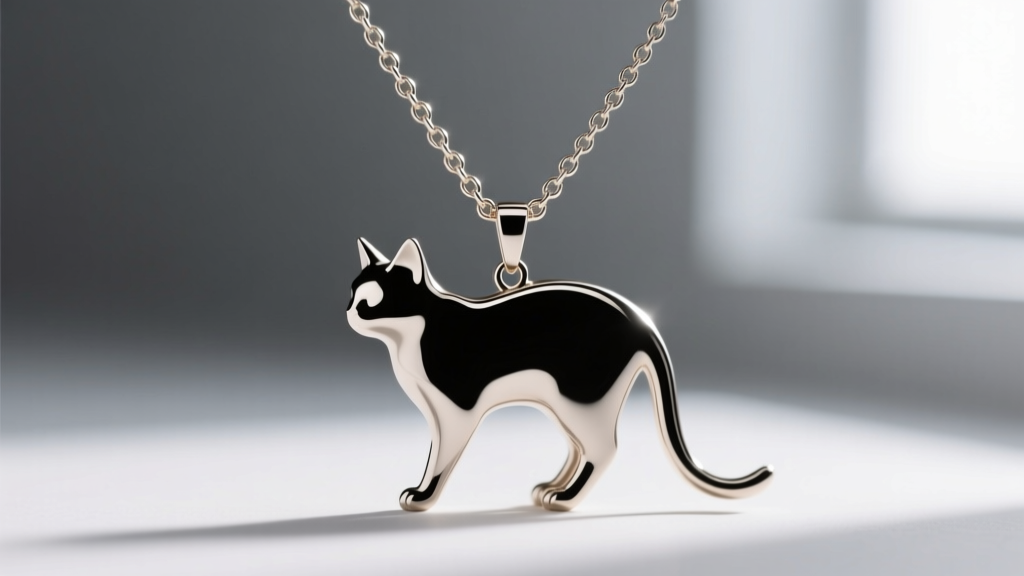
Nothing is more frustrating than a pendant that refuses to show its design. If your cat moon necklace constantly flips backward, the issue lies in the bail placement relative to the pendant's vertical axis. Standard loop bails soldered to the very top of the moon's arch act as a pendulum pivot. If the cat silhouette is slightly heavier on the bottom right (where the tail usually curls), gravity will force the pendant to rotate until the heaviest point rests at the bottom, often twisting the chain in the process.
Solution 1: Upgrade to a V-Bail or Pinch Bail
Take your necklace to a local jeweler and ask them to remove the standard loop bail and install a V-bail or a glue-on pinch bail. A pinch bail grips the pendant at two wider points rather than a single top pivot, drastically widening the center of gravity and preventing rotation. This repair typically costs between $15 and $35, depending on the metal.
Solution 2: The Tungsten Counterweight Method
For solid sterling silver or gold pieces where you don't want to alter the bail, a jeweler can laser-weld a microscopic tungsten bead (weighing roughly 0.2 grams) to the back of the pendant's lighter hemisphere. This artificially re-centers the mass, forcing the pendant to lay flush against the sternum.
Solution 3: Chain Weight Adjustment
Sometimes, the chain is too light to hold the bail in place. Upgrading from a standard 0.8mm cable chain to a heavier 1.5mm box chain or 1.2mm wheat chain provides enough downward tension to keep the bail anchored, reducing the flipping effect by up to 80%.
Metallurgy & Tarnish: Why Your Neck Turns Green
The dreaded "green neck" is a chemical reaction, not an infection. When the copper content in a base metal alloy mixes with the oxygen, sweat, and lotions on your skin, it creates copper chelates—green salts that stain the epidermis. According to metallurgical guidelines from Halstead Bead, the rate of tarnish is directly tied to the alloy's composition and the thickness of its protective plating.
| Metal Grade | Composition Details | Average Price Range | Tarnish Resistance & Lifespan |
|---|---|---|---|
| Zamak (Zinc Alloy) | Zinc, Aluminum, Magnesium, Copper. Usually flash-plated. | $8 - $20 | Poor. Plating wears in 3-6 months. High risk of skin discoloration. |
| Brass Base | Copper and Zinc. Heavier feel, often gold-plated. | $15 - $40 | Moderate. Will tarnish green once the gold plating breaches. |
| 925 Sterling Silver | 92.5% Silver, 7.5% Copper. Solid throughout. | $45 - $120 | Excellent. Will oxidize black over time but is easily polished. No green skin. |
| Grade 23 Titanium | Titanium, Aluminum, Vanadium. Hypoallergenic. | $60 - $150 | Superior. Zero tarnish, zero skin reaction. Cannot be easily resized or soldered. |
How to Seal a Tarnishing Base Metal Pendant
If you already own a Zamak or brass cat moon necklace and want to prevent skin discoloration, you must create a physical barrier between the metal and your skin. While some suggest clear nail polish, this yellows and peels within weeks. Instead, use a specialized jewelry coating like Everbrite ProtectaClear. Apply two thin coats with a foam brush, allowing 24 hours of curing time between layers. This creates a durable, skin-safe polyurethane barrier that lasts up to two years with daily wear.
Repairing Chipped Enamel and Broken Bails
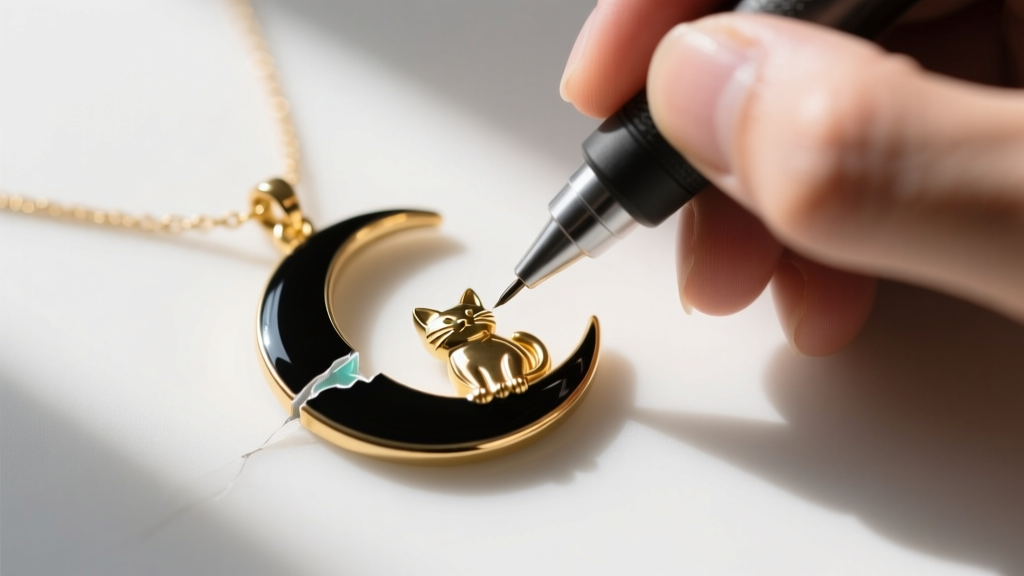
The recessed enamel detailing that gives the cat moon necklace its depth is highly susceptible to impact damage. Dropping the pendant on a hard surface will almost always result in a micro-fracture in the cold enamel. Fortunately, you do not need to send the piece back to the manufacturer for a costly replacement.
Step-by-Step UV Resin Enamel Repair
- Clean the Area: Use a cotton swab dipped in 99% isopropyl alcohol to remove all skin oils and debris from the chipped cavity. Let it dry completely.
- Apply Pigmented UV Resin: Purchase a jewelry-grade UV resin in a matching color (usually opaque black or deep navy). Using a precision needle-tip applicator, carefully fill the chip. Do not overfill; the resin will self-level.
- Cure the Resin: Expose the pendant to a 365nm UV LED lamp for exactly 60 to 90 seconds. (Note: Standard nail lamps often operate at 395nm and may leave the resin slightly tacky; a dedicated 365nm jewelry lamp is required for a glass-like finish).
- Buff and Polish: If the resin sits slightly proud of the metal bezel, gently buff it flush using a 3000-grit micro-mesh pad, followed by a jeweler's rouge cloth.
Fixing a Snapped Jump Ring
The jump ring connecting the pendant to the chain is typically 20-gauge (0.8mm thick) with a 4mm outer diameter. Because the cat moon pendant is often heavy, the tension of the chain can pull the jump ring open. If your pendant has fallen off, do not simply squeeze the split ring back together with pliers; it will pull open again. Take it to a jeweler to have the jump ring laser welded shut, or ask them to upgrade it to a soldered closed jump ring or a seamless O-ring. As noted by the repair specialists at Calla Gold Jewelry, laser welding provides a permanent seal without the risk of melting the delicate enamel details nearby.
The 2026 Buyer’s Checklist for Celestial Pendants
"The longevity of a novelty pendant is entirely dictated by its bail construction and chain pairing. A beautiful design ruined by a weak connection point is a poor investment." — Master Bench Jeweler
If you are in the market for a new cat moon necklace, avoid the troubleshooting phase entirely by vetting the piece against this professional checklist before purchasing:
- Inspect the Bail Interior: Look closely at the hole where the chain passes through. If the metal is sharp or unfinished, it will act like a saw, eventually cutting through your chain links. High-quality pieces feature a polished, rounded bail interior.
- Check the Ear Clearance: If the cat's ears point sharply upward, ensure they do not sit flush against the bail. There must be at least a 2mm gap, otherwise, the ears will constantly snag on the chain links, causing the necklace to tangle and knot behind your neck.
- Verify the Metal Stamp: Look for a "925", "14K", or "Ti" stamp on the back of the pendant or the clasp. If the piece is stamped "Tibetan Silver" or "Alpaca," be aware that these are nickel-heavy base metals that contain zero actual silver and are highly likely to cause allergic contact dermatitis.
- Opt for Vitreous Enamel: If your budget allows (typically $150+), seek out artisans who use kiln-fired vitreous enamel rather than cold epoxy. Vitreous enamel is essentially fused glass; it will never yellow, peel, or scratch under normal wear conditions.
By understanding the mechanical and chemical vulnerabilities of the cat moon necklace, you can transition from frustrated consumer to informed collector. Whether you are applying a protective polyurethane coating to a beloved fast-fashion find, or upgrading the bail on a solid sterling silver heirloom, these troubleshooting techniques will ensure your celestial jewelry remains perfectly balanced and brilliantly untarnished for years to come.


