Zuni Sunface Necklace Care: Cleaning & Maintenance Guide
Learn expert care, cleaning, and storage tips for your Zuni sunface necklace. Protect delicate turquoise, coral, and silver inlay from damage.

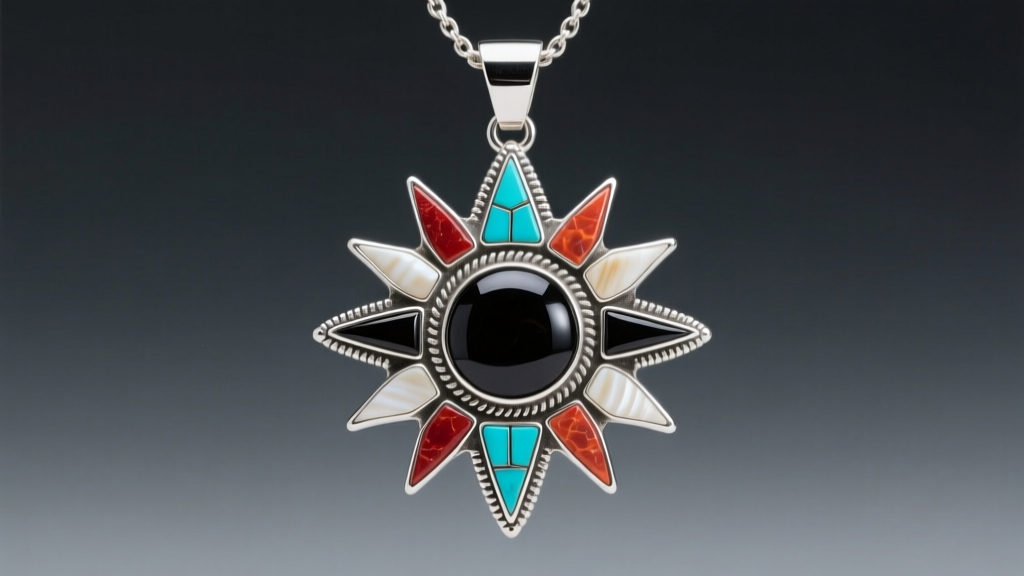
The Anatomy and Fragility of Zuni Inlay
The Zuni sunface is a profound motif in Native American jewelry, representing the Sun Father, the balance of nature, and the agricultural cycles vital to the Zuni people. When crafted into a Zuni sunface necklace, this symbol is typically brought to life through meticulous channel or mosaic inlay work. Artisans cut and shape tiny, precise pieces of sterling silver, turquoise, red coral, jet, and mother-of-pearl or shell, fitting them together like a microscopic jigsaw puzzle.
While visually stunning, this specific combination of materials creates a unique set of maintenance challenges. You are not just caring for a single gemstone; you are managing a composite of organic and inorganic materials held together by jeweler's epoxy and framed by oxidizable silver. According to the National Museum of the American Indian, improper cleaning is the leading cause of degradation in vintage and contemporary Native American inlay jewelry. Understanding the chemical and physical properties of each component is the first step in preserving your necklace for generations.
The Golden Rules: What NEVER to Do
Before discussing how to clean your Zuni sunface necklace, it is critical to understand what will permanently ruin it. The intersection of porous stones, organic gems, and adhesive chemistry means that standard jewelry cleaning methods are highly destructive here.
- Never use ultrasonic cleaners: The high-frequency vibrations will shatter the brittle jet and coral, while the heat generated in the water bath will soften the jeweler's epoxy, causing the inlay stones to pop out of their silver channels.
- Never use liquid silver dips: Commercial silver dips contain thiourea, a toxic chemical that strips tarnish instantly. However, it will also strip the natural polish from porous turquoise and leave a chalky, irreversible white residue trapped in the microscopic crevices of the coral and shell.
- Never submerge the necklace in water: Water seeps beneath the inlay stones. Over time, this trapped moisture oxidizes the silver backing and degrades the adhesive bond. Furthermore, turquoise is highly porous and will absorb water, oils, and soaps, leading to permanent discoloration.
- Never use steam cleaners: Thermal shock will crack the mother-of-pearl and melt the adhesive holding the sunface mosaic together.
Step-by-Step Dry Cleaning Method
Because moisture is the enemy of Zuni inlay, your primary cleaning method should always be dry. Dust, dead skin cells, and cosmetic powders can build up in the tiny seams between the stones, dulling the vibrant contrast of the sunface design.
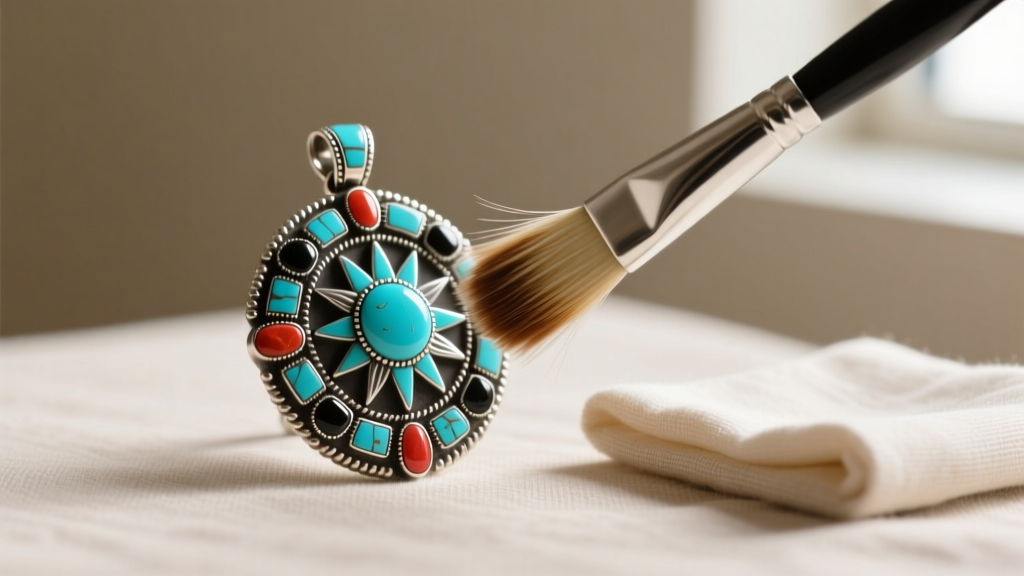
- Prepare your workspace: Lay down a soft, lint-free microfiber towel on a flat surface to prevent damage if the necklace is dropped.
- Brush away debris: Using a clean, soft horsehair jewelry brush, gently sweep across the surface of the pendant. Pay special attention to the seams where the turquoise meets the coral and jet. The horsehair is soft enough not to scratch the stones but stiff enough to dislodge trapped dust.
- Wipe the non-porous stones: For the mother-of-pearl and shell sections of the sunface, you can use a completely dry, untreated microfiber cloth to gently buff away fingerprint oils. Do not apply pressure to the edges where the shell meets the silver bezel.
Safe Polishing Techniques for Sterling Silver Settings
The sterling silver (925 silver) channels and bezels that frame the Zuni sunface will naturally tarnish over time due to exposure to hydrogen sulfide in the air. While a dark patina can add vintage character, many collectors prefer the bright shine of polished silver. The challenge is polishing the silver without scratching the adjacent soft stones or introducing chemicals to the porous gems.
Use a high-quality, treated silver polishing cloth (such as a Sunshine Cloth). Fold the cloth so you are using a small, precise corner. Gently rub only the exposed silver channels and the outer bezels. Avoid dragging the treated cloth across the turquoise, coral, or jet. The mild abrasives and anti-tarnish chemicals embedded in these cloths can cause micro-scratches on the softer organic gems and leave a filmy residue on the turquoise. If you accidentally get polishing compound in the seams, use your dry horsehair brush to flick it out immediately.
Zuni Inlay Material Vulnerability Chart
To understand why specific care is required, reference this hardness and vulnerability chart based on the Mohs scale of mineral hardness and gemological data provided by the Gemological Institute of America (GIA).
| Material | Mohs Hardness | Primary Vulnerabilities | Care Directive |
|---|---|---|---|
| Sterling Silver | 2.5 - 3.0 | Tarnish, scratching, chemical corrosion | Polish with treated cloth; store with anti-tarnish strips |
| Turquoise | 5.0 - 6.0 | Oils, lotions, water, heat, chemicals | Keep completely dry; apply cosmetics before wearing |
| Red Coral | 3.0 - 4.0 | Acids (even skin acidity), heat, scratches | Wipe with dry cloth; avoid wearing during heavy sweating |
| Jet | 2.5 - 4.0 | Thermal shock, impact, abrasion | Store separately; never use ultrasonic or steam |
| Mother-of-Pearl | 2.5 - 4.5 | Acids, harsh chemicals, prolonged sunlight | Dry buff only; keep out of direct UV display light |
Proper Storage to Prevent Adhesive Failure and Tarnish
How you store your Zuni sunface necklace when it is not being worn is just as important as how you clean it. Improper storage leads to two major issues: accelerated silver tarnish and physical damage to the inlay.
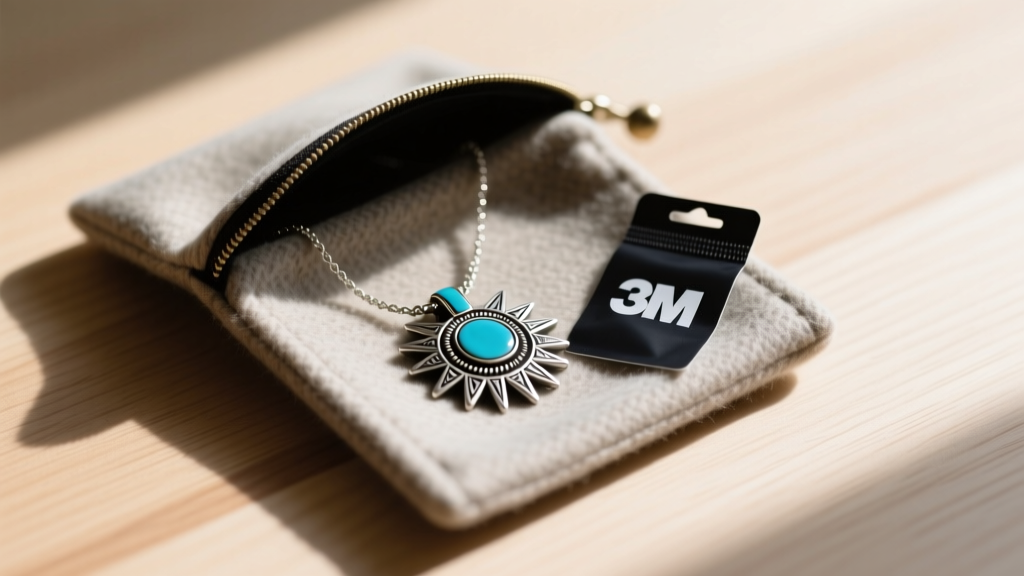
Never toss your necklace into a communal jewelry box. The sterling silver can easily be scratched by harder gemstones like diamonds, sapphires, or quartz found in other pieces. More importantly, if a harder stone rests against the coral or jet of your sunface pendant, it will gouge the soft material. Always store the necklace in its own soft, anti-tarnish flannel pouch.
To combat silver tarnish at the source, place a 3M anti-tarnish strip inside the pouch or storage box. These strips absorb the airborne sulfur compounds that cause silver to oxidize, significantly reducing the need for polishing. Store the pouch in a cool, dry place with stable humidity. Fluctuating temperatures and high humidity can cause the silver channels to expand and contract microscopically, which over decades can weaken the epoxy bond holding the inlay stones in place.
When to Seek Professional Restoration
Even with meticulous care, vintage Zuni sunface necklaces may occasionally lose a stone. The adhesives used decades ago, or even modern epoxies, can become brittle over 30 to 50 years. If a piece of turquoise or coral pops out, do not attempt to glue it back in yourself using household adhesives.
Expert Warning: Never use cyanoacrylate (Super Glue) on Native American inlay. It cures with a cloudy white haze, ruins the porosity of turquoise, and creates a brittle bond that will eventually lift the silver channel. Professional jewelers use specific, slow-curing jeweler's epoxies like Epoxy 330, which remain slightly flexible and dry clear.
If a stone is lost or the silver bezel is lifted, take the necklace to a jeweler who specializes in Native American jewelry or antique restoration. They have the proper lapidary tools to recut a replacement stone that perfectly matches the original channel dimensions and the correct adhesives to ensure the sunface motif remains intact for the next generation.
By respecting the unique material science behind your Zuni sunface necklace and adhering to these strict, dry-cleaning protocols, you preserve not just a beautiful piece of sterling silver and stone, but a vital piece of cultural artistry and heritage.


