How to Clean and Maintain a Celtic Triskelion Necklace
Learn expert techniques to clean, polish, and maintain your triskelion necklace without damaging intricate Celtic spirals or oxidized finishes.

The Unique Challenges of Triskelion Jewelry
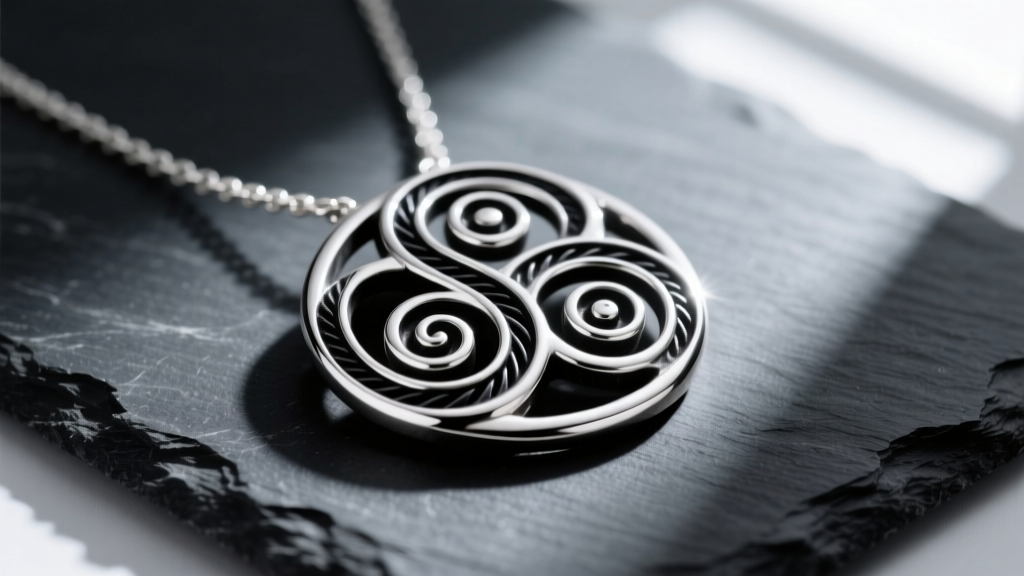
The triskelion—a motif consisting of three interlocked spirals—is one of the most recognizable symbols in Celtic art. When translated into fine jewelry, this ancient geometry presents a very modern metallurgical challenge. A standard triskelion necklace features deep, recessed grooves and tight inner radii that act as magnets for sebum (skin oils), dead epidermal cells, cosmetic residues, and environmental pollutants. Unlike a smooth cabochon pendant or a simple band, the intricate topography of a triskelion requires a highly targeted approach to cleaning. If you use the wrong tools, you risk packing abrasive grit deeper into the spirals or stripping away the intentional antiquing that gives the piece its three-dimensional contrast.
In this comprehensive 2026 care guide, we break down the exact chemical and mechanical protocols required to maintain your triskelion necklace, whether it is forged from 925 sterling silver, solid bronze, or Britannia pewter. By understanding the specific failure modes of Celtic jewelry, you can preserve both the structural integrity and the historical aesthetic of your piece for decades.
Material Identification: Know Your Metal
Before applying any cleaning solution, you must accurately identify the base metal of your triskelion pendant and its chain. The Gemological Institute of America (GIA) emphasizes that misidentifying a metal alloy is the leading cause of irreversible damage in at-home jewelry care.
Sterling Silver and Intentional Oxidation
Most high-quality silver triskelion necklaces are stamped '925', indicating 92.5% pure silver and 7.5% copper alloy. To make the three spirals visually pop, jewelers typically treat the recessed areas with liver of sulfur (potassium polysulfide) to create a dark, intentional patina (silver sulfide). The raised edges are then polished bright. Your primary goal when cleaning this type of triskelion necklace is to remove surface grime without stripping the dark oxidation from the crevices.
Bronze and Brass Alloys
Bronze triskelions (an alloy of copper and tin) are prized for their warm, earthy tones and historical authenticity. However, bronze is highly susceptible to 'bronze disease'—a destructive cycle of corrosion caused by cuprous chlorides reacting with ambient moisture. If you see powdery, pale green spots in the spirals of your bronze pendant, it is not standard patina; it is an active chemical infection that requires immediate stabilization, usually with a benzotriazole (BTA) solution, rather than simple polishing.
Pewter and Britannia Metal
More affordable triskelion necklaces are often cast in pewter. Modern pewter is lead-free and consists primarily of tin, with small amounts of antimony and copper. Pewter is exceptionally soft (ranking around 1.5 on the Mohs scale). Using stiff bristles or abrasive polishing pastes will permanently scratch the surface and round off the sharp, defined edges of the Celtic spirals.
The 'Never' List: Fatal Cleaning Mistakes
To protect the delicate relief work of your triskelion necklace, you must absolutely avoid the following common cleaning methods:
- Chemical Silver Dips (e.g., Tarn-X): These products rely on thiourea and sulfuric acid to instantly strip tarnish. They will completely obliterate the intentional liver-of-sulfur oxidation in your triskelion's crevices in seconds, leaving the piece flat, bright white, and visually lifeless.
- Ultrasonic Cleaners (for certain pieces): While a 40kHz ultrasonic cleaner is excellent for plain diamond solitaires, the high-frequency cavitation can shake loose epoxy-set gemstone inlays (like Connemara marble or turquoise) often found in Celtic jewelry. It can also cause micro-fractures in porous stones.
- Baking Soda and Aluminum Foil Baths: The ion-exchange reaction that removes silver sulfide is non-selective. It will pull the dark antiquing right out of the triskelion's deepest grooves, ruining the designer's intended contrast.
- Toothpaste: Most commercial toothpastes contain hydrated silica, an abrasive that will leave micro-scratches across the polished high-points of your silver or bronze pendant.
The Expert Step-by-Step Cleaning Protocol
For a standard 925 sterling silver triskelion necklace with intentional oxidation, follow this Silver Institute-approved methodology to safely lift dirt without compromising the patina.
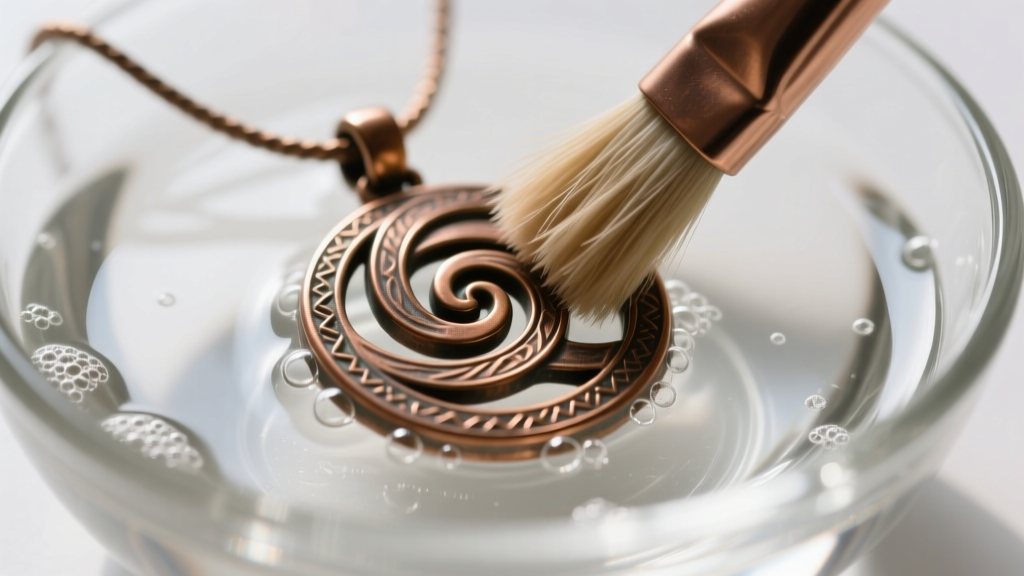
- Prepare a Mild Surfactant Bath: Mix three drops of pH-neutral, phosphate-free dish soap (like Dawn Free & Clear) into a bowl of lukewarm distilled water. Avoid hard tap water, as dissolved calcium and magnesium can leave microscopic mineral deposits in the tight spirals.
- Soak Briefly: Submerge the triskelion pendant and chain for exactly 3 to 5 minutes. This softens hardened sebum and cosmetic buildup without requiring aggressive mechanical force.
- Agitate with Precision: Using an extra-soft baby toothbrush or a specialized jewelry detailing brush, gently sweep the bristles along the curve of the spirals, not across them. This prevents bending the delicate inner walls of the casting.
- The Rinse: Rinse the necklace under a gentle stream of lukewarm distilled water. Ensure all surfactant is flushed from the bail (the loop connecting the pendant to the chain).
- Targeted Drying: Pat the high-polished areas dry with a lint-free microfiber cloth. To remove trapped water from the deep crevices, use a hair dryer on the 'cool' setting or a can of compressed air. Allowing water to air-dry in the grooves will result in stubborn water spots.
- Selective Polishing: Wrap a treated silver polishing cloth tightly around your index finger. Gently glide it only over the raised edges of the triskelion. Do not force the cloth into the recessed grooves, as the mild abrasives in the cloth will slowly wear away the dark antiquing over time.
Caring for Gemstone Inlays
Many premium triskelion necklaces feature inlays of Connemara marble, amber, or turquoise to add color and regional authenticity. These materials are highly porous and chemically sensitive. Amber, for instance, is an organic resin that can become cloudy and brittle if exposed to alcohols, ammonia, or prolonged soaking. If your triskelion contains gemstone inlays, bypass the soaking step entirely. Instead, lightly dampen a cotton swab with distilled water and a drop of mild soap, carefully trace the metal borders around the stone, and immediately dry with a separate, dry swab.
Chain Maintenance and Bail Inspection
A triskelion pendant is typically suspended from a rope chain, box chain, or wheat chain. Rope chains, while visually complementary to Celtic designs, are notorious for trapping dead skin cells and lotion between their interlocking twists. To clean a rope chain, lay it flat on a microfiber towel, apply a small amount of silver polishing foam, and gently work it into the links using your fingertips. Rinse thoroughly and dry completely.
Equally important is the bail. The constant friction between the chain and the bail's inner loop causes gradual metal wear. Once a month, inspect the top of the triskelion's bail with a jeweler's loupe (10x magnification). If you notice the metal thinning or the jump ring separating, take the necklace to a professional jeweler for a micro-weld or bail replacement before the pendant is lost.
Troubleshooting Common Triskelion Issues
Use the following diagnostic table to address specific problems you may encounter with your Celtic jewelry:
| Issue | Likely Cause | Expert Solution |
|---|---|---|
| Pendant looks flat and bright white | Intentional oxidation was stripped by chemical dips or aggressive polishing. | Take to a jeweler to have the recessed areas re-blackened using a controlled liver of sulfur or rhodium plating process. |
| Powdery green spots in bronze crevices | Bronze disease (active cuprous chloride corrosion) triggered by high humidity. | Isolate the piece. Apply a 3% benzotriazole (BTA) solution in ethanol to stabilize the chlorides, then seal with microcrystalline wax. |
| Chain feels stiff and kinks easily | Sebum and lotion buildup acting as an adhesive between the chain links. | Soak the chain (not the pendant) in a warm solution of ammonia-free jewelry cleaner for 10 minutes, agitate, and rinse. |
| Dark tarnish returning within days | High sulfur environment or residual polishing compound left in the grooves. | Ensure all cleaning agents are fully flushed out. Store with activated charcoal or 3M anti-tarnish strips to absorb ambient sulfur gases. |
Long-Term Storage Best Practices
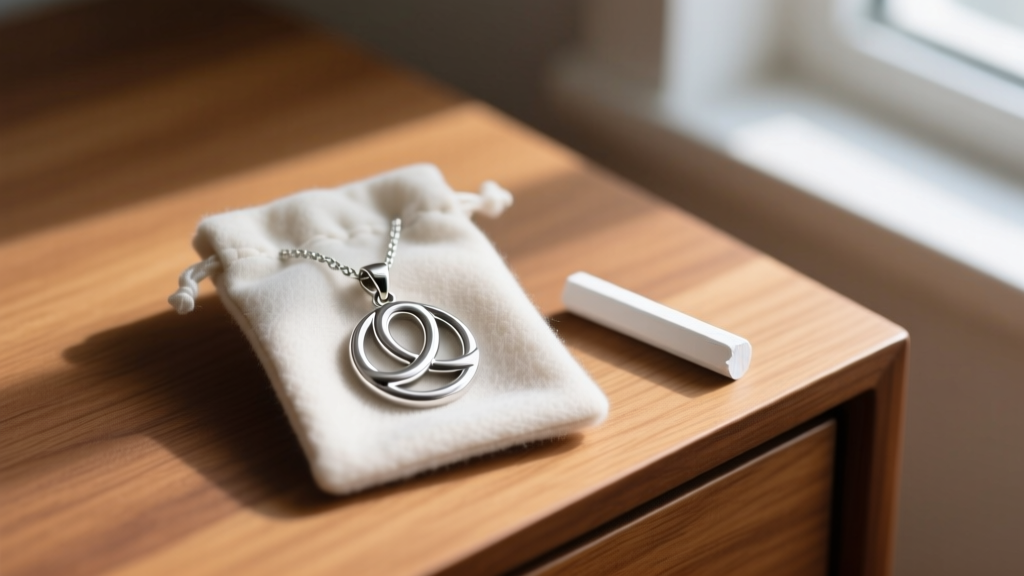
Proper storage is the most effective maintenance strategy for your triskelion necklace. Silver tarnishes when exposed to hydrogen sulfide in the ambient air. Never store your necklace in a standard cardboard jewelry box or leave it exposed on a bathroom vanity, where humidity and aerosol hairsprays accelerate chemical reactions. Instead, store the piece in an airtight polyethylene ziplock bag alongside a 3M anti-tarnish strip, which actively absorbs sulfur compounds. For an extra layer of protection, wrap the triskelion pendant in a Pacific Silvercloth pouch before placing it in the bag. This ensures the intricate spirals remain pristine, allowing the ancient Celtic geometry to shine brilliantly whenever you choose to wear it.


