Multi Strand Pearl Choker Necklace: 2026 Pricing & Value Guide
Discover the true value of a multi strand pearl choker necklace in 2026. Compare freshwater vs. Akoya pricing, grading metrics, and investment tips.

The Anatomy of a Multi Strand Pearl Choker Necklace
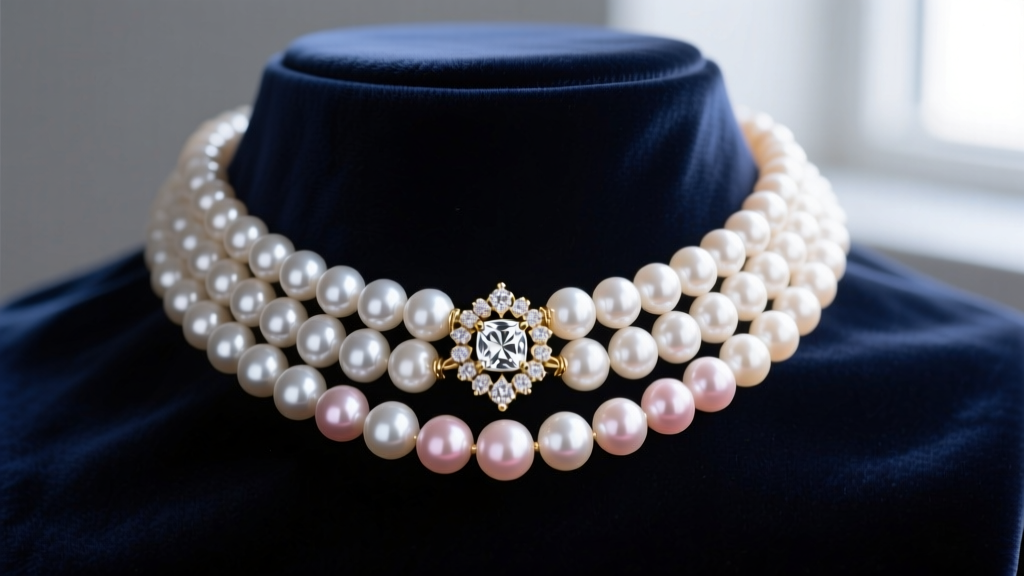
In the evolving jewelry landscape of 2026, the multi strand pearl choker necklace remains a quintessential symbol of refined elegance. However, as sustainable farming techniques advance and global supply chains shift, assessing the true budget and value of these intricate pieces requires a highly analytical approach. A standard choker measures between 14 and 16 inches, designed to sit snugly against the base of the neck. When multiple strands are introduced, the complexity of the design—and its corresponding market value—increases exponentially.
The defining characteristic of a high-value multi-strand piece is the 'nesting' effect. Jewelers achieve this by cutting each successive strand slightly longer, typically in half-inch increments. This ensures the strands lay flat and parallel against the collarbone without twisting or bunching. If a multi strand pearl choker necklace lacks this precise graduation, it will inevitably tangle, severely diminishing both its aesthetic appeal and its long-term wearability.
Pearl Types and Their Market Value
The baseline value of any pearl choker is dictated by the mollusk species and the cultivation environment. Freshwater pearls, cultivated primarily in China, offer exceptional durability due to their solid nacre composition. However, they historically lack the mirror-like luster of saltwater varieties. Akoya pearls, farmed in Japan and Vietnam, are the gold standard for classic white chokers, prized for their sharp, high-contrast luster and perfectly round shapes. In 2026, premium Hanadama-certified Akoya pearls command a significant premium due to stricter environmental regulations limiting harvest yields.
2026 Pricing Tiers: What You Should Actually Pay
Evaluating the budget for a multi strand pearl choker necklace requires looking past retail markups and focusing on wholesale-to-retail value ratios. Below is a comprehensive pricing matrix based on current 2026 market data for 15-inch chokers with 7.0mm to 8.0mm pearls.
| Pearl Type | Strand Count | Quality Tier | Estimated Retail Value (2026) |
|---|---|---|---|
| Freshwater (Round) | 2-Strand | AAA (High Luster) | $250 - $500 |
| Freshwater (Round) | 3-Strand | AAA (High Luster) | $450 - $900 |
| Akoya (Saltwater) | 2-Strand | AA+ to AAA | $1,200 - $2,800 |
| Akoya (Saltwater) | 3-Strand | Hanadama Certified | $3,500 - $7,500+ |
Note: Prices fluctuate based on clasp materials and diamond accents. A 14k gold clasp with 0.10 ctw diamonds will add approximately $300 to $600 to the base price.
Grading Metrics: Decoding Luster, Nacre, and Matching
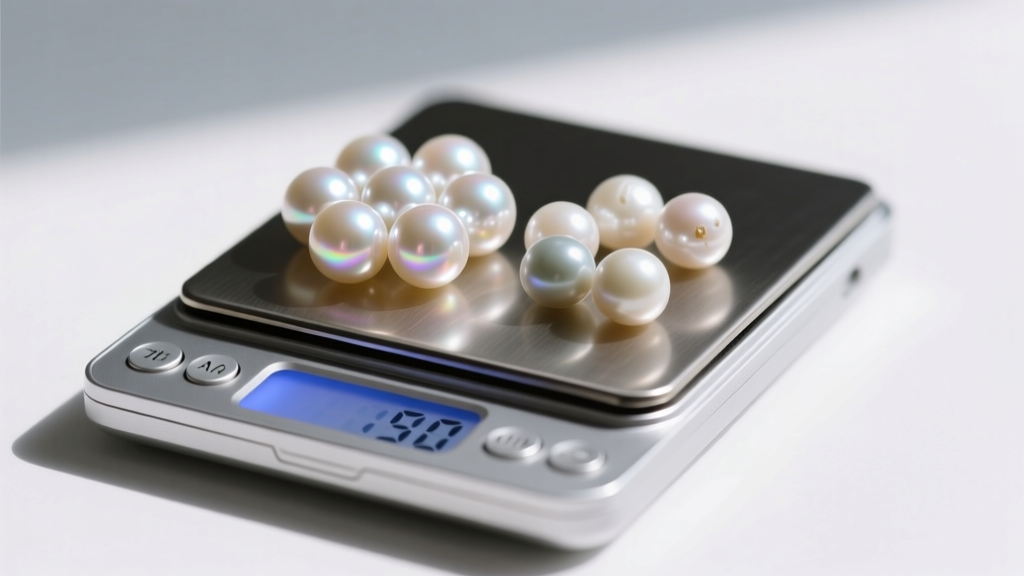
When conducting a value assessment, you must look beyond the basic 'A' grading systems, which are largely unregulated marketing terms. Instead, rely on the value factors established by the Gemological Institute of America (GIA). For a multi strand pearl choker necklace, three specific metrics dictate whether a piece is a worthwhile investment or an overpriced liability.
1. Luster and Nacre Thickness
Luster is the sharpness of light reflection on the pearl's surface. High-luster pearls reflect light crisply, allowing you to see your own reflection on the surface. Nacre thickness is equally critical, especially for saltwater Akoya pearls, which are bead-nucleated. An Akoya pearl with a nacre thickness below 0.4mm is prone to peeling and chipping, rendering it virtually worthless. Always demand X-ray verification or a certificate guaranteeing a minimum nacre thickness of 0.6mm for investment-grade Akoya chokers.
2. The 'Match' Factor in Multi-Strand Designs
In a single-strand necklace, slight variations in pearl size and color can be forgiven. In a multi-strand design, uniformity is paramount. The American Gem Society (AGS) notes that matching encompasses size, shape, color, luster, and surface quality across all strands. Sorting and drilling hundreds of pearls to create a perfectly matched 3-strand choker requires hundreds of hours of specialized labor. If you notice distinct color banding or size discrepancies between the inner and outer strands, the piece has been poorly matched and should be priced at the lower end of the spectrum.
Hardware and Stringing: Hidden Value Indicators
Many buyers focus entirely on the pearls and ignore the structural integrity of the necklace. The hardware and stringing materials are massive indicators of a jeweler's commitment to quality.
Expert Insight: Never purchase a high-value multi-strand pearl necklace strung on synthetic nylon or wire. Authentic pieces are strung on Size F or Size FF pure silk thread. Silk provides the necessary drape and softness, preventing the pearls from rubbing against each other and damaging their nacre.
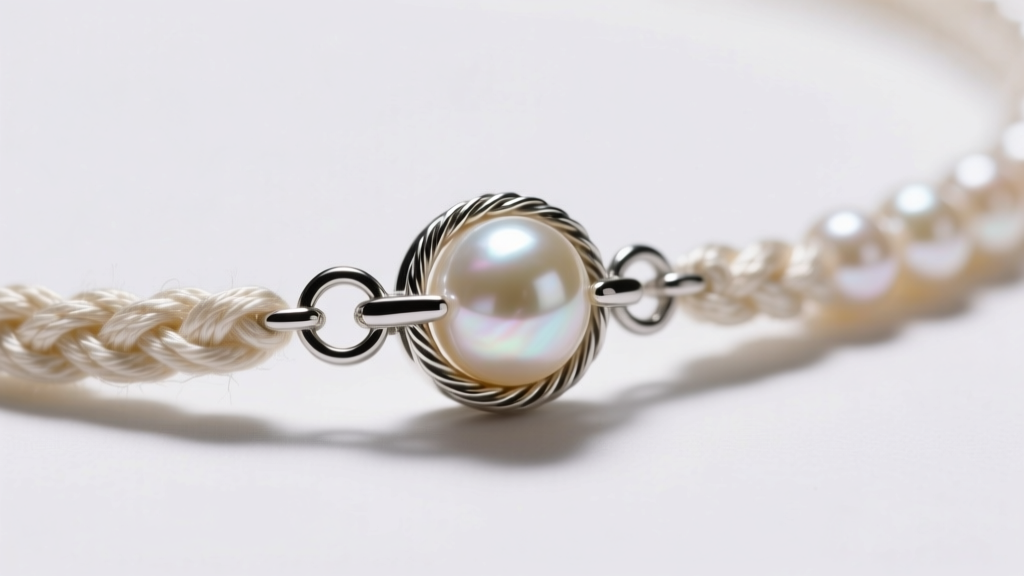
Furthermore, examine the ends of the necklace where the silk thread meets the metal clasp. A premium multi strand pearl choker necklace will feature 'French wire' (also known as gimp)—a tiny, coiled metal spring that protects the silk thread from fraying against the metal clasp ring. If the silk is tied directly to the metal without this protective gimp, the thread will eventually snap, resulting in a catastrophic loss of pearls.
- Premium Clasps: Tongue clasps, box clasps, or barrel clasps crafted in 14k or 18k gold, featuring dual figure-8 safety catches.
- Budget Clasps: Lobster claws or spring-ring clasps. These are difficult to operate with a multi-strand piece and indicate mass-produced, lower-tier jewelry.
How to Spot Overpriced Treated Pearls
The 2026 market is saturated with heavily treated pearls disguised as premium inventory. Understanding these treatments is vital for accurate budget assessment.
Maeshori (Pre-Treatment): This is a standard Japanese process where Akoya pearls are soaked in a methanol solution and gently heated to tighten the nacre layers and enhance luster. While widely accepted, over-processed Maeshori pearls can become brittle and chalky over time.
Bleaching and Tinting: Almost all white Akoya pearls are lightly bleached to remove organic impurities, followed by a subtle pink tint to warm the complexion. However, aggressive bleaching destroys the nacre's structural integrity. You can spot over-bleached pearls by examining the drill holes; if the edges appear chalky, white, or powdery rather than smooth and glassy, the pearls have been chemically compromised.
Irradiation: Sometimes used to darken the nucleus of a pearl to mimic expensive Tahitian or Silver-Blue Akoya pearls. Irradiated pearls often exhibit an unnatural, metallic greenish-black overtone that lacks the deep, complex color layers of naturally dark pearls.
Final Verdict: Is It Worth the Investment?
A multi strand pearl choker necklace is a significant financial commitment, but its value retention depends entirely on the intersection of material quality and structural craftsmanship. If you are operating on a strict budget under $500, a high-grade, round freshwater 2-strand choker offers the best durability and aesthetic return on investment. For budgets exceeding $2,000, insist on Hanadama-certified Akoya pearls, hand-knotted silk stringing with French wire gimp, and a solid gold tongue clasp with safety catches.
By prioritizing nacre thickness, precise strand matching, and premium hardware over inflated brand names, you can secure a breathtaking, heirloom-quality choker that will retain its elegance and market value for decades to come.


