14k Gold Seashell Necklace: Casting, Alloys & Care Guide
Explore the metallurgy, casting methods, and chain pairings of a 14k gold seashell necklace. Expert insights on alloys, durability, and care.

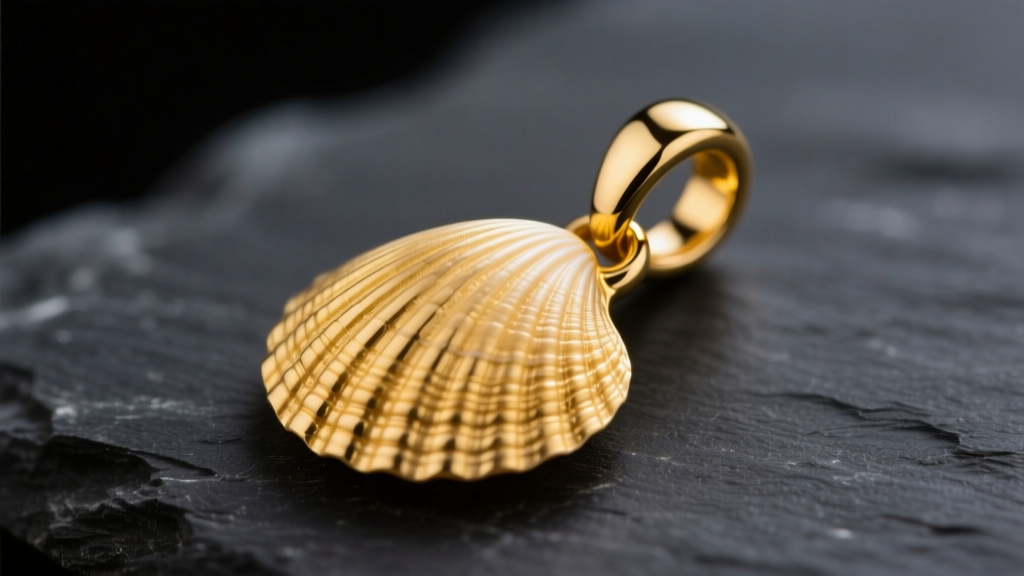
The appeal of marine-inspired jewelry is enduring, but translating the delicate, asymmetrical geometry of nature into wearable metal requires serious metallurgical precision. A 14k gold seashell necklace is not merely a decorative trinket; it is a study in structural engineering, alloy chemistry, and advanced casting techniques. While mass-market alternatives rely on thin stampings and base metals, fine jewelry artisans utilize specific gold karats and lost-wax methodologies to capture the microscopic ridges of a conch or the sweeping curves of a scallop shell.
In this expert deep dive, we deconstruct the anatomy of the 14k gold seashell necklace. From the precise alloy compositions that prevent edge-cracking to the mechanical failure modes of poorly engineered bails, this guide provides the technical framework necessary for sourcing, evaluating, and maintaining high-caliber marine motif jewelry.
The Metallurgy of 14k Gold in Marine Motifs
Why 14k gold and not 18k or 22k? The answer lies in tensile strength and detail retention. Pure gold (24k) is exceptionally malleable. An 18k gold alloy (75% pure gold) is standard for high-end gemstone settings, but it remains too soft to hold the razor-thin, protruding ridges of a cowrie shell or the fragile lip of a conch without bending upon impact.
By dropping to 14k gold (58.3% pure gold), jewelers introduce a 41.7% alloy matrix—typically a blend of silver, copper, and zinc—that drastically increases the Vickers hardness of the metal. This added rigidity ensures that the intricate textures of the seashell survive daily wear. However, the specific alloy mix dictates the necklace's long-term environmental resilience:
- Yellow 14k Gold: Usually alloyed with roughly 25% silver and 15% copper. This provides a warm, classic tone that closely mimics sun-bleached natural shells. It is highly resistant to tarnish but can develop a subtle patina in the deep crevices over decades.
- Rose 14k Gold: Achieves its pink hue by increasing the copper content (often up to 25-30%) and reducing silver. While visually stunning, the high copper content makes rose gold seashell pendants more susceptible to oxidation and darkening in the shell's deep grooves when exposed to sulfur or chlorides.
- White 14k Gold: Alloyed with nickel, palladium, or manganese, and usually rhodium-plated. White gold is the hardest of the three, offering maximum protection for delicate shell edges, though the rhodium plating will eventually wear away on the high-friction ridges, revealing the slightly yellowish underlying alloy.
Manufacturing Techniques: Lost-Wax Casting vs. Die Stamping
The method used to form the shell dictates its tactile quality, weight distribution, and structural integrity. When evaluating a 14k gold seashell necklace, you are generally looking at one of two manufacturing processes.
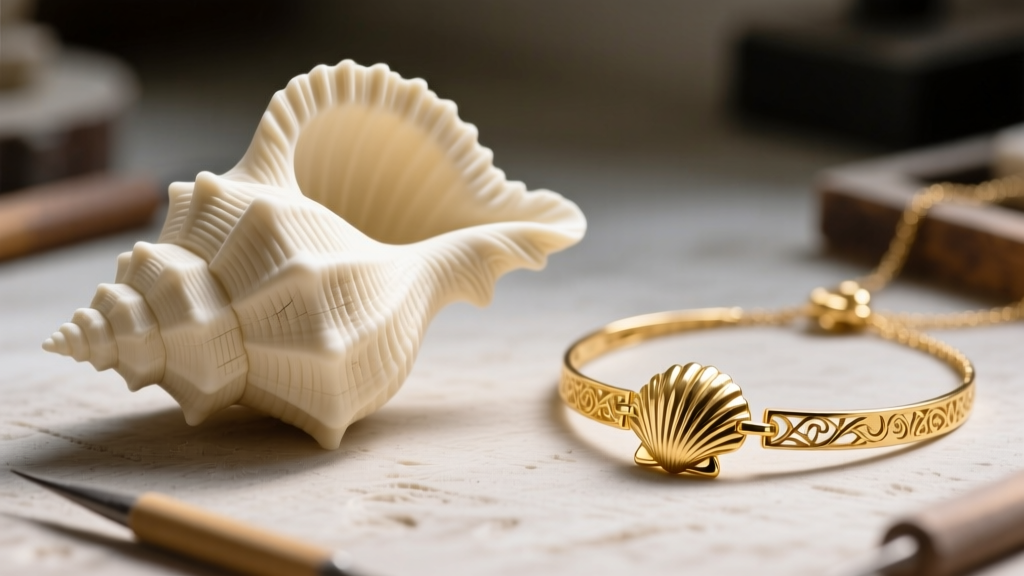
Lost-Wax Casting (The Artisan Standard)
High-end seashell pendants are created via lost-wax casting. A master model is carved in jeweler's wax or 3D-printed in castable resin, capturing every microscopic striation of the natural shell. This model is encased in a plaster-like investment and burned out in a kiln at approximately 1350°F, leaving a hollow cavity. Molten 14k gold is then forced into the mold via centrifugal or vacuum casting.
Failure Modes to Inspect: The primary defect in cast shells is gas porosity. If the gold cools too quickly or the investment traps air, microscopic pinholes will appear on the shell's surface, often hidden in the textured ridges. Another issue is shrinkage porosity, which occurs at the thickest points of the casting (usually near the bail or the shell's hinge), leading to internal structural weaknesses that can cause the pendant to snap if dropped.
Die Stamping (The Commercial Alternative)
Lower-priced seashell necklaces are die-stamped. A sheet of 14k gold is pressed between two hardened steel dies under immense hydraulic pressure. This process work-hardens the gold, making it very stiff, but it limits the design to shallow, two-dimensional reliefs. Stamped shells lack the deep undercuts and 3D organic curvature of cast shells, resulting in a flatter, less dynamic light reflection.
Bail Engineering and Chain Pairing Dynamics
A seashell is inherently asymmetrical. A conch shell has a heavy, bulbous base and a tapered spire. If a standard soldered ring bail is placed dead-center on the top edge, the shell will hang crookedly. Master jewelers solve this by calculating the pendant's center of gravity and custom-soldering a hidden bail or a tapered V-bail slightly off-center to ensure the shell hangs perfectly parallel to the floor.
Furthermore, the bail must be soldered using hard solder (melting point ~1450°F). If a manufacturer uses easy solder to save time, the bail can detach during routine ultrasonic cleaning or if the necklace is subjected to sudden thermal shocks.
Pairing the correct chain gauge with the shell's gram weight is critical to prevent chain fatigue and clasp failure.
| Shell Type & Weight | Recommended Chain Type | Minimum Gauge (mm) | Clasp Requirement |
|---|---|---|---|
| Delicate Scallop (1.5g - 2.5g) | Cable or Wheat Chain | 0.9mm - 1.1mm | Standard Spring Ring |
| Medium Cowrie Shell (3.0g - 5.0g) | Box or Rope Chain | 1.2mm - 1.5mm | Lobster Claw (5x8mm) |
| Heavy 3D Conch (6.0g - 10.0g+) | Thick Rope or Curb Chain | 1.8mm - 2.5mm | Heavy Lobster (10mm+) |
Environmental Degradation and Preventative Care
Because a 14k gold seashell necklace features deep, organic crevices, it acts as a trap for environmental contaminants. Understanding how these contaminants interact with the alloy matrix is vital for long-term preservation.
The Chlorine Threat: Stress Corrosion Cracking
According to the Gemological Institute of America (GIA), exposure to chlorine is one of the most destructive forces for karat gold alloys. Chlorine (found in swimming pools, hot tubs, and harsh household bleach) reacts with the copper and silver in 14k gold to form metallic salts. This reaction is particularly aggressive at the solder joints of the bail. Over time, this leads to stress corrosion cracking, where the bail or the delicate edges of the shell become brittle and snap under minimal pressure.
Sunscreen and Sebum Buildup
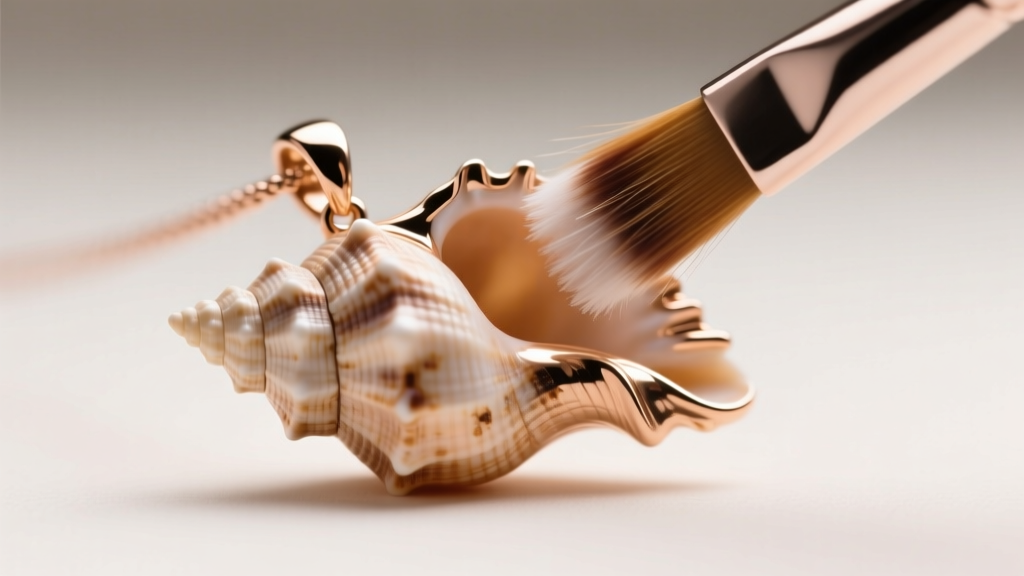
The deep ridges of a cast seashell easily accumulate a mixture of dead skin cells, sebum, and titanium dioxide from sunscreens. This buildup creates a dull, grayish film that mimics tarnish.
"When cleaning highly textured marine castings, avoid ultrasonic cleaners if the shell incorporates glued elements like freshwater pearls. Instead, use a warm bath of mild, phosphate-free dish soap and a soft-bristled baby toothbrush to gently agitate the debris from the undercuts without scratching the high-polish ridges."
— Technical Guide to Jewelry Maintenance, Rio Grande Jewelry Supply
Pricing Tiers and Market Valuation
When shopping for a genuine 14k gold seashell necklace, pricing should be evaluated based on the spot price of gold, the gram weight of the piece, and the labor intensity of the casting. As of current precious metal markets, buyers should expect the following pricing structures:
- Hollow-Cast / Electroformed ($150 - $300): These shells appear large but are incredibly lightweight (often under 2 grams). While affordable, they are highly prone to denting and cannot be easily repaired if crushed.
- Solid Cast, Commercial Finish ($350 - $700): Weighing between 3 to 6 grams, these are solid castings with machine-polished finishes. They offer excellent durability for daily wear and represent the best value-to-longevity ratio.
- Artisan Master-Cast ($800 - $1,500+): Pieces in the 8 to 15-gram range, featuring hand-chased textures, sandblasted matte recesses contrasting with high-polish ridges, and custom-engineered hidden bails. These are heirloom-grade investments.
Final Verdict on Sourcing
A true 14k gold seashell necklace is a triumph of metallurgical art. By prioritizing lost-wax castings, verifying the structural integrity of the bail solder, and matching the chain gauge to the pendant's exact gram weight, you ensure the piece remains a flawless tribute to the ocean. Always demand a "14k" or "585" hallmark stamped directly on the bail or the shell's flat reverse edge to guarantee the alloy's authenticity, and treat the piece with the chemical respect its complex copper-gold matrix demands.


