The Anatomy of a Harmonica Necklace: Materials, Chains & Playability
Explore the technical anatomy of a harmonica necklace. We analyze miniature reed materials, comb construction, and the best chain pairings for daily wear.

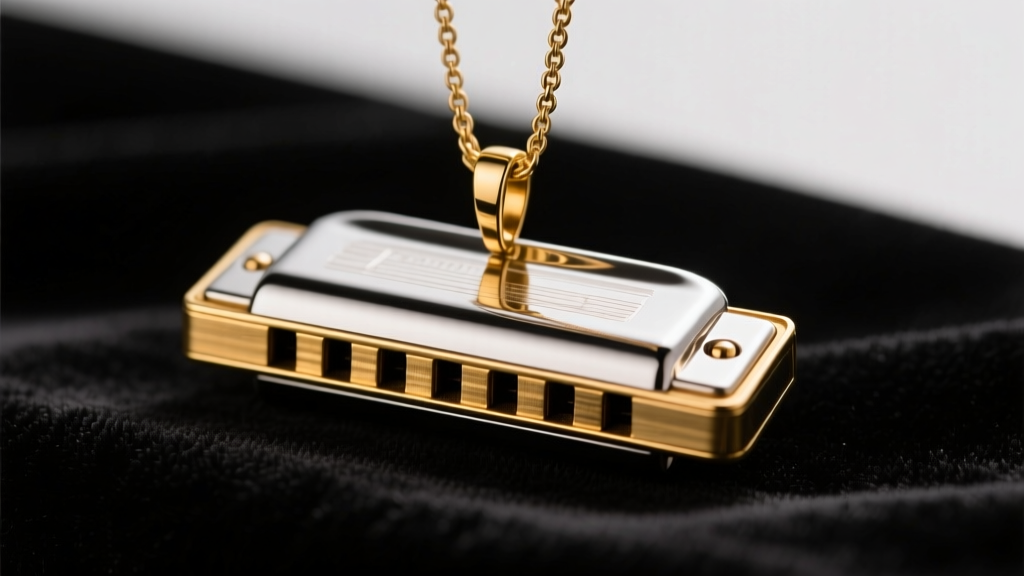
The Convergence of Micro-Acoustics and Jewelry Design
When most people think of a harmonica necklace, they envision a simple novelty trinket or a non-functional cast-metal replica. However, for musicians and serious collectors, a true harmonica necklace represents a fascinating intersection of micro-instrument engineering and jewelry design. Functional miniature harmonicas—such as the iconic 1.5-inch (38mm) models pioneered by brands like Hohner—are fully playable diatonic instruments that require precise metallurgical tolerances to produce sound. According to Pat Missin's extensive archives on harmonica history, the miniaturization of free-reed instruments requires exact scaling of reed mass and air chamber volume to maintain pitch stability.
While a basic cast replica pendant costs between $15 and $30, a functional micro-harmonica necklace paired with a high-quality chain ranges from $85 to $160. This guide bypasses the novelty aspect to provide a deep technical dive into the materials, chain load-bearing mechanics, and maintenance protocols required to wear and play a functional harmonica pendant daily.
Technical Anatomy of a Functional Miniature Pendant
The Comb: ABS Polymer vs. Traditional Pearwood
The comb is the structural core of the harmonica, housing the air chambers that direct breath over the reeds. In standard-sized instruments, traditionalists often prefer pearwood for its warm acoustic resonance. However, in a micro-harmonica pendant worn against the human body, wood is a critical liability. Wood combs absorb ambient humidity and direct moisture from breath or sweat, causing them to swell. In a 10mm wide micro-comb, even a 0.5mm expansion will cause the reed plates to buckle, resulting in air leakage and a complete failure to sound.
High-end functional harmonica necklaces utilize ABS (Acrylonitrile Butadiene Styrene) polymer combs. ABS is entirely impervious to moisture, maintains strict dimensional stability across temperature fluctuations, and can be injection-molded with the sub-millimeter precision required for micro-air chambers. When evaluating a harmonica necklace for actual playability, verifying an ABS or sealed composite comb is non-negotiable.
Reed Plate Metallurgy: CuZn30 Brass vs. Stainless Steel
The reeds dictate the playability, pitch, and lifespan of the pendant. Standard micro-harmonicas utilize CuZn30 (Cartridge Brass, consisting of 70% copper and 30% zinc) for the reed plates. The reeds themselves are typically milled to a thickness of just 0.9mm to 1.2mm. While brass offers excellent acoustic warmth and low fatigue limits, it is highly susceptible to dezincification when exposed to the acidic environment of human saliva (which typically ranges from a pH of 6.2 to 7.4).
Some premium custom jewelers and luthiers are now outfitting micro-pendants with stainless steel reeds. Stainless steel offers superior tensile strength and complete corrosion resistance, allowing for harder, more aggressive playing without the risk of reed fatigue or snapping. However, steel reeds require more breath pressure to initiate vibration, which can be challenging on a micro-instrument with limited air displacement.
Cover Plates and Bail Integration
The cover plates protect the reeds and project the sound. In mass-produced novelty necklaces, covers are often made from cheap, nickel-plated base metals that quickly tarnish and cause contact dermatitis. A properly engineered harmonica pendant uses 316L surgical stainless steel for the covers. The bail (the loop through which the chain passes) must be TIG-soldered directly to the top cover plate using silver solder to withstand the dynamic tension of daily wear without snapping at the joint.
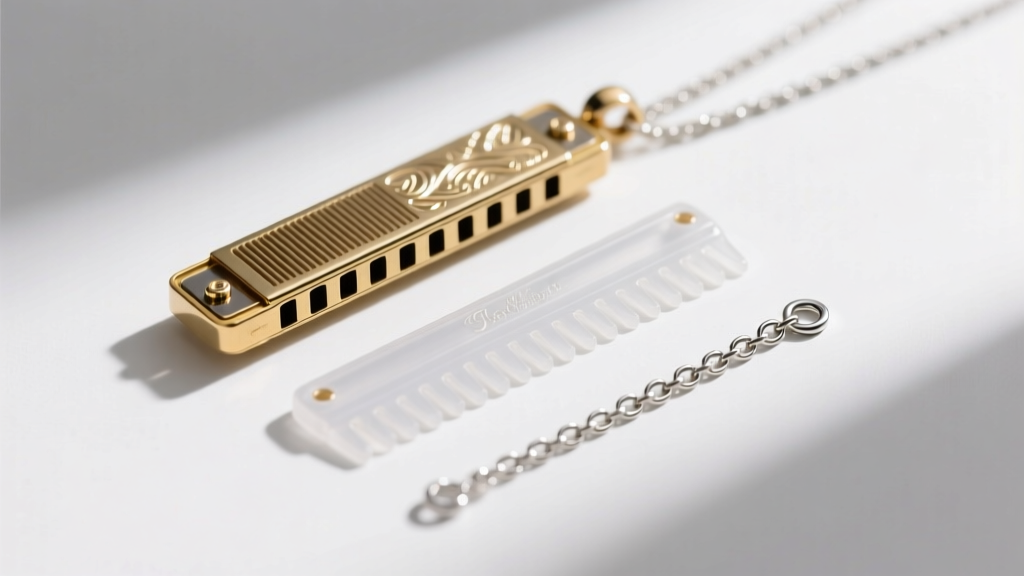
Chain Pairing: Load-Bearing Geometry and Gauge Selection
A standard 1.5-inch functional miniature harmonica weighs between 15 and 22 grams, depending on the alloy density of the cover plates. While this seems light, the dynamic shock load applied to the chain during movement, bending over, or accidental snags can multiply this static weight by a factor of three. According to Rio Grande's chain mechanics guidelines, selecting a chain with an appropriate working load limit is critical to preventing clasp failure or link elongation.
Below is a technical comparison of chain types best suited for functional harmonica pendants:
| Chain Type | Gauge / Width | Material | Max Static Load | Compatibility & Notes |
|---|---|---|---|---|
| Round Cable | 2.0mm | 925 Sterling Silver | 45g | Excellent drape; requires rhodium plating to prevent sulfur tarnish from skin oils. |
| Box Chain | 1.5mm | 316L Stainless Steel | 35g | Highly durable; geometric links resist kinking but can pull chest hair. |
| Rope Chain | 2.5mm | 14k Gold Vermeil | 60g | Superior tensile strength; the twisted links distribute shock loads evenly. |
| Wheat (Spiga) | 1.8mm | Argentium Silver | 50g | Tarnish-resistant; the woven structure offers the highest resistance to snapping. |
Expert Tip: Never use a chain thinner than 1.5mm for a functional harmonica pendant. Furthermore, ensure the clasp is a lobster clasp with a stainless steel internal spring; standard spring-ring clasps frequently fail under the pendulum motion of a heavy pendant.
Acoustic Playability: Breath Control and Resonance
Can you actually play a harmonica necklace? Yes, but it requires a fundamental shift in embouchure and breath control. A standard 10-hole diatonic harmonica relies on the player's cupped hands to create a resonant chamber, amplifying the sound and allowing for wah-wah effects. A 1.5-inch micro-harmonica typically features 16 microscopic holes (or a condensed 10-hole layout) and lacks the physical mass to generate significant acoustic volume on its own.
- Breath Pressure: Micro-reeds require highly focused, low-volume air streams. Blowing with standard diatonic force will overdrive the reeds, causing them to choke or bend out of tune.
- Embouchure: The narrow 10mm width requires a tight lip seal. Players must use a "pucker" technique rather than a "tongue-block" to isolate individual air chambers.
- Resonance Limitations: Without a wooden comb and a larger brass cover, the sound is thin and highly treble-heavy. It functions best as a subtle melodic tool or a rhythmic texture rather than a lead instrument.

Maintenance: Combating Saliva and Sweat Corrosion
Wearing a functional wind instrument against the chest introduces severe environmental hazards. The pendant is exposed to sweat (containing urea, lactic acid, and chloride ions) and, when played, direct saliva. If left uncleaned, the CuZn30 brass reeds will oxidize, forming a green patina that increases reed mass, lowers the pitch, and eventually causes the reed to snap due to metal fatigue.
The Correct Cleaning Protocol:
- Disassembly: If the micro-harmonica is held together by micro-screws rather than rivets, carefully remove the cover plates every three months.
- Solvent Bath: Submerge the brass reed plates and ABS comb in 99% isopropyl alcohol for exactly 5 minutes. This dissolves organic matter and evaporates instantly without causing water spots or rust.
- Mechanical Agitation: Gently brush the reed slots with a soft-bristled fiberglass scratch pen to remove microscopic corrosion. Always brush in the direction of the reed (from base to tip) to avoid catching and bending the free end.
- Avoid Ultrasonic Cleaners: While ultrasonic cleaners are standard in jewelry maintenance, the high-frequency cavitation can warp micro-reeds or loosen the wax coatings sometimes used to seal the comb joints.
For external cover plate maintenance, a simple wipe-down with a microfiber cloth treated with a mild silver or steel polish will remove skin oils and prevent sulfur-based tarnishing. For more detailed specifications on diatonic tuning and micro-reed maintenance, refer to the official Hohner diatonic specifications and care guides.
Final Verdict for Collectors and Musicians
A functional harmonica necklace is far more than a piece of musical novelty jewelry; it is a precision micro-instrument that demands respect for its metallurgical and acoustic limitations. By prioritizing an ABS comb, verifying the use of CuZn30 or stainless steel reeds, and pairing the pendant with a structurally sound 2.0mm cable or rope chain, you ensure the piece remains both a durable daily accessory and a playable instrument. Proper maintenance against the corrosive effects of sweat and saliva will preserve the reed tolerances, allowing the necklace to produce clear, resonant tones for years to come.


