St Michael Cross Necklace: Troubleshooting Wear & Tarnish
Troubleshoot common issues with your St Michael cross necklace. Learn how to fix tarnish, prevent chain breakage, and preserve micro-details.

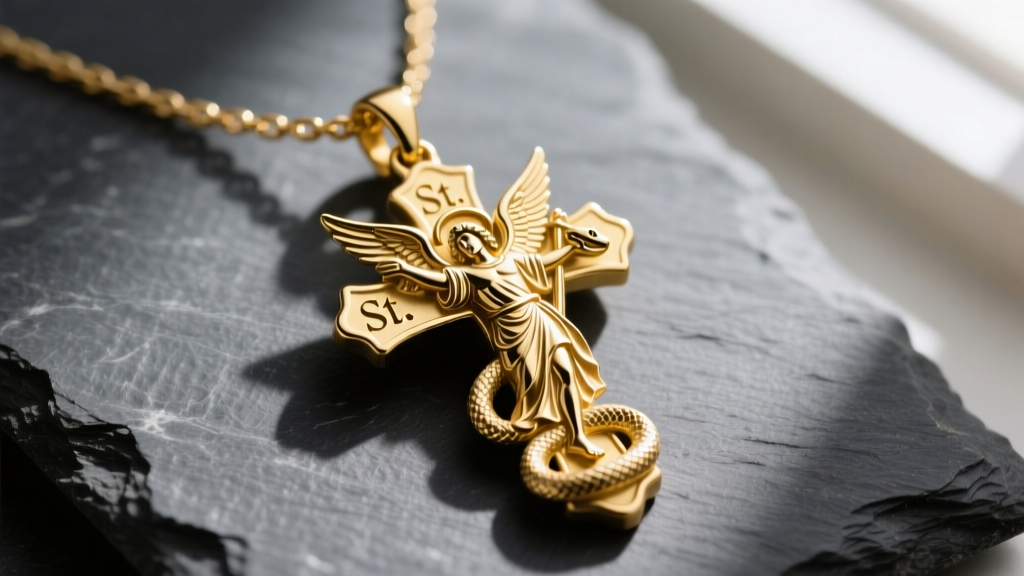
The "St. Michael Cross" Design Dilemma: Medal vs. Hybrid
Most collectors and believers searching for a st michael cross necklace are actually merging two distinct religious symbols: the traditional round or oval St. Michael the Archangel medal and the Christian crucifix. To meet this demand, jewelers often create hybrid designs—such as a cross with the Archangel engraved in the center intersection, or a cruciform outline framing the classic "Quis ut Deus" (Who is like God?) motif.
Because these hybrid molds are geometrically complex, they are highly susceptible to manufacturing defects, particularly in the micro-casting of the angel’s sword, the serpent, and the Latin inscriptions. If your pendant looks blurred or lacks depth, you are likely dealing with a low-pressure cast from a worn master mold, a common issue with mass-produced religious jewelry.
Identifying Poor Castings and Metal Fraud
According to the Federal Trade Commission’s Jewelry Guides, precious metals must be accurately stamped and hallmarked. However, cheap imports frequently stamp "925" on silver-plated brass. To troubleshoot this, use a neodymium magnet. Silver and gold are diamagnetic (non-magnetic). If the cross clings to a magnet, it’s a brass or steel core.
Furthermore, inspect the casting for porosity—tiny pits or holes on the surface of the cross or the angel's shield. Porosity is caused by trapped gas during the casting process. While minor pitting is sometimes unavoidable in large custom pieces, widespread porosity weakens the structural integrity of the pendant, particularly around the thin arms of the cross, making it prone to snapping under everyday stress.
Troubleshooting Tarnish Without Ruining Micro-Details
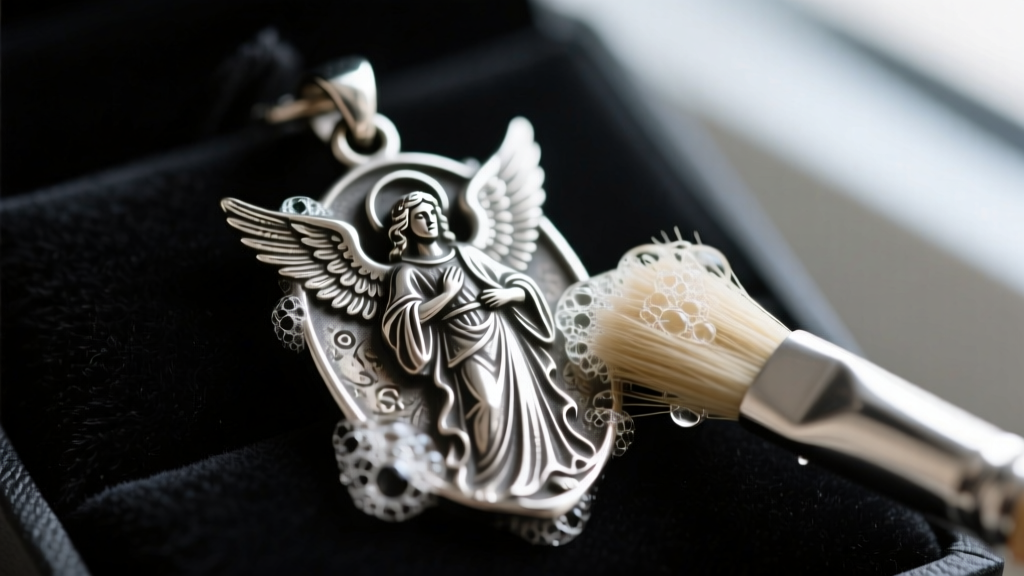
The most common complaint with a sterling silver st michael cross necklace is rapid tarnishing, especially in the deep crevices of the angel's wings and the serpent's scales. Many owners mistakenly use ultrasonic cleaners or harsh silver dips (thiourea-based solutions) to restore the shine.
Never use ultrasonic cleaners on antiqued or oxidized religious pendants. The high-frequency vibrations will strip the intentional dark patina that gives the St. Michael imagery its three-dimensional contrast.
Instead, use the Aluminum Foil & Baking Soda Ion Exchange Method, but with a critical caveat for hybrid crosses:
- Line a glass bowl with aluminum foil (shiny side up).
- Place the necklace in the bowl, ensuring the silver touches the foil.
- Boil water and add 2 tablespoons of baking soda per cup of water.
- Pour the solution over the necklace. The sulfur will transfer from the silver to the foil.
- Crucial Step: Limit the soak to exactly 60 seconds. Prolonged exposure can bleach the intentional antiquing in the "Quis ut Deus" lettering.
- Rinse with distilled water and pat dry with a microfiber cloth.
For routine maintenance, the Gemological Institute of America (GIA) recommends using a specially treated silver polishing cloth that contains micro-abrasives. When polishing the raised edges of the cross, use a Q-tip dipped in a mild silver polish to navigate the tight corners where the Archangel’s wings meet the crossbar. Avoid aggressive rubbing on the serpent, as the scales are often the first detail to wear flat over years of friction against clothing.
Chain & Bail Failures: Sizing and Weight Limits
A solid cast St. Michael cross pendant (typically 20mm to 30mm in height) weighs between 8 and 18 grams depending on the metal and thickness. The most frequent structural failure is the bail snapping or the chain stretching and breaking at the jump ring.
The Bail Weak Point
Many mass-produced necklaces use glued or lightly laser-welded bails. If your cross hangs at an awkward angle or the bail feels loose, take it to a bench jeweler to have a heavy-duty soldered bail installed. A 14k or 18k gold soldered bail with a minimum interior dimension of 5mm x 3mm is required for long-term durability.
Matching Chain Gauge to Pendant Weight
To prevent catastrophic chain failure, you must match the chain’s tensile strength to the pendant's mass. Hollow chains (like standard rope or box chains under 2.0mm) will kink and snap under the pendulum motion of a heavy cross.
| Pendant Weight | Minimum Chain Width | Recommended Chain Styles | Clasp Requirement |
|---|---|---|---|
| Under 8g | 1.5mm - 1.8mm | Solid Cable, Wheat | Spring Ring (5mm) |
| 8g - 15g | 2.0mm - 2.5mm | Solid Figaro, Curb, Mariner | Lobster Claw (10mm) |
| Over 15g | 3.0mm+ | Solid Miami Curb, Franco | Box Lock or Heavy Lobster |
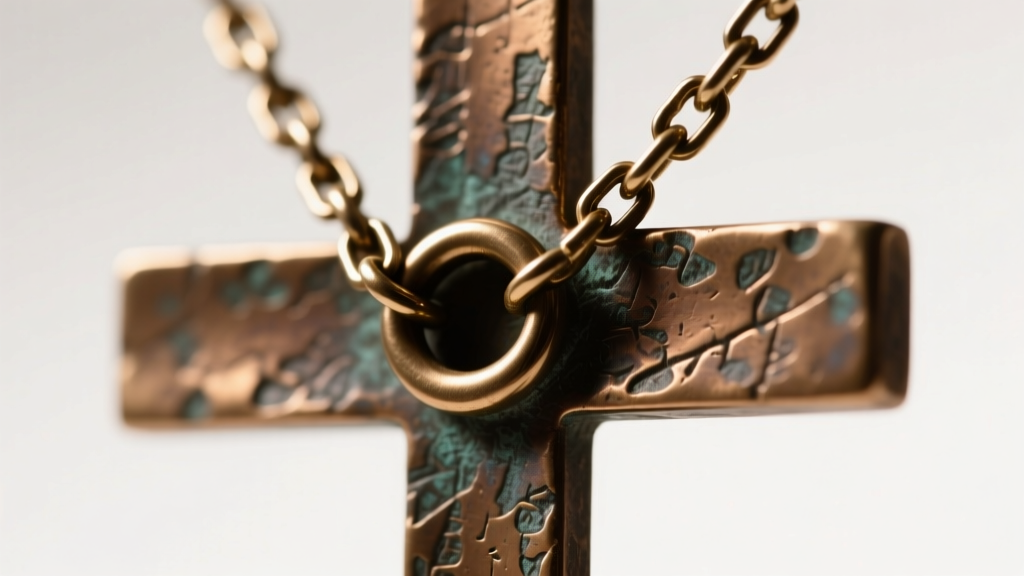
If you already own a chain that is slightly too thin for your heavy St. Michael cross, the immediate troubleshooting fix is to upgrade the jump rings. Replace the standard 4mm jump ring connecting the pendant to the chain with a 6mm, 18-gauge split ring or a fully soldered O-ring to distribute the kinetic stress.
Addressing Skin Discoloration and Allergic Reactions
If your st michael cross necklace leaves a green or black mark on your chest, this is rarely an allergy to pure gold or silver. It is a chemical reaction between your skin's acidity, lotions, and the alloy metals (like copper in 14k gold or standard sterling silver).
The 2026 Standard: Upgrading to Argentium Silver
In 2026, Argentium Silver (935) has become the benchmark for high-quality religious pendants. Unlike traditional 925 sterling, Argentium replaces some of the copper alloy with germanium. This makes it highly resistant to tarnish and virtually eliminates the copper-induced green skin reaction, while still accepting traditional hallmarks. If your current pendant is causing severe discoloration, consider having a custom jeweler cast your specific St. Michael cross design in Argentium.
The Clear Coat Solution
For an immediate, inexpensive fix on an existing piece, apply a thin layer of clear, non-toxic nail polish or a specialized jewelry shield (like Jeweler's Skin Guard) to the back of the pendant where it rests against your sternum. Reapply every 3 to 4 weeks to maintain the barrier.
Final Verdict on Maintenance
Troubleshooting a st michael cross necklace requires understanding both its symbolic geometry and its physical metallurgy. By avoiding ultrasonic cleaners, matching your chain gauge to the pendant's exact gram weight, and verifying metal purity, you can ensure this meaningful piece of jewelry survives daily wear without losing its intricate heavenly details. Inspect the bail and jump rings every six months for micro-fractures, and your necklace will remain a durable staple in your collection for decades.


