2026 Red Evil Eye Necklace Buying Guide & Material Tips
Discover what to look for in a red evil eye necklace. Our 2026 buying guide covers glass vs enamel, chain gauges, pricing, and authentic craftsmanship.

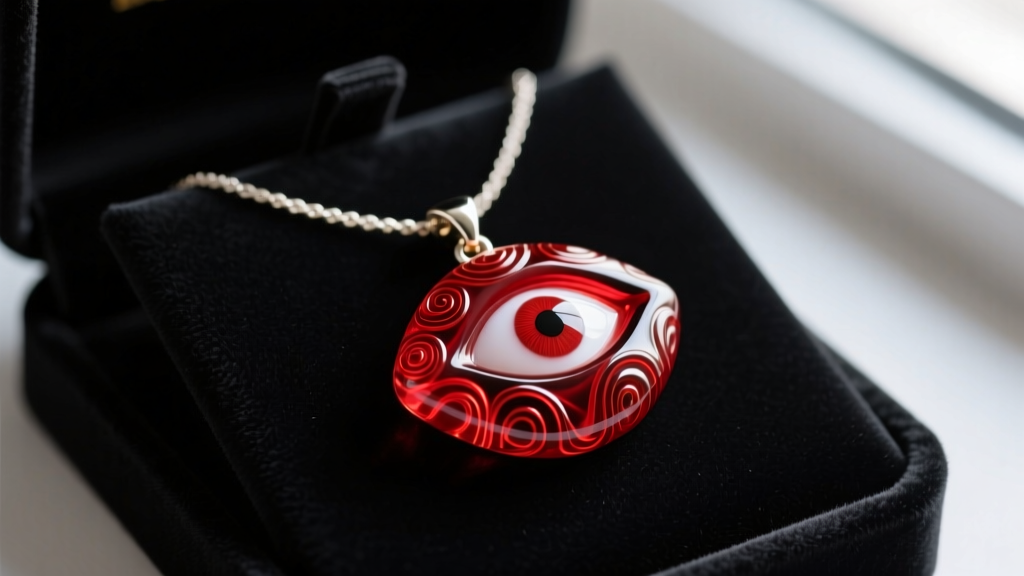
The Evolution of the Red Evil Eye Amulet
While the traditional nazar boncuğu (evil eye amulet) is universally recognized by its striking cobalt blue hue, the red evil eye necklace has emerged as a dominant force in the 2026 jewelry landscape. This shift is not merely a fleeting color trend; it represents a fascinating intersection of cultural symbolism. The red evil eye merges the Mediterranean and Middle Eastern traditions of warding off malicious glares with the East Asian and Kabbalistic symbolism of the red string—representing destiny, protection, and deep romantic bonds. When shopping for a red evil eye necklace today, you are buying into a hybrid talisman of 'meaningful maximalism.' However, the market is flooded with mass-produced acrylic knockoffs masquerading as artisanal glass. This comprehensive buying guide will equip you with the metallurgical and gemological knowledge required to separate authentic, heirloom-quality protection amulets from cheap costume jewelry.
Material Breakdown: Glass vs. Enamel vs. Resin
The core of any evil eye pendant is the 'eye' itself. The material used to craft the concentric circles of the eye dictates the necklace's durability, weight, optical depth, and ultimately, its price point. Understanding the manufacturing process is critical for making an informed purchase.
1. Hand-Blown Lampworked Glass (The Gold Standard)
Authentic evil eye beads are traditionally crafted using lampworking techniques, where glass rods are melted over a torch and wound around a mandrel. High-end pieces often utilize Murano or Venetian glass. The red pigment in genuine glass is achieved using copper or gold chloride, resulting in a deep, translucent crimson that catches the light beautifully. Because each bead is shaped by hand, no two glass evil eyes are perfectly identical—a hallmark of authenticity.
2. Vitreous Enamel / Cloisonné (The Durable Alternative)
For those who want the vibrant color of glass without the fragility, vitreous enamel is the superior choice. This process involves fusing powdered glass to a metal backing (usually sterling silver or brass) at temperatures exceeding 1400°F. The result is a scratch-resistant, brilliantly red surface that will never yellow. Beware of 'cold enamel,' which is merely tinted epoxy resin; it lacks the glass-like luster and will degrade over time when exposed to UV light and skin oils.
3. Acrylic and Epoxy Resin (The Mass-Market Trap)
If a red evil eye necklace is priced under $20, it is almost certainly cast from acrylic or epoxy resin. Resin is poured into silicone molds, allowing for thousands of identical, flawless copies. While lightweight and shatterproof, resin lacks optical depth. It feels slightly 'grippy' to the touch compared to the icy smoothness of glass, and it is highly susceptible to micro-scratches that will cloud the red pigment within a year of daily wear.
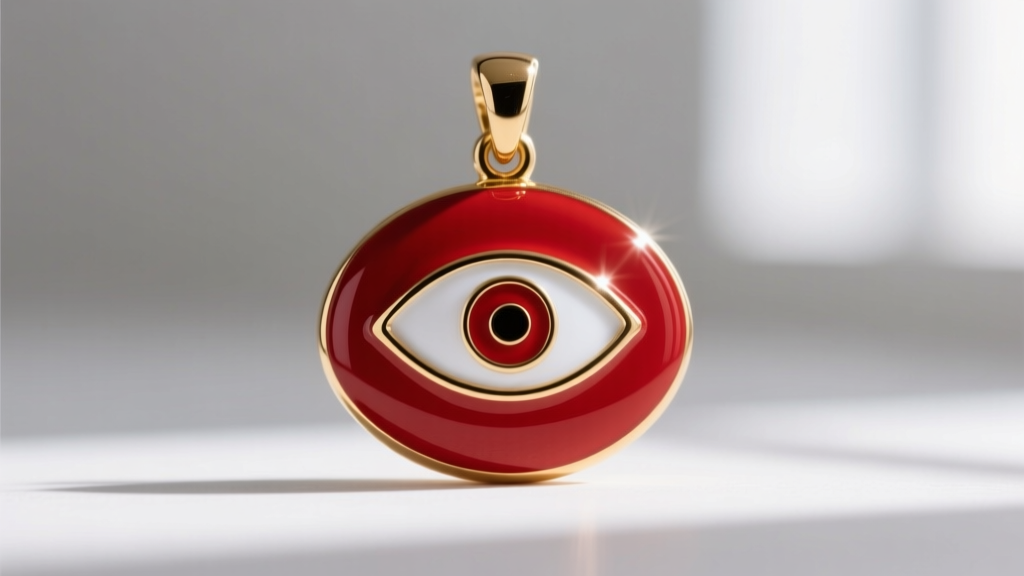
Chain Selection: Gauges, Lengths, and Metals
A heavy glass or enamel pendant requires a chain that can support its weight without snapping. In 2026, the trend leans toward mixing delicate chains with substantial pendants, but structural integrity must remain your priority.
Chain Gauge & Clasp Guide
- 0.9mm - 1.0mm (Delicate): Suitable only for lightweight resin or small (10mm) enamel charms. Prone to kinking and snapping if caught on clothing.
- 1.2mm - 1.5mm (Standard): The ideal sweet spot for a standard 15mm-20mm glass evil eye pendant. Offers a delicate aesthetic with enough tensile strength to hold 5-8 grams of glass.
- 2.0mm+ (Statement): Best for oversized, multi-layered evil eye pendants or heavy solid gold settings. Usually paired with a box chain or a thick Cuban link.
When evaluating the metal, always check the stamp. According to the FTC Jewelry Guides, gold vermeil must consist of a sterling silver base plated with at least 2.5 microns of 10k or higher gold. Anything less is considered 'gold plated' and will quickly wear through to the base metal, turning your skin green and ruining the necklace's protective energy.
Pricing Tiers: What Should You Actually Pay?
Navigating the pricing landscape of talismanic jewelry can be confusing. Use this data table to benchmark the fair market value of a red evil eye necklace based on its material composition and metal setting.
| Material Tier | Eye Construction | Chain Metal | Fair Price Range (2026) |
|---|---|---|---|
| Fashion / Entry | Cast Acrylic / Resin | Gold-Plated Brass | $15 - $35 |
| Mid-Tier / Artisan | Cold Enamel / Stamped Glass | Sterling Silver (925) | $45 - $85 |
| Premium / Heirloom | Hand-Blown Murano Glass | 14k Solid Gold / Vermeil | $120 - $280 |
| Luxury / Fine | Vitreous Enamel + Ruby Accents | 18k Solid Gold | $450 - $1,200+ |
Spotting Fakes & Low-Quality Craftsmanship
When shopping for a premium red evil eye necklace, employ these physical tests to verify the quality of the materials:
- The Temperature Test: Genuine glass and vitreous enamel feel noticeably cold to the touch when first picked up and take a few seconds to warm to your body temperature. Resin and acrylic feel room-temperature and warm up almost instantly.
- The Weight Test: Glass is significantly denser than resin. A 20mm glass evil eye bead should have a substantial, satisfying heft. If it feels as light as a plastic button, it is mass-produced acrylic.
- The Bubble Inspection: Examine the red and white layers of the eye under a macro lens or bright light. Hand-blown glass will often contain microscopic, asymmetrical air bubbles trapped within the layers. Molded resin is perfectly, suspiciously flawless.
'A true talisman carries the physical evidence of its creation. The slight asymmetries and trapped breath within hand-blown glass are not flaws; they are the fingerprints of the artisan and the soul of the amulet.' — Master Glassblower, Murano Island.
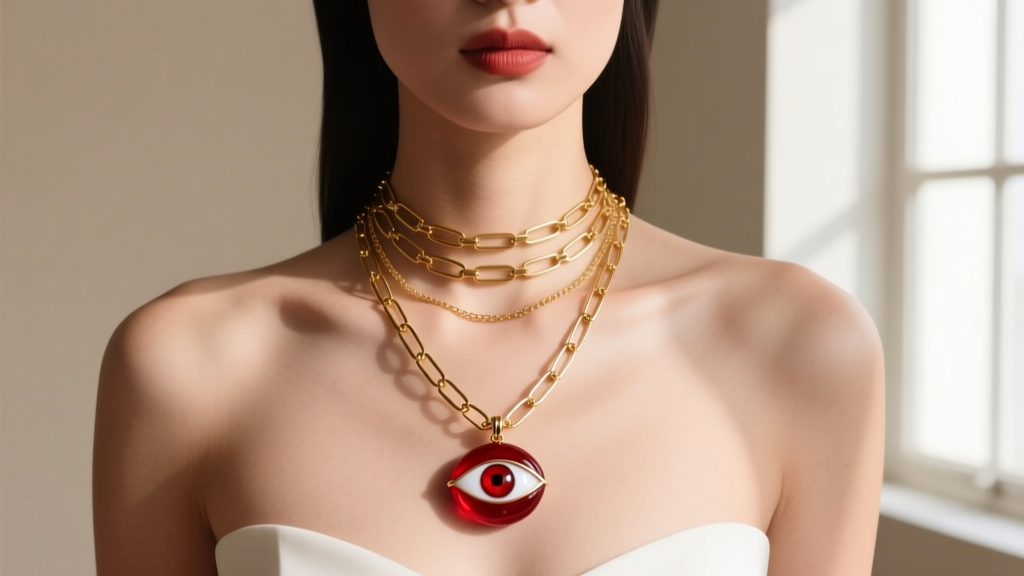
How to Layer a Red Evil Eye Pendant
The red evil eye is inherently bold, making it a striking anchor piece for a layered necklace stack. To achieve a balanced, modern look in 2026, follow the 'Rule of Three' and vary your chain textures.
- Layer 1 (The Choker): A 14-inch to 16-inch delicate cable chain holding the red evil eye pendant. This keeps the talisman close to the throat, acting as the focal point.
- Layer 2 (The Mid-Length): An 18-inch to 20-inch textured chain, such as a gold paperclip chain or a herringbone snake chain. Add a simple geometric pendant or a solitary freshwater pearl to complement the red without competing with it.
- Layer 3 (The Base): A 22-inch to 24-inch heavy rope chain or a strand of matte onyx beads. The dark, neutral tones of the longer layer will push the vibrant red of the evil eye forward, creating incredible visual depth.
Care and Maintenance for Longevity
Proper care is essential to maintain the vibrant crimson hue and structural integrity of your necklace. According to the Gemological Institute of America (GIA), organic and glass-based jewelry requires specific cleaning protocols to avoid irreversible damage.
Never use ultrasonic cleaners. The high-frequency vibrations can shatter hand-blown glass and cause vitreous enamel to crack or separate from its metal backing. Similarly, avoid harsh chemical dips, silver polishes, and alcohol-based cleaners, which will strip the glossy finish of cold enamel and degrade resin.
Instead, clean your red evil eye necklace using a solution of lukewarm water and a few drops of mild, phosphate-free dish soap. Gently agitate the water, let the necklace soak for three minutes, and then use a baby-soft toothbrush to lightly sweep away any skin oils or lotion buildup from the crevices of the eye. Rinse thoroughly under distilled water to prevent hard water spots, and pat dry with a lint-free microfiber cloth. Always store your glass pendants separately in a soft pouch to prevent them from scratching against harder gemstones like diamonds or sapphires in your jewelry box.


