The Definitive Guide To The Cancer Zodiac Sign Necklace
Discover the technical details behind the perfect cancer zodiac sign necklace. Explore metal grades, gemstone hardness, and chain mechanics for daily wear.

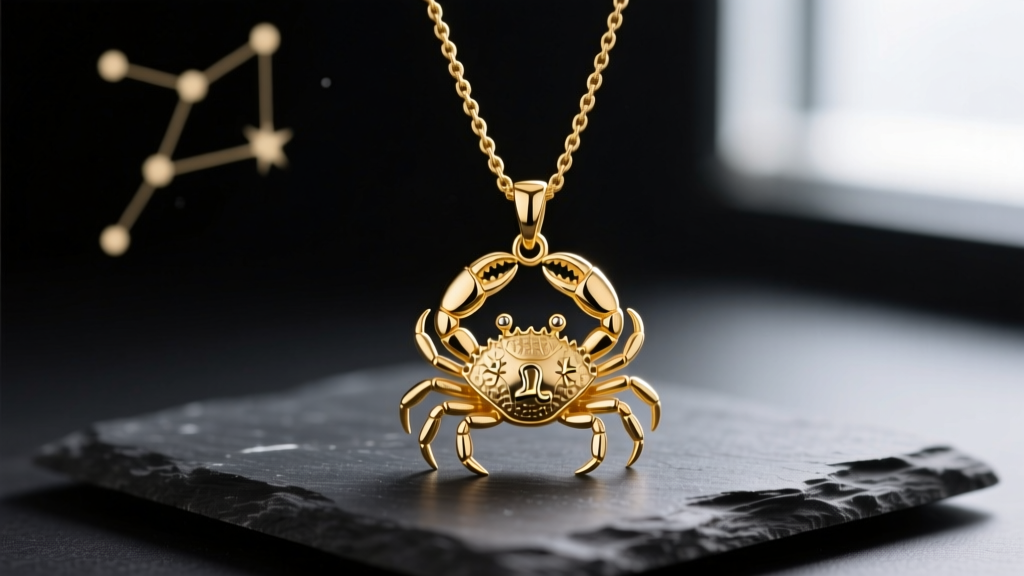
The Anatomy of a Cancer Zodiac Sign Necklace
When evaluating a cancer zodiac sign necklace, most buyers focus solely on the aesthetic appeal of the crab motif or the astrological significance of the water sign. However, from a jewelry engineering perspective, designing and selecting a piece that represents Cancer (June 21 - July 22) requires a deep understanding of metallurgy, gemological stability, and structural mechanics. Cancer is ruled by the Moon and symbolized by the Crab—a creature defined by its hard exterior and soft interior. Translating this duality into fine jewelry demands precise material selection to ensure the piece withstands daily wear while maintaining its symbolic integrity.
A high-quality astrological pendant is not merely a stamped piece of metal; it is a micro-sculpture. The intricate legs and pincers of the crab motif require specific casting techniques and metal hardness levels to prevent bending or snapping. Furthermore, because Cancer is a water sign, wearers often seek pieces that can withstand frequent contact with moisture, making corrosion resistance a paramount technical requirement.
Metallurgy & Material Grades: Engineering the Shell
The foundational durability of any cancer zodiac sign necklace relies on the alloy composition of the pendant and its chain. The crab motif features delicate, protruding elements (like antennae and claws) that are highly susceptible to mechanical stress. Therefore, the Vickers hardness (HV) of the chosen metal is a critical metric.
Precious Metal Alloys and Hardness
For gold pendants, 14k gold (58.5% pure gold) is generally superior to 18k gold (75% pure gold) for intricate zodiac motifs. 14k gold alloys, typically mixed with copper, silver, and zinc, achieve a Vickers hardness of approximately 120-150 HV. This provides the necessary tensile strength to keep the crab's delicate legs from warping under pressure. In contrast, 18k gold sits at a softer 90-110 HV, making it more prone to scratching and structural deformation in highly detailed, three-dimensional castings.
For those prioritizing hypoallergenic properties and absolute moisture resistance, implant-grade titanium (ASTM F138 compliant) or 316L surgical stainless steel are exceptional choices. 316L steel contains molybdenum, which drastically increases its resistance to pitting and crevice corrosion in chloride environments (like salt water or sweat). According to the Federal Trade Commission Jewelry Guides, accurate metal marking is essential, so ensure any steel or titanium piece is properly stamped or certified by the manufacturer to guarantee the absence of nickel, a common contact allergen.
Gemological Breakdown: Moonstone, Pearl, and Ruby
Cancer's astrological profile is deeply intertwined with specific gemstones. The Moon represents the sign's ruling planet, making Moonstone and Pearl the primary birthstones, while Ruby serves as a high-durability alternative for July-born Cancers. Understanding the structural vulnerabilities of these stones is vital for a necklace intended for daily wear.
| Gemstone | Mohs Hardness | Structural Vulnerability | Technical Care Requirement |
|---|---|---|---|
| Moonstone | 6.0 - 6.5 | Perfect cleavage in one direction; prone to splitting if struck. | Requires bezel setting; avoid ultrasonic cleaners. |
| Pearl (Akoya) | 2.5 - 4.5 | Organic aragonite platelets; highly sensitive to acids and cosmetics. | Wipe with microfiber; never submerge in chemical baths. |
| Ruby | 9.0 | Excellent toughness, but can fracture along twin planes. | Highly durable; safe for ultrasonic cleaning if unfractured. |
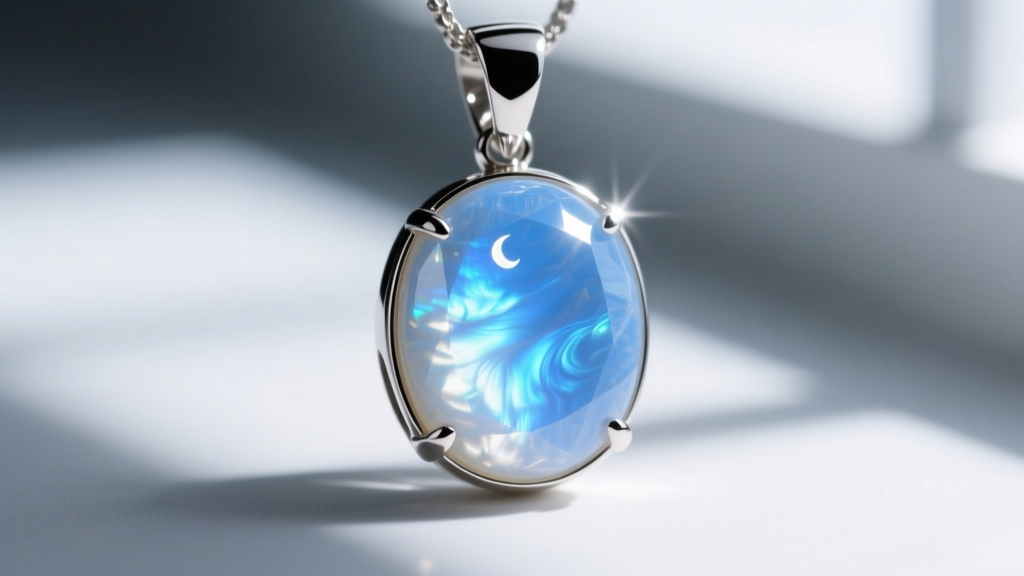
When selecting a moonstone for a cancer zodiac sign necklace, look for strong adularescence—the billowy blue or white light that appears to float just below the surface. This optical phenomenon is caused by the scattering of light between microscopic layers of orthoclase and albite feldspar. The Gemological Institute of America (GIA) notes that the most valuable moonstones possess a nearly transparent body with a sharp, centered blue sheen. Because of its perfect cleavage, moonstone must always be set in a protective bezel or heavy prong setting to prevent chipping against hard surfaces.
If opting for a pearl inlay within the crab motif, nacre thickness is the primary indicator of longevity. According to CIBJO (The World Jewellery Confederation), high-quality Akoya pearls should possess a nacre thickness of at least 0.4mm. Thin-nacre pearls will eventually peel or crack when subjected to the friction of daily wear.
Chain Mechanics and Clasp Engineering
A detailed, solid-cast crab pendant carries significant weight relative to its size. Pairing a 5-gram pendant with a standard 1.0mm cable chain is a mechanical failure waiting to happen. The chain must possess adequate tensile strength and resistance to kinking.
Optimal Chain Profiles
- Wheat Chains (1.5mm - 2.0mm): Composed of four strands of twisted oval links woven together. This multi-directional weave distributes mechanical stress evenly, making it virtually impervious to kinking and capable of supporting heavy zodiac pendants without stretching.
- Box Chains (1.2mm minimum): While visually geometric and modern, box chains are constructed from 90-degree folded links. If the gauge drops below 1.2mm, the links are highly susceptible to permanent kinking if bent backward upon themselves.
- Rope Chains (2.0mm+): Excellent for heavier pendants, provided the links are laser-soldered. Unsoldered rope chains will easily unravel if a single link is compromised.
Clasp Mechanics
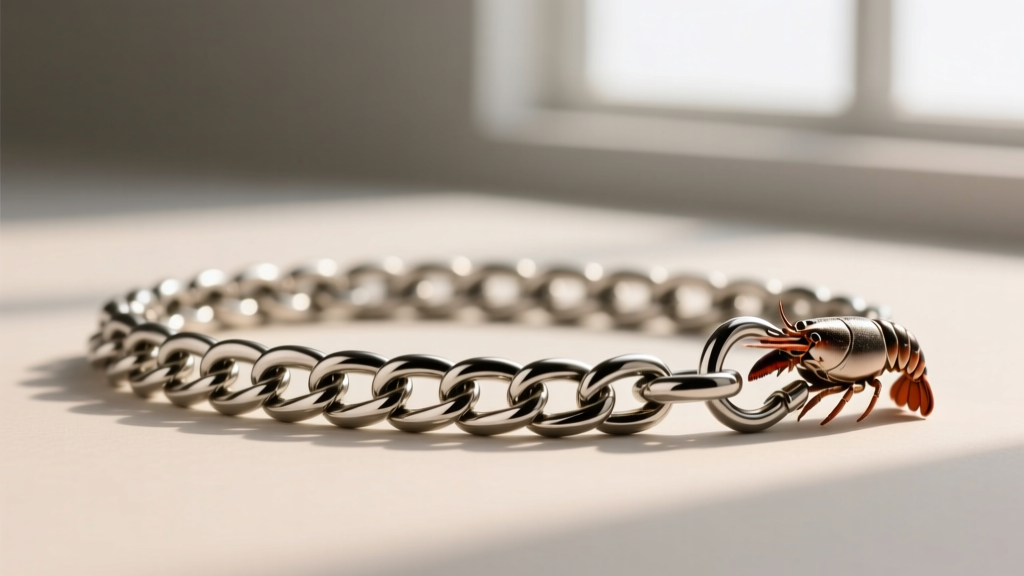
For a heavy cancer zodiac sign necklace, the standard spring-ring clasp is inadequate; its internal spring mechanism is prone to fatigue and failure under constant tension. A forged lobster clasp with a stainless steel internal spring is mandatory. For ultimate security, particularly in higher-end 14k or 18k gold pieces, a hidden box clasp with a figure-eight safety catch provides redundant mechanical locking, ensuring the pendant is never lost if the primary latch is accidentally depressed.
Engraving and Personalization Techniques
Many buyers choose to personalize the reverse side of the crab pendant with a date, coordinate, or name. The technique used for this engraving drastically affects the structural integrity of the piece.
Rotary Burr Engraving: This traditional method uses a spinning diamond-tipped bit to physically carve away metal. While it creates deep, tactile grooves that can be filled with enamel, it removes structural material. On a thin pendant backplate (under 1.5mm thick), deep rotary engraving can cause warping or weaken the metal's stress points.
Fiber Laser Engraving: Operating at a 1064 nm wavelength, fiber lasers alter the surface oxidation of the metal without removing significant mass. This is the superior technical choice for zodiac pendants, allowing for ultra-fine detail (such as micro-text or intricate star charts) without compromising the pendant's structural rigidity.
Pricing Tiers & Value Assessment
Understanding the manufacturing costs helps buyers identify true value when shopping for a cancer zodiac sign necklace.
- Entry-Level ($30 - $80): Typically 316L stainless steel or sterling silver with a rhodium flash. Pendants are often die-struck rather than cast, resulting in less three-dimensional depth. Chains are usually lightweight cable or box chains.
- Mid-Range ($150 - $450): Solid 10k or 14k gold, utilizing lost-wax casting for high-fidelity crab motifs. May include small accent gemstones (e.g., 2mm moonstone cabochons). Features robust wheat or rope chains with forged lobster clasps.
- Investment Tier ($800 - $2,500+): 18k gold or platinum, featuring hand-finished detailing, micro-pave diamond accents, and premium, gem-grade center stones (such as high-domed blue sheen moonstones or natural pearls). Includes hidden box clasps and laser-engraved hallmarks.
Expert Verdict
A well-engineered cancer zodiac sign necklace transcends simple astrological branding; it is a study in material science and structural design. By prioritizing 14k gold or 316L steel for the motif, selecting bezel-set moonstones or thick-nacre pearls, and anchoring the piece with a soldered wheat chain and forged clasp, you ensure the necklace serves as a durable, lifelong talisman. Always demand transparency in metal alloys and gemstone origins to guarantee your piece meets the highest standards of modern jewelry engineering.


