Indian Gold Necklace Choker: 2026 Budget & Value Guide
Discover how to evaluate an Indian gold necklace choker in 2026. Learn about 22K purity, making charges, weight deductions, and smart budget strategies.

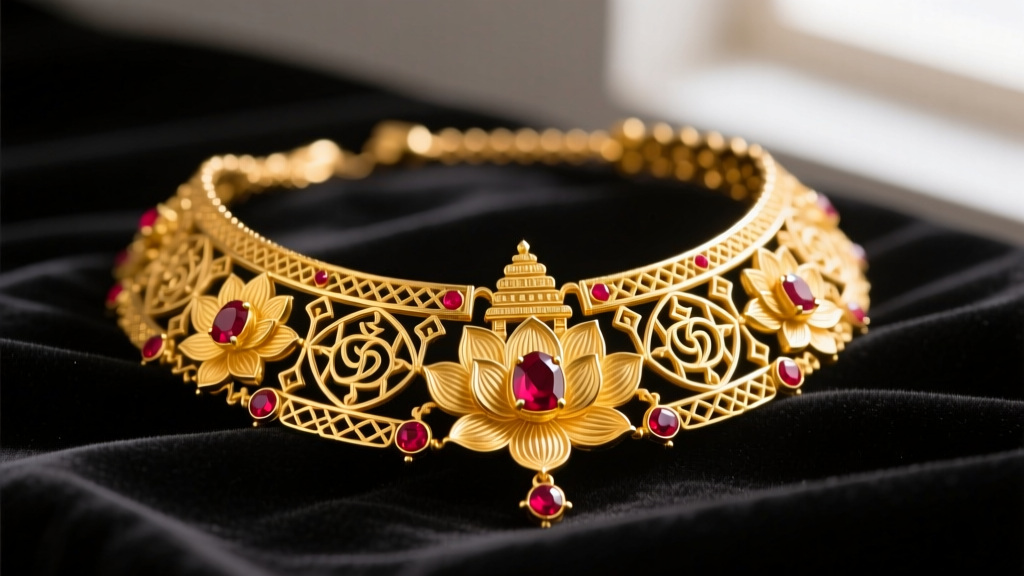
Purchasing an Indian gold necklace choker is rarely just a fashion decision; it is a complex financial transaction steeped in cultural heritage. Whether you are eyeing a traditional Temple design from Tamil Nadu, a heavy Kundan bridal piece from Rajasthan, or a sleek, modern Kamarkas for daily wear, the pricing structures in 2026 require a discerning eye. Gold prices have seen significant volatility over the past few years, making budget assessment and value retention more critical than ever for buyers. This comprehensive guide breaks down the exact mechanics of pricing, purity standards, and hidden costs to ensure your investment is both beautiful and financially sound.
The Anatomy of the Price Tag: Beyond the Daily Gold Rate
Many first-time buyers mistakenly believe the price of an Indian gold necklace choker is simply its weight multiplied by the daily market rate. In reality, the final retail price is a composite of four distinct variables. Understanding this formula is the first step in accurate budget assessment:
- Base Gold Value: The weight of the pure gold (excluding stones and enamel) multiplied by the daily 22K or 18K rate.
- Making Charges (Labor): The cost of craftsmanship, which can range from 8% to over 25% depending on the intricacy of the choker.
- Stone and Enamel Weight: The cost of any rubies, emeralds, pearls, or uncut diamonds (Polki) set into the piece.
- Statutory Taxes: In India, a 3% Goods and Services Tax (GST) is levied on the total value (gold + making charges + stones).
According to market data tracked by the World Gold Council, consumer demand for lightweight, high-purity gold jewelry has surged in 2026, pushing jewelers to offer more transparent pricing models. However, opaque making charges remain the primary area where buyers lose value.
Purity Showdown: 22K vs. 18K for Choker Designs
The structural integrity and resale value of your choker depend heavily on its karatage. While 24K gold is too soft for jewelry, the choice between 22K and 18K dictates both your upfront budget and long-term value retention.
| Feature | 22K Gold (BIS 916) | 18K Gold (750) |
|---|---|---|
| Purity | 91.6% Pure Gold | 75.0% Pure Gold |
| Best For | Plain gold, Temple, Antique, & Kasu Malai chokers | Diamond, Polki, Kundan, and intricate stone-set chokers |
| Making Charges | Typically 12% - 18% | Typically 18% - 25% (due to stone setting labor) |
| Resale Value | Excellent (98-100% of current gold rate) | Moderate (70-80% of current gold rate, stones deducted) |
| Durability | Softer, prone to bending if heavily layered | Harder, excellent for securing heavy gemstone clusters |
If your primary goal is wealth preservation and budget efficiency, a plain 22K Indian gold necklace choker is unmatched. However, if you desire a choker heavily encrusted with uncut diamonds or precious gems, 18K is structurally necessary to prevent the prongs from bending and losing stones over time.
Weight Tiers and Budget Expectations for 2026
Chokers sit snugly against the collarbone, meaning they require less overall length than a standard 22-inch Haar, but their width and three-dimensional motifs can quickly drive up the gram weight. Here is what you can expect to pay across different weight categories in the current market:
1. The Lightweight Tier (15g to 25g)
Budget Range: $1,100 – $1,900 USD (approx. ₹90,000 – ₹1,60,000 INR)
Styles like the Kamarkas (a traditional waist-chain design adapted for the neck) or simple hollow-formed Gulabhar (rose-petal) chokers fall into this category. These are ideal for daily wear or office environments. To keep the weight low, jewelers use hollow tube constructions or delicate filigree work. While budget-friendly, ensure the clasp is solid gold, as hollow clasps are a common failure point.
2. The Medium Tier (30g to 50g)
Budget Range: $2,200 – $3,800 USD (approx. ₹1,80,000 – ₹3,20,000 INR)
This is the sweet spot for traditional South Indian Temple chokers and medium-weight antique finish designs. At this weight, the choker has enough physical presence to serve as a standalone bridal piece or a statement accessory for festive wear. The making charges here are usually calculated as a percentage of the gold weight.
3. The Heavy Bridal Tier (60g to 120g+)
Budget Range: $4,500 – $9,000+ USD (approx. ₹3,80,000 – ₹7,50,000+ INR)
Heavy Kundan, Polki, and solid-cast Temple chokers designed for wedding days. At this tier, the structural engineering of the necklace is vital. A 100-gram choker requires a secondary support string (dori) to tie at the back, as a standard gold clasp will snap under the dynamic weight of the wearer's movements.
Navigating Making Charges and Hidden Deductions
The most critical E-E-A-T factor in buying gold jewelry is knowing how to audit the jeweler's invoice. The Bureau of Indian Standards (BIS) mandates strict hallmarking protocols, but invoice manipulation regarding non-gold elements remains a common pitfall.
The Stone and Wax Deduction Rule
When buying a Kundan or Meenakari Indian gold necklace choker, the reverse side is often filled with lac (a resinous wax) to secure the uncut diamonds and provide structural backing. Unscrupulous jewelers will weigh the entire piece and charge you the 22K gold rate for the weight of the wax and glass stones. Always demand a net gold weight deduction. The jeweler must estimate the weight of the stones and lac, subtract it from the gross weight, and charge you the gold rate only on the net metal weight.
Flat Rate vs. Percentage Making Charges
For machine-cut or simple cast chokers, making charges are often a flat fee per gram (e.g., $5 to $10 per gram). For hand-carved antique or Temple jewelry, making charges are a percentage of the total gold value (usually 15% to 22%). In 2026, many organized retailers offer 'zero making charge' promotions during festive seasons. Be cautious: these promotions often inflate the base gold rate per gram by 5% to 8%, effectively hiding the labor cost in the metal price. Always compare the final out-the-door price, not the advertised discount.

Verification: The HUID Mandate
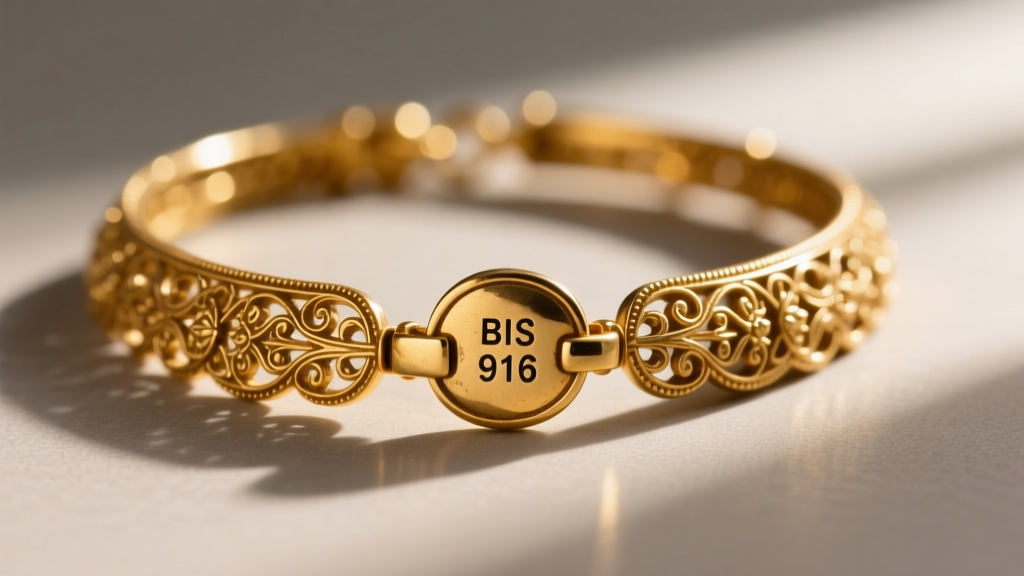
Never purchase an Indian gold necklace choker without verifying the HUID (Hallmark Unique Identification) code. Since the strict enforcement of the BIS hallmarking regulations, every piece of 22K gold jewelry must carry a 6-digit alphanumeric HUID code stamped directly onto the metal, usually on the clasp or the primary ring. You can verify this code in real-time using the official BIS Care App. This ensures that the choker you are paying for is genuinely 91.6% pure gold and not a lower-karat alloy disguised with heavy antique oxidation.
Value Retention and Resale Realities
An Indian gold necklace choker is a highly liquid asset, provided you buy it with the secondary market in mind. When you eventually decide to upgrade or liquidate, the buyback policy of the jeweler dictates your return on investment.
- 22K Plain Gold: Reputable jewelers will buy back 22K plain gold chokers at 98% to 100% of the prevailing daily gold rate, deducting only a nominal 1% to 2% for melting and refining impurities.
- Stone-Set and Kundan Chokers: Resale value drops significantly. Jewelers will deduct the entire weight of the stones, lac, and enamel. Furthermore, they will only pay for the gold content at the current rate, meaning you will lose 100% of the making charges and the retail markup on the gemstones.
- Exchange Offers: If you are buying a new choker by exchanging old gold, ensure the jeweler is offering a 100% value exchange on the net gold weight of your old piece, without deducting 'melting charges' or 'wastage' from your old jewelry.
Final Verdict: Smart Buying in 2026
To maximize both aesthetic appeal and financial prudence when purchasing an Indian gold necklace choker, prioritize 22K BIS-hallmarked pieces with making charges capped below 18%. If you desire the opulent look of heavy bridal Kundan on a strict budget, opt for a 20-gram 22K gold base choker and pair it with detachable, high-quality gold-plated floral hair accessories or a separate pearl harness. This strategy preserves your capital in pure, liquid gold while delivering the visual impact required for grand occasions. Always demand an itemized invoice that clearly separates the net gold weight, stone weight, making charges, and GST, ensuring your investment is protected for generations to come.


