How Experts Define Pearl Necklace Quality: Troubleshooting Flaws
Learn how gemologists define pearl necklace quality. Troubleshoot common defects like peeling nacre, silk stretching, and spot fakes with expert tips.

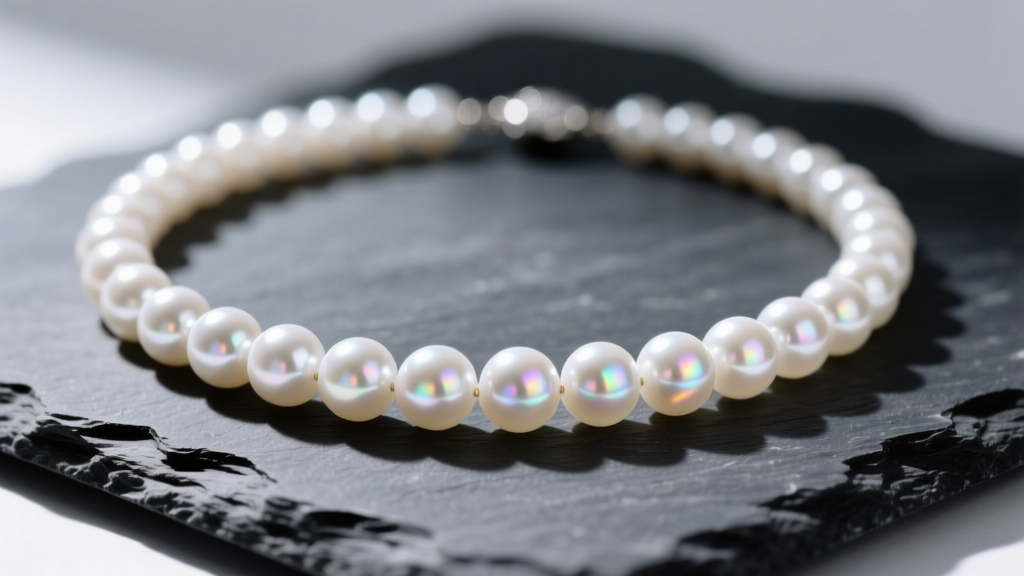
When collectors, appraisers, and gemologists define pearl necklace quality, they look far beyond simple roundness and shine. The secondary market is flooded with treated, poorly cultured, and outright fake strands, making authentication and maintenance a critical skill for any serious jewelry enthusiast. Whether you are diagnosing a vintage estate find or troubleshooting a modern strand that has lost its luster, understanding the structural anatomy of cultured pearls is your first line of defense.
This guide moves past basic buying advice and dives into the technical troubleshooting of pearl necklaces. We will cover how to identify nacre degradation, diagnose silk thread failures, and resolve hardware issues that threaten the integrity of your jewelry.
How Gemologists Define Pearl Necklace Grading Standards
To effectively troubleshoot flaws, you must first understand the baseline of perfection. According to the Gemological Institute of America (GIA), pearl quality is defined by seven distinct value factors: size, shape, color, luster, surface, nacre quality, and matching. For troubleshooting purposes, luster and nacre quality are the most critical indicators of structural integrity.
Luster is not merely 'shine'; it is the sharpness of light reflection caused by the overlapping layers of aragonite platelets in the nacre. A high-quality Akoya pearl will reflect a crisp, undistorted image of the light source. If a pearl appears chalky or dull, it indicates either poor crystallization during the culturing process or severe surface degradation from chemical exposure. Nacre thickness is equally vital. While a commercial-grade Akoya might possess a mere 0.2mm to 0.3mm of nacre, gem-grade strands require a minimum of 0.8mm to ensure longevity and prevent peeling.
Troubleshooting Nacre Peeling and Flaking
One of the most devastating defects a pearl owner can encounter is nacre peeling. This occurs when the outer layers of aragonite separate from the nucleus or underlying layers.
Root Causes of Peeling
- Premature Harvesting: Pearls harvested before the nacre has sufficiently thickened (often under 8 months for Akoya) lack the structural cohesion to withstand daily wear.
- Acidic Degradation: Human sweat, perfumes, and cosmetics contain acids that slowly dissolve the calcium carbonate in the nacre. Over decades, this eats through the outer layers, causing them to flake off.
- Drill Hole Stress: If a pearl was drilled with a dull bit or at high speeds, micro-fractures can form around the drill hole, eventually leading to localized chipping and peeling.
The Solution
Unfortunately, once nacre begins to peel, the damage is irreversible. There is no polish or coating that can restore the crystalline structure. The only troubleshooting step is preventative: always wipe your pearls with a damp, lint-free microfiber cloth after wearing them, and never store them in airtight plastic, which can trap moisture and accelerate degradation. For severe cases on a graduated strand, a jeweler may need to remove the damaged pearls and replace them with matched components, though this is costly and often disrupts the original matching.
Diagnosing and Fixing Silk Thread Stretching
The traditional method of stringing fine pearls involves 100% silk thread, hand-knotted between each bead. While beautiful, silk is an organic protein fiber highly susceptible to environmental factors. If you notice 'gapping'—visible spaces between the pearls when the necklace is laid flat or worn—your strand requires immediate restringing.
Thread Sizing and Material Specifics
Using the wrong thread gauge is a common amateur mistake that leads to rapid stretching or breakage. Professional jewelers rely on specific sizing based on the pearl's drill hole diameter (typically 0.7mm to 0.9mm for standard strands):
- Size D (0.30mm): Used for small seed pearls (under 6mm) or delicate baby strands.
- Size E (0.35mm): The industry standard for 6mm to 7.5mm Akoya and freshwater pearls.
- Size F (0.40mm) or Size 2 (0.45mm): Required for heavy South Sea and Tahitian pearls (8mm and above) to bear the increased tensile load.
When restringing, the silk must be pre-stretched by the jeweler before knotting. If the thread is not stretched under tension during the knotting process, the weight of the pearls will stretch the silk during the first few wears, resulting in the dreaded gapping effect.
Pearl Necklace Troubleshooting Matrix
| Symptom | Root Cause | Expert Solution |
|---|---|---|
| Visible gapping between knots | Silk thread stretching due to moisture or lack of pre-stretching | Restring using 100% silk (Griffin or equivalent) with proper tension knotting |
| Chalky, dull appearance | Acid erosion from sweat/cosmetics or poor initial crystallization | Gentle wipe with damp cloth; if structural, replacement is the only option |
| Fraying near the clasp | Silk rubbing against sharp metal edges of the clasp ring | Install or replace 0.3mm sterling silver or gold-filled French wire (gimp) |
| Yellowing of white pearls | Dehydration or prolonged storage in dark, airtight environments | Store in a soft cotton pouch; allow pearls to 'breathe' and absorb ambient humidity |
Hardware Failures: Clasp and French Wire Wear

The hardware connecting your pearl strand is a frequent point of mechanical failure. The transition point where the silk thread meets the metal clasp is the most vulnerable area of the entire necklace. To protect the silk from being sliced by the metal jump ring, jewelers use a protective coil called French wire (or gimp).
Troubleshooting French Wire
French wire should be made of 0.3mm sterling silver, gold-filled, or solid gold wire, tightly coiled like a tiny spring. Over time, the friction of the clasp rubbing against the French wire can cause the metal to wear thin, eventually exposing the silk to the sharp metal clasp ring. If you see the silk thread visibly touching the clasp hardware, or if the French wire appears dark, crushed, or frayed, the necklace must be taken to a jeweler for a partial restring of the terminal ends. Ignoring this will inevitably lead to a catastrophic snap and the loss of your pearls.
Clasp Mechanism Diagnostics
For multi-strand or heavy South Sea pearl necklaces, a simple spring ring or lobster clasp is insufficient. These require a tongue-and-groove (box clasp) or a fishhook clasp equipped with a figure-eight safety catch. If the tongue of a box clasp becomes loose and slips out of the groove, a jeweler can carefully use a pair of nylon-jaw pliers to gently compress the metal tongue, restoring the necessary friction fit without damaging the precious metal.
Spotting Fakes: The Authentication Troubleshooting Guide
Before you invest time and money into restringing or repairing a strand, you must definitively define pearl necklace authenticity. The market is saturated with glass, plastic, and shell-bead imitations coated with 'essence d'orient' (a mixture of fish scales and lacquer).
The most reliable non-destructive troubleshooting method is the 'tooth test.' Gently rub the pearl against the biting edge of your front tooth. A genuine cultured pearl, with its microscopic crystalline aragonite platelets, will feel distinctly gritty or sandy. A glass or plastic imitation will feel perfectly smooth. However, for high-end shell-coated fakes (like Majorica pearls), the tooth test can sometimes yield a false gritty reading due to the texture of the synthetic coating.
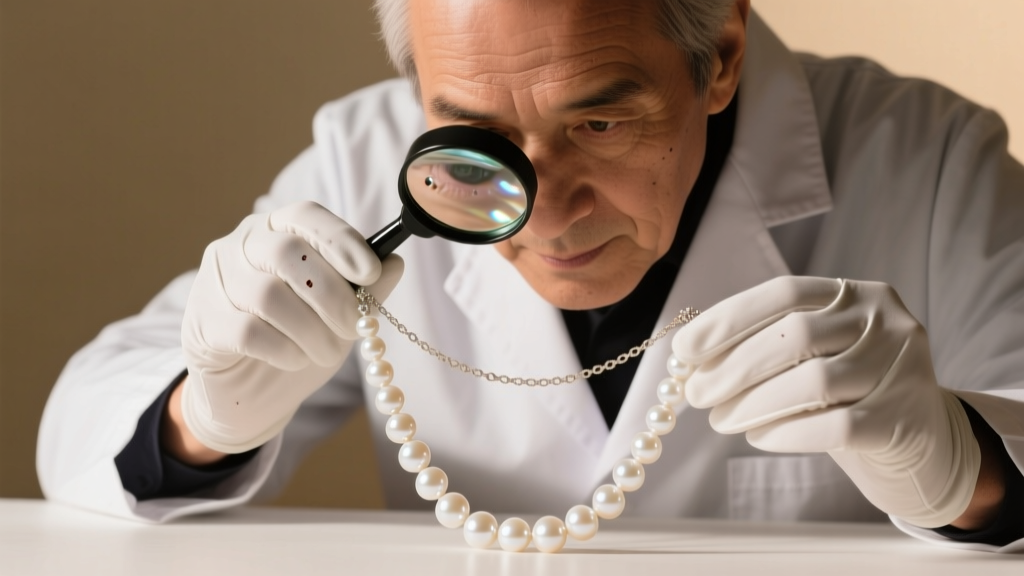
For absolute certainty, use a 10x triplet jeweler's loupe to examine the drill hole. A real pearl will show a sharp, distinct boundary between the nacre and the nucleus (or the concentric growth lines in a freshwater pearl). A coated fake will often reveal peeling paint, a rounded lip of coating pulled into the drill hole, or a perfectly smooth, glass-like interior. According to the GIA Pearl Care and Cleaning guidelines, proper identification is the first step in ensuring you apply the correct maintenance protocols, as harsh chemicals used to clean fakes can ruin organic gems, and vice versa.
By mastering these diagnostic techniques, you can confidently maintain, repair, and authenticate your pearl jewelry, ensuring these organic treasures survive for generations.