The Beginner's Guide to Choosing Mens Leather Necklaces
Discover how to choose, style, and care for mens leather necklaces. Learn about leather grades, cord thickness, and clasp types in this beginner guide.

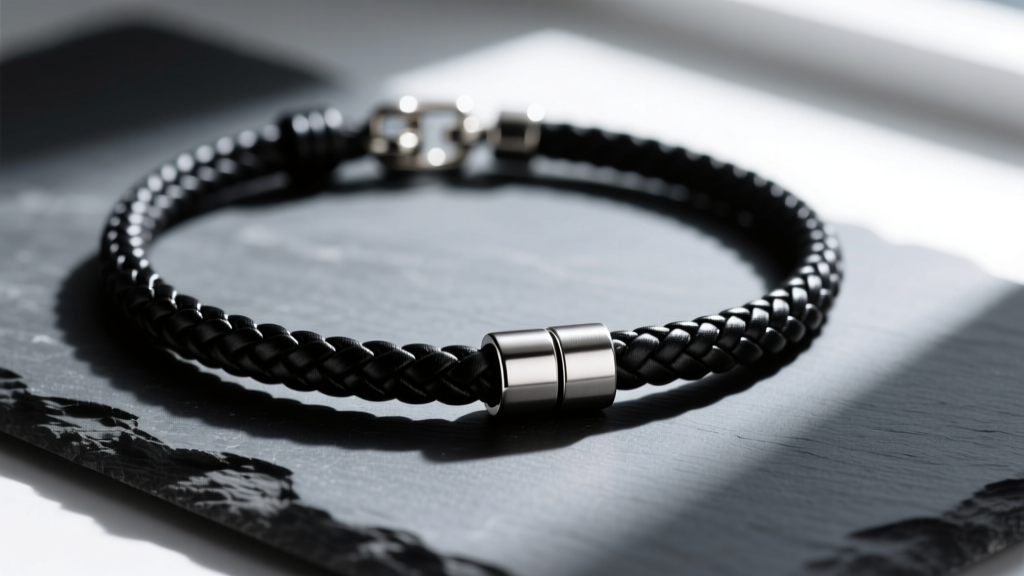
When it comes to versatile, rugged, and timeless accessories, few items rival the appeal of mens leather necklaces. Unlike precious metal chains that can sometimes feel overly formal or flashy, leather cords offer a grounded, masculine aesthetic that pairs just as well with a vintage t-shirt as it does with a casual button-down. However, the market is flooded with low-quality options that snap, peel, or tarnish within months. For beginners, navigating the nuances of leather grades, cord thicknesses, and hardware can be overwhelming. This comprehensive guide breaks down exactly what you need to know to invest in a piece that will last for years, not weeks.
Decoding Leather Grades: What You Are Actually Buying
The term "leather" is not a guarantee of quality. In fact, the jewelry industry frequently uses misleading marketing terms to sell inferior products at premium prices. Understanding the hierarchy of leather grades is the most critical step in buying mens leather necklaces.
- Full-Grain Leather: The absolute gold standard. Full-grain leather includes the entire thickness of the hide, retaining the natural grain and imperfections. It is incredibly strong, water-resistant, and develops a rich, unique patina over time. A high-quality full-grain leather cord will easily last a decade or more with proper care. Expect to pay between $40 and $120 for a bare full-grain cord.
- Top-Grain Leather: The second-highest quality. The top layer is sanded and buffed to remove imperfections, resulting in a uniform, smooth finish. While it is still durable and flexible, it will not develop the same deep patina as full-grain leather. Prices typically range from $25 to $60.
- Genuine Leather: This is the most common trap for beginners. "Genuine leather" is not a mark of authenticity; it is a specific, low-grade classification. It is made from the bottom splits of the hide, heavily processed, and often painted to look like higher grades. It lacks structural integrity and will eventually crack, peel, and snap. Avoid this grade entirely.
- Bonded Leather: The particleboard of the leather world. It consists of leather dust and scraps glued together with polyurethane. It degrades rapidly, especially when exposed to the natural oils and sweat from your neck.
For a deep dive into how these materials are processed and why the grading system matters, authoritative leathercraft resources like Heddels offer excellent visual breakdowns of the hide layers.
Cord Thickness and Length: Getting the Fit Right
The visual weight of your necklace is dictated by its thickness (measured in millimeters) and its length. Choosing the wrong combination can result in a piece that looks either comically oversized or frustratingly fragile.
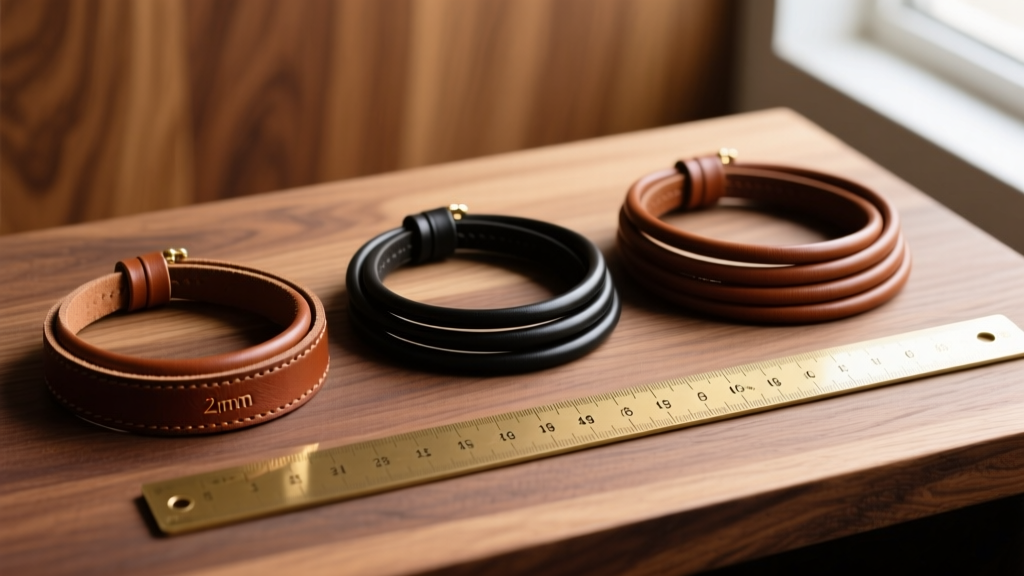
Standard Thickness Chart for Mens Leather Necklaces
| Thickness | Style Profile | Pendant Compatibility | Best Use Case |
|---|---|---|---|
| 1.5mm - 2mm | Minimalist, subtle | Small, lightweight pendants (under 10g) | Layering, office wear, discreet daily use |
| 3mm - 4mm | Standard, versatile | Medium pendants (10g - 25g) | Everyday casual wear, standard silver/stone pendants |
| 5mm - 6mm | Rugged, bold | Heavy, large pendants (25g - 50g) | Statement pieces, Viking/heritage styles, outdoor wear |
| 8mm+ | Chunky, statement | None (worn alone) | Streetwear, standalone statement pieces |
Length is equally important. A 20-inch cord sits right at the collarbone, making it ideal for thinner cords and smaller pendants. A 22-inch cord rests on the upper chest and is the most universally flattering length for medium-to-heavy pendants. If you prefer a longer, streetwear-inspired look that hangs near the sternum, opt for 24 to 28 inches, but stick to thicker cords (4mm+) so the necklace doesn't look like a piece of string.
Hardware and Clasps: The Weak Point of Leather Cords
A premium full-grain leather cord is useless if it is attached to a cheap, weak clasp. The hardware is almost always the first point of failure on mens leather necklaces. When evaluating a piece, pay close attention to both the clasp mechanism and the metal alloy.
Clasp Mechanisms
Lobster Claws: Common on thin (1-2mm) cords. They are secure but can be difficult to fasten with one hand and look disproportionate on thicker leather.
Magnetic Clasps: Highly convenient for daily wear, but cheaper magnets can slip apart if the necklace is snagged on clothing. Only buy magnetic clasps with a strong neodymium core and a secondary locking sleeve.
Bayonet / Screw Clasps: The undisputed king of thick leather cords (4mm and up). These feature a threaded barrel that screws together, creating a mechanical lock that will never accidentally open. They also provide a seamless, continuous look to the cord.
Metal Alloys
Always look for 316L Surgical Stainless Steel, Titanium, or Solid Sterling Silver hardware. Avoid brass, copper, or mystery "alloy" metals, which will oxidize, turn your neck green, and cause contact dermatitis when exposed to sweat.
Pendant Pairing: Weight Ratios and Bail Sizes
Pairing a pendant with a leather cord requires an understanding of physical proportions and structural limits. The most common mistake beginners make is threading a heavy, oversized pendant onto a thin leather cord, which stretches the leather and eventually causes it to snap at the bail (the loop that holds the pendant).

Follow the Rule of Thirds for weight distribution: the pendant should not weigh more than one-third of the visual mass of the cord. Furthermore, you must check the inner diameter of the pendant's bail. If you are buying a 4mm leather cord, the bail must have an inner diameter of at least 5mm to 6mm to allow the leather to slide freely without pinching or fraying. For heavy silver, bronze, or natural stone pendants (like turquoise or onyx), a 5mm braided or round leather cord with a reinforced wire-wrapped bail is the safest configuration.
Care and Maintenance: Preventing Dry Rot and Snapping
Leather is a natural, porous material. The very environment it lives in—the human neck—is hostile to its longevity due to sweat, sebum, and friction. Proper maintenance is non-negotiable if you want your necklace to survive the years.
Expert Tip: Never shower or swim with a leather necklace. Repeated exposure to water strips the hide of its natural oils, leading to "dry rot," where the leather becomes brittle and snaps without warning.
To maintain the structural integrity of your cord, condition it every 3 to 6 months. Use a high-quality leather conditioner like Bickmore Bick 4 or a pure mink oil. Apply a tiny drop to a microfiber cloth and rub it thoroughly into the cord, letting it absorb overnight before wearing. For a more detailed look into long-term leather preservation, heritage brands like Saddleback Leather provide excellent, time-tested conditioning routines that apply perfectly to jewelry-grade leather.
By prioritizing full-grain materials, selecting the correct thickness for your pendant, and investing in secure bayonet hardware, you will secure a piece of jewelry that ages beautifully and becomes a signature part of your daily wardrobe.


