Beginner's Guide to Choosing a Sunburst Gold Necklace
Discover everything about the sunburst gold necklace. Learn how to choose karats, pick the right chain, and style this timeless celestial motif.

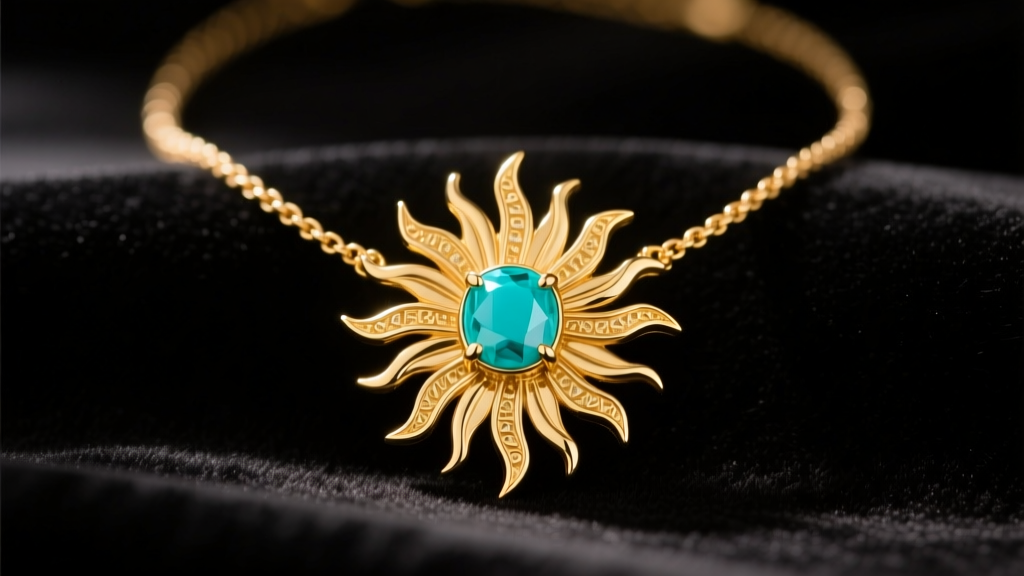
The celestial motif has captivated jewelry designers for centuries, but few designs command attention quite like the sunburst gold necklace. Characterized by a striking central focal point surrounded by radiating spokes, this design mimics the explosive energy of the sun. Whether you are inheriting a vintage piece, shopping for a modern interpretation, or simply looking to add a bold yet versatile pendant to your daily rotation, understanding the craftsmanship and styling nuances of this specific necklace is essential.
As a beginner navigating the vast landscape of fine jewelry, it is easy to feel overwhelmed by karat weights, chain pairings, and vintage versus modern pricing. This comprehensive guide breaks down the anatomy, metallurgy, and styling frameworks you need to confidently choose and wear a sunburst gold necklace.
What Exactly is a Sunburst Gold Necklace?
At its core, a sunburst pendant is defined by its geometry. The design typically features a central cabochon, faceted gemstone, or plain gold dome, from which linear rays extend outward. These rays can be crafted using various techniques:
- Milgrain Edging: Tiny beads of gold applied to the edges of the rays, common in Art Deco and 1970s vintage pieces.
- Diamond Pavé: Modern luxury interpretations often feature the radiating spokes encrusted with micro-pavé diamonds for added brilliance.
- Textured Gold: Hammered or florentine-finished rays that catch the light without the need for additional gemstones.
The anatomy also includes the bail—the loop at the top that connects the pendant to the chain. In sunburst designs, the bail is often integrated into the top ray or hidden behind the central stone to maintain the illusion of a floating sun. According to the Gemological Institute of America (GIA), the structural integrity of these intricate rays relies heavily on the specific gold alloy used, making your choice of metal paramount.
Decoding the Gold: 14k vs. 18k for Sunburst Pendants
When shopping for a sunburst gold necklace, you will primarily encounter 14k and 18k gold. Because sunburst designs feature long, delicate, and sometimes protruding spokes, the hardness of the metal is a critical factor in preventing bending or breakage.
Pure 24k gold is far too soft for intricate jewelry. Therefore, it is alloyed with metals like copper, silver, and zinc. 14k gold contains 58.5% pure gold, while 18k contains 75%. The higher alloy content in 14k gold makes it noticeably harder and more resistant to the daily wear-and-tear that delicate sunburst rays endure. Conversely, 18k gold offers a richer, deeper yellow hue that is highly prized in vintage 1970s jewelry.
| Feature | 14k Yellow Gold | 18k Yellow Gold |
|---|---|---|
| Gold Content | 58.5% | 75.0% |
| Durability | High (Ideal for delicate rays) | Moderate (Softer, prone to scratching) |
| Color Profile | Warm, slightly muted yellow | Rich, deep, saturated yellow |
| Average Price (20mm Pendant) | $450 - $850 | $900 - $1,800+ |
If you are buying a piece with long, wire-like spokes exceeding 25mm in diameter, 14k gold is the superior choice for structural longevity. If you are investing in a vintage piece with shorter, thicker rays and a deep yellow aesthetic, 18k is the traditional standard.
Choosing the Right Chain for Your Sunburst Pendant
A common mistake beginners make is pairing a delicate sunburst pendant with a chain that is either too thick, competing with the design, or too thin, risking a snap. The radiating lines of a sunburst pendant demand a chain that offers visual balance without stealing focus.
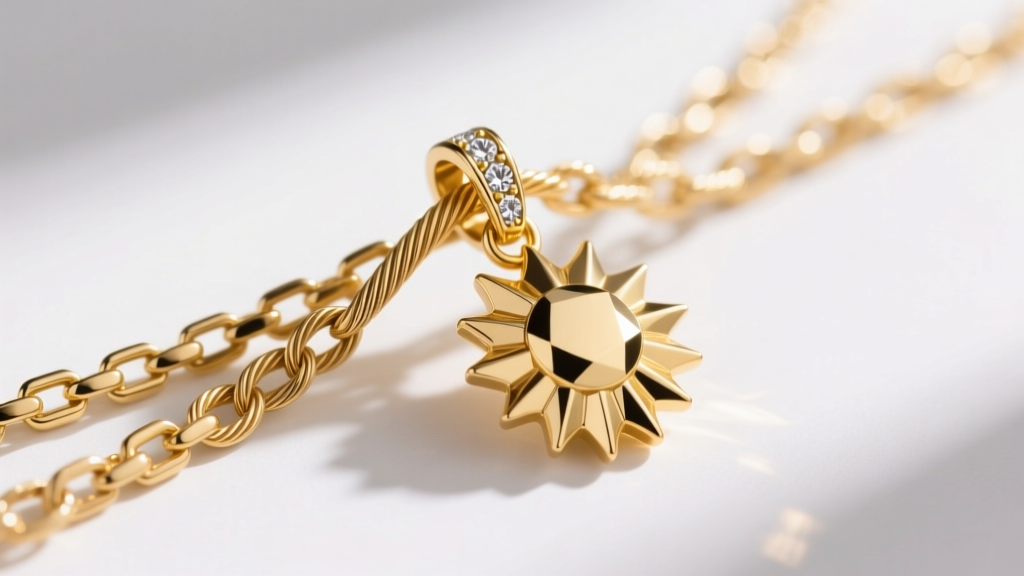
The first step is measuring the inner diameter of the pendant's bail. Most vintage sunburst pendants have a bail opening between 2.5mm and 4.0mm. Modern, diamond-encrusted sunbursts often feature smaller, hidden bails that restrict you to chains under 1.5mm.
Top Chain Pairings for Sunburst Pendants
- The Box Chain (1.0mm - 1.5mm): The geometric, square links of a box chain beautifully complement the structured, linear rays of a sunburst. It lays flat and reflects light cleanly.
- The Cable Chain (1.2mm - 1.8mm): A classic, oval-link cable chain is the most historically accurate pairing for vintage 1970s yellow gold sunbursts. It offers a traditional, understated look.
- The Wheat Chain (1.5mm): For a slightly more textured, vintage-inspired look, a wheat chain mimics the woven, organic feel of mid-century jewelry design.
Expert Tip: Avoid snake chains or thick rope chains. Snake chains can easily kink when paired with heavier pendants, and rope chains possess too much visual noise, clashing with the intricate milgrain or pavé details of the sunburst rays.
How to Style and Layer Your Sunburst Necklace
The sunburst gold necklace is inherently bold, acting as a natural focal point. However, mastering the art of layering can elevate it from a simple accessory to a curated style statement. The key to successful layering is maintaining adequate space between the necklaces to allow the sunburst's rays to remain fully visible.
The Rule of Three Layering Framework
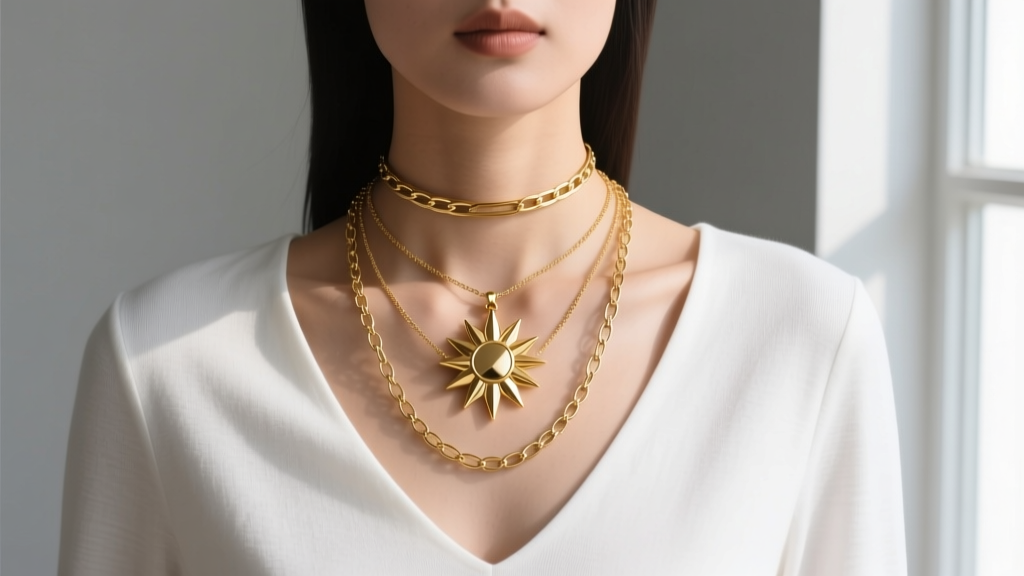
When building a stack around your sunburst pendant, utilize the "Rule of Three" with varying lengths and textures:
- The Anchor (14 to 15 inches): Start with a simple, thin gold choker or a small 3mm gold bead chain that sits high on the collarbone.
- The Focal Point (17 to 18 inches): This is where your sunburst gold necklace lives. Ensure the pendant rests squarely in the center of the chest.
- The Elongator (22 to 24 inches): Finish with a longer, heavier chain, such as a 2.0mm gold lariat or a pendant featuring a solitary, elongated gemstone like a marquise diamond or pearl drop.
Neckline Pairings
The geometry of your clothing should harmonize with the geometry of your jewelry. Sunburst pendants, being circular and expansive, pair best with necklines that frame them without crowding the rays:
- V-Necklines: The downward angle of a V-neck perfectly mirrors the elongating effect of a necklace stack, giving the sunburst pendant ample negative space to shine.
- Scoop Necks: A wide scoop neck mirrors the circular geometry of the sunburst, creating a cohesive, balanced look.
- Button-Down Shirts: Wearing a sunburst necklace over a crisp, unbuttoned white or navy linen shirt provides a high-contrast backdrop that makes yellow gold pop vividly.
Vintage vs. Modern: Where to Buy and What to Expect
The market for sunburst gold necklaces is distinctly split between vintage treasures and modern luxury creations. Understanding this dichotomy will help you set realistic budget expectations and identify authentic pieces.
Vintage Sunbursts (1960s - 1980s): This era favored bold, chunky 14k and 18k yellow gold. These pieces frequently feature opaque center stones like turquoise, coral, lapis lazuli, or tiger's eye. You can source these from reputable vintage curators on platforms like 1stDibs or specialized Etsy sellers. Expect to pay between $400 and $900 for a high-quality, authentic vintage piece in excellent condition. Always ask for a hallmark photo to verify the gold purity.
Modern Sunbursts (2010s - Present): Contemporary designs lean toward minimalism and high brilliance. Modern sunbursts are often crafted in 14k or 18k gold but feature white diamonds (both in the center and along the rays) and are frequently available in white or rose gold variations. Brands like Mejuri, Catbird, and fine jewelry boutiques offer modern iterations ranging from $800 for solid gold without diamonds, up to $3,500+ for heavily pavéed diamond designs.
For further guidance on verifying hallmarks and understanding metal purity when buying vintage or modern jewelry, the American Gem Society provides excellent resources on purchasing with confidence and identifying authentic maker's marks.
Care and Maintenance for Radiating Gold
The intricate crevices between the radiating spokes of a sunburst pendant are notorious for trapping skin oils, lotions, and environmental dust. Over time, this buildup can dull the gold and obscure the brilliance of any accent diamonds.
To clean your sunburst gold necklace safely at home, create a solution of warm water and a few drops of mild, phosphate-free dish soap. Let the pendant soak for 15 minutes to loosen debris. Then, using a soft-bristled baby toothbrush, gently brush along the grain of the rays, paying special attention to the junction where the spokes meet the central stone.
Crucial Warning: If your vintage sunburst features a porous center stone—such as turquoise, coral, opal, or pearl—never soak it in water or use an ultrasonic cleaner. Ultrasonic vibrations can easily fracture porous gems or dissolve the adhesives used in vintage cabochon settings. For these specific pieces, wipe the gold rays carefully with a damp jewelry cloth, avoiding the center stone entirely.
When storing your necklace, always lay it flat or hang it from a jewelry stand. Tossing a sunburst pendant into a crowded jewelry box is the fastest way to bend a delicate gold ray or scratch a polished center dome. By treating this celestial masterpiece with the specific care it requires, your sunburst gold necklace will continue to radiate brilliance for decades to come.


