The Ultimate Beginner's Guide to Choosing a Women's Clover Necklace
Discover how to choose the perfect women's clover necklace. Learn about metal grades, stone inlays, chain pairings, and styling tips for everyday wear.

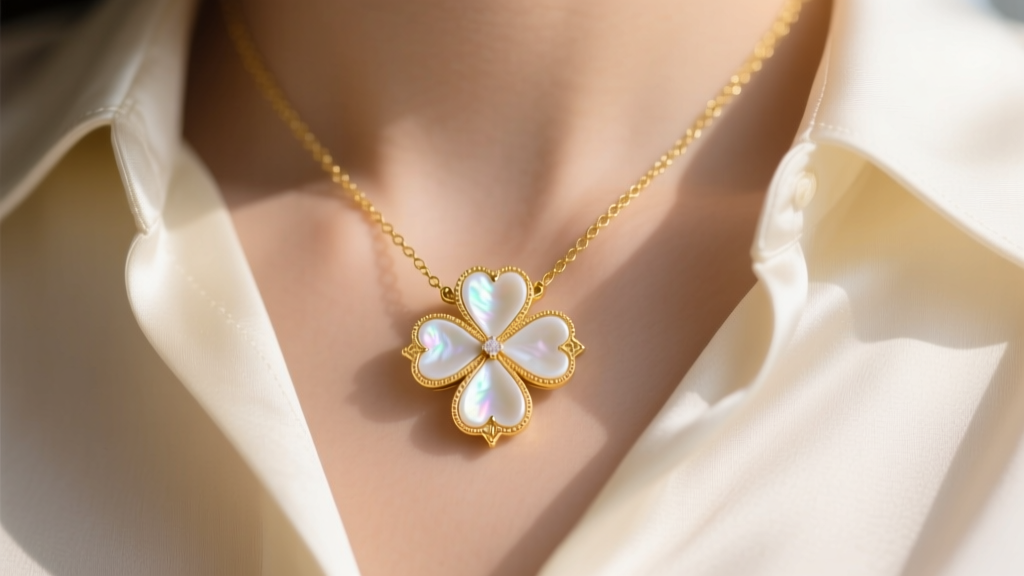
When it comes to timeless jewelry motifs, few designs carry the universal charm and enduring popularity of the quatrefoil. For beginners stepping into the world of fine jewelry, selecting a women's clover necklace can feel overwhelming. Between varying metal purities, fragile stone inlays, and complex chain pairings, making the wrong choice can lead to tarnished metals, cracked stones, or a pendant that simply doesn't sit right on your neckline. This comprehensive guide breaks down the exact specifications, material grades, and structural details you need to know to invest in a clover pendant that will last a lifetime.
The Symbolism and Historical Appeal of the Clover Motif
Before diving into metallurgy and gemology, it is essential to understand why this specific shape dominates the jewelry market. The four-leaf clover, or quatrefoil, has roots tracing back to Gothic and Renaissance architecture, where it symbolized harmony, proportion, and divine balance. In modern jewelry, the four leaves are widely accepted to represent luck, health, wealth, and love. Unlike fleeting trend-based shapes, the geometric symmetry of the clover ensures it remains a staple in both minimalist and maximalist jewelry boxes. Because of its deep historical roots, a well-crafted clover pendant transitions seamlessly from casual daytime wear to formal evening events.
Decoding Materials: What to Look For (and Avoid)
The longevity of your necklace depends entirely on the materials used for both the metal base and the decorative inlays. Fast-fashion retailers often cut corners here, leading to jewelry that degrades within months.
Metal Bases: 14k vs. 18k Gold and Sterling Silver
For a women's clover necklace intended for daily wear, 14k gold (58.5% pure gold) is the superior choice. It offers a rich color while maintaining the structural integrity needed to protect delicate stone inlays. 18k gold (75% pure gold) provides a deeper, more buttery yellow hue but is significantly softer, making the prongs or bezels more prone to bending and releasing the inlay over time. If you prefer silver, ensure the piece is stamped 925 and features a rhodium flash plating to delay the natural oxidation process that causes sterling silver to tarnish.
Failure Mode Alert: Avoid gold-plated brass or copper bases. The acids in human sweat will quickly penetrate microscopic pores in the plating, causing the base metal to oxidize and turn your skin green while the gold layer flakes away.
Inlay Stones: Durability and the Mohs Scale
The inlay is the soul of a clover necklace. According to the Gemological Institute of America (GIA), understanding the Mohs hardness scale is critical for predicting how an inlay will survive daily wear.
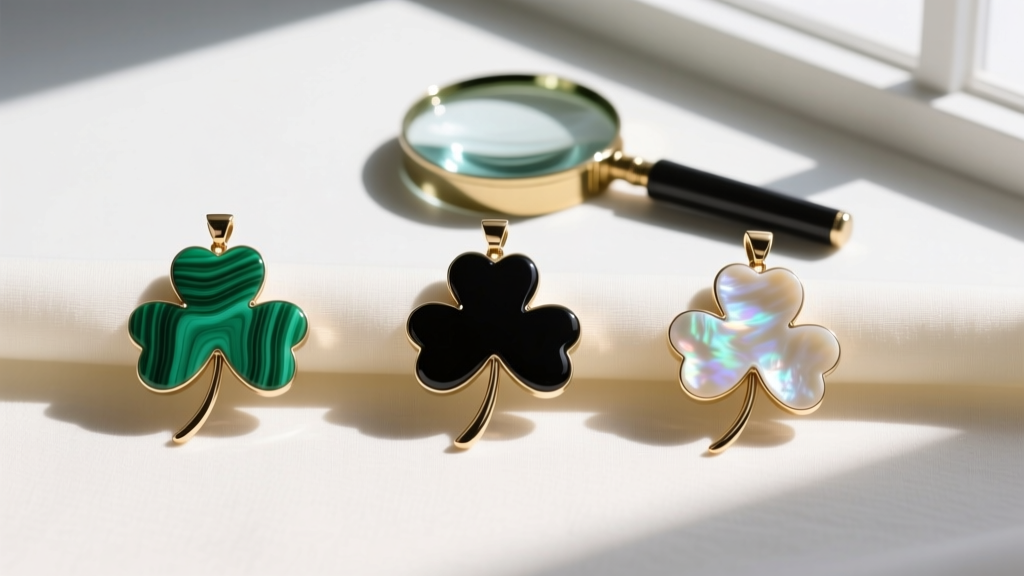
- Mother of Pearl (MOP): Mohs 2.5 - 4.5. Beautiful and iridescent, but highly porous. It will absorb perfumes and lotions, leading to a dull, yellowed appearance over time.
- Malachite: Mohs 3.5 - 4.0. Prized for its vivid green banding, malachite is notoriously fragile. It has perfect cleavage, meaning a simple drop onto a tile floor can cause it to fracture cleanly in half.
- Black Onyx: Mohs 6.5 - 7.0. The most durable traditional inlay. It resists scratching and handles accidental impacts far better than MOP or malachite.
- Carnelian: Mohs 6.5 - 7.0. A warm, reddish-orange chalcedony that offers excellent durability and a striking contrast against yellow gold.
Construction Quality: Bezel Settings vs. Epoxy Glue
One of the most critical, yet overlooked, aspects of buying a women's clover necklace is examining how the inlay is secured. High-end jewelers use a bezel setting, where a thin rim of gold or silver is physically pushed over the edge of the stone to lock it in place. This allows for future repairs; if the stone cracks, a jeweler can carefully lift the bezel and replace the inlay.
Conversely, mass-market manufacturers rely on industrial epoxy glues. You can spot a glued inlay by looking at the side profile of the pendant. If the stone sits completely flush with no metal rim overlapping its edge, it is glued. Over time, exposure to UV light, chlorine, and body heat will cause the epoxy to become brittle and yellow, eventually resulting in the stone popping out and getting lost.
Chain Pairings: Matching the Pendant to the Right Chain
A beautiful clover pendant will look unbalanced if hung on the wrong chain. The weight and dimensions of the pendant must dictate the chain's gauge (thickness) and style. Here is a practical framework for pairing your components:
| Chain Type | Recommended Thickness | Best Paired With | Durability Rating |
|---|---|---|---|
| Cable Chain | 0.9mm - 1.2mm | Small, lightweight MOP clovers (under 15mm) | Moderate (prone to kinking) |
| Box Chain | 1.2mm - 1.5mm | Medium stone inlays (15mm - 20mm) | High (resists tangling) |
| Rope Chain | 1.5mm - 2.0mm | Heavy solid gold or large dimensional clovers | Very High (excellent tensile strength) |
| Singapore Chain | 1.0mm - 1.5mm | Delicate diamond-accented clover pendants | High (fluid drape, strong links) |
Pro Tip: Always upgrade the clasp. Most standard chains come with spring-ring clasps, which are notoriously difficult to operate with one hand and prone to internal spring failure. Swap it for a lobster clasp or a magnetic neodymium clasp for superior security and ease of use.
Sizing and Proportions: Getting the Drop Length Right
The visual impact of a clover necklace changes drastically depending on where it falls on the chest. For beginners, understanding standard necklace lengths is crucial for achieving the desired aesthetic.
- 16 Inches (Collarbone): Ideal for smaller clover pendants (10mm - 12mm). This length sits right at the base of the neck and is perfect for layering with longer chains.
- 18 Inches (Standard Drop): The most versatile length. An 18-inch chain allows a medium-sized pendant (15mm) to rest just below the collarbone, drawing the eye downward and elongating the neck.
- 20 to 22 Inches (Matinee): Best reserved for larger, bolder clover designs or heavy gemstone inlays. This length works beautifully over clothing, such as sweaters or button-down shirts.
Styling Your Clover Necklace for Different Necklines
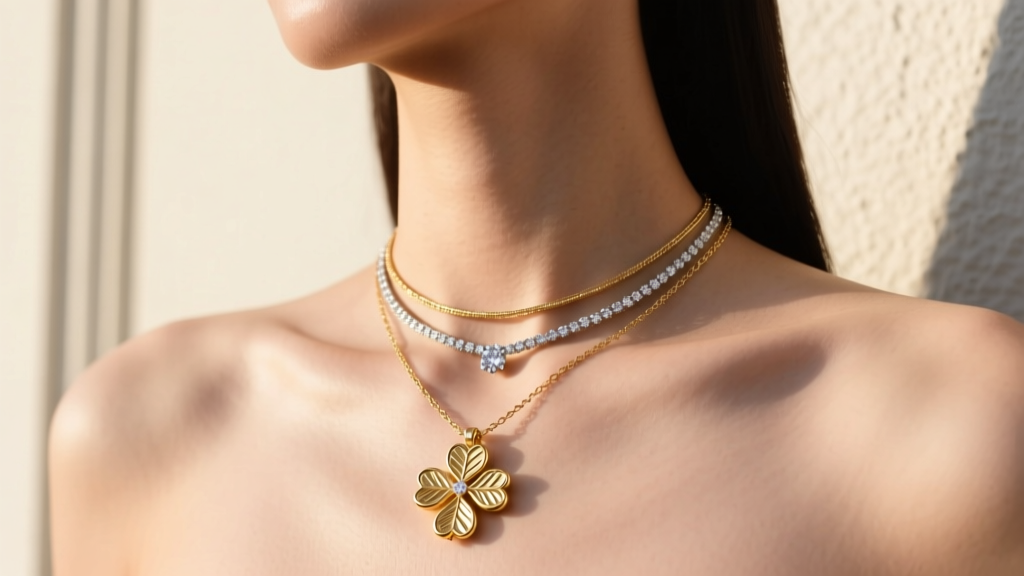
To maximize the versatility of your jewelry, you must match the pendant's drop to your wardrobe's necklines.
The golden rule of pendant styling is to ensure the jewelry either perfectly parallels the neckline or creates a deliberate, contrasting focal point.
- V-Neck Tops and Dresses: Pair with an 18-inch chain. The downward point of the V-neck naturally frames the geometric symmetry of the clover pendant, creating a cohesive, elongating visual line.
- Crew Necks and T-Shirts: Opt for a 16-inch choker length with a smaller pendant. This prevents the jewelry from getting lost in the fabric and keeps the clover resting visibly on the skin.
- Button-Down Shirts: Leave the top two buttons undone and wear a 20-inch chain. The pendant will rest against the skin in the open V created by the collar, offering a sophisticated, relaxed look.
Care and Maintenance: Preventing Inlay Damage
Proper maintenance is non-negotiable, especially for porous inlays like malachite and mother of pearl. The Jewelers of America strongly advises against using ultrasonic cleaners or harsh chemical dips on any jewelry featuring organic or soft stone inlays. The high-frequency vibrations of an ultrasonic machine can easily shatter malachite along its natural cleavage planes, while chemical dips will strip the iridescent nacre layer right off mother of pearl.
The Safe Cleaning Protocol
- Mix a few drops of mild, phosphate-free dish soap into a bowl of lukewarm (never hot) water.
- Dip a soft-bristled baby toothbrush or a microfiber cloth into the solution.
- Gently wipe the metal bezel and the surface of the stone. Do not scrub aggressively.
- Rinse briefly under a gentle stream of lukewarm water, ensuring the drain is securely plugged.
- Pat dry immediately with a lint-free cloth. Never let water air-dry on the metal, as it will leave hard water spots.
Finally, always practice the 'Last On, First Off' rule. Your women's clover necklace should be the last thing you put on after applying cosmetics, perfumes, and hairsprays, and the very first thing you take off when you return home. By respecting the material limitations and investing in proper construction, your clover pendant will remain a lucky, beautiful staple in your collection for decades to come.


