Belt Buckle Necklace With Initial: 2026 Value Guide
Assess the true value of a belt buckle necklace with initial. We break down 2026 pricing, material grades, chain gauges, and durability red flags.

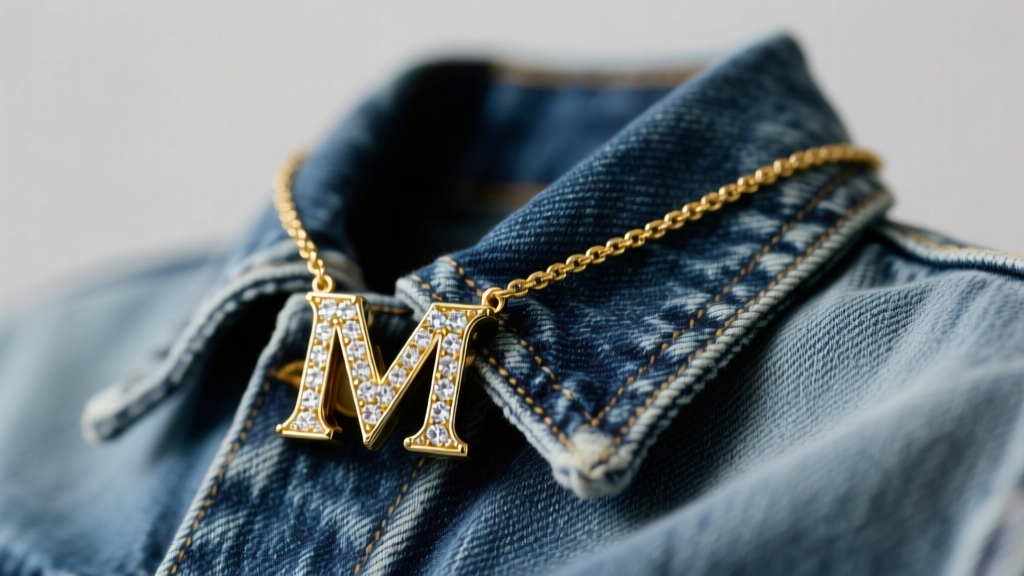
The Resurgence of Western-Core: Why the Belt Buckle Motif Matters
The intersection of Y2K nostalgia and modern Western-core aesthetics has propelled the belt buckle necklace with initial into a dominant trend for 2026. Characterized by a rectangular or slightly curved frame with a central crossbar—mimicking equestrian or rodeo hardware—this motif offers a structured, edgy alternative to traditional circular or oval initial pendants. However, as demand surges, the market has been flooded with everything from $15 fast-fashion alloys to $800 solid gold luxury pieces. For the savvy consumer, distinguishing between a disposable accessory and a lasting wardrobe staple requires a deep understanding of metallurgy, chain mechanics, and manufacturing techniques. This guide provides a rigorous budget and value assessment to help you invest wisely.
Material Grades & Pricing Matrix: What Are You Actually Paying For?
When evaluating a belt buckle necklace with initial, the base metal and plating thickness dictate 80% of the piece's lifespan. Budget brands frequently obscure their materials behind terms like 'gold tone' or 'silver plated,' which offer zero guarantees regarding nickel content or tarnish resistance. Below is a comprehensive breakdown of the 2026 market tiers.
| Material Tier | Base Metal | Plating / Finish | Price Range (2026) | Expected Lifespan |
|---|---|---|---|---|
| Fast Fashion | Zinc Alloy / Brass | Flash Plating (<0.1 microns) | $12 - $35 | 1 - 3 Months |
| Mid-Tier Value | 925 Sterling Silver | Gold Vermeil (2.5+ microns) | $65 - $140 | 2 - 5 Years |
| Premium Demi-Fine | 925 Sterling Silver | Rhodium / 14k Solid Gold | $150 - $280 | 10+ Years |
| Fine Jewelry | Solid 14k / 18k Gold | None (Solid throughout) | $450 - $900+ | Lifetime |
According to the FTC Jewelry Guides, a piece can only be legally marketed as 'gold vermeil' if it features a sterling silver base with a gold plating of at least 2.5 microns thick. Many mid-budget brands sell 'gold plated sterling silver' that is only 0.5 microns thick, which will rub off the belt buckle frame's high-friction edges within weeks. Always demand the micron thickness specification before purchasing.
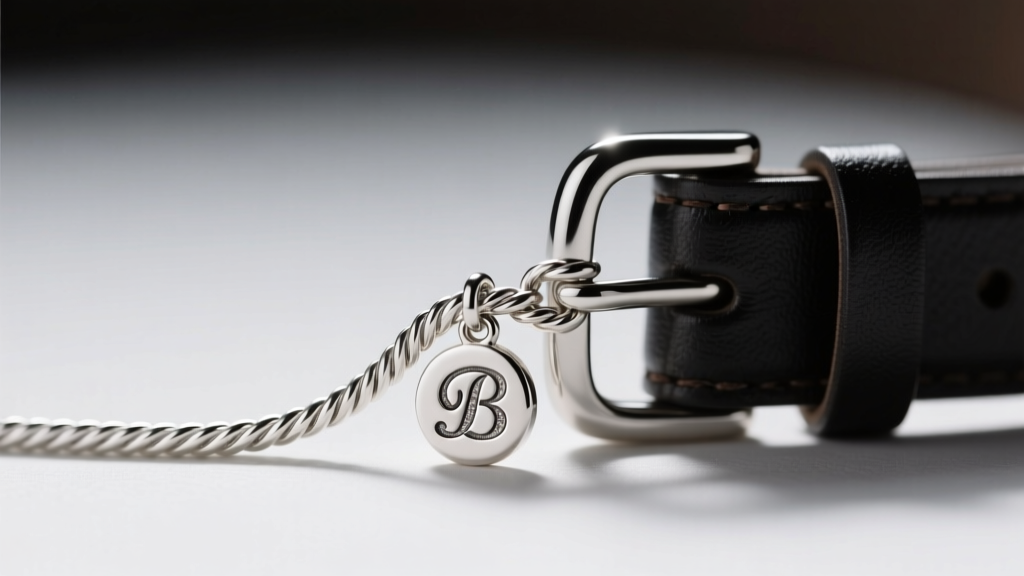
Chain Gauges and Hardware: The Hidden Point of Failure
A heavy, detailed belt buckle pendant requires substantial structural support. The most common failure mode in budget necklaces is not the pendant itself, but the chain snapping under the pendulum effect of the buckle swinging against the chest.
Gauge Thickness and Chain Styles
Budget manufacturers typically pair heavy pendants with 0.8mm to 1.0mm cable chains to save on metal costs. This is a critical engineering flaw. A standard belt buckle frame, especially one featuring an initial and cubic zirconia accents, can weigh between 4 to 8 grams. A 1.0mm cable chain has a tensile break point of roughly 2.5 pounds, meaning a sudden snag on a sweater will snap it instantly. For true value, insist on a chain gauge between 1.2mm and 1.5mm. Box chains and rope chains in this gauge range distribute weight more evenly and resist kinking, which is vital for maintaining the drape of a wide buckle pendant.
Clasp and Jump Ring Integrity
Examine the jump ring connecting the initial to the buckle frame. In low-tier pieces, this ring is merely bent shut, leaving a microscopic gap that will eventually catch on the chain and pull apart. High-value pieces feature soldered jump rings or a seamless laser-welded connection. Furthermore, avoid spring ring clasps on budget chains; they lack the internal spring tension to hold heavier pendants securely. A 10mm or 12mm lobster clasp is the minimum standard for a secure, valuable piece.
Initial Integration: Enamel vs. Stone Settings
The way the initial letter is integrated into the belt buckle frame drastically impacts both the aesthetic longevity and the resale value of the necklace.
- Cold Enamel (Epoxy): Common in pieces under $40. This is essentially colored resin painted into the letter cutout. It is prone to yellowing from UV exposure and will chip if dropped on a hard surface.
- Vitreous Enamel: Found in premium demi-fine pieces ($150+). This is powdered glass fused to the metal at extreme temperatures. It is highly scratch-resistant, colorfast, and offers a glass-like depth that elevates the initial.
- Pave Stone Settings: If the initial is encrusted with stones, avoid glued-in cubic zirconia. Glue degrades when exposed to hot water, lotions, or natural skin oils, leading to missing stones. Seek out prong-set or bezel-set synthetic moissanite or natural diamonds for enduring brilliance.
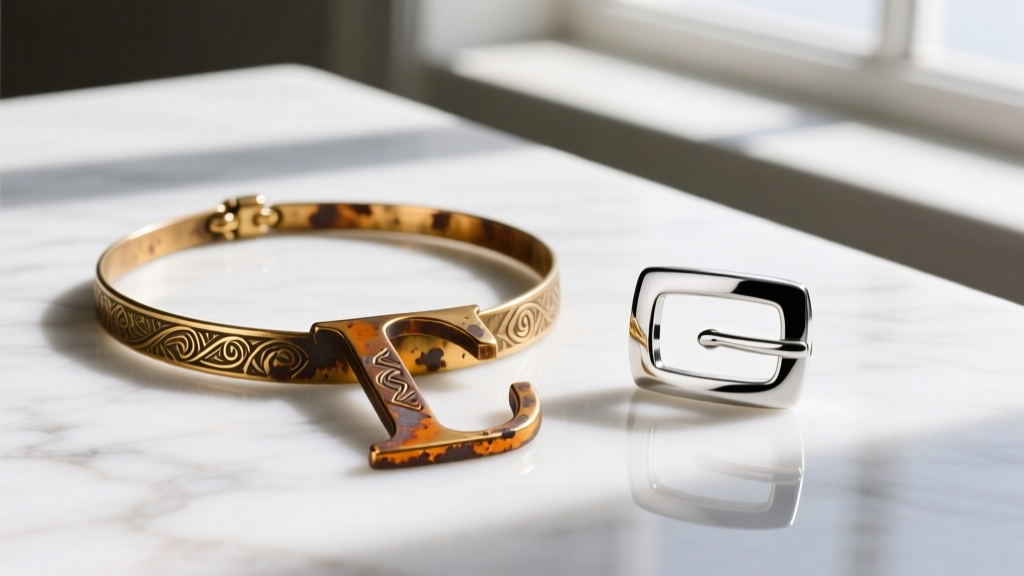
Real-World Failure Modes: The 'Green Collar' Effect
The most frequent complaint among buyers of budget belt buckle necklaces is skin discoloration. This is not an allergic reaction, but a chemical one. Budget brass and zinc alloys contain high levels of copper. When copper reacts with the salts, acids, and oxygen in human sweat, it produces copper chloride—a green compound that stains the skin and ruins clothing. The Gemological Institute of America (GIA) notes that proper rhodium plating over sterling silver creates an inert barrier that completely prevents this reaction. If you are buying a silver-toned belt buckle necklace, verifying a rhodium flash over a sterling base is non-negotiable to avoid the dreaded green collar.
Value Assessment Framework: Is It Worth Your Money?
Before adding a belt buckle necklace with initial to your cart, run it through this rapid value-assessment checklist:
- Weight-to-Chain Ratio: Does the pendant feel dense while the chain feels suspiciously light? If so, the chain will break.
- Edge Finishing: Run your fingernail along the inner edge of the buckle frame where the initial sits. It should be smooth and filed. Rough, sharp edges indicate poor casting and will act like a saw against your chain's jump ring.
- Initial Legibility: Because the belt buckle motif is horizontally dominant, vertically oriented initials can sometimes look cramped. Ensure the brand has proportionally scaled the letterform to fit the crossbar architecture of the buckle without sacrificing readability.
- Material Transparency: If the product description says 'alloy' or 'mixed metals' instead of explicitly stating '925 Sterling Silver' or 'Solid 14k Gold,' assume it is zinc and price it accordingly (under $25).
Care and Longevity for Mid-Tier Pieces
If you opt for the mid-tier gold vermeil route (the sweet spot for value in 2026), proper maintenance is required to protect the 2.5-micron gold layer. Never use ultrasonic cleaners or harsh silver dip solutions on vermeil, as the cavitation and chemicals will strip the gold plating directly off the buckle frame. Instead, use a mild, phosphate-free dish soap and a soft baby toothbrush to gently clean around the initial's crevices. Always store the necklace flat; hanging a heavy belt buckle pendant by its chain for months will cause permanent structural stretching to the lower links.
Ultimately, a belt buckle necklace with initial is a bold statement piece that anchors an outfit. By prioritizing structural integrity, precise material grades, and secure stone or enamel settings over fast-fashion pricing, you secure a piece of jewelry that delivers exceptional cost-per-wear value and enduring style.


