Material Guide: Choosing the Best Gold Paw Print Necklace
Discover which gold paw print necklace material suits your lifestyle. We compare solid, vermeil, and plated options for durability and price.

The Emotional Weight of Pet Tribute Jewelry
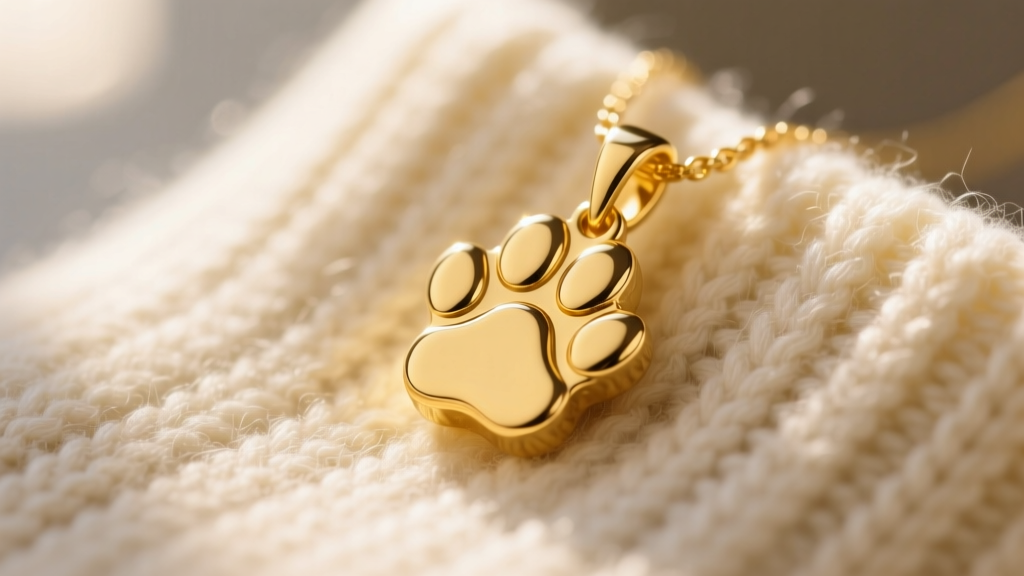
A gold paw print necklace is rarely just an accessory; it is a profound emotional anchor. Whether you are celebrating a new puppy, honoring a senior dog, or memorializing a beloved feline companion, this specific pendant carries immense sentimental value. Because pet owners lead active, hands-on lifestyles—frequently exposed to water, sweat, pet grooming chemicals, and outdoor elements—the metallurgical integrity of your jewelry is paramount. Choosing the wrong material can result in a tarnished, degraded, or broken pendant within months, turning a cherished tribute into a source of frustration.
In this comprehensive material guide, we dissect the exact properties, failure modes, and pricing tiers of the various 'gold' options available on the market. By understanding the science behind the shine, you can invest in a piece that withstands the rigors of pet ownership while honoring your companion beautifully.
Metallurgy 101: Decoding 'Gold' in Paw Print Pendants
The term 'gold' is heavily regulated by the Federal Trade Commission (FTC), yet marketing language often obscures the actual metal composition. Here is the technical breakdown of what you are actually buying.
Solid Gold (14K & 18K)
Pure 24K gold is too malleable for daily-wear pendants; the prongs holding optional gemstone 'toe beans' would bend, and the piece would scratch easily. Therefore, alloying is necessary. According to the Gemological Institute of America (GIA), 14K gold contains 58.5% pure gold, mixed with copper, silver, and zinc for tensile strength. 18K gold contains 75% pure gold, offering a richer, warmer yellow hue but slightly less scratch resistance. For a daily-wear paw print pendant, 14K solid gold is the undisputed champion of durability, completely impervious to tarnish and safe for 24/7 wear, including showers and swims.
Gold Filled (14/20 GF)
Gold filled material is created through a mechanical bonding process where a thick layer of solid gold is heat- and pressure-bonded to a brass or copper core. By US legal standards, the gold layer must constitute at least 5% (or 1/20th) of the total weight of the item. This results in a gold layer that is up to 100 times thicker than standard plating. A 14/20 GF gold paw print necklace will easily last 10 to 30 years with proper care, making it an exceptional mid-tier investment.
Gold Vermeil vs. Standard Flash Plating
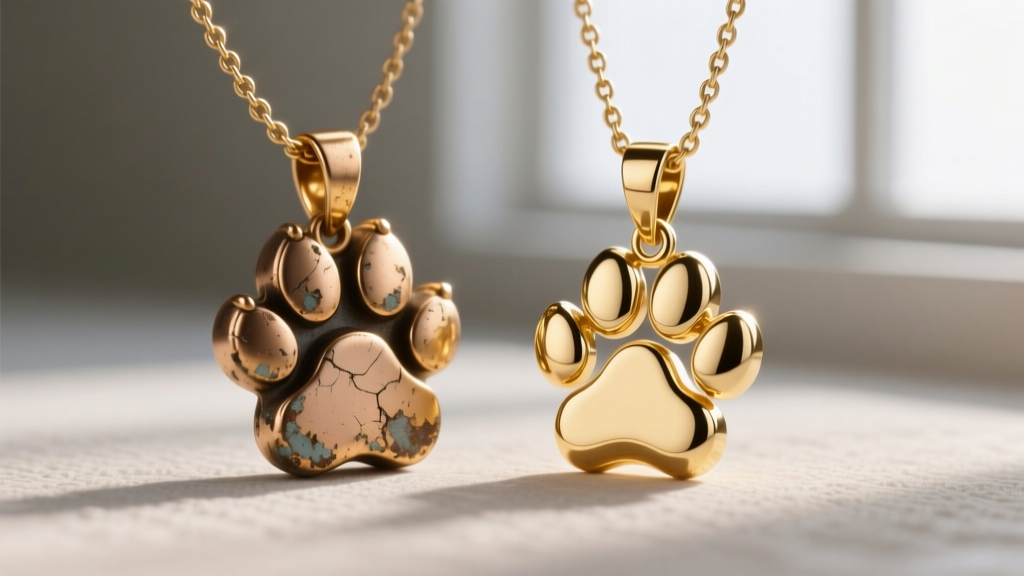
Gold vermeil (pronounced ver-may) requires a base of .925 sterling silver, electroplated with a minimum of 2.5 microns of gold. It is an excellent choice for those with base-metal allergies. Standard gold plating, however, often uses a brass or copper base with a microscopic 'flash' layer of gold (usually 0.1 to 0.5 microns). Flash-plated necklaces will inevitably wear through to the base metal within months of daily wear, especially when exposed to the friction of clothing and pet hair.
The Pet Owner Stress Test: Environmental Hazards
Pet owners subject their jewelry to a unique matrix of chemical and physical stressors. Dog shampoos often contain chlorhexidine or ketoconazole, while flea and tick topical treatments contain potent solvents. Furthermore, the physical friction of a dog's collar or a cat's kneading claws can act like mild sandpaper on softer metals.
| Material Type | Base Metal | Gold Thickness | Water & Sweat Resistance | Chemical Resistance (Pet Shampoos) | Expected Daily-Wear Lifespan |
|---|---|---|---|---|---|
| Solid 14K Gold | N/A (Alloy) | Solid | Excellent | Excellent | Lifetime (Generational) |
| Solid 18K Gold | N/A (Alloy) | Solid | Excellent | Excellent | Lifetime (Generational) |
| Gold Filled (14/20) | Brass/Jewelers Metal | ~5% of total weight | Very Good | Good (Avoid harsh solvents) | 10 - 30 Years |
| Gold Vermeil | Sterling Silver | Min. 2.5 microns | Fair (Silver can oxidize) | Poor (Chemicals strip plating) | 2 - 5 Years |
| Gold Plated | Brass/Copper | 0.1 - 0.5 microns | Poor | Very Poor | 3 - 12 Months |
The Hidden Danger: Galvanic Corrosion in Layering
A critical mistake many buyers make is mismatching the chain and the pendant. If you pair a sterling silver-based gold vermeil paw pendant with a cheap brass-based gold-plated chain, you create a galvanic cell. When exposed to an electrolyte—in this case, your sweat or humidity from a dog walk—the dissimilar metals will undergo galvanic corrosion. The more anodic metal (usually the brass or copper in the cheap chain) will rapidly oxidize and degrade, leaving a green residue on your neck and weakening the chain links, which risks the loss of your sentimental pendant. Always ensure your chain and pendant share the same base metallurgy.

Enamel 'Toe Beans': Vitreous vs. Epoxy Resin
Many gold paw print necklaces feature black, white, or pink enamel in the toe pads to add contrast and detail. The type of enamel used drastically affects the pendant's longevity. Cheap manufacturing utilizes epoxy resin or cold enamel, which is essentially painted and baked at low temperatures. This epoxy will yellow over time when exposed to UV light and will dissolve or cloud when exposed to the alcohol-based solvents found in many pet grooming wipes and flea treatments.
High-end jewelers use vitreous enamel, which is finely ground glass fused to the gold at temperatures exceeding 1,400°F (760°C). Vitreous enamel is impervious to UV fading, pet shampoos, and pool chlorine. When shopping, inspect the product details or ask the jeweler specifically if the enamel is vitreous (hard) or epoxy (cold).
2026 Pricing Matrix: What Should You Actually Pay?
Understanding material properties allows you to spot inflated pricing. Based on current precious metal markets and standard jewelry manufacturing costs, here is what you should expect to pay for a standard 15mm to 20mm paw print pendant (excluding the chain):
- Solid 14K Gold: $180 to $350 (Depends on gram weight and whether it includes diamond/sapphire toe beans).
- Solid 18K Gold: $280 to $500+ (Premium pricing for higher gold content and luxury brand markups).
- Gold Filled (14/20 GF): $45 to $85 (An excellent value proposition for budget-conscious buyers wanting longevity).
- Gold Vermeil: $60 to $120 (You are paying for the sterling silver base and the thicker 2.5-micron plating).
- Standard Gold Plated: $15 to $35 (Fast fashion jewelry; expect to replace it frequently).
Expert Verdict: Matching Material to Your Milestone
If you are purchasing a gold paw print necklace as a memorial piece to honor a pet that has passed, or as a permanent tribute to a lifelong companion, Solid 14K Gold is the only logical choice. Its ability to withstand decades of wear, water exposure, and chemical contact ensures the piece will become a true heirloom.
For new pet owners celebrating a first puppy or kitten, or for those who prefer to rotate their jewelry seasonally, a Gold Filled (14/20 GF) pendant offers the perfect intersection of affordability, rich color, and multi-year durability. Avoid standard flash-plated options entirely; the emotional weight of a paw print pendant deserves a material foundation that will not fade, tarnish, or break when you need it most.


