A Beginner's Guide to Choosing a Big Gold Cross Necklace
Learn how to choose, style, and buy a big gold cross necklace. We cover karats, chain weights, hollow vs. solid gold, and styling tips for beginners.

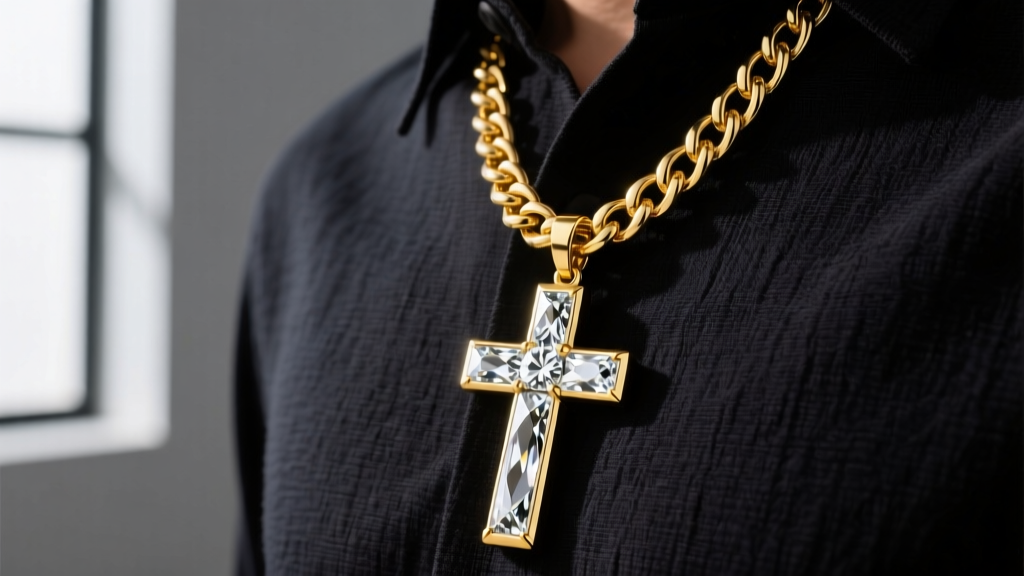
The Appeal of the Statement Cross
A big gold cross necklace is more than just a piece of jewelry; it is a cultural icon, a statement of faith, and a cornerstone of streetwear and high fashion alike. Whether you are drawn to the bold aesthetics of hip-hop culture or the timeless elegance of classic religious iconography, a large cross pendant commands attention. However, for beginners, navigating the jewelry market can be intimidating. Retailers often use confusing terminology regarding gold purity, weight, and construction methods that can easily lead to overpaying for subpar pieces.
In the jewelry industry, a 'big' or 'statement' cross typically measures between 2.5 and 4 inches in height. At this scale, the physical properties of the gold—its weight, durability, and structural integrity—become just as important as its visual appeal. This guide will break down exactly what you need to know to make an informed, confident purchase.
Solid vs. Hollow: The Biggest Trap for Beginners
When shopping for a large pendant, the most critical distinction you must understand is whether the piece is solid, hollow, or plated. Because gold is priced by weight, a 3-inch solid gold cross will cost significantly more than a hollow one of the exact same dimensions. Many beginners are lured in by the low price of hollow jewelry, only to face severe durability issues later.

Hollow crosses are typically made using a process called electroforming, where gold is deposited over a wax or resin core, which is later melted or dissolved away. This leaves a paper-thin shell of gold. While it looks large and impressive, it is highly susceptible to denting, crushing, and cracking. Once a hollow pendant is dented, it is nearly impossible to repair.
| Construction Type | Average Weight (3-inch Cross) | Durability | Repairability | Estimated Price Range |
|---|---|---|---|---|
| Solid Cast Gold | 20g - 40g+ | Excellent (Heirloom quality) | Easy (Can be soldered/polished) | $1,500 - $3,500+ |
| Hollow Electroformed | 3g - 7g | Poor (Dents easily) | Impossible (Must be replaced) | $250 - $600 |
| Gold Plated / PVD | 15g - 30g (Base metal) | Moderate (Tarnishes/rubs off) | Difficult (Requires replating) | $50 - $150 |
Expert Tip: Always ask the jeweler for the exact gram weight of the pendant. If a 3-inch 14k gold cross is being sold for under $800, it is almost certainly hollow or heavily resin-filled. For a piece you intend to wear daily, always invest in solid gold.
Decoding Gold Karats for Statement Pieces
Gold purity is measured in karats (K), with 24K being pure gold. However, pure gold is far too soft for everyday jewelry, especially large, heavy pendants that swing and collide with surfaces. According to the Gemological Institute of America (GIA), alloying gold with metals like copper, silver, and zinc is necessary to increase its hardness and durability.
- 10K Gold (41.7% Pure): The most durable and affordable option. It has a slightly paler yellow hue and is highly resistant to scratching and bending. Ideal for heavy, everyday streetwear.
- 14K Gold (58.3% Pure): The industry standard in the United States. It offers the perfect balance of rich yellow color, structural integrity, and value retention. Highly recommended for big crosses.
- 18K Gold (75.0% Pure): Noticeably richer, warmer, and more vibrant in color. It is softer than 14K and will acquire a patina (micro-scratches) over time, which many collectors appreciate.
- 22K / 24K Gold: Too soft for large, heavy pendants. The bail (the loop at the top) will quickly warp under the weight of the piece, and the edges will dent.
The Federal Trade Commission (FTC) Jewelry Guides strictly regulate how gold purity can be marketed in the US. Always look for a stamped hallmark (e.g., '14K', '585', '18K', '750') on the bail or the back of the cross to verify its authenticity.
Sizing and Proportions: Matching Pendant to Chain
A common mistake beginners make is pairing a massive, heavy cross pendant with a thin, lightweight chain. This not only looks visually unbalanced but creates a severe mechanical failure point. The bail (the loop connecting the pendant to the chain) will experience excessive friction and shear stress, eventually snapping the chain or wearing a hole straight through the gold bail.
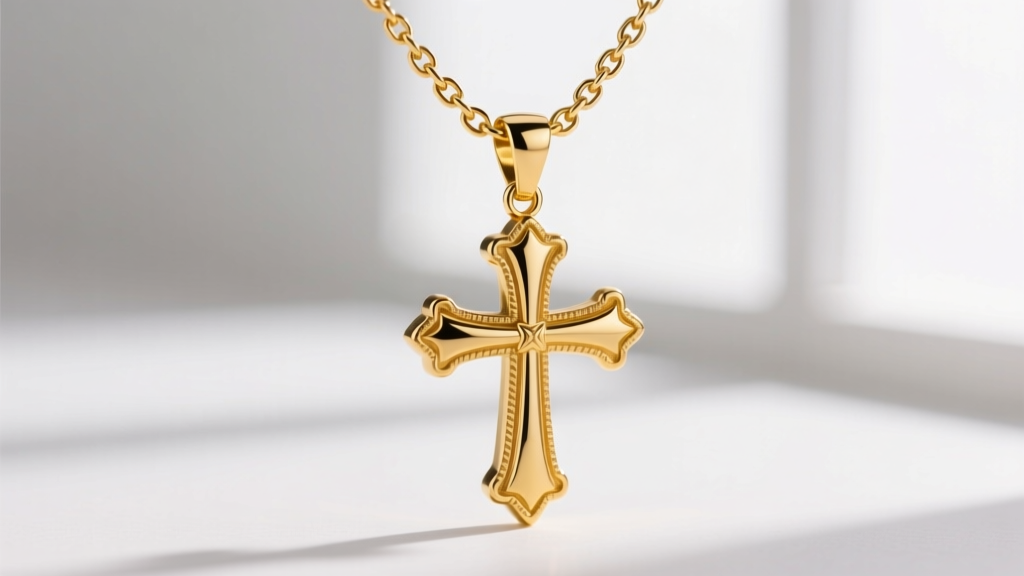
To ensure longevity, the chain's width and weight must be proportional to the pendant. A general rule of thumb is that the chain should weigh at least 50% to 75% of the pendant's total weight to support it properly without excessive swinging.
| Pendant Height | Ideal Chain Width | Recommended Chain Styles | Minimum Bail Opening |
|---|---|---|---|
| 1.5 - 2.0 inches | 3mm - 5mm | Cuban, Rope, Figaro | 6mm x 4mm |
| 2.5 - 3.0 inches | 5mm - 8mm | Cuban, Curb, Franco | 9mm x 6mm |
| 3.5 - 4.0+ inches | 8mm - 12mm | Thick Cuban, Miami Curb | 12mm x 8mm+ |
When selecting a chain, avoid fragile styles like box chains or thin cable chains for heavy pendants. Franco chains and interlocking Cuban links offer superior tensile strength and distribute the weight of the pendant evenly across the collarbone.
Styling Your Statement Cross
Styling a big gold cross necklace is an exercise in minimalism. Because the piece itself is inherently loud, the rest of your outfit should serve as a canvas.
'A statement cross should be the anchor of your outfit, not competing with a dozen other chains. Let the gold and the silhouette do the talking.' — Contemporary Menswear Styling Guidelines
Neckline Pairings:
- Crew Neck T-Shirts: The classic streetwear look. A 3-inch cross resting just below the collarbone on a dark, heavyweight cotton tee creates a striking contrast, especially with yellow gold.
- Open Collar / Button-Downs: For a smarter, elevated look, wear the cross inside an unbuttoned linen or silk shirt. This frames the pendant and adds a touch of rugged sophistication.
- Hoodies and Outerwear: In colder months, wear the pendant over a solid-colored hoodie. Avoid busy patterns or graphic prints that will clash with the intricate details of a diamond-cut or engraved cross.
How to Price and Buy Without Getting Scammed
When buying solid gold jewelry, you are paying for two things: the melt value of the raw gold and the maker's fee (craftsmanship, brand markup, and retail overhead). Understanding how to calculate the melt value gives you immense leverage as a buyer.
To calculate the baseline value of the piece, multiply the gram weight by the current spot price of gold, then multiply that by the purity percentage (0.583 for 14K, 0.750 for 18K). A reputable independent jeweler will typically charge a maker's fee of 20% to 50% above the melt value for a high-quality, solid cast piece. Luxury brands and mall jewelers, however, often mark up the price by 300% to 800%.
By focusing on gram weight, verifying the karat hallmark, and insisting on solid construction over hollow illusions, you can acquire a big gold cross necklace that will not only elevate your personal style but serve as a lasting, wearable asset for decades to come.


