Big Initial Necklace Materials: A Weight & Durability Guide
Discover the best metals for a big initial necklace. Compare weight, tarnish resistance, and durability of gold, steel, and brass for oversized pendants.

The Physics of Oversized Pendants: Weight, Swing, and Friction
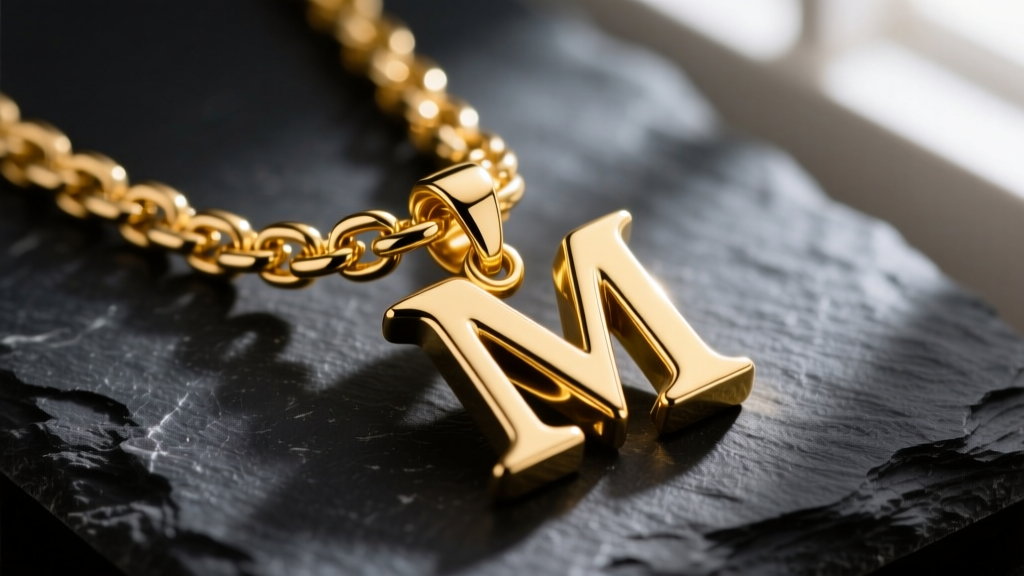
When selecting a big initial necklace, most buyers focus entirely on the font style and the letter itself. However, from an engineering and metallurgical perspective, an oversized letter pendant is a high-stress mechanical component. A standard 2-inch tall, 3mm thick solid 14k gold letter 'M' weighs between 22 and 28 grams. This concentrated mass creates a pendulum effect against the sternum, generating significant kinetic friction on the chain links, the bail, and the clasp mechanism.
Unlike small, lightweight charms that rest passively on the collarbone, a heavy initial pendant swings, catches on clothing, and strikes the chest wall during movement. Therefore, the material you choose dictates not only the aesthetic and price but the structural integrity of the entire piece. In this comprehensive guide, we break down the exact material properties, weight ratios, and failure modes associated with large-scale initial jewelry in 2026.
Material Breakdown: Comparing Metals for Large Letters
Solid Gold (14k & 18k): The Heirloom Standard
Solid gold remains the benchmark for fine jewelry, but its density makes it incredibly heavy when scaled up. According to the Gemological Institute of America (GIA), 14k gold contains 58.5% pure gold, alloyed with metals like copper, silver, and zinc to increase tensile strength. A solid 14k gold big initial necklace will feel substantial and luxurious, but it requires a robust chain. 18k gold (75% pure) is noticeably softer and more prone to scratching and bending on the sharp corners of letter pendants. If you opt for 18k, ensure the pendant has slightly rounded, beveled edges rather than sharp, geometric corners to prevent edge deformation.
316L Surgical Stainless Steel: The Indestructible Budget Option
For those who want the heavy, oversized look without the four-figure price tag, 316L surgical stainless steel is a powerhouse. It boasts exceptional tensile strength and will not bend, warp, or tarnish, even when exposed to sweat and humidity. However, its density (approx. 8.0 g/cm³) means a large steel initial can easily exceed 35 grams. While highly durable, steel is not entirely hypoallergenic. The American Academy of Dermatology notes that stainless steel contains trace amounts of nickel, which can trigger contact dermatitis in highly sensitive individuals if the pendant rests constantly against the skin.
Gold Vermeil vs. Flash Plating: The Edge-Wear Trap
Gold vermeil consists of a thick layer of gold (legally required to be at least 2.5 microns) over a sterling silver base. It offers a lighter weight than solid gold and a lower price point. However, a big initial necklace presents a unique problem: edge friction. The sharp corners and outer edges of a large letter experience the most wear from clothing and accidental bumps. Flash-plated brass (often deceptively marketed as 'gold dipped' with less than 0.1 microns of gold) will wear through to the base metal on the corners within weeks. True vermeil will last significantly longer, but buyers must accept that the high-friction edges of the letter will eventually require re-plating.
Cast Brass and Acetate: Alternative Textures and Weights
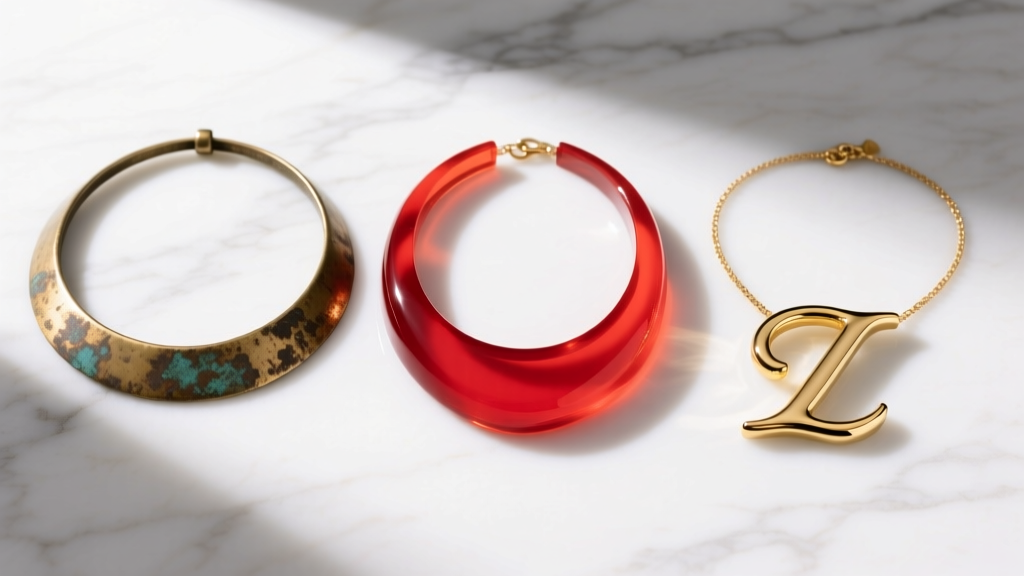
For a vintage or avant-garde aesthetic, cast brass and carved acetate offer distinct material advantages. Brass provides a beautiful, warm, antique gold tone and is relatively inexpensive to cast in large volumes. The drawback is oxidation; brass contains high levels of copper, which reacts with the acidic pH of human sweat to create copper chloride, leaving a green stain on the chest. To mitigate this, look for brass pendants sealed with a clear ceramic nano-coating. Acetate, a plant-based plastic, is the ultimate lightweight alternative. A 3-inch acetate initial weighs mere grams, allowing for exaggerated, massive proportions without straining the neck or requiring a heavy chain.
The Weight-to-Chain Ratio Matrix
The most common failure point for a big initial necklace is not the pendant itself, but the chain snapping under the dynamic load of a heavy letter. A general rule of thumb in jewelry manufacturing is that the chain's breaking strength should be at least three times the static weight of the pendant to account for sudden snags. Below is a structural pairing matrix based on industry-standard tensile testing data provided by jewelry manufacturing suppliers like Rio Grande.
| Pendant Material & Size | Avg. Weight | Minimum Chain Width | Recommended Chain Style |
|---|---|---|---|
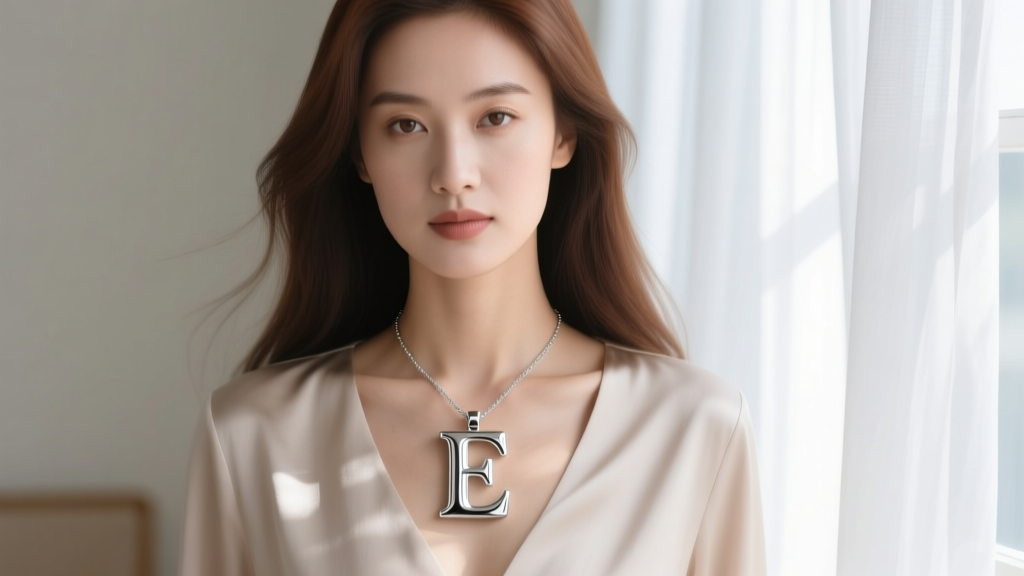
| Solid 14k Gold (2 inch) | 24g | 2.5mm - 3.0mm | Cuban Link, Rope, or Figaro |
| 316L Steel (2.5 inch) | 38g | 3.5mm - 4.5mm | Box Chain, Thick Curb |
| Sterling Silver Vermeil (2 inch) | 16g | 2.0mm - 2.5mm | Cable, Mariner, or Wheat |
| Carved Acetate (3 inch) | 4g | 1.5mm - 2.0mm | Snake Chain, Thin Cable |
Hardware and Clasp Failure Modes in Heavy Necklaces
When wearing a heavy, oversized pendant, the clasp is the weakest link. Standard spring ring clasps (commonly found on lightweight chains) rely on a tiny internal steel spring that easily fatigues and fails under the swinging weight of a large metal letter.
- Lobster Clasps (12mm - 15mm): The industry standard for heavy pendants. The internal mechanism is robust, and the larger surface area provides a secure grip. Always ensure the jump ring connecting the lobster clasp to the chain is soldered shut, not just pinched.
- Box Clasps with Safety Catches: Ideal for extremely heavy steel or solid gold initials. The tongue-and-groove mechanism locks into place, and the external wire safety catch prevents total loss if the primary lock is bumped open.
- Oversized Jump Rings: The bail (the loop the chain passes through) on a big initial necklace must be at least 5mm in diameter and 1.5mm thick to accommodate wider chains without causing abrasive friction that thins the metal over time.
Skin Chemistry and Metal Oxidation
Because a big initial necklace rests flat against the sternum—a high-sweat zone—material reactivity is a crucial consideration. Pure gold and platinum are inert and will not react with skin chemistry. However, alloys and base metals are subject to electrochemical reactions. If you have a highly acidic skin pH (often influenced by diet, stress, or medication), copper-heavy alloys like brass or low-karat 10k gold will oxidize rapidly. This doesn't mean the metal is 'fake'; it is a natural chemical reaction. To enjoy base-metal initials without the green stain, apply a thin layer of clear nail polish to the back of the pendant, or opt for a pendant backed with a surgical steel or enamel plate.
Final Verdict: Matching Material to Lifestyle
A big initial necklace is a statement piece that demands structural forethought. Choose solid 14k gold for a lifelong heirloom that withstands daily friction, opt for 316L stainless steel for an indestructible streetwear staple, or select lightweight acetate if you prefer massive, exaggerated proportions without the physical burden of heavy metals.
Ultimately, the best material for your oversized pendant depends on your budget, your skin's sensitivity, and your willingness to maintain the piece. By respecting the physics of weight and friction, you can ensure your bold initial necklace remains a striking centerpiece for years to come.