Big Rhinestone Necklace Trends 2026: The Style Guide
Discover 2026 big rhinestone necklace trends, material breakdowns, and expert styling frameworks for architectural crystal collars and bibs.

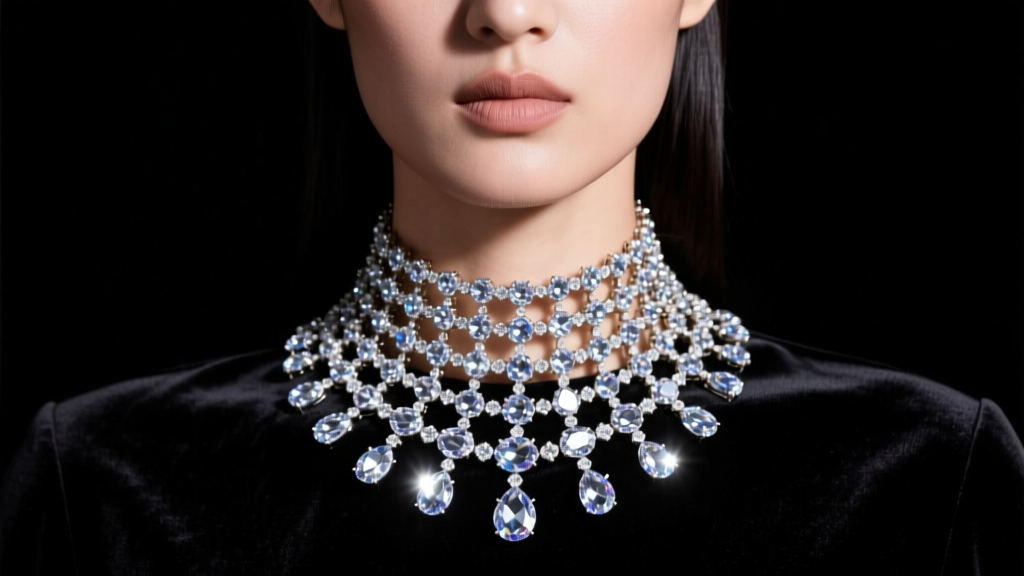
The era of the delicate, barely-there pendant has officially shared the stage with unapologetic maximalism. As we navigate the 2026 fashion landscape, the big rhinestone necklace has emerged not merely as a nostalgic callback to 1980s power dressing or 1950s Hollywood glamour, but as a sophisticated, architectural focal point. Today’s statement necklaces are engineered with precision, blending fine jewelry construction techniques with advanced simulant stones. Whether you are styling a bridal look, preparing for a gala, or elevating a minimalist wardrobe, understanding the anatomy, material grades, and styling frameworks of these statement pieces is essential for making a calculated sartorial impact.
The 2026 Shift: From Fast-Fashion Flash to Architectural Opulence
In previous decades, a large crystal collar or bib necklace was often synonymous with cheap costume jewelry—pieces that tarnished within a month and featured glued-in acrylic stones. The 2026 trend cycle, however, is defined by what industry analysts call 'curated opulence.' According to insights from the Business of Fashion, consumers are increasingly demanding bridge-tier jewelry that offers the visual weight and sparkle of high jewelry without the five-figure price tag.
This shift has forced manufacturers to upgrade their base metals and stone-setting techniques. We are seeing a massive decline in pot-metal castings and a rise in cast brass with thick vermeil plating. Furthermore, the design language has moved away from chaotic, clustered stone arrangements toward brutalist, geometric, and cascading 'waterfall' designs that manipulate light through deliberate negative space.
Material Matrix: Decoding the 'Rhinestone' Spectrum
The term 'rhinestone' is historically a catch-all for any diamond simulant, but in the modern market, the material composition dictates the price, weight, and optical performance of your necklace. To make an informed purchase, you must understand the Refractive Index (RI)—the measure of how much light bends as it enters the stone, which directly correlates to its 'sparkle' or brilliance.
| Material Grade | Refractive Index (RI) | Weight Profile | Price Tier | Best Application |
|---|---|---|---|---|
| Acrylic / Resin | 1.49 | Ultra-Light | $ (Under $40) | Festivals, avant-garde editorial, lightweight comfort. |
| Standard Glass | 1.52 | Medium | $$ ($40 - $90) | Vintage reproductions, theatrical performances. |
| Lead-Free Advanced Crystal | 1.54 - 1.58 | Medium-Heavy | $$$ ($100 - $350) | Everyday luxury, bridal parties, professional eveningwear. |
| Cubic Zirconia (CZ) | 2.15 - 2.18 | Heavy | $$$$ ($300+) | Red carpet, high-end bridal, fine jewelry alternatives. |
As noted by the GIA Gem Encyclopedia, the optical properties of Cubic Zirconia closely mimic those of a natural diamond, offering exceptional fire and brilliance. However, CZ is dense. A big rhinestone necklace entirely paved with 5mm CZ stones can easily exceed 250 grams, requiring specialized structural support to prevent neck strain.
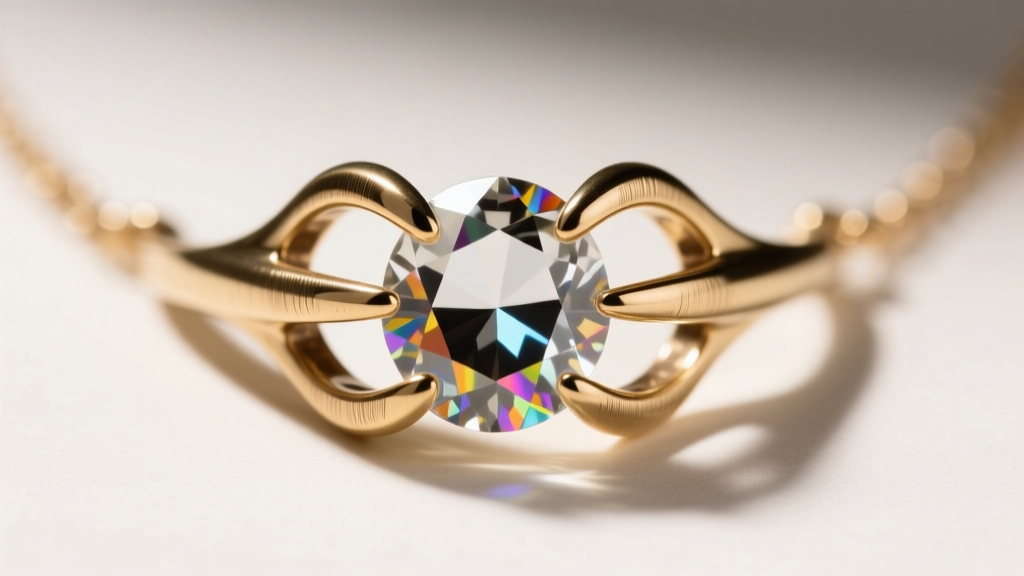
Structural Engineering: Prong-Set vs. Foil-Backed
The longevity of a statement necklace is entirely dependent on how the stones are secured to the metal chassis. When shopping for a big rhinestone necklace, you will primarily encounter two setting styles:
1. The Foil-Backed Method (Glue-Set)
Historically, glass rhinestones were coated on the back with a metallic foil to reflect light, then glued into a solid metal cup. While this creates a mirror-like flash, it is highly vulnerable. If moisture penetrates the glue seal, the foil oxidizes, turning the stone black or cloudy. In 2026, this method is largely reserved for ultra-cheap fast fashion or strict vintage reproductions.
2. The Open-Back Prong Setting
The hallmark of a premium bridge-tier necklace is the prong setting. Metal claws (usually four or six per stone) fold over the girdle of the crystal, securing it mechanically. Crucially, prong settings leave the back of the stone open to the skin. This allows ambient light to pass entirely through the stone, utilizing the material's natural refraction rather than relying on a glued-on mirror. Expert Tip: Always inspect the prongs on a new necklace. If they are merely resting on top of the stone without a tight mechanical bend, the stones will dislodge during wear.
The Weight Factor: Chains, Clasps, and Ergonomics
A frequent failure mode in large crystal necklaces is not the stones, but the hardware. A sprawling crystal bib can weigh between 120g and 300g. If this weight is suspended on a delicate 1mm chain with a standard spring-ring clasp, the hardware will inevitably snap.
- Chain Gauge: For any necklace over 100g, the chain or collar must be a minimum of 3mm in thickness. Curb chains and box chains offer superior tensile strength compared to standard cable chains.
- Clasp Mechanics: Discard spring rings immediately. A high-quality, 10mm to 14mm lobster clasp or a magnetic neodymium barrel clasp is mandatory for heavy bibs.
- Ergonomic Backing: Designer brands often back the inner curve of a heavy metal collar with velvet, suede, or silicone. This increases friction (preventing the necklace from sliding off-center) and distributes the physical load across the clavicle, preventing skin pinching.
The Styling Framework: Pairing with Modern Necklines
Styling a big rhinestone necklace requires an understanding of negative space. The jewelry should not compete with the garment; it should complete it. Here is the 2026 styling matrix for maximum impact.
The Asymmetric & One-Shoulder Neckline
Asymmetric tops and dresses create a diagonal line of tension across the collarbone. Pair this with a 'waterfall' or 'lariat-style' rhinestone bib that drops vertically in the center. The contrast between the sharp, diagonal fabric and the fluid, vertical drop of the crystals creates a highly editorial, modern silhouette.
The Deep Sweetheart Plunge
A sweetheart neckline exposes the sternum, creating a natural 'frame' for jewelry. Opt for a 16-inch choker or collar-style rhinestone necklace that sits high on the neck, leaving at least two inches of bare skin between the bottom of the crystals and the top of the dress. This negative space prevents the look from becoming overly congested or theatrical.

The High-Neck / Mock Turtleneck
Layering a massive crystal collar over a tight, black, long-sleeved mock turtleneck is a staple of modern minimalist-maximalism. The dark, matte fabric acts as a light-absorbing canvas, allowing the refractive index of the crystals to pop aggressively. Ensure the necklace sits over the fabric, not tucked in, and keep earrings completely absent to let the neck do all the talking.
Investment Tiers: What Should You Actually Pay?
Navigating the pricing of statement jewelry can be opaque. Here is a realistic breakdown of what you should expect to pay based on material integrity and brand positioning in the current market:
The Golden Rule of Statement Jewelry: You are paying for the labor of the stone-setting and the quality of the base metal plating, not just the raw materials. Hand-set prong work commands a premium over machine-glued cups.
- Tier 1: Fast Fashion & Costume ($15 - $45) Expect acrylic or low-grade glass stones, glue-set into zinc alloy (pot metal) with flash plating. Lifespan: 1-3 wears before tarnishing or stone loss.
- Tier 2: Bridge & Contemporary ($80 - $250) The sweet spot for 2026. Features lead-free advanced crystal or glass, prong-set into cast brass with 1-micron gold vermeil or rhodium plating. Brands in this tier offer excellent longevity and optical performance.
- Tier 3: Accessible Luxury & Designer ($400 - $1,200+) Features precision-cut Swarovski zirconia or lab-grown diamond accents mixed with crystal. Settings are hand-finished, often featuring articulated hinges that allow the metal bib to drape fluidly over the collarbone like fabric.
Care & Maintenance: Preventing the 'Cloudy' Effect
The greatest enemy of a big rhinestone necklace is not impact, but chemistry. The oils from your skin, combined with the alcohol in perfumes and hairsprays, will create a microscopic film over the facets of the stones, dulling their refractive index and making them look 'cloudy' or dead.
Never use an ultrasonic cleaner on a rhinestone necklace, even if the stones are prong-set. The high-frequency vibrations can shatter internal tensions in glass crystals and loosen the metal prongs. Instead, adopt this safe, professional cleaning protocol:
- Mix a solution of lukewarm distilled water and a single drop of pH-neutral dish soap.
- Use an ultra-soft, baby-hair brush to gently agitate the solution around the back of the stone settings where lotion and skin oils accumulate.
- Rinse briefly under a gentle stream of distilled water (tap water contains minerals that can leave water spots on the metal).
- Immediately dry with a lint-free microfiber cloth, using a hair dryer on the 'cool' setting to blast moisture out of the prong crevices.
By understanding the material science, structural requirements, and styling geometry of the modern statement collar, you can confidently invest in a big rhinestone necklace that delivers brilliant, architectural impact for years to come.


