Big Star Necklace Value Guide: 2026 Pricing & Metals
Is a big star necklace worth the investment? We break down 2026 pricing tiers, material grades, plating thickness, and chain weight limits.

The Resurgence of the Celestial Statement Piece
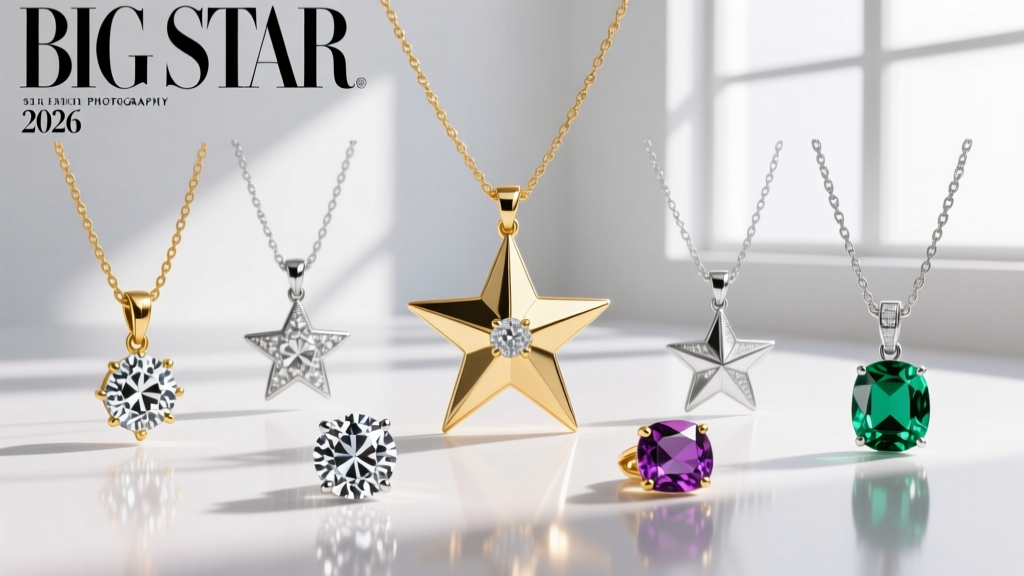
The big star necklace has transcended its Y2K fast-fashion roots to become a permanent fixture in contemporary jewelry wardrobes. Typically ranging from 40mm to 70mm in diameter, these oversized celestial pendants offer a bold, geometric focal point that pairs equally well with streetwear and elevated evening attire. However, as the trend has matured into 2026, the market has become saturated with options ranging from $20 costume pieces to $3,000 fine jewelry investments. For the discerning buyer, assessing the true value of a big star necklace requires looking past the aesthetic and understanding the metallurgy, weight distribution, and manufacturing techniques that dictate both price and longevity.
Unlike delicate solitaire pendants, oversized star shapes present unique structural challenges. The high surface area demands more raw material, while the sharp points are highly susceptible to friction, scratching, and plating loss. This comprehensive value assessment will break down exactly what you should pay based on material grades, manufacturing methods, and hardware integrity.
The Physics of Oversized Pendants: Weight vs. Wearability
To understand the pricing of a big star necklace, you must first understand the physics of its volume. A solid, flat-cast 50mm star pendant with a 3mm thickness contains a significant amount of metal. If cast in solid 14k gold, this single pendant would weigh approximately 25 to 35 grams. According to raw material metrics tracked by Kitco, the melt value of 30 grams of 14k gold alone hovers around $1,400, meaning a solid gold big star necklace would retail for well over $2,500 once craftsmanship and brand markups are applied.
Furthermore, a 35-gram pendant is incredibly heavy for daily wear. It will constantly pull on the cervical spine, drag the neckline of your garments downward, and cause the chain to snap under the dynamic stress of walking. Therefore, the highest value propositions in the 2026 market are not solid cast gold, but rather advanced alternative constructions that maintain the visual volume without the punishing weight and cost.
Hollow Electroforming: The Fine Jewelry Loophole
For buyers who demand real gold without the $3,000 price tag, hollow electroforming is the gold standard for big star necklaces. This process involves creating a wax mandrel in the shape of the star, coating it in a conductive layer, and electroplating 14k gold over it until a rigid shell forms. The wax is then melted out. The result is a massive, 50mm+ star pendant that weighs a mere 4 to 6 grams but retains the exact dimensions of its solid counterpart. While the retail price sits in the $600 to $900 range, the value per gram of gold and the sheer wearability make it the premier choice for fine jewelry collectors.
Material Tiers and the Plating Thickness Problem
If you are shopping in the $50 to $200 range, you are entering the world of plated metals. This is where value assessment becomes critical, as misleading marketing terms often mask inferior manufacturing. The sharp points and flat faces of a star pendant experience high friction against clothing and skin, making plating thickness the single most important metric for longevity.

Flash Plated Brass (The $15 - $40 Tier)
Often marketed simply as 'gold tone' or '18k gold plated,' these pieces feature a brass or zinc alloy base with a microscopic layer of gold, typically measuring less than 0.1 microns. Because the points of a star necklace act as natural friction points, flash plating will wear away to reveal the dark, oxidizing brass underneath within three to six months of regular wear. From a value perspective, these are disposable accessories, not investments.
Sterling Silver Vermeil (The $80 - $180 Tier)
Vermeil is the sweet spot for mid-tier buyers. As defined by industry suppliers like Rio Grande, true vermeil requires a sterling silver base coated with a minimum of 2.5 microns of 14k or 18k gold. The silver base ensures that if the gold eventually wears off at the star's tips, the underlying metal remains bright and hypoallergenic, rather than turning your skin green. A high-quality vermeil big star necklace offers excellent visual luxury and a lifespan of 2 to 5 years with proper care.
PVD Coated 316L Stainless Steel (The $45 - $90 Tier)
Physical Vapor Deposition (PVD) is a vacuum-sealed coating process that bonds titanium nitride to surgical-grade stainless steel. While it lacks the prestige of precious metals, PVD coating boasts a Vickers hardness rating of over 2000 HV, compared to 14k gold's relatively soft 130 HV. For a big star necklace, which is prone to scratching and edge-wear, a PVD stainless steel piece offers unparalleled durability. The gold color will not rub off at the points, making it the ultimate utilitarian value for daily wearers.
2026 Price vs. Value Matrix
Use the following matrix to benchmark any big star necklace you are considering purchasing. If a brand's pricing falls outside these parameters without offering verified artisan craftsmanship or gemstone accents, you are likely overpaying for marketing.
| Material Category | Base Metal | Coating / Purity | Fair 2026 Price Range | Expected Lifespan |
|---|---|---|---|---|
| Fast Fashion | Brass / Zinc | Flash Plating (<0.1μm) | $15 - $40 | 3 - 6 Months |
| Utilitarian | 316L Steel | PVD Titanium Nitride | $45 - $90 | 5+ Years |
| Mid-Tier Luxury | 925 Silver | Vermeil (2.5μm+) | $80 - $180 | 2 - 5 Years |
| Fine Jewelry | N/A | Hollow 14k Gold | $600 - $1,200 | Lifetime |
| Heirloom | N/A | Solid 14k/18k Gold | $2,200 - $4,500+ | Lifetime |
Chain Mechanics and Bail Friction: The Hidden Failure Points
A common mistake buyers make when evaluating a big star necklace is focusing entirely on the pendant while ignoring the suspension system. A 50mm pendant acts as a pendulum, generating significant kinetic force that transfers directly to the chain, the clasp, and the bail (the loop connecting the star to the chain).

The Bail Friction Problem
In cheaper necklaces, the chain passes directly through a hole drilled into the top point of the star, or through a thin, unsoldered wire loop. Over time, the harder steel or silver chain acts like a saw, slowly cutting through the softer gold plating and brass base of the bail. According to metallurgical guidelines referenced by the Gemological Institute of America (GIA), gold alloys are inherently soft and susceptible to friction wear. Always inspect the bail: high-value pieces will feature a hardened steel insert, a ceramic lining, or a heavily reinforced, soldered jump ring that prevents the chain from sawing through the pendant itself.
Clasp and Gauge Requirements
A big star necklace requires a chain with a minimum wire gauge of 1.5mm to 2.0mm to visually balance the pendant and withstand the tensile stress. Furthermore, standard spring-ring clasps are entirely inadequate for oversized pendants; the internal spring mechanism will inevitably fail under the dynamic weight. Insist on a lobster clasp with a reinforced soldered jump ring at the connection point. For pieces over 20 grams, a box chain or a thick rope chain is mandatory, as delicate cable chains will stretch and eventually snap at the links.
Final Verdict: How to Spot a Fair Deal
When assessing the budget and value of a big star necklace in 2026, your primary goal is to align your expectations with the material reality. If you want a lightweight, everyday piece that survives the elements, a PVD-coated stainless steel star in the $60 range is an unbeatable value. If you are seeking the warmth and prestige of real gold without the crippling weight and cost of solid casting, a hollow electroformed 14k gold piece or a heavy sterling silver vermeil option represents the smartest financial allocation.
Never pay fine jewelry prices for flash-plated brass, and never expect a delicate 1mm chain to support a 60mm metal star. True value lies in the harmony of weight, plating thickness, and structural hardware.
By demanding transparency regarding plating microns, base metals, and chain gauge thickness, you can confidently navigate the market and secure a celestial statement piece that retains both its physical beauty and its financial integrity for years to come.