Large Link Necklace Gold: Solid, Filled, and Plated Guide
Compare solid, vermeil, and plated options for your large link necklace gold. Learn about weight, durability, and metal grades before you buy.

The Engineering Challenge of Oversized Links
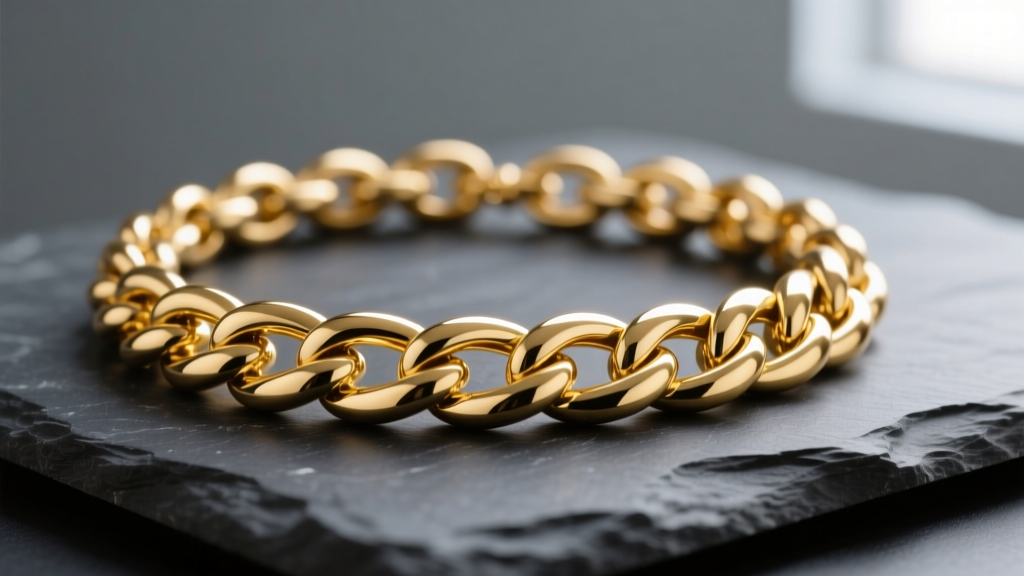
When shopping for a large link necklace gold options range dramatically from $50 costume pieces to $50,000 luxury investments. The visual impact of a 15mm to 25mm chain is undeniable, serving as a bold sartorial anchor. However, the physics of oversized jewelry introduces unique material challenges that do not exist with delicate chains. A standard 2mm cable chain features minimal link-on-link contact. In contrast, a 20mm Cuban or curb link possesses massive flat surfaces that constantly rub against one another with every movement of the wearer.
This continuous, high-pressure friction dictates which materials will survive long-term daily wear and which will rapidly degrade. Furthermore, the sheer volume of metal required for large links means that solid gold becomes exceptionally heavy and expensive, pushing many buyers toward alternatives. Understanding the metallurgical properties, manufacturing limitations, and structural failure points of these alternatives is critical before making a high-ticket purchase.
Material Breakdown: What Holds Up in Heavy Chains?
14k and 18k Solid Gold (The Benchmark)
Solid gold is the only material that guarantees lifelong durability against link friction, as the gold color extends entirely through the core. However, not all solid gold is equal when it comes to heavy chains. According to the Gemological Institute of America (GIA), pure 24k gold is far too soft for jewelry. It must be alloyed with metals like copper, silver, and zinc to increase tensile strength.
For a heavy large link necklace, 14k gold (58.5% pure gold) is often structurally superior to 18k gold (75% pure gold). The higher alloy content in 14k gold increases its Vickers hardness, making it more resistant to the deep scratching and deformation that occurs when heavy links grind together. An 18k chain will develop a patina of micro-scratches much faster on its broad, flat surfaces. Additionally, buyers must beware of "hollow" solid gold. Electroforming allows manufacturers to create massive, lightweight 14k gold links that are hollow inside. While visually identical, hollow links will permanently dent if dropped on a hard surface and cannot be easily repaired by a jeweler.
Gold Vermeil vs. Standard Plating (The Friction Problem)
Gold vermeil and standard gold plating are popular for achieving the look of a large link necklace gold style without the five-figure price tag. The Federal Trade Commission (FTC) Jewelry Guides strictly define vermeil as a sterling silver base coated with a minimum of 2.5 microns of 10k gold or higher. Standard plating typically uses a brass or copper base with a gold layer of less than 0.5 microns.
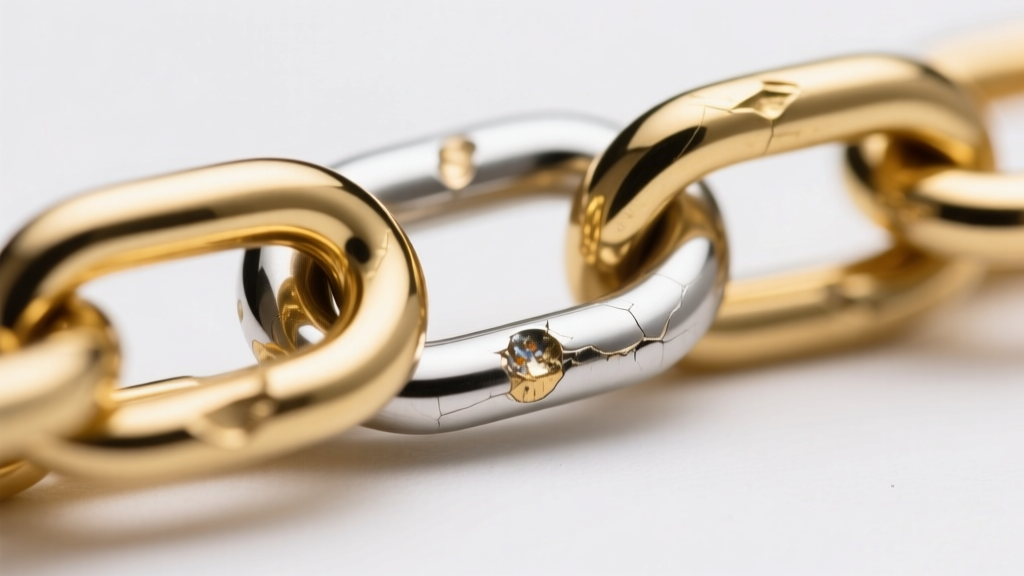
While vermeil is excellent for earrings or smooth bangles, it is highly problematic for large link chains. The friction at the interlocking joints of a 15mm+ chain will wear through a 2.5-micron layer of gold within six to twelve months of daily wear, exposing the sterling silver or brass beneath. Once the base metal is exposed at the joints, the chain will develop dark, tarnished rings at every connection point, ruining the aesthetic. If you choose plated or vermeil for oversized links, reserve it strictly for occasional, low-friction wear.
Gold-Filled Wire (The Structural Limitation)
Gold-filled material consists of a thick outer layer of solid gold (usually 5% or 1/20th of the total weight) mechanically bonded to a brass core under extreme heat and pressure. It is vastly superior to plating and can last decades. However, there is a massive catch regarding large link necklaces: gold-filled metal is manufactured as wire or sheet metal, not as a casting material.
Small to medium chains (up to 5mm) can be machine-woven from gold-filled wire. But large, chunky links (like 15mm Figaro or Cuban styles) are almost exclusively manufactured via wax casting. Because you cannot cast gold-filled metal, true gold-filled large link chains are virtually non-existent. Many online retailers mislabel heavy gold electroplate (HGE) over brass as "gold-filled" when selling large cast links. Always demand proof of the manufacturing method; if the links are cast, they cannot legally be sold as gold-filled.
Weight, Drape, and Tensile Strength Data
The drape of a large link necklace is heavily influenced by its weight. A chain that is too light will twist, tangle, and fail to lay flat against the collarbone. Below is a comparative analysis based on a standard 20-inch, 15mm wide Cuban link chain.
| Material Type | Core Metal | Gold Layer | Avg. Weight (20") | Est. Price Range | Link Friction Durability |
|---|---|---|---|---|---|
| Solid 14k Gold (Cast) | 14k Gold Alloy | 100% | 85 - 110 grams | $4,500 - $7,000 | Lifetime (Excellent) |
| Solid 14k Gold (Hollow) | 14k Gold Alloy | 100% | 25 - 40 grams | $1,200 - $2,500 | Lifetime (Prone to denting) |
| Gold Vermeil | Sterling Silver | 2.5+ microns | 70 - 90 grams | $250 - $600 | 6-12 months at joints |
| Heavy Gold Electroplate | Brass / Copper | 1.0 - 2.0 microns | 80 - 100 grams | $80 - $200 | 3-6 months at joints |
Clasp and Jump Ring Failure Points
The weakest point of any heavy chain is the hardware. A 100-gram solid gold chain exerts significant kinetic force on the clasp when the wearer moves abruptly, bends over, or catches the chain on clothing. Standard 10mm or 12mm lobster claws are entirely inadequate for large link necklaces; the thin cast gold of the lever will bend, and the internal steel spring will eventually snap under the dead weight.
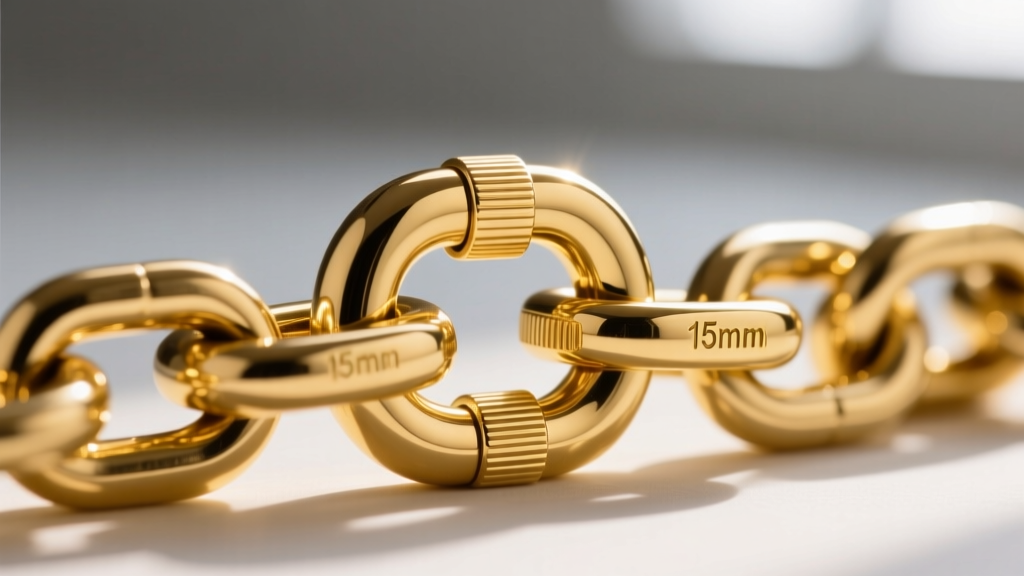
For chains exceeding 50 grams, you must insist on a heavy-duty box clasp (also known as a tongue clasp) measuring at least 15mm in width, equipped with a figure-eight safety catch on the side. Alternatively, a massive 15mm spring ring with a thick steel internal mechanism can work, provided the jump ring connecting it to the chain is soldered shut. Open jump rings are a catastrophic failure point on heavy chains; the sheer weight of the links will slowly pull the open gap apart, resulting in the loss of the necklace. Always verify with the jeweler that the jump rings at both the clasp and the chain's end tag are laser-welded or traditionally soldered closed.
Care and Maintenance for High-Volume Gold
Maintaining a large link necklace requires specific protocols to preserve the metal's finish and structural integrity. The broad, flat surfaces of oversized links act as magnets for skin oils, lotions, and environmental dust, which can quickly dull the high-polish finish.
Expert Warning: Never use ultrasonic jewelry cleaners on hollow electroformed gold links. If there is a micro-fissure in the casting, the ultrasonic vibrations will force water and cleaning chemicals inside the hollow cavity, leading to internal corrosion that cannot be dried or repaired.
For solid cast links, a weekly soak in warm water with a few drops of mild, phosphate-free dish soap is sufficient. Use a soft horsehair brush to gently agitate the dirt trapped in the tight crevices between the interlocking links. Avoid stiff bristles, which can induce micro-scratches on the broad faces of 18k gold. When storing the necklace, never toss it into a jewelry box where it can tangle with diamond-set pieces; diamonds will easily scratch the gold surfaces. Lay the heavy chain flat in a dedicated, velvet-lined tray to prevent kinking the links out of their natural alignment.
Choosing the right large link necklace gold material ultimately comes down to balancing your budget with your expectations for longevity. While solid 14k gold remains the undisputed champion for heirloom-quality, friction-resistant heavy chains, understanding the precise limitations of vermeil and plated alternatives ensures you make an informed, structurally sound investment in your personal style.