Expert Care and Cleaning Guide for Bird Necklaces
Discover expert cleaning methods and maintenance tips for bird necklaces. Protect delicate enamel, gemstone eyes, and intricate metalwork from damage.

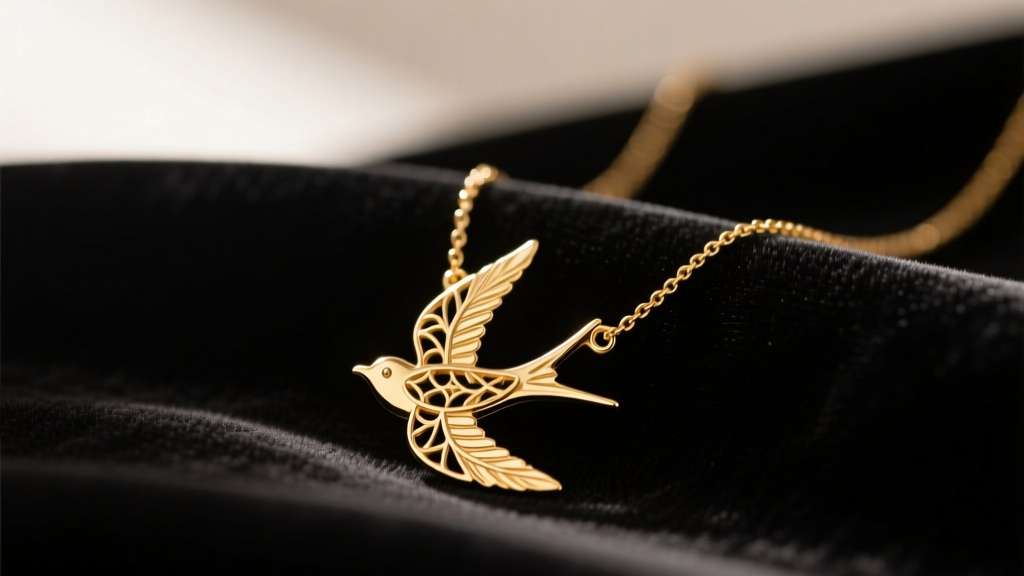
The Unique Vulnerabilities of Avian Jewelry Designs
Bird necklaces are among the most intricate and beloved motifs in fine and fashion jewelry. Whether you own a sweeping gold swallow, a vibrant enameled peacock, or a minimalist silver hummingbird, these pieces require specialized care. Unlike simple geometric pendants, avian designs feature pronounced extremities—delicate wings, protruding beaks, and intricate tail feathers—that are highly susceptible to snagging, bending, and impact damage.
Furthermore, the artistic execution of bird necklaces often involves mixed media. It is common to find oxidized sterling silver used to highlight feather textures, delicate prong-set gemstones used for the bird's eyes, and fragile enamel work filling the wings. In 2026, many contemporary jewelers are also applying PVD (Physical Vapor Deposition) nano-coatings to prevent tarnishing on silver bird pendants. While highly durable, PVD coatings require specific cleaning agents to avoid stripping the microscopic layer. Understanding the exact anatomy and material composition of your bird necklace is the first step in preserving its lifelike beauty.
Material-Specific Cleaning Protocols
A blanket approach to jewelry cleaning will ruin the nuanced details of a bird pendant. You must tailor your cleaning method to the specific materials present in your piece.
Sterling Silver, Gold Vermeil, and PVD Coatings
For solid gold or sterling silver bird necklaces without gemstones or enamel, a mild surfactant is your best option. Use a phosphate-free, non-citrus dish soap. Citrus-based cleaners contain mild acids that can degrade gold vermeil (gold plating over sterling silver) over time. If your bird necklace features an oxidized patina—a darkening technique used to make individual feathers pop—never use liquid silver dip cleaners. These harsh chemical baths will strip the intentional oxidation, leaving the bird looking flat and one-dimensional. For modern PVD-coated pieces, stick strictly to lukewarm water and a microfiber cloth; abrasive polishing pads will scratch the nano-layer.
Enamel and Guilloché Details
Many vintage and high-end bird necklaces utilize champlevé or plique-à-jour enamel to mimic the vibrant plumage of species like the kingfisher or macaw. Plique-à-jour, which is essentially stained glass without a metal backing, is exceptionally fragile. Thermal shock is the enemy of enamel. Never run an enameled bird pendant under hot water, as the rapid expansion of the metal framework can cause the glass-like enamel to pop out or fracture.
Gemstone Accents: The 'Eyes' and 'Feathers'
The gemstones used in bird necklaces dictate their chemical tolerance. According to the Gemological Institute of America (GIA), stones like diamonds and sapphires (Mohs hardness 9-10) can withstand gentle scrubbing and mild ultrasonic cleaning. However, if your bird's eyes are set with turquoise, opal, or lapis lazuli (Mohs 5-6.5), these porous stones will absorb soapy water and chemicals, leading to permanent discoloration and structural weakening. Clean porous gemstone accents using only a barely damp, lint-free cotton swab.
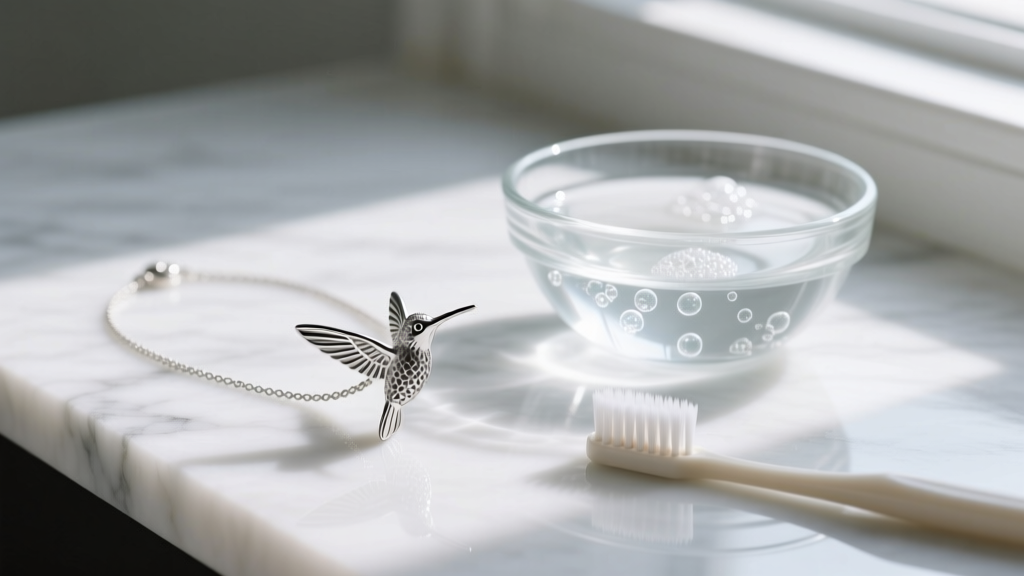
Step-by-Step Deep Cleaning Routine
For a standard metal bird necklace (without porous stones or fragile enamel), follow this safe, deep-cleaning protocol to restore its brilliance without damaging the delicate chain or prongs.
- Prepare the Solution: Fill a small glass bowl with lukewarm distilled water. Add exactly three drops of mild, phosphate-free dish soap. Distilled water is crucial, as tap water contains minerals that leave microscopic hard-water spots on polished metal wings.
- Soak Briefly: Submerge the bird pendant and chain for no more than three to five minutes. This loosens body oils, lotions, and environmental dust trapped in the feather engravings.
- Agitate Gently: Using an extra-soft baby toothbrush, gently brush the pendant. Always brush in the direction of the feather engravings. Avoid vigorous scrubbing around the gemstone eyes, as this can loosen the delicate prongs.
- Rinse and Dry: Rinse the necklace under a gentle stream of lukewarm distilled water. Pat dry with a clean, lint-free microfiber cloth. Allow it to air dry completely on a paper towel before storing.
Expert Warning on Ultrasonic Cleaners: While modern 2026 ultrasonic cleaners are highly efficient, they generate high-frequency cavitation bubbles that create intense localized pressure. Never place a bird necklace with pavé-set wings, glued-in gemstone eyes, or any form of enamel into an ultrasonic machine. The vibrations will shake the stones loose and shatter the enamel.
Chain Maintenance and Snag Prevention
Bird pendants are typically suspended on delicate chains, usually ranging from 0.6mm to 0.9mm in gauge. Cable, box, and wheat chains are popular choices, but their fine links are prone to kinking and catching on the bird's beak or wingtips. To prevent the chain from tangling with the pendant during storage, always fasten the clasp and leave a small loop of the chain threaded through the pendant's bail. This keeps the chain taut and prevents it from weaving through the intricate metalwork of the bird's wings.
Storage and Environmental Protection
Proper storage is just as critical as cleaning. The protruding elements of bird necklaces (beaks, talons, wingtips) can easily scratch other jewelry or become bent if crushed in a crowded jewelry box.
- Individual Pouches: Store each bird necklace in its own soft flannel or anti-tarnish cloth pouch.
- Flat Storage: Lay the necklace flat rather than hanging it, especially if the chain is a fine 0.6mm gauge. Hanging heavy pendants over long periods can cause permanent stretching of the chain links.
- Humidity Control: Place a small silica gel packet or an anti-tarnish strip inside the storage pouch to absorb ambient moisture and sulfur compounds that cause silver to blacken.
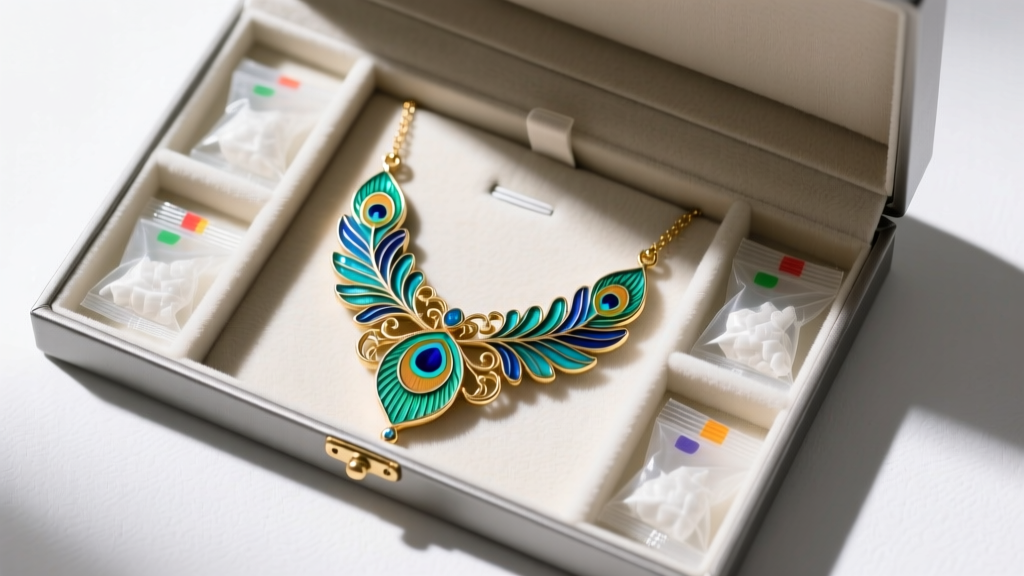
Troubleshooting Common Bird Necklace Failures
Even with meticulous care, the complex geometry of avian pendants can lead to specific wear-and-tear issues. Below is a diagnostic table to help you address common problems.
| Issue | Primary Cause | Actionable Solution |
|---|---|---|
| Loose Gemstone Eye | Snagging on clothing; prong wear | Stop wearing immediately. Take to a jeweler to have the V-prong or bezel tightened. Do not attempt to push it back in with your fingers. |
| Bent Wingtip or Beak | Impact or sleeping in the necklace | Do not bend it back yourself, as repeated bending causes metal fatigue and snapping. A jeweler can safely anneal and reshape the metal. |
| Chain Kinking | Improper storage; friction | Lay the chain flat on a hard surface and gently roll a clean, smooth wooden dowel or glass bottle over the kink to flatten the links. |
| Enamel Cloudiness | Exposure to perfumes or hairspray | Wipe gently with a damp microfiber cloth. If cloudiness persists, the enamel's surface may be etched and require professional repolishing. |
Professional Maintenance Schedule
While at-home care keeps your bird necklace looking pristine, professional maintenance is non-negotiable for preserving its structural integrity. The Jewelers of America recommends having fine jewelry inspected at least once a year. For bird necklaces, a jeweler will use a microscope to check the structural integrity of the solder joints where the wings meet the body, ensure the bail is not wearing thin from chain friction, and verify that all gemstone prongs are secure. By combining gentle, informed at-home cleaning with annual professional inspections, your avian jewelry will remain a breathtaking and durable staple in your collection for decades to come.


