Puka Bead Necklace Anatomy: Shell Grading and Stringing Techniques
Discover the technical anatomy of a genuine puka bead necklace. Learn shell grading, synthetic detection, and professional stringing methods.

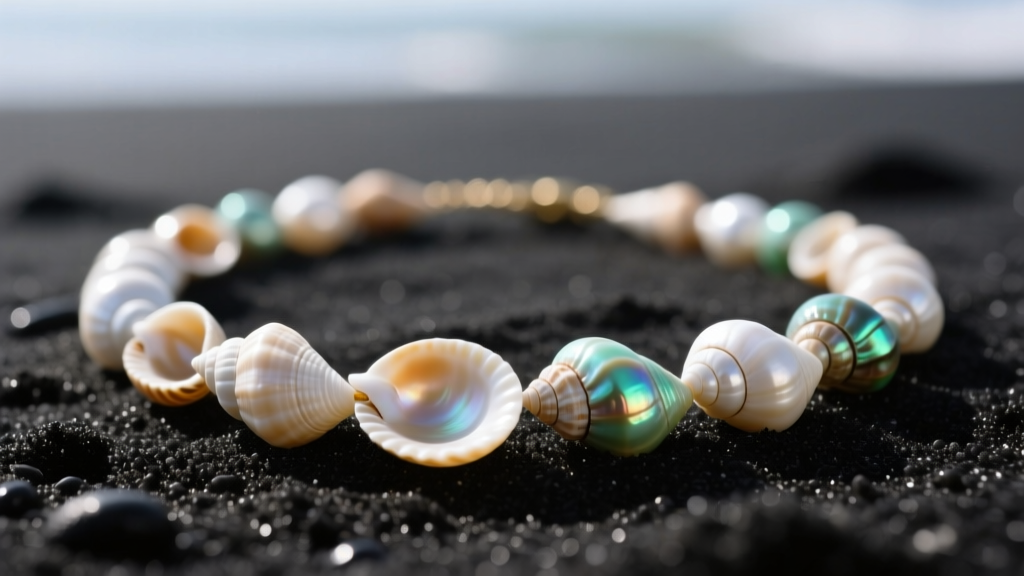
The Biological Origin: What Makes a True Puka?
The term "puka" translates directly to "hole" in the Hawaiian language, but in the context of fine jewelry, it refers to a highly specific biological remnant. A genuine puka bead necklace is not merely a collection of broken shells; it is an assemblage of the naturally occurring spires of cone snails, primarily Conus miliaris (the Miliare cone) and Conus sponsalis (the Sponsal cone). Historically, these shells were gathered from the beaches of Kauai and Oahu after years of ocean tumbling. The abrasive action of the sand and surf naturally wears away the fragile body whorl of the shell, leaving behind the dense, calcified spire with a naturally formed hole. According to the Bernice Pauahi Bishop Museum, early Hawaiian shell leis were prized not just for their beauty, but for the immense labor required to find naturally pierced specimens in the surf.
From a mineralogical perspective, these shells are composed of microscopic aragonite crystals bound together by an organic protein matrix called conchiolin. This cross-lamellar structure gives the puka shell a Mohs hardness of approximately 3.0 to 3.5, making it durable enough for daily wear but susceptible to scratching from harder materials like quartz sand or steel clasps.
Grading the Puka Bead Necklace: Natural vs. Tumbled vs. Synthetic
The modern market is saturated with imitations, making it critical for jewelers and collectors to understand the grading taxonomy of puka shells. The value and structural integrity of a puka bead necklace depend entirely on its processing method and origin.
| Grade | Classification | Morphology & Processing | Market Price Range (18") |
|---|---|---|---|
| Grade A | Natural / Ocean-Tumbled | Unpolished, natural hole, varying sizes, matte finish. | $150 - $400+ |
| Grade B | Tumbled / Polished | Machine-tumbled, smooth edges, uniform sizing, high luster. | $60 - $120 |
| Grade C | Chip / Trochus Imitation | Non-cone shells punched and drilled, flat backs, sharp edges. | $15 - $35 |
| Grade D | Synthetic / Resin | Epoxy or polyurethane casts, mold seams, uniform thickness. | $5 - $20 |
Grade A specimens command a premium because the natural ocean-tumbling process creates a unique, asymmetric drape that cannot be replicated by machines. Grade C imitations, often made from Trochus shells or mother-of-pearl, are punched out of flat sheets. While they contain real calcium carbonate, they lack the convex/concave geometry of a true cone spire.
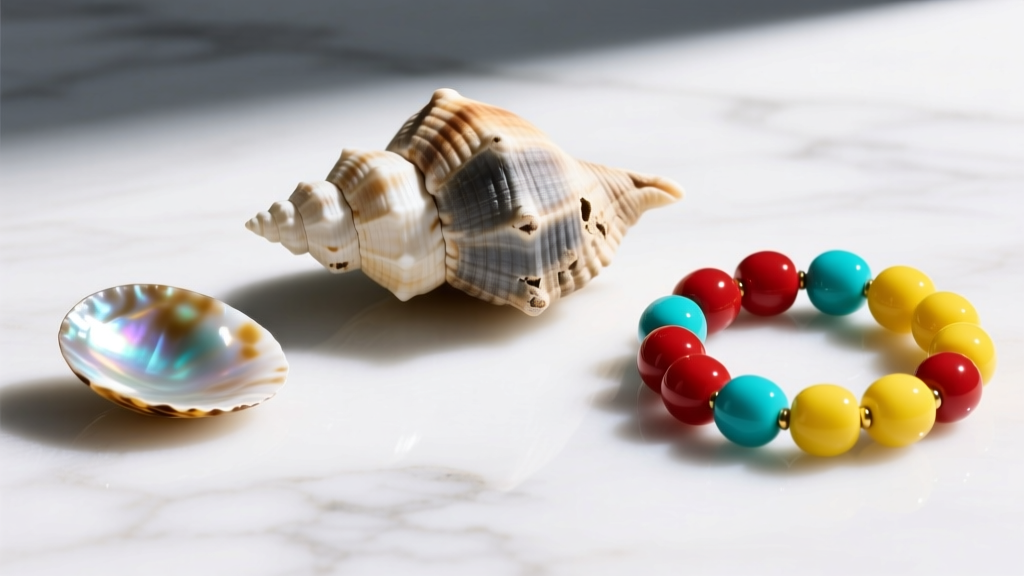
Technical Inspection: Identifying Authentic Cone Shells
When authenticating a vintage or high-end puka bead necklace, rely on morphological and optical inspection rather than touch alone. Use a 10x triplet loupe to examine the following vectors:
- The Convex/Concave Axis: A genuine puka is essentially a tiny cup. The front (spire) is convex and rounded, while the back (the remnant of the body whorl) is distinctly concave. Synthetic and chip beads are often flat on the back or uniformly curved like a lentil.
- The Hole Geometry: Natural ocean-drilled holes are rarely perfectly centered and usually exhibit a smooth, slightly flared entry point. Machine-drilled imitations feature sharp, 90-degree entry burrs or concentric striations left by diamond-tipped core drills.
- UV Fluorescence: As noted in the GIA's guidelines on organic gem materials, natural aragonite shells often exhibit a dull, chalky blue or yellow fluorescence under long-wave UV light due to trace organic compounds. Epoxy and plastic resins will either fluoresce brightly (often milky blue or green) or appear completely inert, depending on the polymers and optical brighteners used in the casting process.
Advanced Stringing: Engineering for Durability
The most common failure point in shell jewelry is the stringing material. The inner edges of a puka shell, even when highly polished, act as microscopic abrasives. Over years of wear, the friction against the thread causes catastrophic failure, resulting in lost beads.
Thread Selection Matrix
Choosing the right cord requires balancing tensile strength, abrasion resistance, and knot security.
- Silk Thread: The traditional choice, but highly unsuitable for modern daily wear. Silk degrades rapidly when exposed to the salt in human sweat and the acidity of skin oils, leading to dry rot and snapping.
- Polyurethane Elastic (e.g., Stretch Magic): Frequently used in commercial-grade necklaces. While convenient, elastic degrades under UV exposure and the micro-friction from shell edges. It is not recommended for heirloom-grade puka.
- Braided UHMWPE (Ultra-High-Molecular-Weight Polyethylene): Brands like PowerPro or SpiderWire (typically 10 lb to 20 lb test, 0.15mm - 0.20mm diameter) are the gold standard for professional stringing. UHMWPE offers zero stretch, immense tensile strength, and extreme resistance to abrasion from calcium carbonate edges.
- Bonded Nylon/Polyester (e.g., Serafil): An excellent alternative to UHMWPE, offering slightly more flexibility and easier knotting, though it requires larger crimp beads due to its thicker diameter.
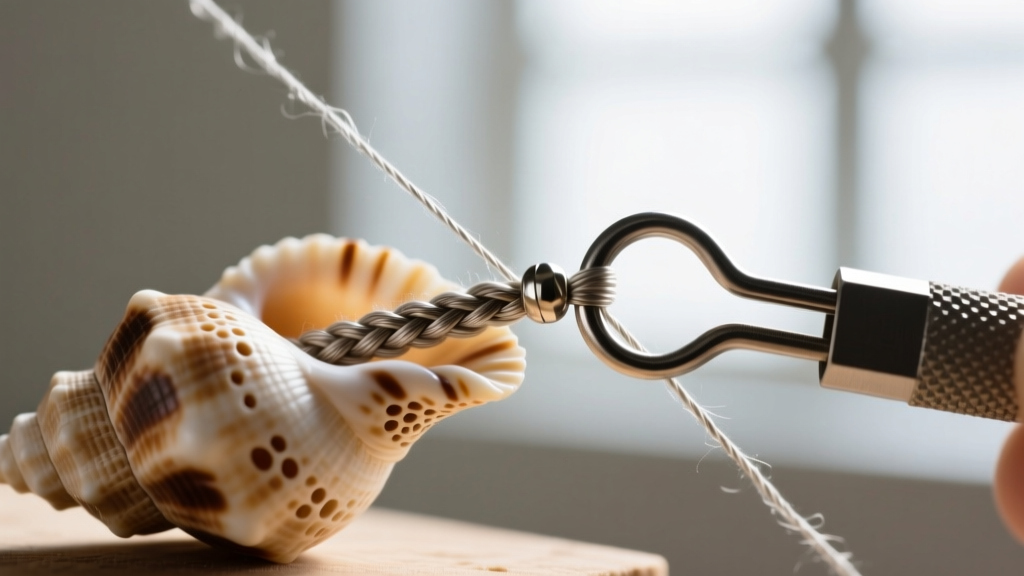
Crimping vs. Macrame Knotting
When using UHMWPE, standard crimp tubes will often slip because the braided line is incredibly slick. Professionals must use micro-crimps (1.5mm x 1.5mm) and a specialized crimping plier that folds the metal into a secure, multi-chambered lock. Alternatively, many master stringers bypass hardware entirely, utilizing hand-tied macrame techniques with waxed polyester thread (such as Linhasita). The wax coating fills the microscopic gaps in the shell's drill hole, reducing friction and locking the knots firmly against the bead bumper.
Sizing, Drape Geometry, and Layout
Unlike perfectly spherical glass beads, natural puka shells possess an organic taper. The spire is narrower at the apex and wider at the base. When designing a custom puka bead necklace, a master jeweler will "graduate" the strand. This involves placing the largest, widest shells at the nadir (the center front) of the necklace and progressively transitioning to smaller, narrower spires as the strand moves up toward the clasp. This graduation is not just an aesthetic choice; it is a structural necessity. If uniform, heavy shells are placed near the clasp, the necklace will pull awkwardly against the nape of the neck, causing the clasp to migrate forward and the drape to collapse. Proper graduation ensures the center of gravity rests comfortably on the sternum.
Care, Maintenance, and Degradation Vectors
To preserve the structural integrity and luster of a puka bead necklace, owners must mitigate specific environmental degradation vectors:
- Chemical Exposure: Calcium carbonate is highly reactive to acids. Perfumes, citrus-based lotions, and even acidic sweat will etch the surface of the shell over time, resulting in a permanent, dull chalkiness. Always apply cosmetics and fragrances 15 minutes before donning the necklace.
- Ultrasonic Cleaners: Never place puka shells in an ultrasonic cleaner. The high-frequency cavitation can exploit micro-fissures in the aragonite layers, causing the shell to delaminate or shatter entirely.
- UV Degradation: Prolonged exposure to direct sunlight will break down the conchiolin protein matrix within the shell, leading to irreversible yellowing and structural brittleness. Store the necklace in a dark, climate-controlled jewelry box lined with anti-tarnish flannel.
- Cleaning Protocol: To clean, submerge the strand in lukewarm distilled water with a drop of pH-neutral dish soap. Agitate gently with a soft-bristled makeup brush to dislodge sebum from the concave backs, rinse with fresh distilled water, and allow to dry completely on a microfiber cloth before storage.
By understanding the biological origins, morphological grading, and mechanical stringing requirements of these organic gems, collectors and jewelers can ensure their puka bead necklace remains a durable, heirloom-quality artifact rather than a fleeting fashion accessory.


