Birthstone Necklace December Care: Cleaning Tanzanite & Turquoise
Expert cleaning and care tips for your birthstone necklace December gems like tanzanite, turquoise, and zircon to prevent damage and maintain brilliance.

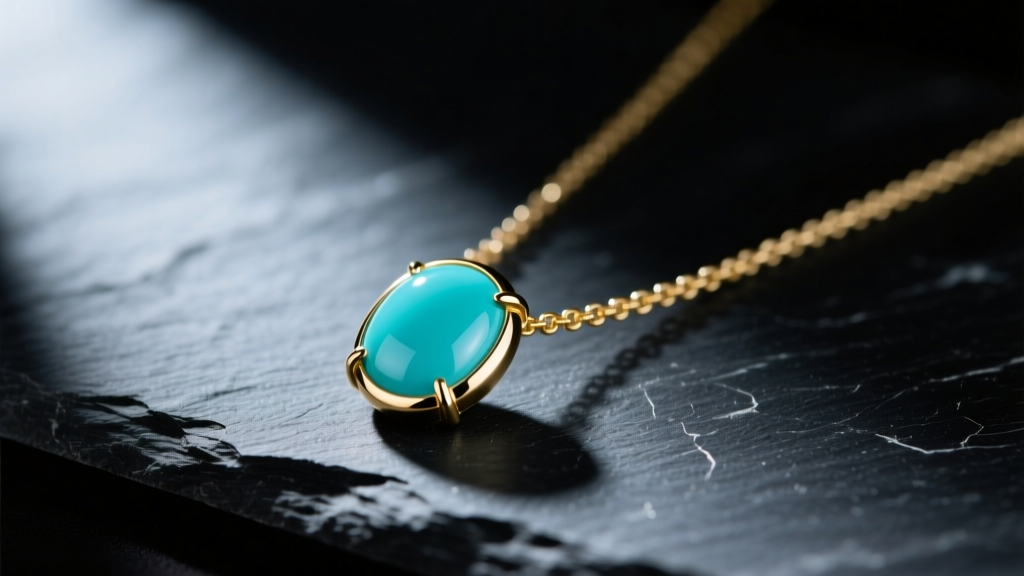
Developing a proper birthstone necklace December care strategy requires a deep understanding of gemological vulnerabilities. December is unique in the gemological calendar, boasting a trio of spectacular but highly sensitive birthstones: tanzanite, turquoise, and zircon (with blue topaz often included as a modern alternative). While these gems offer breathtaking winter hues, their physical properties make them notoriously difficult to maintain. As we navigate the jewelry care landscape in 2026, ultrasonic cleaners and harsh chemical dips are increasingly recognized as hazardous to these specific stones. Whether you are wearing a delicate tanzanite pendant or a bold turquoise statement piece, understanding the exact structural limitations of your gem is the first step in preserving its brilliance.
The Hardness & Vulnerability Matrix of December Birthstones
Before applying any cleaning solution, you must understand the Mohs hardness scale and the crystallographic cleavage planes of your specific stone. Hardness dictates scratch resistance, while cleavage dictates how easily a stone will shatter upon impact or thermal shock.
| Gemstone | Mohs Hardness | Cleavage / Fracture | Porosity | Ultrasonic Safe? |
|---|---|---|---|---|
| Tanzanite | 6.5 - 7.0 | Perfect in one direction | None | No (Shatter risk) |
| Turquoise | 5.0 - 6.0 | Conchoidal fracture | High (unless stabilized) | No (Chemical damage) |
| Zircon | 6.5 - 7.5 | Brittle facet edges | None | Risky (Edge abrasion) |
| Blue Topaz | 8.0 | Perfect basal cleavage | None | No (Cleavage risk) |
According to the Gemological Institute of America (GIA), tanzanite's perfect cleavage in one direction means that a sudden temperature change or the high-frequency vibrations of an ultrasonic cleaner can cause the stone to split entirely in half. Similarly, turquoise is a hydrous phosphate of copper and aluminum, making it incredibly reactive to acids, alkalis, and even the natural oils in your skin.
Step-by-Step Cleaning Protocols by Gemstone
A one-size-fits-all approach to jewelry cleaning will destroy a December birthstone. Below are the precise, gem-specific protocols recommended by master jewelers.
Tanzanite & Blue Topaz: The Lukewarm Soak
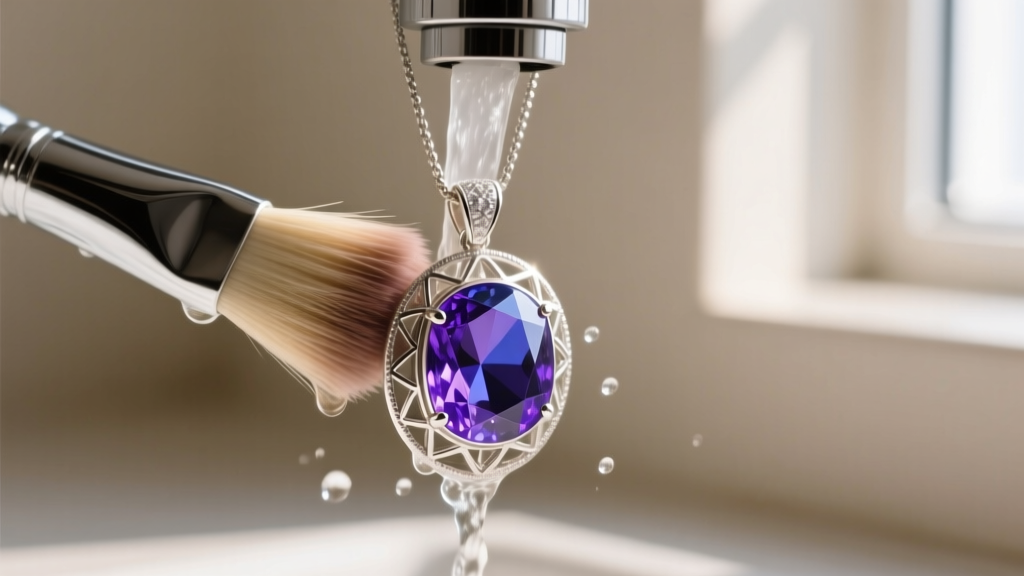
Because both tanzanite and blue topaz possess distinct cleavage planes, thermal shock is your greatest enemy. Never use hot or ice-cold water. Instead, prepare a solution of distilled water and a few drops of phosphate-free, mild dish soap (such as Dawn Essentials) at room temperature (approx. 68°F to 72°F).
- Submerge the pendant for no more than 3 to 5 minutes.
- Use a baby toothbrush with ultra-soft bristles to gently sweep away debris from the back of the setting (the pavilion).
- Rinse under a gentle stream of lukewarm distilled water to prevent hard water spot buildup.
- Pat dry immediately with a lint-free microfiber cloth. Do not air dry, as water spots can dull the facet reflection.
Turquoise: The Dry & Damp Wipe Method
Turquoise requires an entirely different methodology. Natural, untreated turquoise is highly porous. If you submerge it in soapy water, it will absorb the chemicals, leading to irreversible discoloration and structural weakening over time. Even stabilized turquoise (treated with epoxy resin) should not be soaked, as the resin can degrade.
To clean a turquoise pendant, use a slightly damp, untreated cotton cloth to gently wipe the surface of the cabochon. For the silver or gold bezel surrounding the stone, use a specialized jewelry polishing cloth that is completely dry. The GIA Turquoise Guide explicitly warns against using silver dip liquids, as the sulfuric acid components will permanently stain the porous matrix of the turquoise, turning vibrant blues into sickly greens or browns.
Zircon: Gentle Brushing for Facet Brilliance
Zircon is famous for its high dispersion (fire), but it suffers from 'paper wear'—a phenomenon where the facet edges abrade over time from friction. When cleaning a zircon birthstone necklace, avoid rubbing the stone aggressively. Use a camel-hair makeup brush to dust the crown of the gem, and only use a wet cotton swab to clean the culet (the bottom point) where skin oils accumulate.
What to Avoid: The Ultimate 'Do Not Use' List
To protect your birthstone necklace December gems from catastrophic failure, banish the following items from your cleaning arsenal:
Pro-Tip: Never wear your turquoise or tanzanite necklace while applying cosmetics, perfumes, or hairspray. The alcohol and aerosolized chemicals will create a microscopic film on the gems that is incredibly difficult to remove without professional polishing.
- Ultrasonic Cleaners: The cavitation bubbles created by ultrasonic waves will shatter tanzanite and blue topaz along their cleavage planes.
- Steam Cleaners: The intense, localized heat will cause thermal shock and can melt the epoxy used in stabilized turquoise.
- Ammonia & Bleach: These harsh alkalis will pit the surface of turquoise and degrade the rhodium plating on white gold settings.
- Toothpaste: Toothpaste contains hydrated silica, which has a Mohs hardness of around 7. This will severely scratch turquoise (Mohs 5-6) and leave micro-abrasions on tanzanite.
Chain and Setting Maintenance for Winter Pendants
The care of your necklace extends beyond the gemstone to the metalwork that secures it. December birthstones are often worn during winter, a season that introduces unique mechanical hazards. Heavy wool scarves, turtlenecks, and layered winter clothing frequently catch on necklace chains, putting immense tensile stress on the jump rings and prongs.
Choosing the Right Chain Gauge
If you are restringing or upgrading your pendant chain, opt for a 1.0mm to 1.2mm box chain or rope chain. Box chains are constructed from interlocking square links that lay flat and are highly resistant to snagging on winter knits. Avoid delicate 0.5mm cable chains or herringbone chains, which are prone to kinking and snapping when caught on a heavy winter coat.
Prong vs. Bezel Settings
Because turquoise is relatively soft and tanzanite is prone to chipping, bezel settings (where a rim of metal completely encircles the gem's girdle) are vastly superior to prong settings for daily wear. If your tanzanite is set in a four-prong basket, you must have a jeweler inspect the prong tips every six months. Winter temperature fluctuations cause fingers and skin to shrink and swell, altering how necklaces sit on the chest and increasing the likelihood of a prong catching and bending backward.
Professional Servicing and Storage Best Practices
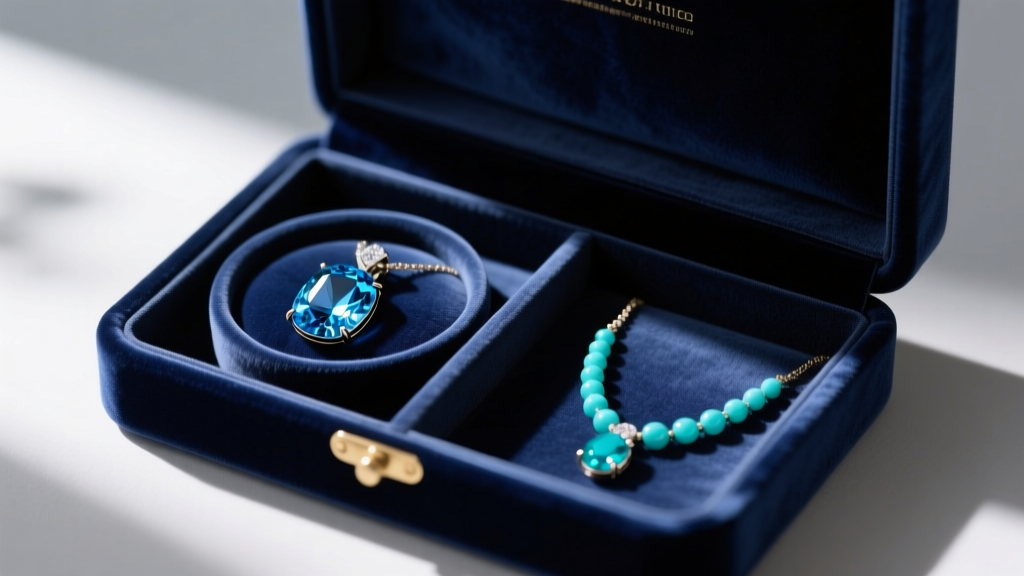
Proper storage is the final pillar of your maintenance routine. December birthstones must never be tossed into a communal jewelry box. Zircon and blue topaz, being harder than tanzanite and turquoise, will easily scratch the softer stones if they come into contact during storage.
Store each necklace in an individual, anti-tarnish flannel pouch. For silver settings, include a 3M anti-tarnish strip in the storage drawer to absorb atmospheric sulfur, which causes silver sulfide (tarnish) to form. If you wear your turquoise necklace frequently, the natural oils from your skin will actually help maintain its luster, but you must wipe it down with a dry, soft cloth before putting it away to remove acidic sweat residue.
By respecting the unique crystallographic and chemical properties of tanzanite, turquoise, zircon, and blue topaz, you ensure that your December birthstone jewelry remains a vibrant, flawless heirloom for decades to come. When in doubt regarding deep cleaning or prong tightening, always defer to a certified gemologist rather than risking irreversible damage with at-home remedies.


