The Black and White Chunky Necklace: 2026 Trend Guide
Discover how the black and white chunky necklace is dominating 2026 fashion. Explore material guides, styling frameworks, and high-contrast layering tips.

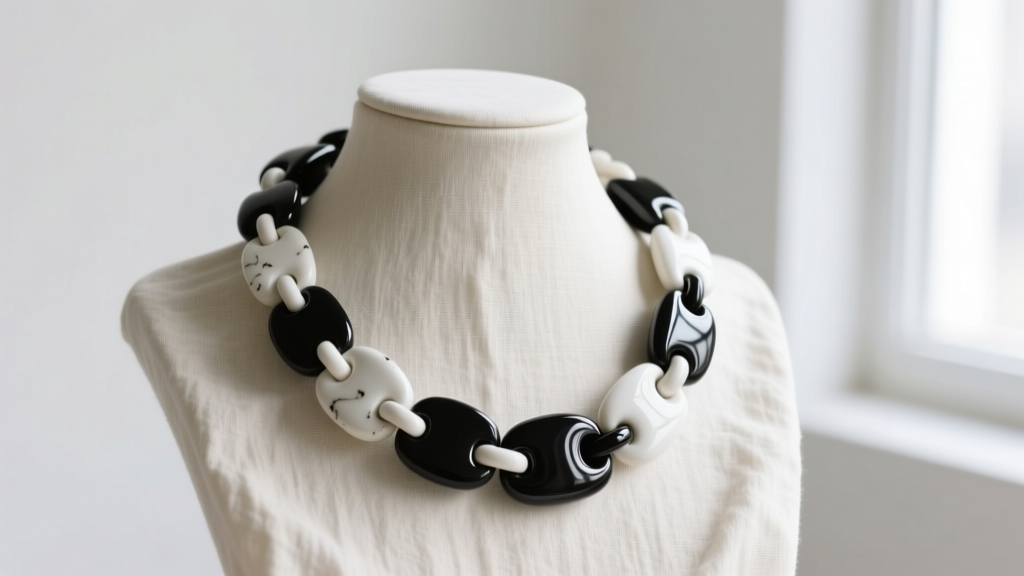
The Monochrome Maximalism Movement
In 2026, the jewelry landscape has decisively pivoted away from the understated whispers of quiet luxury and the chaotic layering of early-2020s maximalism. Enter 'architectural monochrome'—a trend defined by aggressive scale, strict color palettes, and brutalist silhouettes. At the absolute epicenter of this movement is the black and white chunky necklace. This isn't merely a strand of oversized beads; it is a study in high-contrast visual weight, utilizing negative space, stark tonal shifts, and unconventional material pairings to transform basic garments into editorial statements.
According to trend forecasting data from The Business of Fashion, consumer searches for high-contrast, oversized resin and ceramic jewelry have surged by 140% year-over-year. The modern collector is no longer looking for delicate chains to layer; they want a single, structurally dominant piece that anchors an entire outfit. But executing this trend requires a deep understanding of material physics, hardware tolerances, and proportional styling. Below, we break down the exact specifications that separate a premium architectural piece from a fast-fashion novelty.
Material Matrix: What Makes a Quality Chunky Piece?
The physical weight and light-refraction properties of a black and white chunky necklace dictate its wearability and perceived value. A piece that looks monumental but weighs 200 grams will cause cervical fatigue within an hour. The best contemporary jewelers engineer visual volume without the punishing mass. Here is how the top-tier materials compare in the 2026 market:
| Material | Visual Profile | Weight & Durability | Average Price Tier |
|---|---|---|---|
| Cellulose Acetate | Deep, translucent black with creamy, marbled white. High polish. | Extremely lightweight. Hypoallergenic. Prone to micro-scratches if dropped. | $120 - $280 |
| Zirconia Ceramic | Stark, opaque matte black against brilliant glossy white. Zero porosity. | Heavy, but highly scratch-resistant (8.5 on Mohs scale). Shatters on hard impacts. | $250 - $600 |
| Carved Black Onyx | Jet black with sharp, geometric white enamel inlays or quartz accents. | Very heavy (Specific Gravity 2.60+). Requires robust hardware. GIA notes it is brittle. | $450 - $1,200+ |
| Epoxy Resin | Can embed stark white geometric shapes in blackened, smoky transparent bases. | Featherlight. Yellows over time if not UV-stabilized. Low heat tolerance. | $40 - $150 |

The 2026 Styling Framework: Necklines & Proportions
Wearing a high-contrast, oversized piece requires treating your neckline as an architectural canvas. The interplay between the garment's collar and the necklace's drop length is where outfits either succeed or fail. Use this precise framework to pair your black and white chunky necklace with your wardrobe:
- The Crewneck Anchor (16 to 18-inch drop): When wearing a standard crewneck sweater or tee, the necklace must sit entirely above the fabric's ribbed collar. A 16-inch drop creates a 'collar' effect, framing the face without tangling in the garment. Opt for interlocking, flat-backed links here to prevent the piece from flipping outward.
- The V-Neck Plunge (20 to 24-inch drop): The goal is to mirror the garment's geometry. A deep V-neck requires a Y-silhouette or a long, graduated chunky chain that draws the eye downward. Ensure the heaviest, largest link or pendant rests exactly one inch above the apex of the V-neckline to maintain visual tension.
- The Strapless Collarbone (14 to 15-inch choker): For strapless gowns or tube tops, bare skin demands a shorter, tighter silhouette. A rigid, sculptural black and white choker that sits flush against the clavicle provides a brutalist contrast to the softness of exposed shoulders. Look for pieces with an interior silicone grip lining to prevent sliding on bare skin.
Hardware & Clasp Mechanics for Heavy Pendants
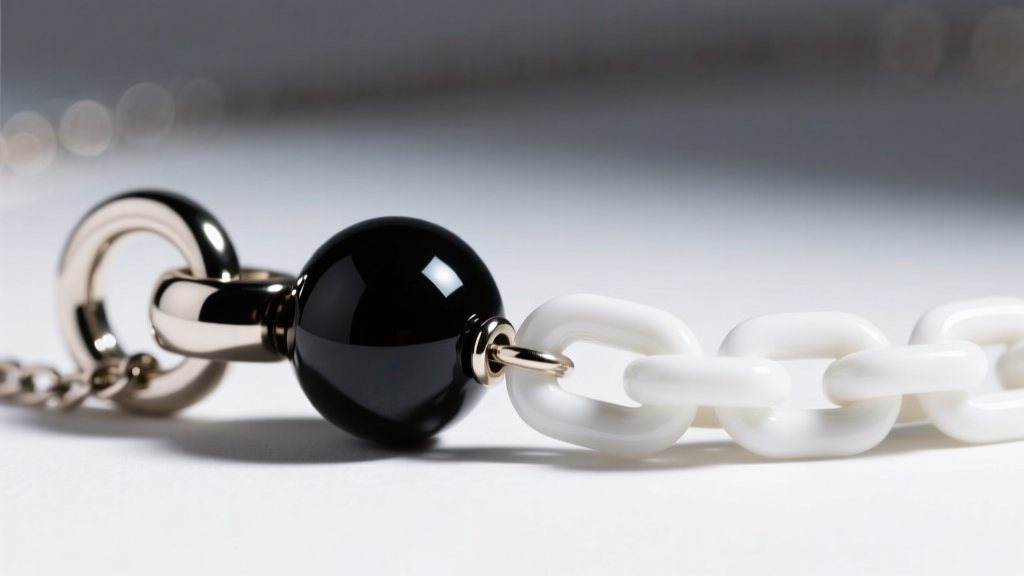
The most common failure point in statement jewelry is the clasp. A standard 10mm lobster clasp is rated for roughly 40 to 50 grams of static load. However, a premium carved onyx or ceramic black and white chunky necklace frequently exceeds 90 grams. When you factor in dynamic load—the kinetic force generated by walking, turning your head, or bending over—the stress on the jump ring and clasp spring can easily triple.
For any piece exceeding 75 grams, demand structural upgrades. Look for 14k gold-filled or surgical steel spring-ring clasps with reinforced soldered jump rings. Alternatively, the industry standard for 2026 heavy-link necklaces is the neodymium magnetic clasp. Ensure the magnets are rated for at least 15 pounds of pull-force (typically N42 grade or higher) and are housed in a friction-locked metal casing. Crucially, a secondary micro-cable safety chain is non-negotiable to catch the piece if the magnetic seal is compromised by a sudden tug.
Price Tiers & Brand Benchmarks
Understanding the pricing architecture of the monochrome trend helps you identify genuine craftsmanship over inflated branding. The market is currently segmented into three distinct tiers:
- Accessible / Trend-Driven ($30 - $90): Dominated by injection-molded acrylic and epoxy resins. Links are often hollow or filled with base-metal sand for weight. Hardware is typically unplated brass with a high risk of tarnishing. Suitable for seasonal experimentation, but expect structural degradation within a year.
- Contemporary / Designer ($150 - $450): The sweet spot for material integrity. Brands in this tier utilize hand-polished Mazzucchelli cellulose acetate, high-grade zirconia ceramics, and PVD-coated stainless steel hardware. Links are solid, and clasps are mechanically tested for dynamic loads.
- Artisan / Fine ($600 - $2,500+): Reserved for master-carved gemstones (like black onyx and rock crystal), paired with 18k gold or platinum linkages. These pieces are often limited-run or bespoke, featuring invisible clasps and custom-engineered tension settings.
'The structural integrity of a chunky necklace isn't just about the clasp; it's about the internal tension wire. High-end resin and ceramic links should be threaded on a multi-strand, 49-strand micro-braided stainless steel cable, never on nylon monofilament, which degrades and snaps under UV exposure and skin oils.' — Master Bench Jeweler & Structural Consultant
Care and Maintenance for Matte Finishes
Many black and white chunky necklaces in 2026 feature matte or satin finishes on the black components to contrast with high-gloss white elements. This mixed-texture approach requires specific maintenance. Never place matte ceramic or porous onyx in an ultrasonic cleaner; the high-frequency vibrations can fracture internal inclusions and strip away delicate enamel inlays.
Instead, use a dry, ultra-fine microfiber cloth to lift skin oils and cosmetic powders from the links. For the glossy white acetate or enamel sections, a slightly damp cloth with a drop of pH-neutral dish soap will restore brilliance without damaging the chemical bonds of the material. Always store the necklace laid flat in a flannel-lined drawer; hanging heavy, chunky links on a standard jewelry stand places uneven stress on the lower links, eventually warping the internal threading and causing permanent structural fatigue.


