Black Dress and Pearl Necklace: Budget & Value Assessment Guide
Discover how to assess value when pairing a black dress and pearl necklace. Compare Akoya, Freshwater, and South Sea pricing, luster, and grading.

The Economics of the Classic Black Dress and Pearl Necklace
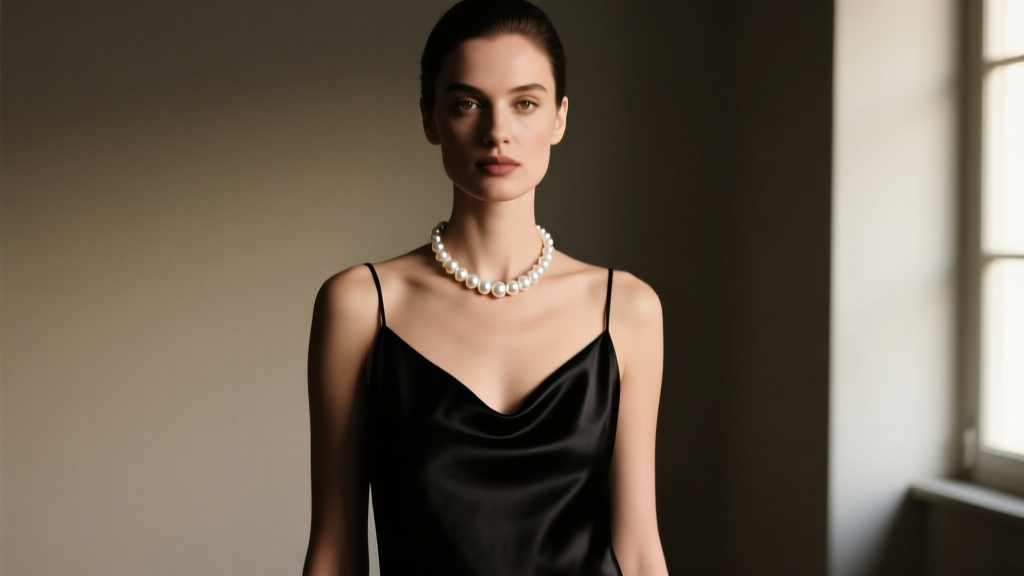
The pairing of a black dress and pearl necklace is arguably the most enduring silhouette in fashion history, immortalized by Coco Chanel and Audrey Hepburn. Yet, beneath the romanticized aesthetic lies a complex gemological market where prices for seemingly identical white strands can range from $40 to over $40,000. For the modern consumer, navigating this disparity requires moving beyond brand names and understanding the intrinsic value factors that dictate pearl pricing.
When you place a pearl strand against a black fabric canvas, you are essentially creating a high-contrast optical test. Black absorbs ambient light, meaning the only illumination returning to the observer's eye is the light reflecting off the pearl's nacre layers. This contrast ruthlessly exposes poor luster and chalky surfaces, while simultaneously amplifying the mirror-like shine of high-grade pearls. Therefore, allocating your budget correctly is not just about prestige; it is about maximizing visual return on investment (ROI) against dark textiles.
Decoding Pearl Types: Where Your Budget Actually Goes
To assess value accurately, you must first understand the biological and manufacturing differences between the three primary saltwater and freshwater pearl categories available in the 2026 market.
Freshwater Pearls: The Budget Champion
Historically, freshwater pearls were tissue-nucleated, resulting in solid nacre but often irregular, off-round shapes with a softer, satiny luster. Today, premium bead-nucleated Edison freshwater pearls dominate the mid-tier market. Priced between $80 and $250 for an 18-inch princess strand, high-grade Edison pearls offer incredible value. However, their luster, while bright, rarely achieves the razor-sharp, mirror-like reflection of saltwater varieties, which can make them appear slightly flat against deep black silk or velvet.
Akoya Pearls: The Mid-Tier Standard
The Akoya pearl is the quintessential partner for the little black dress (LBD). Cultivated primarily in Japan and Vietnam, Akoya pearls are bead-nucleated with a nacre thickness typically ranging from 0.15mm to 0.5mm. The aragonite platelets in Akoya nacre are exceptionally uniform, creating a crisp, high-contrast luster that pops brilliantly against dark fabrics. A premium Hanadama-grade Akoya strand (7mm to 8mm) will cost between $600 and $1,500. According to the GIA's Pearl Quality Factors, luster is the most critical value determinant for saltwater pearls, and Akoya consistently leads this metric.
South Sea and Tahitian Pearls: The Luxury Investment
South Sea pearls (white and golden) and Tahitian pearls (naturally dark) are cultivated in the massive Pinctada maxima and Pinctada margaritifera oysters. Ranging from 9mm to 16mm, these pearls feature incredibly thick nacre (2mm to 6mm), resulting in a deep, satiny, almost glowing luster rather than a sharp mirror finish. A high-quality white South Sea strand starts around $3,500 and can easily exceed $25,000. While undeniably luxurious, their massive size and soft luster can sometimes overpower a delicate black cocktail dress, making them better suited for grand galas than everyday elegance.
The 4-Point Value Assessment Matrix for LBD Pairings
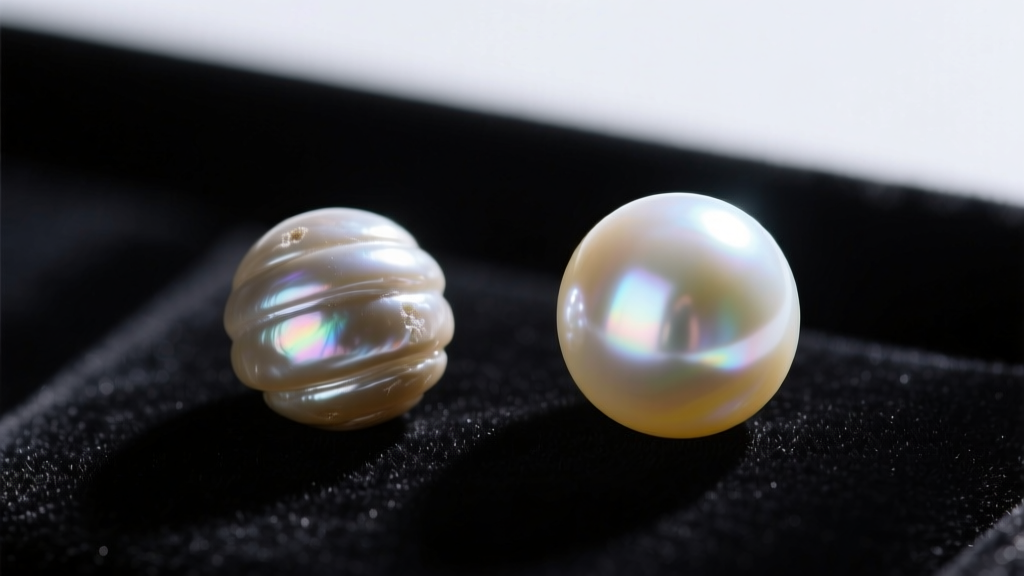
When evaluating a black dress and pearl necklace combination, use this specialized framework to ensure your budget is spent on visual impact rather than hidden flaws.
| Value Factor | Why It Matters on Black Fabric | Budget Allocation Priority |
|---|---|---|
| Luster | Black fabric absorbs light; sharp luster provides the necessary contrast and 'glow'. | Highest (Allocate 60% of budget here) |
| Nacre Thickness | Thin nacre (under 0.2mm) shows the bead nucleus, creating a dull, chalky 'dead' spot. | High (Ensures longevity and deep reflection) |
| Surface Blemishes | Minor blemishes are virtually invisible against black backgrounds due to light absorption. | Low (Save money by accepting minor flaws) |
| Matching & Sizing | Uniformity in size and overtone creates a cohesive, elegant line against the dark canvas. | Medium (Crucial for the classic aesthetic) |
Sizing and Length: Maximizing Visual ROI on a Black Canvas
The neckline of your black dress dictates the required length of the pearl strand, which directly impacts the final price. As pearl size and strand length increase, the price scales exponentially, not linearly. The GIA Pearl Description guidelines note that millimeter increases in saltwater pearls drastically reduce the yield of a harvest, spiking costs.
- Collar (10-13 inches): Sits tightly against the neck. Best for V-neck or scoop-neck black dresses. Requires perfectly matched, smaller pearls (5mm-6mm), offering high value as smaller Akoya pearls are more abundant and affordable ($300-$500).
- Choker (14-16 inches): Rests at the base of the neck. The ultimate choice for off-the-shoulder or strapless black gowns. A 7mm Akoya choker provides maximum visual impact without the exorbitant cost of longer strands.
- Princess (17-19 inches): Falls just below the collarbone. This is the most versatile length, resting elegantly on the bodice of almost any black dress. It requires more pearls, increasing the budget requirement by roughly 15-20% compared to a choker.
- Matinee (20-24 inches): Falls to the top of the bust. Ideal for high-necked black turtlenecks or shift dresses. Because it requires significantly more material, buyers often achieve better value by opting for high-luster Edison freshwater pearls in this length rather than paying the premium for long Akoya strands.
Real-World Budget Scenarios: What to Buy
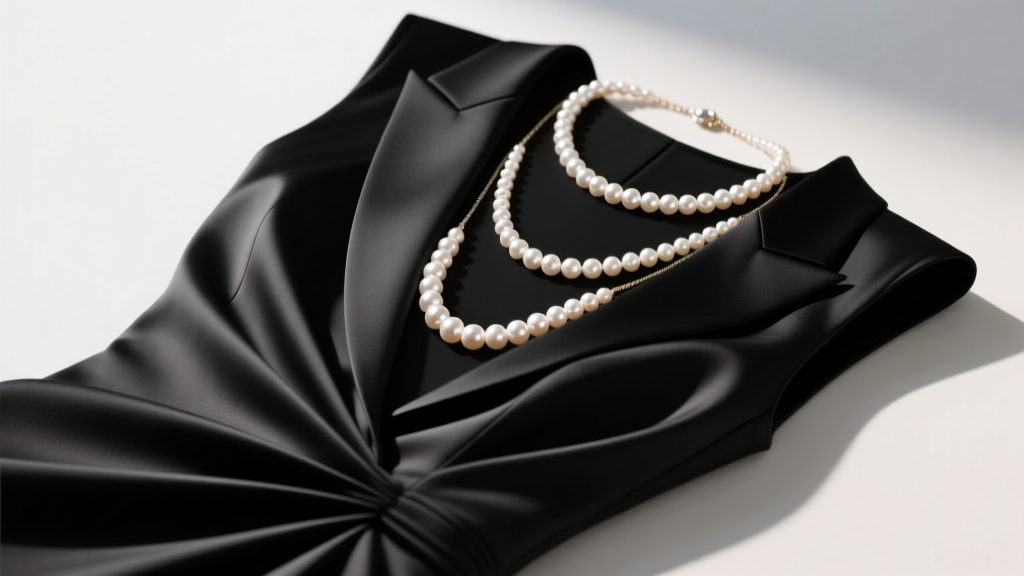
To translate gemological theory into actionable purchasing decisions, consider these three budget scenarios tailored for the classic LBD pairing.
Scenario 1: The Smart Budget (Under $200)
The Strategy: Prioritize luster over perfect roundness. Look for AAA-grade near-round freshwater pearls or high-quality Edison pearls in the 7mm to 8mm range. While they may lack the razor-sharp reflection of Japanese Akoya, top-tier freshwater pearls possess a beautiful, soft orient that looks incredibly rich against black matte crepe or cotton blends. Avoid cheap, imitation glass pearls coated in synthetic pearl essence; under the harsh lighting of evening events, their plastic-like sheen will immediately clash with the sophistication of a black dress.
Scenario 2: The Core Investment ($500 - $1,200)
The Strategy: This is the sweet spot for authentic Japanese Akoya pearls. Target a 16-inch choker or 18-inch princess strand featuring 6.5mm to 7.5mm pearls with a minimum nacre thickness of 0.3mm. Look for vendors who provide X-ray verification of nacre depth. At this price point, you are paying for the 'mirror ball' effect—the sharp, high-contrast reflections that make the pearls appear as if they are glowing from within when set against black silk or satin.
Scenario 3: The Heirloom Tier ($3,000+)
The Strategy: Enter the realm of Hanadama-certified Akoya or entry-level White South Sea pearls. If your black dress features heavy embellishments, sequins, or intricate lace, a strand of 9mm-10mm White South Sea pearls will provide the necessary visual weight to balance the outfit. Ensure the pearls have a very high luster grade; South Sea pearls with poor luster look like dull plastic beads against dark fabrics, rendering the massive financial investment entirely counterproductive.
Authenticity and Avoiding Overpriced Imitations
The market is saturated with 'shell pearls' and heavily treated low-grade pearls bleached and dyed to mimic high-end Akoya. When assessing value, always perform the 'tooth test' (gently rubbing the pearl against the biting edge of your front teeth; real nacre feels gritty like sandpaper, while glass or plastic feels perfectly smooth). Furthermore, demand a detailed receipt specifying the pearl type, origin, and any treatments (such as bleaching or pinking). A genuine black dress and pearl necklace combination relies on the organic, imperfect beauty of real nacre to achieve its timeless elegance. By understanding the optical physics of contrast and the gemological realities of nacre thickness, you can confidently invest in a strand that delivers both enduring financial value and unparalleled sartorial impact.


