Black Heart Diamond Necklace Buying Guide: What to Look For in 2026
Discover how to choose the perfect black heart diamond necklace in 2026. Learn about gem treatments, heart-cut symmetry, settings, and pricing tiers.

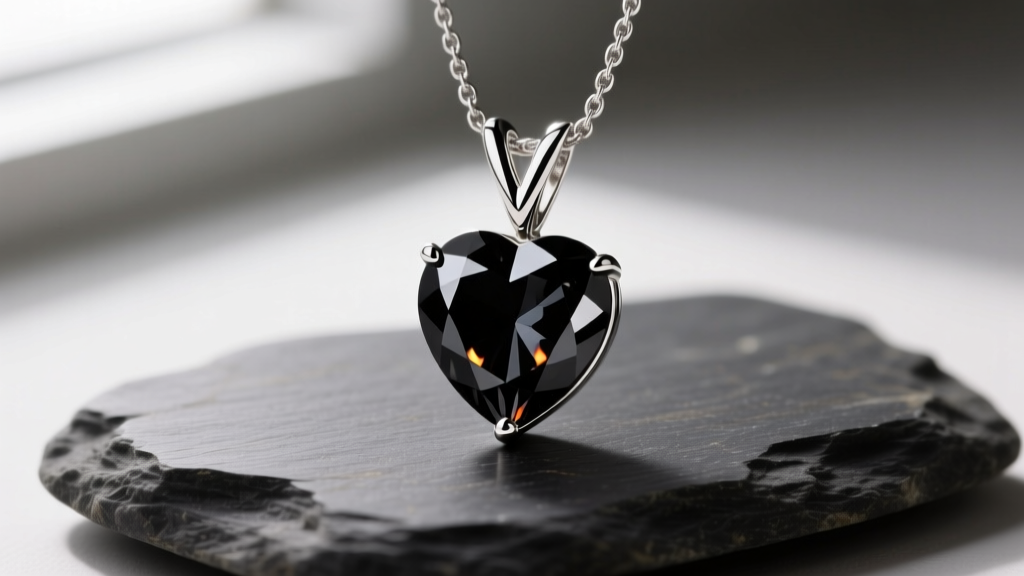
The Allure of the Black Heart Diamond
The traditional clear diamond has dominated the fine jewelry market for a century, but 2026 marks a definitive shift toward moody, unconventional gemstones. The black heart diamond necklace sits at the intersection of gothic romance and modern minimalism. Unlike their colorless counterparts, black diamonds do not rely on light return and brilliance; instead, they offer a deep, opaque luster that absorbs light, creating a striking visual weight against the skin. When combined with the complex geometry of a heart cut, the result is a pendant that demands attention. However, buying a black heart diamond requires a completely different gemological framework than buying a white diamond. This guide breaks down the exact specifications, structural vulnerabilities, and pricing metrics you need to know before making a purchase.
Gemological Breakdown: Natural vs. Treated vs. Lab-Grown
Not all black diamonds are created equal. The color origin drastically affects the stone's durability, price, and long-term value. According to the Gemological Institute of America (GIA), natural black diamonds derive their color from dense clouds of graphite and pyrite inclusions. These inclusions make the stone completely opaque but also introduce micro-fractures, making natural black diamonds more brittle than clear ones.
Treated black diamonds, on the other hand, begin as low-clarity, heavily included grey or white diamonds that are subjected to high-temperature annealing or irradiation to turn them uniformly black. Lab-grown black diamonds are created via Chemical Vapor Deposition (CVD) or High Pressure High Temperature (HPHT) methods, utilizing specific dopants to achieve the opaque black hue without the structural weaknesses of natural inclusions.
| Feature | Natural Black | Treated Black | Lab-Grown Black |
|---|---|---|---|
| Color Origin | Graphite/Pyrite inclusions | Irradiation/Annealing | CVD/HPHT with dopants |
| Opacity | Highly Opaque | Opaque to Semi-Translucent | Uniformly Opaque |
| Durability | Prone to micro-fractures | High (starts as clearer diamond) | High (controlled crystal growth) |
| Price Range (1 Carat) | $2,500 - $5,000+ | $800 - $1,500 | $400 - $900 |
Decoding the Heart Cut: Proportions and Symmetry
The heart brilliant cut is one of the most difficult shapes for a lapidary to execute. It requires 56 to 58 facets, and because the stone is opaque, the cutter must prioritize silhouette symmetry over light performance. When evaluating a black heart diamond necklace, you must scrutinize the length-to-width (L/W) ratio.
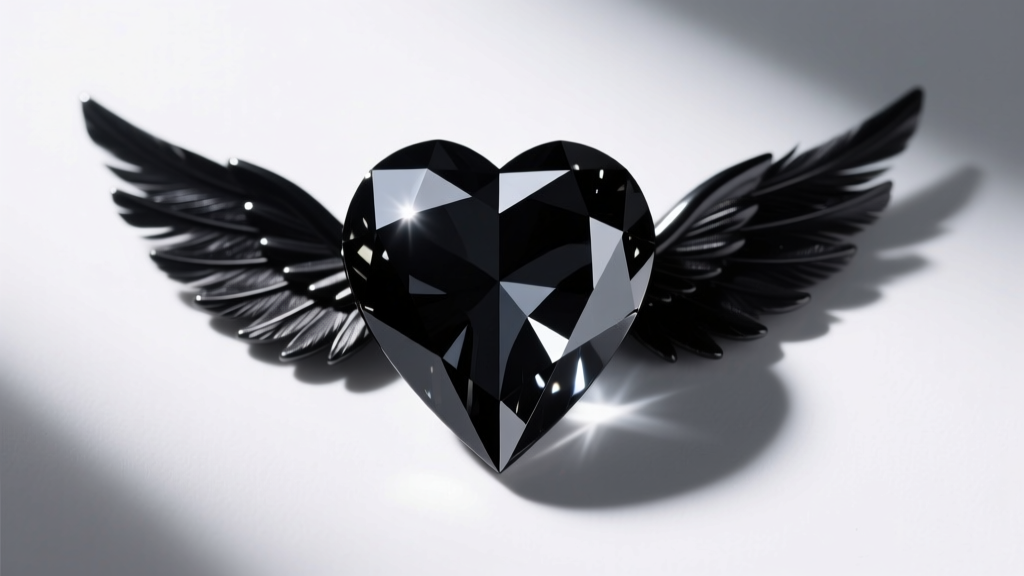
The Golden Ratio for Heart Diamonds
For a heart diamond to look balanced, the L/W ratio should fall strictly between 0.90 and 1.10. A ratio below 0.90 results in a stubby, wide shape that loses the elegant taper of the bottom point. A ratio above 1.10 creates an elongated, stretched appearance that resembles a pear cut with a cleft. Furthermore, the "wings" (the rounded top lobes) must be perfectly symmetrical. Draw an imaginary vertical line down the center of the cleft; the left and right wings must mirror each other exactly. Any asymmetry is immediately obvious in a solid black stone because there is no internal scintillation to distract the eye.
"When evaluating opaque diamonds like black diamonds, standard clarity grading is irrelevant. The focus must shift entirely to the precision of the lapidary cut, the symmetry of the wings, and the structural integrity of the setting." — Master Gemologist Appraiser
Setting Security: Protecting the Vulnerable Points
The most critical failure mode in heart-shaped jewelry is chipping at the extremities. The cleft (the V-shaped dip at the top) and the point (the bottom tip) are acute angles that act as structural weak points. If a heart diamond is dropped on a hard tile floor, these points will shatter first.
Never buy a heart diamond set with standard rounded prongs at the extremities. You must insist on V-prongs at both the top cleft and the bottom point. A V-prong wraps around the sharp corner, distributing impact stress and shielding the vulnerable tip. For the sides of the wings, standard claw prongs are acceptable, provided they are adequately thick.
Metal Selection and Black Rhodium Maintenance
While 18k white gold and platinum are standard, 2026 has seen a massive surge in black rhodium-plated settings to match the opaque stone. If you choose black rhodium, understand that it is a surface treatment, not an alloy. It will wear off the high-friction areas of the prongs within 12 to 18 months, revealing the silvery-white metal beneath. Platinum is the superior choice for prong tension and longevity, as it develops a patina rather than losing material when scratched, ensuring the V-prongs remain secure over decades of wear.
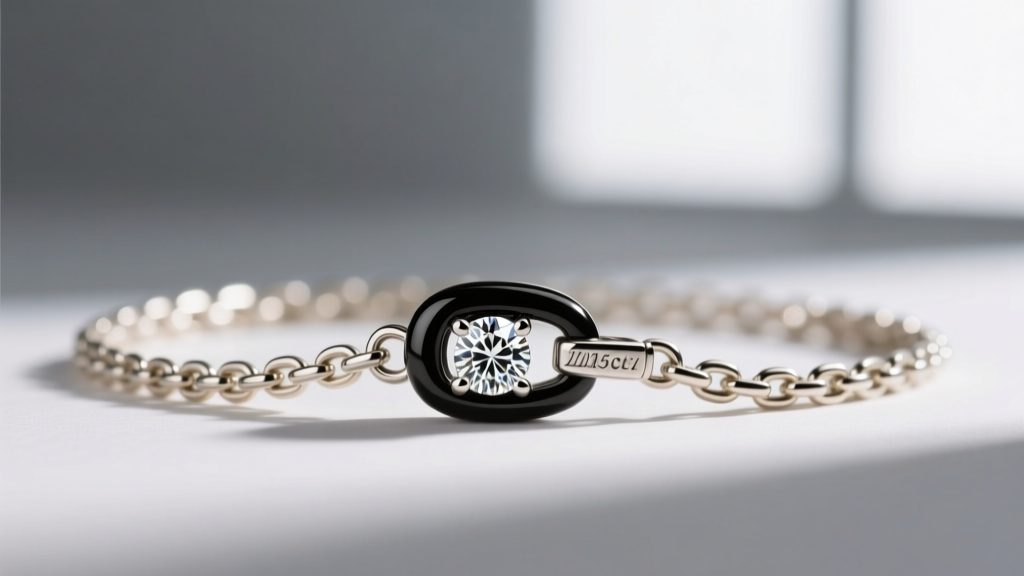
Chain Metallurgy and Clasp Mechanics
A 1-carat heart diamond in a platinum setting weighs approximately 3.5 to 4.5 grams. While this seems light, the pendulum effect of a pendant swinging against the chest places immense tensile stress on the chain's weakest link—usually the jump ring connecting the clasp.
- Chain Style: Avoid snake chains and herringbone chains. They kink easily, trap hair, and are notoriously difficult to repair. Opt for a 0.9mm to 1.2mm box chain or wheat chain, which offer excellent tensile strength and resist tangling.
- Clasp Type: Discard the standard spring-ring clasp. They have weak internal springs and fail under dynamic loads. Upgrade to a lobster clasp with a reinforced, soldered jump ring. For chains over 1.5mm, a parrot clasp or a specialized locking mechanism is recommended.
- The Bail: Ensure the bail (the loop holding the pendant) has a smooth, rounded interior. A rough or angular bail will act like a saw, slowly cutting through the chain links over time.
2026 Pricing Tiers and Certification Requirements
Pricing for black heart diamond necklaces varies wildly based on origin and carat weight. Because the heart cut yields a lower percentage of the rough crystal compared to a round brilliant, heart-shaped diamonds carry a 10% to 15% premium over round black diamonds of the same origin.
When purchasing a natural black diamond of significant size (over 1.50 carats), do not accept a standard GIA Diamond Dossier. The GIA does not grade black diamonds on the standard D-Z color scale or standard clarity scales due to their opacity. Instead, you must request a GIA Colored Diamond Identification and Origin Report, which confirms whether the stone is natural or treated. For lab-grown options, an IGI or GCAL certification is standard and will detail the CVD/HPHT growth method. Always verify the laser inscription on the girdle of the diamond against the digital certificate before finalizing your purchase.
Final Verdict for the Buyer
The black heart diamond necklace is an investment in alternative luxury. By prioritizing V-prong settings, demanding strict 0.90-1.10 L/W symmetry, and selecting a robust 1.0mm box chain with a lobster clasp, you ensure that your pendant is not only visually striking but structurally engineered to survive daily wear. Whether you opt for the geological rarity of a natural graphite-included stone or the flawless durability of a lab-grown alternative, understanding these technical nuances is the key to a confident purchase.


