How to Choose the Perfect Black Lace Choker Necklace: A Material Guide
Discover how to choose the ideal black lace choker necklace. We compare Chantilly, Guipure, and stretch lace properties, durability, and styling tips.

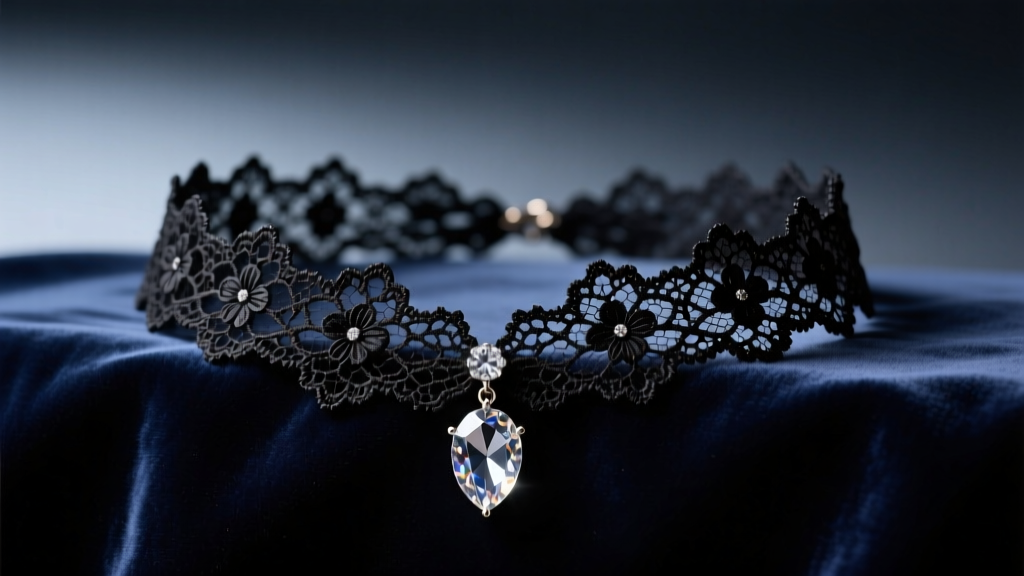
The black lace choker necklace is a perennial staple in jewelry wardrobes, bridging the gap between Victorian elegance and modern grunge. However, in the 2026 jewelry market, discerning buyers are looking past mere aesthetics to evaluate the structural integrity, textile origin, and dermatological safety of their accessories. Not all lace is created equal. The difference between a choker that frays after a month and an heirloom-quality piece lies entirely in its material composition and manufacturing method.
This comprehensive guide breaks down the specific material properties of black lace, comparing traditional weaves against modern synthetics, and provides a practical framework for selecting the right piece based on your lifestyle and skin sensitivity.
The Textile Foundation: Raschel Knit vs. Leavers Loom
Before evaluating specific lace styles, it is crucial to understand how the base textile is manufactured. The production method dictates the drape, stretch, and longevity of the black lace choker necklace.
Raschel Knit Lace
Over 80% of commercially available lace chokers are produced on Raschel warp knitting machines. Raschel lace is characterized by its geometric, slightly rigid net background. It is cost-effective and highly durable, but it lacks the fluid drape of traditional lace. Because the threads are knotted rather than woven, Raschel lace is prone to curling at the edges when cut, requiring finished borders or backing to maintain its shape.
Leavers Loom Lace
Authentic, high-end lace is woven on antique Leavers looms, a complex process that intertwines the warp and weft threads to create a stable, non-curling fabric. According to the Victoria and Albert Museum's textile archives, Leavers lace is distinguished by its intricate, raised floral motifs and sheer, hexagonal net ground. A black lace choker necklace made from genuine Leavers lace will lay perfectly flat against the collarbone without requiring heavy structural backing, though it commands a significantly higher price point.
Material Breakdown: Chantilly, Guipure, and Stretch Lace
When shopping for a black lace choker necklace, you will primarily encounter three distinct material categories. Each possesses unique physical properties that affect how it wears throughout the day.
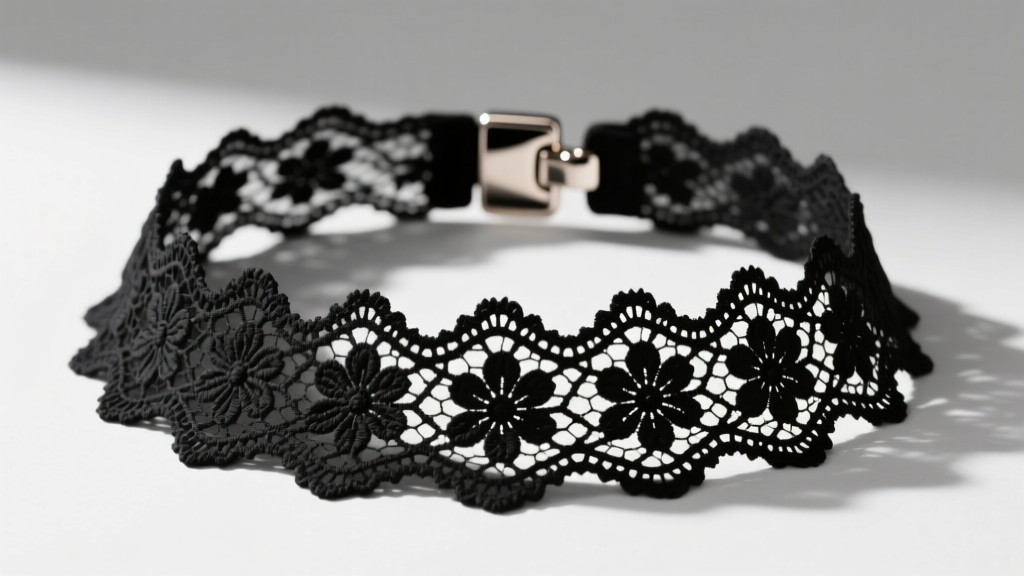
1. Chantilly Lace (The Delicate Classic)
Traditionally made from silk, modern Chantilly lace is usually woven from fine nylon or polyester threads. It features a distinct hexagonal net background with heavy, outlined floral patterns. It is exceptionally lightweight and breathable, making it ideal for sensitive skin. However, its sheer net background offers zero structural support, meaning it must be lined or backed to prevent the delicate netting from catching on jewelry or clothing.
2. Guipure / Venice Lace (The Structural Heavyweight)
Guipure lace is a misnomer; it is technically an embroidered net where the net background is dissolved or cut away, leaving only the dense, raised thread work. Usually crafted from mercerized cotton or a cotton-polyester blend, Guipure is heavy, self-supporting, and highly textured. A black lace choker necklace made from Guipure does not require a backing material, as the dense thread work provides ample rigidity. It is the most durable option for daily wear.
3. Stretch Lace (The Modern Utility)
Stretch lace integrates elastane (Spandex/Lycra) into the nylon or polyester base, typically in an 85/15 or 90/10 ratio. This material hugs the neck without the need for clasps or adjustable chains. While it lacks the heritage appeal of Chantilly or Guipure, its mechanical stretch properties make it the most practical choice for active lifestyles, as it moves with the body and resists tearing under tension.
Comparative Material Properties Matrix
Use the following data table to compare the physical properties of the three primary lace types used in choker manufacturing.
| Property | Chantilly Lace | Guipure (Venice) Lace | Stretch Lace |
|---|---|---|---|
| Primary Fiber | Nylon / Silk Blend | Mercerized Cotton | Nylon / Elastane (85/15) |
| Weight & Drape | Ultra-light, fluid | Heavy, rigid, textured | Medium, form-fitting |
| Structural Support | Low (Requires backing) | High (Self-supporting) | Medium (Relies on tension) |
| Durability Score | 4/10 (Snags easily) | 9/10 (Highly resilient) | 7/10 (Elastane degrades) |
| Average Price Range | $45 - $150+ | $30 - $85 | $12 - $35 |
| Best Hardware Match | Ribbon ties / Small rings | Heavy lobster clasps | Claspless / Slip-on |
Backing Materials and Dermatological Safety
Raw lace, particularly Raschel knit and unlined Chantilly, can cause micro-abrasions on the delicate skin of the neck. To mitigate this, premium black lace choker necklaces utilize backing materials. The choice of backing drastically alters the comfort and safety of the piece.
- Velvet Backing: Provides a luxurious feel and excellent opacity, but velvet traps heat and moisture, making it unsuitable for humid climates or extended summer wear.
- Suede / Faux Suede: Offers a soft, matte finish that grips the skin slightly, preventing the choker from sliding. However, low-quality faux suede can peel after repeated exposure to skin oils.
- Medical-Grade Silicone: The optimal choice for sensitive skin. Silicone is non-porous, hypoallergenic, and easily wiped clean of sweat and cosmetics.
Furthermore, the metal hardware used to secure the lace is a common culprit for contact dermatitis. The American Academy of Dermatology notes that nickel allergy is the most common cause of allergic contact dermatitis. Always ensure the lobster clasp or jump rings on your black lace choker necklace are crafted from 316L surgical stainless steel, solid brass, or sterling silver, rather than cheap zinc alloys plated with nickel.
Hardware and Closure Mechanics
The closure mechanism must be proportionate to the weight and tensile strength of the lace material.
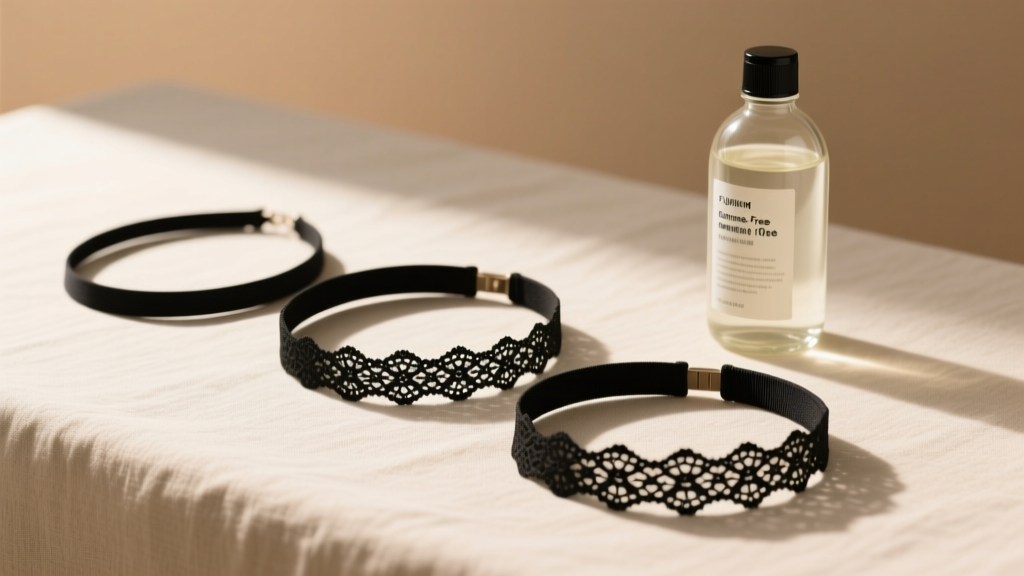
Lobster Clasps and Extender Chains
For rigid materials like Guipure, a 12mm to 15mm stainless steel lobster clasp is required to support the weight of the lace without bending. The extender chain should feature welded jump rings; split rings will easily catch on the lace threads and cause pulls.
Ribbon Ties
Delicate Chantilly lace is best secured with ribbon ties rather than metal clasps, which can tear the fine netting. When evaluating a ribbon-tie choker, check the ribbon material. Grosgrain ribbon, with its ribbed texture, holds knots securely and resists fraying far better than smooth satin ribbon, which tends to slip undone throughout the day.
Care, Maintenance, and Longevity
Proper maintenance is dictated by the fiber content of your black lace choker necklace. The elastane in stretch lace is highly susceptible to degradation from heat and harsh chemicals, while cotton Guipure can shrink if washed improperly.
Expert Care Rule: Never machine wash or tumble dry any lace choker. The agitation will destroy the structural integrity of the net background, and the heat will melt synthetic fibers or snap elastane threads.
Washing Protocol: Submerge the choker in a basin of cold water (below 30°C) mixed with an enzyme-free, pH-neutral textile detergent. Enzymes, commonly found in standard laundry detergents, will break down protein-based fibers like silk-blend Chantilly and cause cotton Guipure to weaken. Gently agitate for two minutes, rinse in cold water, and press flat between two microfiber towels to absorb excess moisture. Allow it to dry flat away from direct sunlight to prevent the black dye from fading to a dull charcoal.
Final Verdict: Which Lace Suits Your Lifestyle?
Selecting the right black lace choker necklace requires balancing aesthetic preference with material reality. If you prioritize heritage craftsmanship and a delicate, romantic silhouette, invest in a backed Chantilly lace piece with ribbon ties. If you need a durable, everyday accessory that withstands friction and maintains its structural shape, a cotton-blend Guipure lace choker with a stainless steel clasp is your best option. For athleisure or high-mobility environments, the mechanical utility of an 85/15 nylon-elastane stretch lace remains unmatched. By understanding these textile properties, you can curate a jewelry collection that is as resilient as it is beautiful.


