Mastering Dainty Necklace Layering: A Buyer's Guide
Discover the mechanics of dainty necklace layering. Learn how to choose chain styles, metal grades, and lengths to prevent tangling and breakage.

The Physics of Tangle-Free Dainty Necklace Layering
Dainty necklace layering is one of the most sought-after aesthetics in modern jewelry, yet it remains notoriously difficult to execute without ending up with a knotted mess. The secret to a flawless stack does not lie merely in aesthetic choices, but in the applied physics of tribology—the study of friction, wear, and lubrication. When multiple delicate chains rest against the skin and each other, they generate micro-friction and static electricity. Understanding how chain geometry, metal hardness, and weight distribution interact is the cornerstone of mastering dainty necklace layering.
Chain Link Geometry: Why Some Tangle and Others Don't
Not all chain links are created equal when it comes to layering. The structural geometry of the link dictates its friction coefficient and its propensity to interlock with neighboring chains.
- Cable and Rolo Chains: These feature uniform, rounded links. While classic, identical gauge sizes (e.g., stacking two 1.0mm cable chains) will inevitably interlock. If you layer cable chains, vary the link sizes significantly (e.g., a 0.8mm micro-cable with a 1.5mm standard rolo).
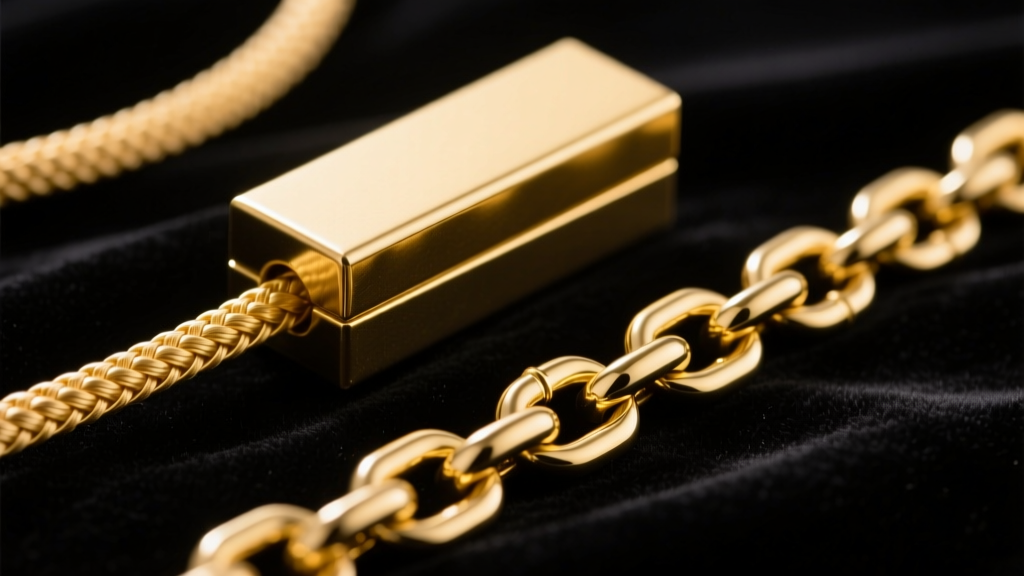
- Box Chains: Composed of square, rigid links, box chains are the undisputed champions of layering. Their flat surfaces and structural rigidity prevent them from folding in on themselves or catching on adjacent chains.
- Snake and Herringbone Chains: Avoid these for layering. Their smooth, continuous surface creates a high-friction 'magnetic' effect against other chains, and they are highly susceptible to permanent kinking when twisted in a stack.
Metal Grades & Durability: What Survives the Stack
When dealing with ultra-fine gauges (0.7mm to 1.2mm), the metallurgical composition of your jewelry is just as critical as its design. Pure gold (24k) is far too malleable for dainty layering; it will stretch and snap under the microscopic torque of untangling. According to the Gemological Institute of America (GIA), alloying gold with metals like copper, silver, and zinc dramatically increases its tensile strength and Vickers hardness.
For dainty necklace layering, 14k gold is structurally superior to 18k gold. The higher copper content in 14k gold yields a Vickers hardness of approximately 135 HV, compared to 115 HV for 18k yellow gold. This 17% increase in hardness translates directly to a chain's resistance to stretching and link deformation when caught in a tangle.
Furthermore, if you prefer the silvery hue of white gold, be aware that dainty necklace layering accelerates the wear of rhodium plating. The constant micro-friction between layered chains will strip the rhodium from 14k or 18k white gold much faster than a single chain worn alone. For a maintenance-free white metal stack, solid platinum or palladium is vastly superior, as their color is intrinsic and will not reveal a yellowish underlayer over time.
| Metal / Alloy | Vickers Hardness (HV) | Tensile Strength | Layering Suitability |
|---|---|---|---|
| 14k Yellow Gold | ~135 HV | High | Excellent (Best for daily wear) |
| 18k Yellow Gold | ~115 HV | Medium | Good (Requires careful handling) |
| Platinum (950) | ~110 HV | Very High | Excellent (Dense, won't snap) |
| Sterling Silver | ~75 HV | Low-Medium | Fair (Prone to stretching) |
The Golden Ratio of Lengths and Weights
A common failure point in dainty necklace layering is improper length spacing. The 'Golden Ratio' of layering dictates a minimum 2-inch gap between each necklace. A 1-inch gap allows the chains to cross over one another during movement, creating a fulcrum point that leads to complex knotting.
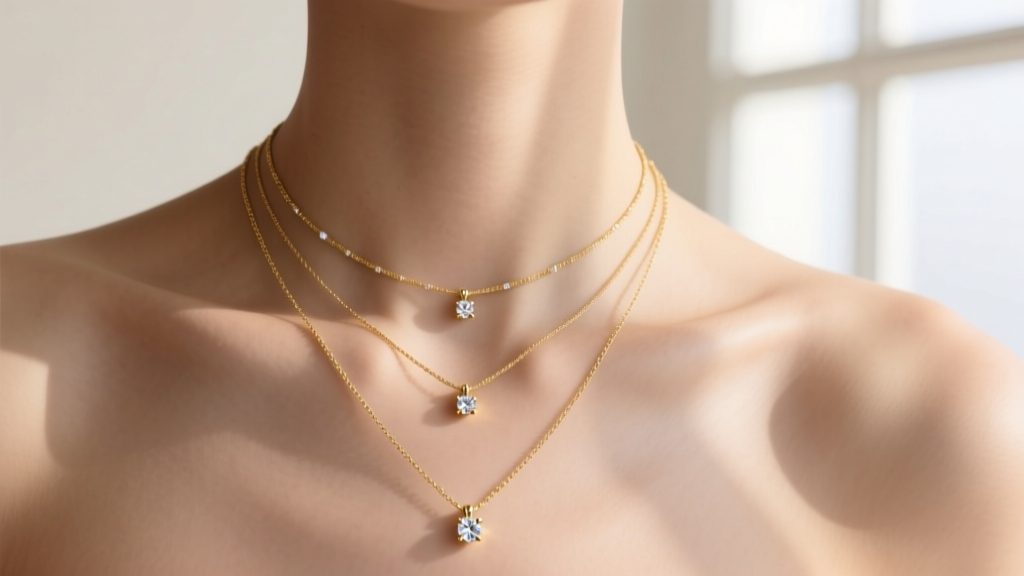
Beyond length spacing, consider the neckline of your wardrobe. A 14-inch choker paired with a 16-inch collarbone chain and an 18-inch chest chain creates a cascading triangle that perfectly frames a V-neck or scoop-neck top. However, if you frequently wear high crewnecks or turtlenecks, shift your baseline lengths to 18, 20, and 22 inches to ensure the pendants remain visible and do not bunch up against the fabric collar, which introduces external friction and increases the likelihood of tangling.
Expert Sourcing Tip: Always anchor your stack. The longest chain in your layer should feature the heaviest pendant. This weight acts as a gravitational anchor, keeping the lowest layer taut and preventing it from sliding up and tangling with the shorter, lighter layers above it.
Clasp Mechanics: Upgrading the Weakest Link
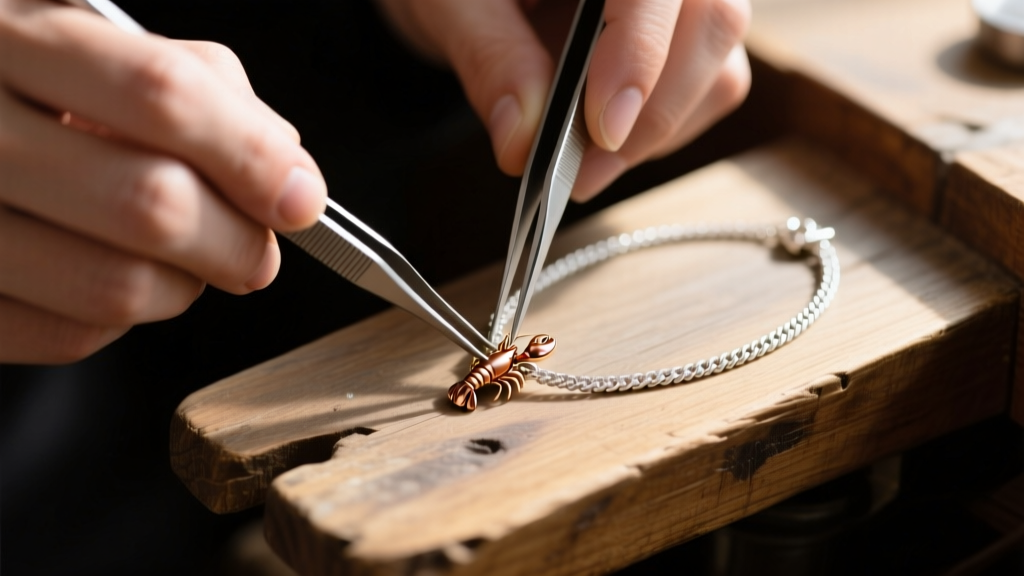
The clasp is the most frequent point of failure in any layered stack. Standard spring-ring clasps—often found on mass-produced dainty chains—rely on a microscopic internal spring that easily fails under the lateral torque generated by multiple layers pulling in different directions. When sourcing chains for layering, insist on solid lobster clasps. Lobster clasps feature a thicker, more robust locking arm that can withstand the compounded tension of a multi-layer stack. For an even more seamless look, consider upgrading to custom neodymium magnetic clasps, which eliminate the mechanical failure point entirely while providing a secure, high-tensile hold.
Troubleshooting Common Layering Failures
Even with perfect sourcing, environmental factors like humidity and skin oils can increase friction, leading to tangles. When disaster strikes, avoid the instinct to pull. Pulling tightens the microscopic gaps in the links, turning a simple loop into a permanent deformation. Instead, utilize techniques recommended by industry professionals like Jewelers of America:
- The Lubrication Method: Apply a small amount of baby powder or talcum powder directly to the knot. This reduces the friction coefficient between the metal links, allowing them to slide apart with minimal pressure.
- The Pin Technique: Use two fine sewing pins or safety pins to gently tease the center of the knot outward. Never use your fingernails, as the oils can transfer to the metal, and the blunt force can bend 0.8mm links.
- Ultrasonic Warnings: Never place a knotted dainty chain into an ultrasonic cleaner. The high-frequency vibrations will tighten the knot instantly, often rendering it unsalvageable.
Final Sourcing Checklist
Before adding a new piece to your layered collection, run it through this definitive checklist to ensure it will integrate flawlessly with your existing stack:
- Is the chain gauge between 0.8mm and 1.2mm for optimal dainty proportions without sacrificing tensile strength?
- Is the metal alloy 14k gold or platinum to ensure sufficient Vickers hardness?
- Does the link geometry differ from the other chains in your stack (e.g., pairing a box chain with a micro-cable)?
- Is the length at least 2 inches longer or shorter than your adjacent layers?
- Has the spring-ring clasp been replaced with a secure lobster or magnetic clasp?
By prioritizing structural mechanics over mere aesthetics, you can curate a dainty necklace layering collection that remains elegant, durable, and entirely tangle-free for years to come.


