Expert Material Guide: The Black Necklace Women Need for Daily Wear
Discover the metallurgy and gemology behind the perfect black necklace women rely on. Compare PVD, rhodium, and oxidized silver for lasting wear.

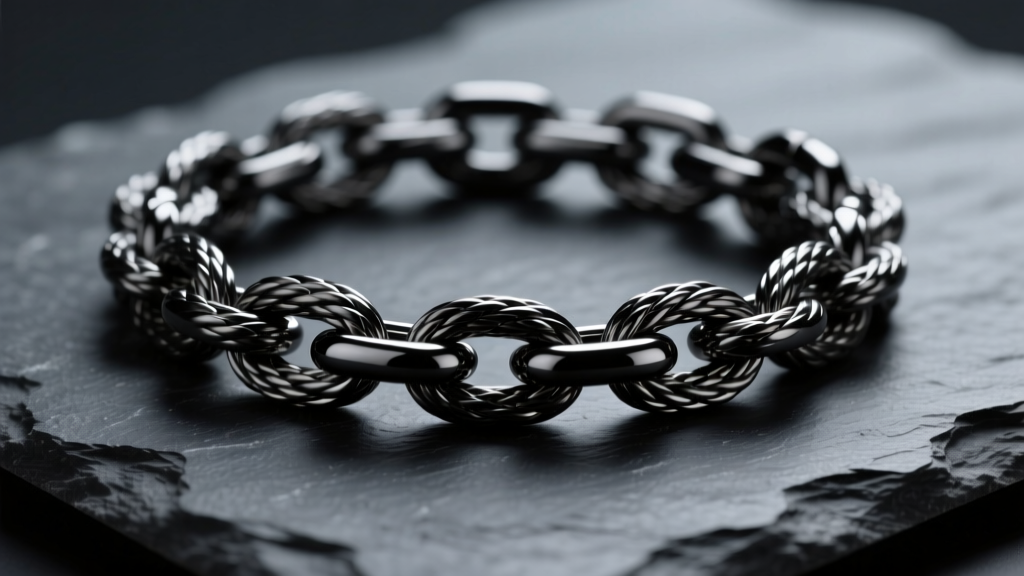
The Metallurgy of Black Metals: Plating vs. Coating
When selecting a black necklace women intend to wear daily, the primary point of failure is almost always the surface treatment. The jewelry industry utilizes three distinct methods to achieve black metallic finishes, each with vastly different chemical properties, Vickers hardness (HV) ratings, and lifespans. Understanding these metallurgical differences is critical for avoiding premature wear, flaking, and skin discoloration.
Black Rhodium and Ruthenium Alloys
Black rhodium is not a naturally occurring metal; it is an electroplated alloy typically composed of rhodium and ruthenium. High-end jewelers plate this alloy over white gold or sterling silver at a thickness of 0.1 to 0.3 microns. While it provides a stunning, deep gunmetal-black luster, it is inherently a sacrificial layer. With daily friction against the clavicle and exposure to the slightly acidic pH of human sweat (typically 4.5 to 6.0), black rhodium will wear through to the base metal within 6 to 14 months. Replating a black rhodium chain costs between $45 and $85, making it a high-maintenance choice for everyday wear.
Physical Vapor Deposition (PVD) on Titanium
For maximum durability, the premier black necklace women's collections feature in 2026 utilizes Physical Vapor Deposition (PVD). In a vacuum chamber, titanium or zirconium is vaporized and bonded to a Grade 5 Titanium (Ti-6Al-4V) or 316L surgical steel substrate. This creates a titanium nitride or zirconium carbide layer that boasts a surface hardness exceeding 2000 HV—nearly four times harder than hardened steel. Unlike electroplating, PVD does not flake or peel; it can only be removed by aggressive abrasion or extreme impact. According to research presented at the Santa Fe Symposium on Jewelry Manufacturing Technology, modern black PVD coatings are entirely hypoallergenic and impervious to UV degradation, making them the superior technical choice for active lifestyles.
Oxidized Sterling Silver and Liver of Sulfur
Oxidation is a controlled chemical reaction, not a coating. By exposing sterling silver to potassium sulfide (commonly known as Liver of Sulfur), jewelers force the formation of silver sulfide (Ag2S) on the surface. This creates a matte, antique black patina. However, silver sulfide is relatively soft and will rub off onto clothing or skin over time. To lock in the oxidation, expert bench jewelers seal the piece with a microcrystalline wax, such as Renaissance Wax. If a retailer does not properly seal an oxidized silver chain, the black finish will degrade unevenly within weeks.
Gemological Breakdown: Black Spinels, Onyx, and Diamonds
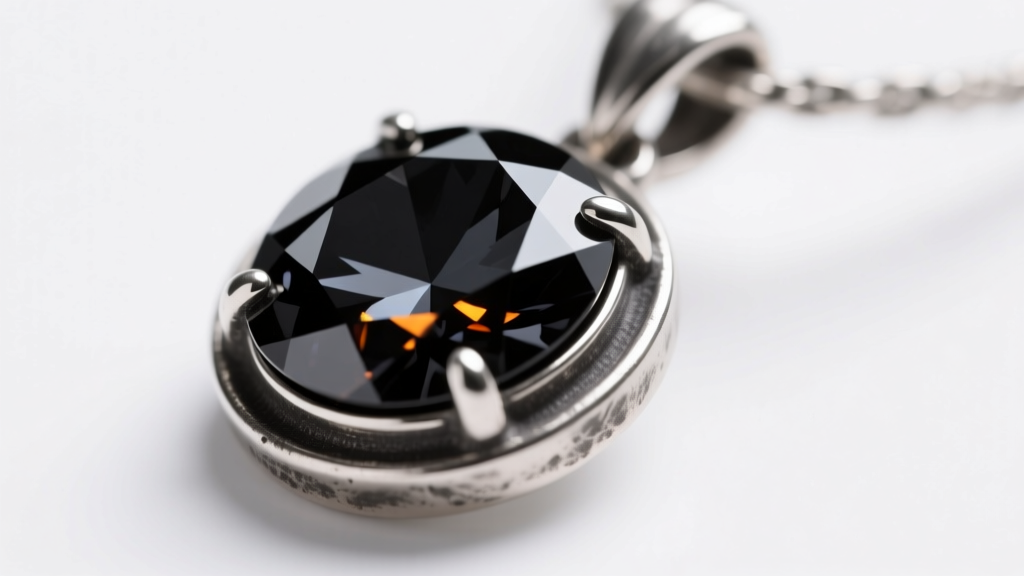
The centerpiece of a dark pendant requires careful gemological selection. The Mohs scale of mineral hardness dictates how well a black gemstone will resist micro-scratches from environmental dust (which contains quartz particles at a 7 on the Mohs scale).
- Black Onyx (Mohs 6.5 - 7): A cryptocrystalline quartz. While classic and affordable ($10–$30 per carat), it is prone to chipping at the girdle if struck against hard surfaces. It is also frequently dyed gray chalcedony, which can fade under prolonged UV exposure.
- Black Spinel (Mohs 8): The superior technical alternative to onyx. Natural black spinel (hercynite) is singly refractive, meaning it exhibits exceptional brilliance without the double-refraction blur seen in some stones. It is highly resistant to scratching and typically costs $40–$120 per carat for well-cut specimens.
- Black Diamonds (Mohs 10): According to the Gemological Institute of America (GIA), most commercial black diamonds are heavily included, opaque stones that have been subjected to high-dose neutron irradiation to turn their inclusions black. While they are incredibly hard, the dense network of inclusions makes them brittle and susceptible to cleaving if dropped on a tile floor.
Technical Comparison Chart: Longevity and Maintenance
The following matrix compares the structural integrity and maintenance requirements of the most common black finishes used in contemporary jewelry manufacturing.
| Material / Finish | Base Substrate | Hardness (HV) | Expected Daily Lifespan | Primary Failure Mode |
|---|---|---|---|---|
| Black PVD (Zirconium) | Grade 5 Titanium | 2200+ | 10+ Years | Deep impact chipping |
| Black Rhodium | 18k White Gold | 120 - 150 | 6 - 14 Months | Friction wear, sweat corrosion |
| Oxidized Silver | 925 Sterling Silver | 80 - 100 | 1 - 3 Years (Sealed) | Patina rubbing off on skin |
| Vitreous Enamel | 14k or 18k Gold | 400 - 500 | Lifetime | Shattering from blunt force |
| Cold Epoxy Enamel | Brass or Silver | 15 - 20 | 2 - 4 Years | UV yellowing, peeling |
Chain Gauge and Clasp Mechanics for Dark Alloys
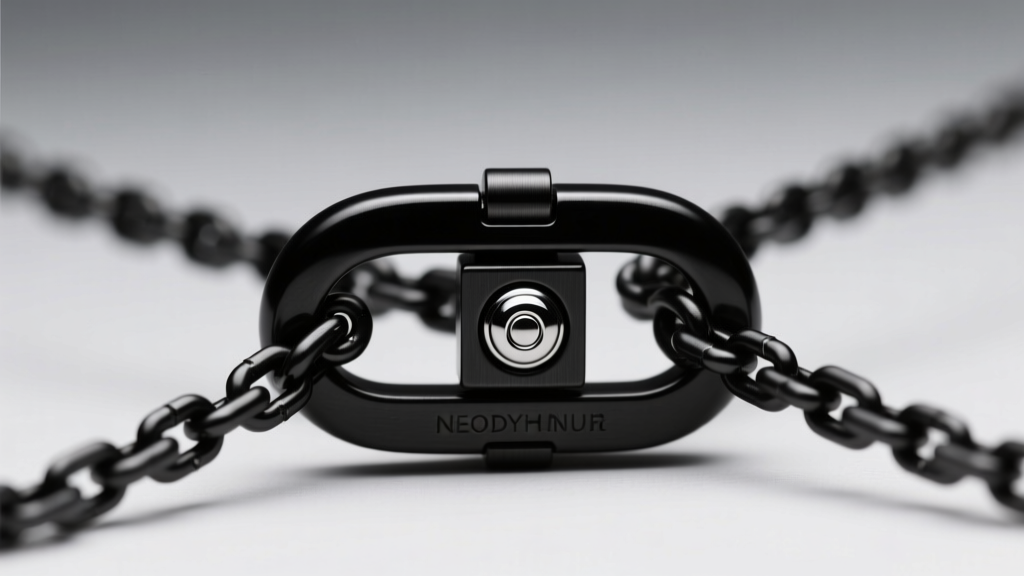
The structural integrity of a black necklace relies heavily on the gauge of the wire and the mechanics of the clasp. Standard spring-ring and lobster clasps are notorious failure points on black chains. The internal steel springs in these clasps are rarely coated; when exposed to moisture, they rust, seizing the mechanism or staining the skin. Furthermore, the constant metal-on-metal friction at the jump ring will strip black rhodium or PVD coatings down to the bare metal within months.
For a secure, long-lasting configuration, experts recommend the following specifications:
- Chain Gauge: Opt for a minimum wire thickness of 1.5mm to 2.0mm (approx. 14 to 12 gauge). Thinner chains (under 1.0mm) lack the tensile strength to support heavy black spinel or diamond pendants and are prone to kinking, which fractures PVD coatings.
- Clasp Type: Matte black titanium magnetic clasps with an internal N52-grade neodymium magnet and a secondary folding safety latch eliminate the friction wear associated with mechanical moving parts. Alternatively, a solid black PVD-coated box clasp with a dual-safety figure-eight wire guard provides the highest tensile security for chains over 20 inches in length.
- Jump Rings: Ensure all jump rings are laser-welded shut rather than simply squeezed closed. A split jump ring will slowly saw through the coating of the chain link it connects to, eventually leading to chain separation.
Expert Care Protocols to Prevent Patina Degradation
Maintaining a dark metallic or enameled finish requires abandoning traditional jewelry cleaning methods. Ultrasonic cleaners, which use high-frequency cavitation, will strip oxidized silver patinas and can fracture the microscopic bonds of black PVD if the coating was improperly applied. Similarly, commercial silver dip solutions (thiourea-based) will instantly dissolve silver sulfide, turning an antique black chain back to bright, polished silver and ruining the designer's intended aesthetic.
According to conservation guidelines outlined by the Getty Conservation Institute, the safest method for cleaning dark metals and sealed patinas is mechanical wiping using a lint-free microfiber cloth lightly dampened with distilled water and a pH-neutral surfactant. For oxidized silver that has begun to lose its dark contrast in the recesses, a jeweler can re-oxidize the piece and apply a fresh coat of microcrystalline conservation wax to lock in the dark finish for another decade of wear. By understanding the exact chemical nature of your black necklace, you can ensure it remains a permanent, striking staple in your wardrobe.


