Blue Miraculous Medal Necklace: A Beginner's Style Guide
Discover the meaning, materials, and styling tips for the blue miraculous medal necklace. A beginner's guide to choosing and wearing this sacred pendant.

The History and Meaning Behind the Blue Miraculous Medal
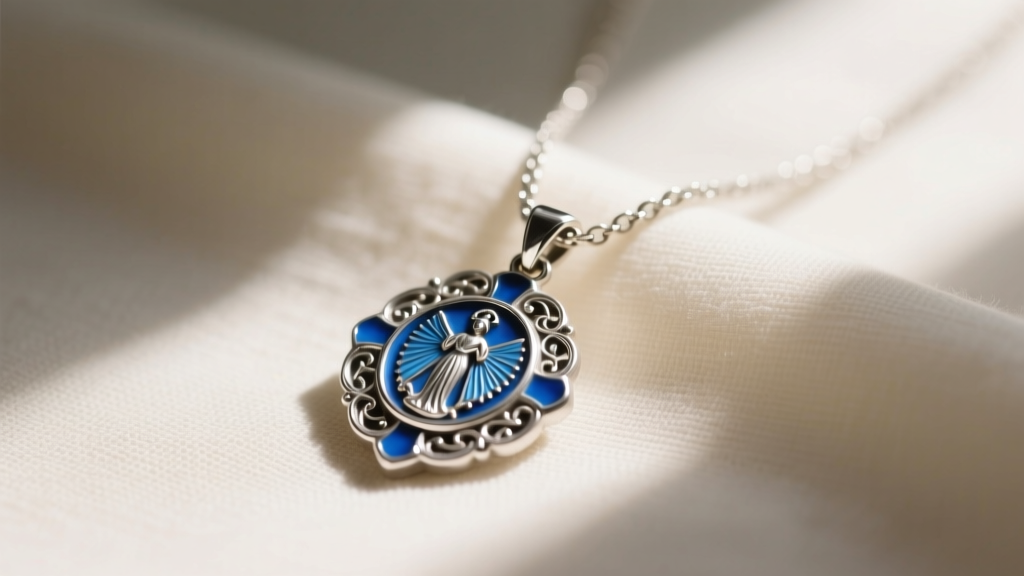
For those exploring the intersection of faith and fashion, the blue miraculous medal necklace stands out as one of the most recognizable and deeply symbolic pieces of devotional jewelry. To understand its significance, we must look back to 1830 in Paris, France. According to the Catholic Encyclopedia, the Virgin Mary appeared to Saint Catherine Labouré at the Chapel of Our Lady of the Miraculous Medal on the Rue du Bac. Mary instructed Catherine to strike a medal based on a specific vision, promising that those who wore it with confidence would receive great graces.
The original design features Mary standing upon a globe, crushing a serpent, with rays of light streaming from her hands. The reverse side displays a large 'M' surmounted by a cross, with the hearts of Jesus and Mary below. But why the blue? In Catholic iconography, 'Marian Blue' represents the Immaculate Conception, purity, and the heavens. While the original 1830 medals were primarily silver or gold, modern jewelers frequently incorporate deep blue centers—using enamel, glass, or gemstones—to visually emphasize Mary's mantle and make the pendant a striking aesthetic piece as well as a spiritual safeguard.
Material Breakdown: What Creates the 'Blue' Center?
When shopping for a blue miraculous medal necklace, the most critical decision you will make is the material used for the blue inlay or backing. This choice dictates the necklace's durability, price point, and care requirements. Here is a detailed look at the four most common materials used by contemporary jewelers.
| Material | Durability (Mohs Scale) | Price Range | Pros & Cons |
|---|---|---|---|
| Champlevé Enamel | N/A (Glass-based) | $45 - $120 | Vibrant color, traditional look. Prone to chipping if dropped on hard surfaces. |
| Lapis Lazuli | 5 - 6 | $80 - $250 | Natural stone with gold pyrite flecks. Porous; easily damaged by chemicals and water. |
| Czech / Murano Glass | 5.5 - 7 | $15 - $45 | Affordable, deep color saturation. Can scratch over time; may shatter on heavy impact. |
| Blue Sapphire | 9 | $400 - $1,500+ | Extremely durable, brilliant luster. High cost; usually found only in fine luxury settings. |
If you are a beginner looking for an everyday piece, champlevé enamel set in sterling silver offers the best balance of traditional aesthetics, durability, and affordability. However, if you prefer natural earth-mined stones, Lapis Lazuli is a stunning choice. According to the Gemological Institute of America (GIA), Lapis Lazuli has been prized since antiquity for its intense, royal blue color, making it a fitting tribute to Marian iconography. Just be aware that its porous nature requires careful maintenance.
Choosing the Right Chain: Length, Gauge, and Clasp
A pendant is only as good as the chain that holds it. The delicate nature of the miraculous medal requires a chain that is sturdy enough to support the weight but thin enough not to overpower the intricate front-and-back detailing.
Optimal Chain Lengths
- 16-inch (Choker): Sits high on the collarbone. Best for smaller pendants (10mm - 14mm) and high-neckline blouses. Ideal for teenagers or those preferring a minimalist, modern look.
- 18-inch (Standard): The most versatile length. Rests perfectly at the base of the throat or just below the collarbone. This is the default choice for an everyday blue miraculous medal necklace.
- 20-inch to 22-inch (Matinee): Falls on the upper chest. Excellent for layering over t-shirts, sweaters, or wearing outside the collar of a button-down shirt.
- 24-inch to 30-inch (Opera/Rope): Traditionally used for rosaries or scapulars worn under clothing. If wearing a medal this low, opt for a larger pendant (20mm+) so it remains visible.
Gauge and Clasp Hardware
For a standard 15mm sterling silver medal weighing approximately 2 to 3 grams, a chain thickness (gauge) between 0.9mm and 1.2mm is ideal. Cable chains, box chains, and rolo chains are the best structural choices because their uniform links resist kinking. Avoid ultra-thin snake chains (under 0.8mm), as they are notorious for bending permanently and snapping under the pendulum motion of a medal.
Always check the clasp. A lobster claw clasp is vastly superior to a spring-ring clasp for devotional jewelry. Spring rings are difficult to operate with one hand and have a higher failure rate over time due to their tiny internal tension springs.
Metal Purity: What to Look For
The metal base of your necklace determines its longevity and how it reacts with your skin's pH levels.
- .925 Sterling Silver: The gold standard for mid-range devotional jewelry. It contains 92.5% pure silver and 7.5% copper for strength. It will tarnish over time but is easily polished. Look for the '.925' stamp.
- Gold Vermeil: This is not standard gold plating. By US standards, vermeil must be a thick layer of gold (at least 2.5 microns) plated over a solid sterling silver base. It is highly durable and hypoallergenic, making it perfect for a gold-and-blue enamel medal.
- 316L Surgical Stainless Steel: The best budget and hypoallergenic option. It will never tarnish, rust, or turn your skin green. However, it cannot be easily resized or repaired by a traditional jeweler if the chain breaks.
How to Style and Layer Your Necklace
The blue miraculous medal necklace is remarkably versatile and transitions seamlessly from subtle daily wear to intentional, layered fashion statements. When layering, the golden rule is to maintain a two-inch drop between each chain to prevent the clasps and pendants from tangling.

Beginner Layering Formula:
Start with a 16-inch delicate gold or silver choker (perhaps featuring a tiny freshwater pearl or a simple bezel-set diamond). Next, add your 18-inch blue miraculous medal necklace as the focal centerpiece. Finally, anchor the stack with a 20-inch or 22-inch textured rope chain or a simple silver crucifix pendant. This creates a cascading effect that draws the eye downward and highlights the vibrant blue of the medal without looking cluttered.
When it comes to necklines, the 18-inch blue medal pairs beautifully with V-necks and scoop necks, as the pendant naturally follows the geometric lines of the fabric. For crew necks and turtlenecks, size up to a 22-inch chain and opt for a slightly larger, bolder medal to ensure the intricate details are not lost against the fabric.
Care and Maintenance for Longevity
Devotional jewelry is often worn 24/7, exposing it to sweat, lotions, and environmental pollutants. Proper care is essential, especially if your blue miraculous medal features enamel or porous gemstones like Lapis Lazuli.
Never use ultrasonic cleaners or steam cleaners on enameled jewelry or porous gemstones. The high-frequency vibrations can shatter glass and crack enamel, while the heat and chemicals can permanently strip the natural oils from Lapis Lazuli, leaving it dull and gray.
The Safe Cleaning Method:
1. Mix a few drops of mild, phosphate-free dish soap into a bowl of lukewarm (not hot) water.
2. Submerge the necklace for no more than 3 to 5 minutes.
3. Gently agitate the water. If the chain is tarnished, use an extra-soft baby toothbrush to lightly brush the silver links, avoiding the blue inlay.
4. Rinse thoroughly under cool running water.
5. Pat dry immediately with a lint-free microfiber cloth. Do not air dry, as water spots can form on the metal and enamel.
When not wearing your necklace, store it in an anti-tarnish cloth pouch or a lined jewelry box. Keep it away from direct sunlight, which can fade certain dyed glass or lower-quality enamel over time.
Where to Buy: Navigating the Market
The market for religious jewelry is flooded with cheap, mass-produced items made from zinc alloy and painted with toxic lead-based paints. As a beginner, it is crucial to buy from reputable sources that guarantee material authenticity.
Look for established Catholic gift shops, specialized devotional jewelers, or artisan creators on platforms like Etsy who explicitly state their metal purity and enamel processes. A genuine .925 sterling silver blue miraculous medal necklace with quality champlevé enamel should cost between $50 and $110. If you see a 'sterling silver' medal selling for $12, it is almost certainly silver-plated brass or steel, which will quickly wear through to the base metal and cause skin irritation.
Investing in a high-quality blue miraculous medal necklace ensures that this beautiful symbol of faith will remain a durable, tarnish-resistant, and stylish staple in your jewelry collection for decades to come.


