Anatomy of a Book Chain Necklace: Technical Deep Dive
Explore the metallurgy, link geometry, and soldering techniques of the book chain necklace. An expert technical guide for jewelers and collectors.

The Geometry and Architecture of the Book Chain Link
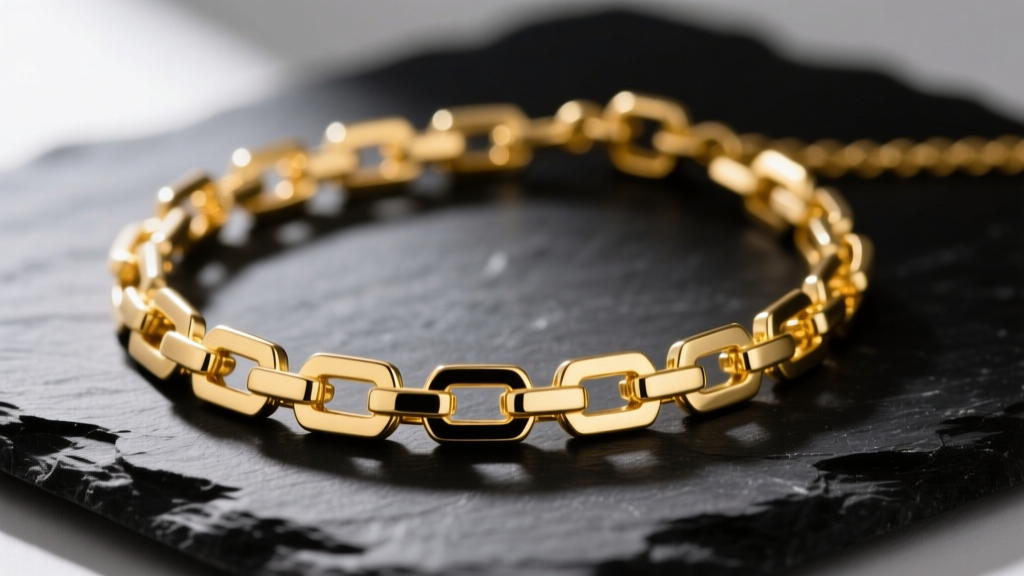
The book chain necklace, historically referred to as a book curb or rectangular curb chain, is a masterclass in structural jewelry design. Unlike the fluid, rounded links of a cable or rolo chain, the book chain relies on strict geometric precision. Each link is a flattened, elongated rectangle with chamfered or beveled edges, designed to interlock seamlessly while maintaining a rigid, flat profile against the skin.
From a manufacturing perspective, creating a high-quality book chain necklace requires drawing metal wire through progressive rectangular dies. A standard medium-weight chain typically utilizes wire with a cross-section of 1.5mm by 0.8mm. The critical metric in book chain design is the link aspect ratio—the relationship between the inner length and inner width of the link. An optimal aspect ratio for a book chain is 3:1 or 4:1. This specific geometry ensures that the links lay perfectly flat without twisting, while providing enough surface area for the interlocking mechanism to distribute lateral stress evenly across the chain's length.
Historical Context and Modern CNC Manufacturing
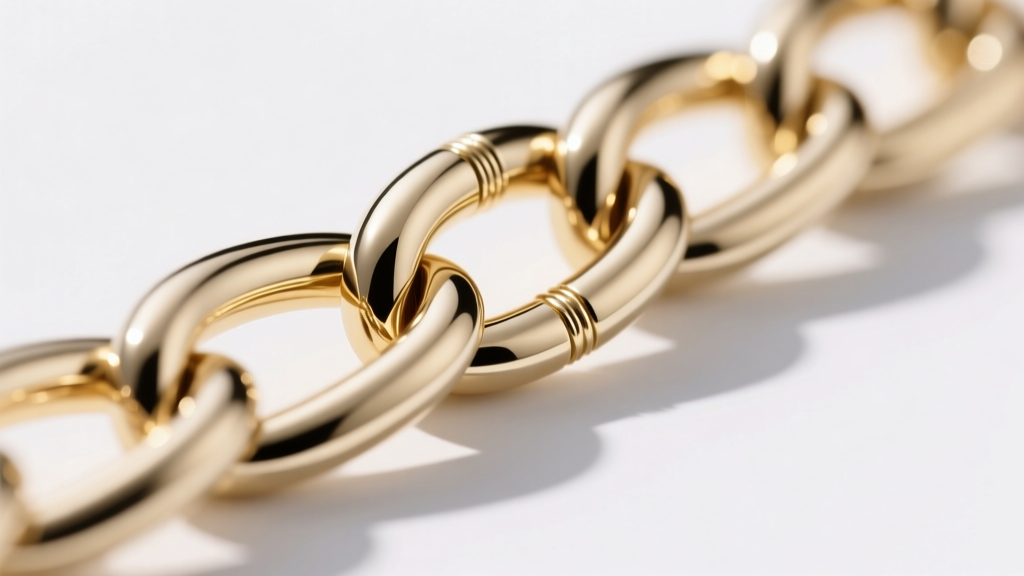
Originally popularized during the Victorian era as watch chains and Albert chains, the book chain was designed to withstand the daily friction of being pulled from a waistcoat pocket. The flat links prevented the chain from catching on fine fabrics and minimized hair-pulling when worn as a necklace.
Today, the manufacturing of a premium book chain necklace has evolved from manual bench work to highly calibrated CNC (Computer Numerical Control) chain weaving machines. Modern CNC machines feed rectangular wire through automated mandrels, bending the wire into precise rectangular loops and cutting them with diamond-tipped blades to ensure perfectly flush seams. However, the bending process introduces severe work hardening to the metal at the tight 90-degree corners. To prevent the links from becoming brittle and snapping, the wire must undergo continuous micro-annealing processes during the weaving stage, a technical nuance that separates fine jewelry manufacturers from mass-market costume producers.
Metallurgy and Material Grades
The structural integrity of a book chain necklace is heavily dictated by its metallurgical composition. Because the links are flat and bear surface-level friction, the choice of alloy impacts both durability and aesthetic longevity.
Gold Alloys: 14k vs. 18k
While 18k gold (75% pure gold) offers a richer color and higher prestige, 14k gold (58.5% pure gold) is often the superior technical choice for heavy book chains. The higher alloy content in 14k gold—typically a mix of copper, silver, and zinc—increases the Vickers hardness (HV) of the metal. A standard 14k yellow gold wire exhibits a hardness of approximately 130-150 HV, compared to 110-125 HV for 18k yellow gold. This increased tensile strength resists the elongation of the rectangular links under the weight of heavy pendants.
Silver and the Tarnish Dilemma
Sterling silver (925) book chains are highly popular but present a maintenance challenge. The 7.5% copper content in standard sterling silver oxidizes rapidly, and the tight crevices between the interlocking rectangular links trap sulfur and moisture, accelerating tarnish. For collectors seeking a silver book chain necklace, experts recommend sourcing chains crafted from Argentium Silver (935). Argentium replaces some of the copper with germanium, which forms a transparent, self-healing oxide layer that drastically reduces tarnish and eliminates the need for aggressive chemical polishing that can degrade chain solder joints.
Soldering Techniques and Structural Integrity
The most critical point of failure in any chain is the link seam. In a book chain necklace, the seam runs parallel to the flat face of the link. If this seam is left open (unsoldered), the chain will eventually pull apart under tension. Jewelers must choose between traditional torch soldering and modern laser welding.
| Soldering Method | Thermal Impact | Joint Strength | Best Application |
|---|---|---|---|
| Torch Soldering | High (requires flux) | High (capillary penetration) | Thick, heavy-gauge chains (>3mm) |
| Laser Welding | Localized (no flux) | Very High (fusion welding) | Delicate chains, repair work, oxidized metals |
| Induction Soldering | Medium (even heating) | High (consistent flow) | Mass production of uniform links |
When torch soldering a 14k or 18k gold book chain, jewelers must use a precisely matched 'plumb solder' to ensure the melting point of the solder is close to the base metal. A reducing flame is essential to prevent fire scale from forming on the broad, flat surfaces of the book links, which are highly visible and difficult to polish without rounding off the sharp architectural edges.
Common Failure Modes and Troubleshooting
Even well-crafted book chain necklaces are subject to specific mechanical stresses. Understanding these failure modes is crucial for both bench jewelers and informed collectors:
- Link Elongation: Caused by excessive weight from heavy pendants. The rectangular links stretch into an oval shape, compromising the 3:1 aspect ratio and causing the chain to twist.
- Seam Separation: Occurs when unsoldered links are subjected to lateral torque. The flat links act as levers, prying the butt-jointed seams apart.
- Edge Abrasion: The chamfered edges of the links can wear down over years of friction against the skin or clothing, dulling the sharp, geometric aesthetic of the chain.
- Stress Corrosion Cracking: In lower-karat gold alloys exposed to chlorine (e.g., swimming pools), the copper and zinc alloys can undergo microscopic cracking at the bent corners of the links.
Clasp Mechanics and Load Distribution
The clasp assembly on a book chain necklace requires specialized engineering. Because the links are rigid and flat, attaching a standard spring-ring clasp directly to the terminal link creates a stress concentrator. The terminal link is unable to pivot freely, leading to rapid wear on the jump ring.
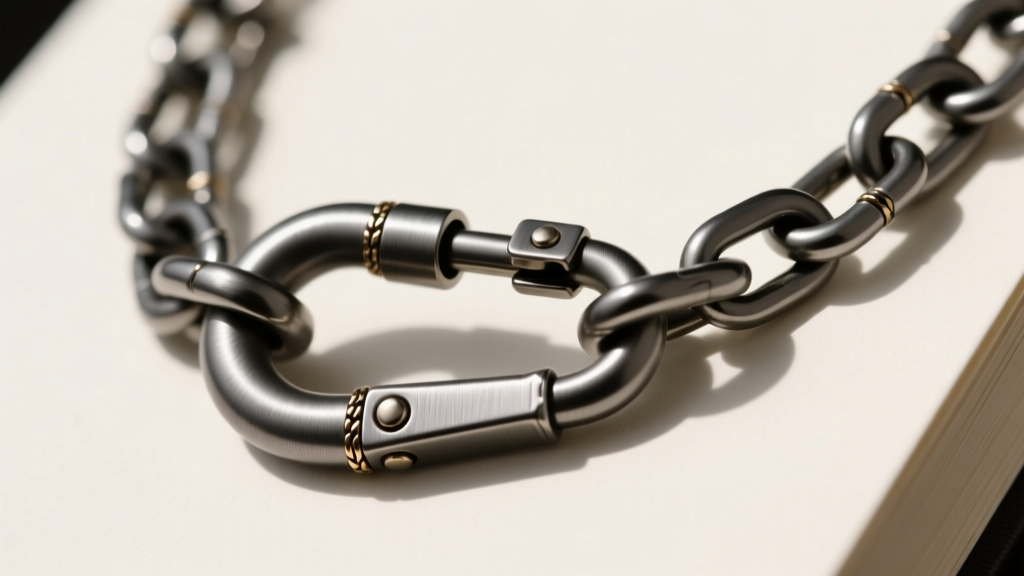
To mitigate this, high-end manufacturers use a 'tag and ring' termination. A flat, rectangular tag is soldered to the final link, providing a broad surface area for laser-engraved hallmarks and distributing the mechanical load away from the fragile terminal link. The jump ring connecting the chain to a heavy-duty lobster clasp must be soldered closed or feature an internal tension mechanism to prevent the flat links from prying it open. For chains exceeding 4mm in width, a box clasp with a secondary figure-eight safety latch is the industry standard, as detailed in technical sourcing guides by Rio Grande.
Expert Maintenance and Ultrasonic Precautions
Cleaning a book chain necklace requires careful consideration of the chain's solder joints and material grade. While ultrasonic cleaners are highly effective at dislodging sebum and dead skin cells trapped between the flat links, they pose a risk to chains that have been repaired with soft, low-temperature solder. The high-frequency cavitation bubbles generated in an ultrasonic bath can fatigue and fracture weak solder joints over time.
According to gemological and metallurgical guidelines from the Gemological Institute of America (GIA), maintaining the structural integrity of gold alloys requires avoiding harsh chemical dips that can strip alloyed metals from the surface layer, leading to a porous, weakened chain structure.
For routine maintenance, bench jewelers recommend using a soft-bristled brush with a mild, non-ammoniated surfactant solution. If polishing is required to restore the mirror finish of the flat links, a magnetic tumbler with stainless steel shot is preferred over traditional buffing wheels. Buffing wheels tend to round the sharp, defining corners of the book chain, fundamentally altering its architectural silhouette and reducing its value as a precision-crafted piece of jewelry.


