The Ultimate Bow Necklaces Material Guide: Gold, Silver & Enamel
Discover the best materials for bow necklaces in our expert guide. Compare solid gold, sterling silver, enamel, and alloy for durability and style.

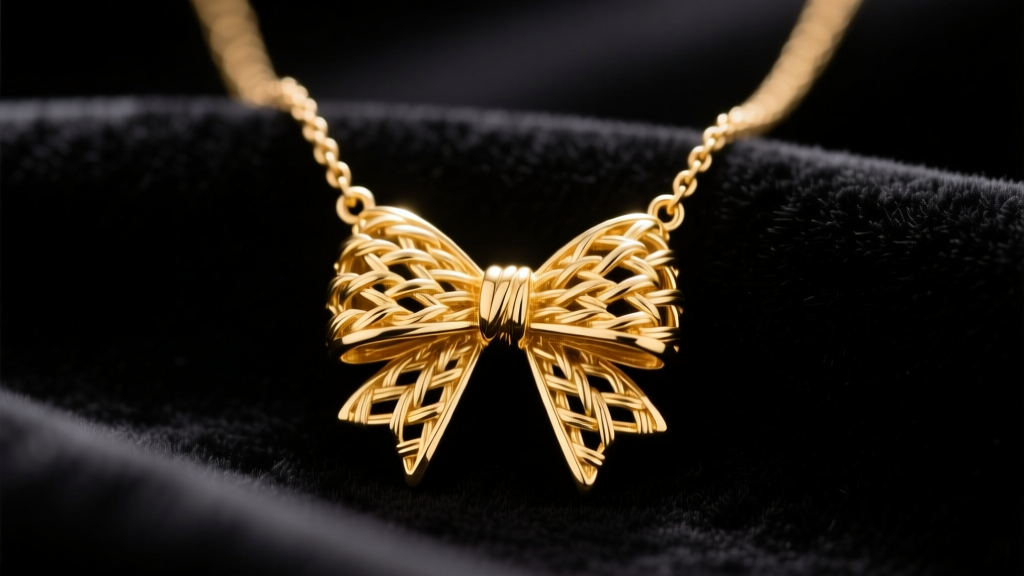
As we navigate the jewelry landscape in 2026, the coquette and balletcore aesthetics have evolved from fleeting internet trends into permanent fixtures of fine jewelry collections. At the center of this movement are bow necklaces—delicate, feminine, and highly versatile. However, the intricate folds, loops, and ribbons that define a bow pendant present unique metallurgical and structural challenges. A material that works perfectly for a simple disc pendant might warp, tarnish, or chip when shaped into a multi-dimensional bow.
In this comprehensive material comparison guide, we break down the exact properties, durability metrics, and skin-safety profiles of the most common materials used in bow necklaces. Whether you are investing in a solid gold heirloom or exploring vitreous enamel options, understanding these material science fundamentals is critical for making a purchase that lasts.
The Metallurgy of Bow Necklaces: Precious Metals vs. Base Alloys
The structural integrity of a bow pendant relies heavily on the tensile strength and hardness of the metal. Because bow designs often feature thin, elongated 'ribbon' tails and delicate overlapping loops, the metal must resist bending under its own weight or when snagged on clothing.
Solid Gold (14k vs 18k): Hardness and Malleability
When evaluating solid gold for intricate bow shapes, karat weight directly impacts durability. According to the Gemological Institute of America (GIA), pure 24k gold is far too soft for jewelry. Therefore, we look to 14k and 18k alloys.
- 14k Gold (58.5% Pure Gold): With a Vickers hardness of approximately 140 HV, 14k gold is the optimal choice for large or highly detailed bow necklaces. The higher percentage of alloying metals (like copper and zinc) provides the rigidity needed to keep thin ribbon tails from permanently bending.
- 18k Gold (75% Pure Gold): Softer (around 125 HV) and richer in color, 18k gold is better suited for smaller, chunkier bow motifs. If an 18k gold bow features long, slender tails, it is highly susceptible to warping during daily wear.
Sterling Silver (925) & The Crevices Problem
Sterling silver is an alloy of 92.5% silver and 7.5% copper. While the copper adds necessary strength, it also introduces a major vulnerability: tarnish. As verified by The London Assay Office, copper reacts with sulfur and moisture in the air to form silver sulfide (tarnish).
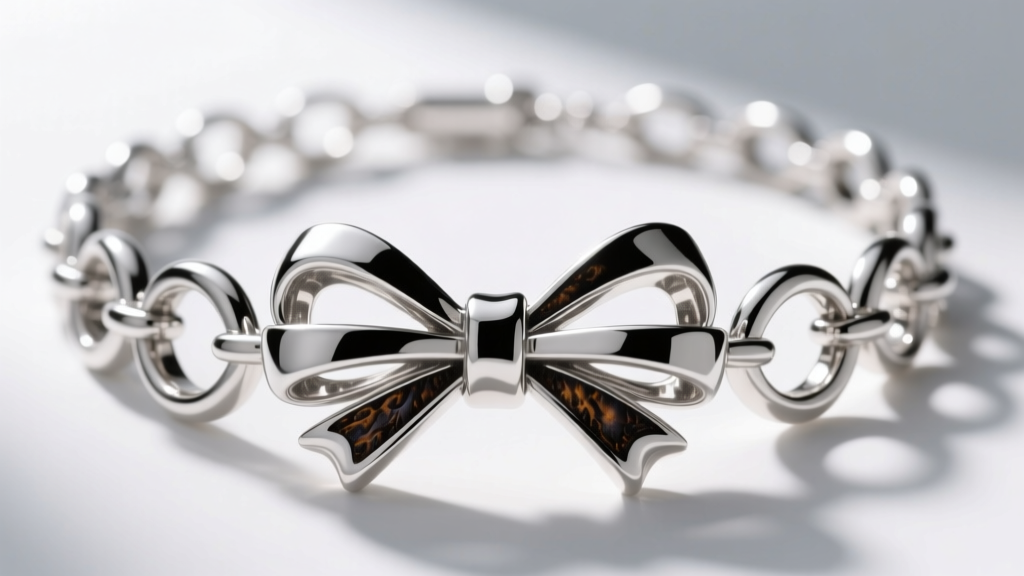
The geometry of a bow necklace exacerbates this issue. The deep crevices where the 'ribbon' crosses itself trap moisture, skin oils, and environmental sulfur, leading to rapid localized tarnishing that is nearly impossible to polish out with a standard cloth. To combat this, high-quality sterling silver bow necklaces must feature a thick flash of rhodium plating. This platinum-group metal creates an inert, highly reflective barrier that prevents oxidation and maintains the bright white luster of the silver beneath.
Enamel, Resin, and Fabric: Non-Metal Bow Materials
For those seeking vibrant colors or a vintage aesthetic, non-metal materials are frequently incorporated into bow necklace designs. However, the curved, three-dimensional surface of a bow makes the application and longevity of these materials highly complex.
Vitreous Enamel vs. Cold Enamel
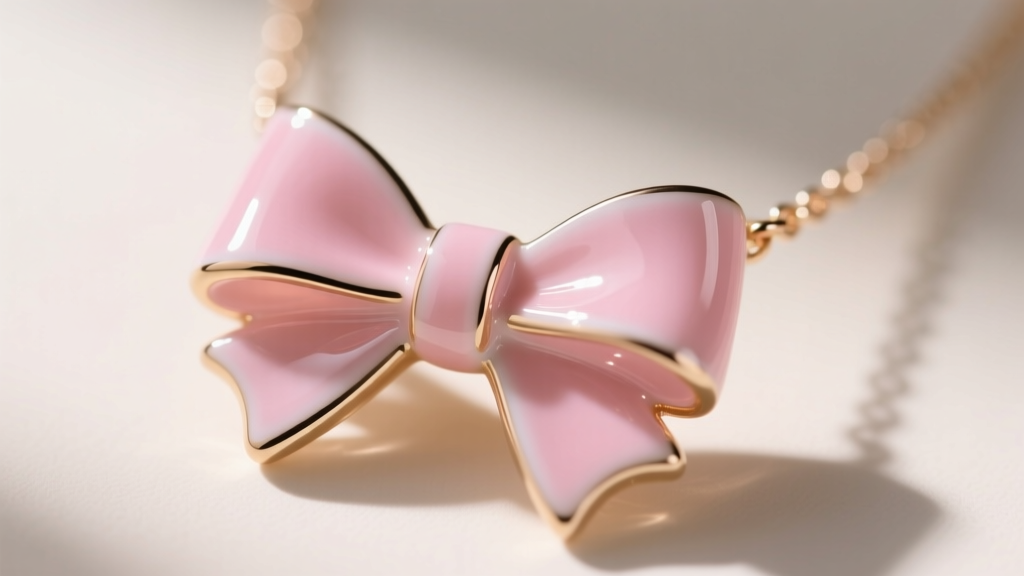
Vitreous enamel is essentially powdered glass fused to a metal base at extreme temperatures (typically 750°C to 850°C). The result is a surface with a Mohs hardness of 5 to 6, making it highly resistant to scratching. When applied to a gold bow pendant, vitreous enamel offers a luminous, glass-like depth that synthetic alternatives cannot replicate. However, its rigidity means it can chip or fracture if the metal base bends or if the necklace is dropped on a hard surface.
Cold enamel, conversely, is a two-part epoxy resin. It is cured at room temperature and poured into the recessed areas of a metal bow. While it boasts a lower Mohs hardness (around 2 to 3) and is prone to micro-scratches and UV yellowing over time, cold enamel is slightly flexible. This flexibility allows it to withstand minor impacts without shattering, making it a common choice for fashion-tier bow necklaces.
Silk, Velvet, and Organza Integrations
Some avant-garde bow necklaces integrate actual textiles, such as silk or velvet ribbons, held together by metal clasps. From a material science perspective, these are the least durable. Textiles are highly porous, absorbing perspiration and cosmetics, which leads to rapid fiber degradation and discoloration. These pieces should be treated as occasional-wear statement items rather than daily accessories.
Material Comparison Matrix
To help you evaluate your options at a glance, we have compiled a technical comparison of the most prevalent bow necklace materials on the market.
| Material | Composition / Base | Hardness Metric | Tarnish & Wear Risk | Avg. Price Range (2026) |
|---|---|---|---|---|
| 14k Solid Gold | 58.5% Au, Ag, Cu, Zn | ~140 HV | Very Low (Requires occasional polishing) | $350 - $850 |
| 18k Solid Gold | 75% Au, Ag, Cu | ~125 HV | Very Low (Prone to scratching/warping) | $550 - $1,400 |
| Rhodium-Plated 925 Silver | 92.5% Ag, 7.5% Cu | ~75 HV (Base) | Moderate (Plating wears off in crevices) | $80 - $250 |
| Vitreous Enamel on Gold | Fused Silica/Glass | Mohs 5-6 | Low scratch risk, High chip risk | $400 - $1,200 |
| Brass/Zinc Alloy (Fashion) | Cu/Zn or Zn/Al | ~60-100 HV | High (Corrodes, causes skin discoloration) | $20 - $65 |
Skin Sensitivity and Allergic Contact Dermatitis
The skin on the neck and décolletage is significantly thinner and more sensitive than the skin on the hands or wrists. This makes bow necklaces worn close to the collarbone prime candidates for triggering Allergic Contact Dermatitis (ACD).
The primary culprit in lower-priced, base-metal bow necklaces is nickel, often used in brass alloys or as an under-plate for gold vermeil. According to the American Academy of Dermatology, nickel allergy affects roughly 10% of women. When a base-metal bow necklace is exposed to sweat, the salt acts as an electrolyte, accelerating the release of nickel ions into the skin. This results in localized erythema, itching, and blistering.
Expert Rule of Thumb: If you have sensitive skin, completely avoid unbranded 'gold-tone' or 'silver-tone' alloy bow necklaces. Always verify that the piece is either solid 14k/18k gold, surgical-grade stainless steel (316L), or explicitly certified as nickel-free and compliant with the EU Nickel Directive (which limits nickel release to 0.5 µg/cm²/week).
Chain Mechanics: Supporting the Bow Pendant
A material guide is incomplete without addressing the chain. Bow pendants are inherently top-heavy due to their wide horizontal profile and multi-layered metal folds. Pairing a heavy 18k gold bow pendant with a delicate 1mm cable chain is a structural failure waiting to happen.
- The Bail Friction Issue: A heavy bow pendant will constantly shift, causing the bail (the loop connecting the pendant to the chain) to saw through a thin chain.
- The Solution: Opt for a 1.5mm to 2.0mm box chain or rope chain. The interlocking links of a box chain provide superior tensile strength, while a rope chain's twisted geometry prevents the bail from wearing a single, weak point into the metal.
- Galvanic Corrosion: Never mix metals at the connection point. A sterling silver bow pendant on a stainless steel chain, exposed to sweat, will create a galvanic cell that rapidly corrodes the less noble metal (silver).
Expert Verdict: Choosing the Right Bow Necklace
Selecting the ideal bow necklace requires aligning the material properties with your lifestyle and wearing habits.
If you intend to wear the necklace daily, including during workouts or showers, 14k solid gold is the undisputed champion. Its superior Vickers hardness ensures the delicate ribbon tails will not bend, and it will never tarnish or react with your skin. For those who prefer a bright white metal aesthetic but want daily wearability, a rhodium-plated sterling silver bow is acceptable, provided you commit to re-plating it every 12 to 18 months to protect the deep crevices from sulfur exposure.
For collectors and vintage enthusiasts, a vitreous enamel bow offers unparalleled visual depth and color saturation, but it must be treated with the same care as fine porcelain. Ultimately, understanding the metallurgy and material science behind these romantic motifs ensures your investment remains as pristine as the day you first tied it around your neck.


