V Necklace Silver: Alloys, Stress Points, and Chain Mechanics
Explore the technical anatomy of a v necklace silver. We analyze sterling vs. Argentium alloys, vertex stress points, and optimal chain pairings.

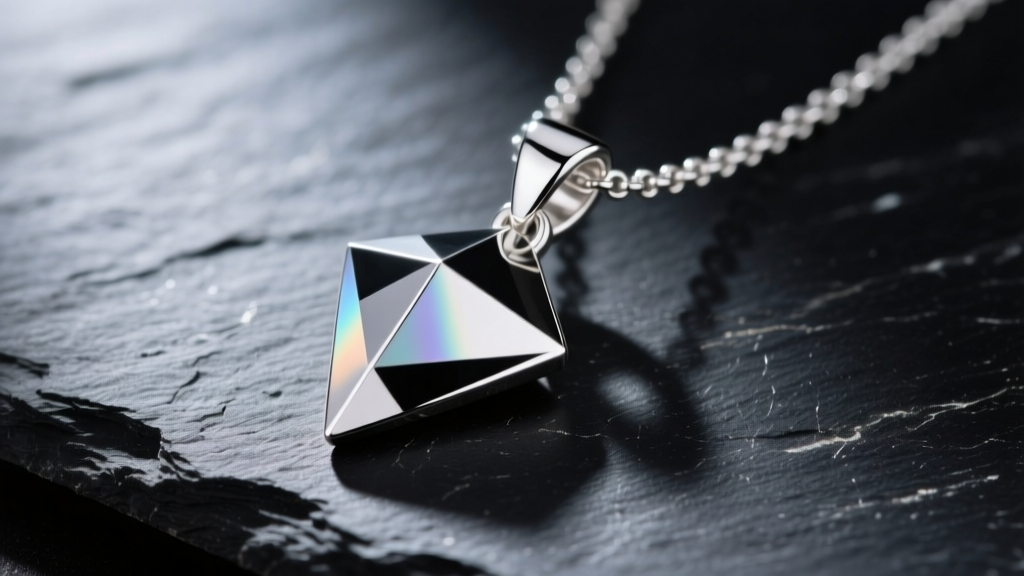
The minimalist appeal of a geometric pendant has cemented its place in contemporary jewelry, but beneath the sleek exterior lies a complex interplay of metallurgy and structural engineering. When selecting a v necklace silver piece for everyday wear, consumers often focus solely on the aesthetic silhouette. However, as jewelry professionals, we must evaluate the alloy composition, the stress concentration at the vertex, and the kinetic friction between the bail and the chain. This deep dive explores the technical specifications that separate a fragile fashion accessory from a durable, heirloom-grade silver V necklace.
The Metallurgy of Silver: Standard Sterling vs. Argentium 960
The foundation of any silver pendant is its alloy composition. Pure silver (999 fine) is too malleable to hold the sharp, aggressive angles of a V-shape without bending or warping under minor physical stress. Therefore, alloying elements are introduced to increase tensile strength and work-hardening capabilities.
Traditional 925 Sterling Silver
Standard sterling silver consists of 92.5% silver and 7.5% copper. The copper provides the necessary structural rigidity, allowing the V pendant to maintain its sharp upper corners and bottom vertex. However, copper is highly reactive to sulfur and oxygen in the atmosphere, leading to the formation of silver sulfide (tarnish) and firescale during the manufacturing process. According to the Silver Institute, this copper-induced tarnishing requires frequent chemical or abrasive maintenance, which can eventually soften the sharp geometric edges of the V design over years of polishing.
Argentium 960 Silver
For a premium v necklace silver design, Argentium 960 is the superior metallurgical choice. By replacing a portion of the copper with germanium, Argentium achieves a higher silver purity (96%) while dramatically increasing structural resilience. The germanium forms a transparent, self-healing oxide layer on the surface that virtually eliminates tarnishing. Furthermore, Argentium can be fusion-welded without solder, meaning if the bail of the V pendant ever fractures, a master jeweler can fuse it seamlessly without leaving a visible solder seam or compromising the structural integrity of the surrounding metal.
Structural Engineering: Vertex Stress and Failure Modes
The defining feature of a V necklace is its sharp bottom vertex. From a physics standpoint, this vertex acts as a stress concentrator. When the pendant swings or catches on clothing, the kinetic energy is transferred down the two diagonal arms and converges at the bottom point.
Investment Casting vs. Die Striking
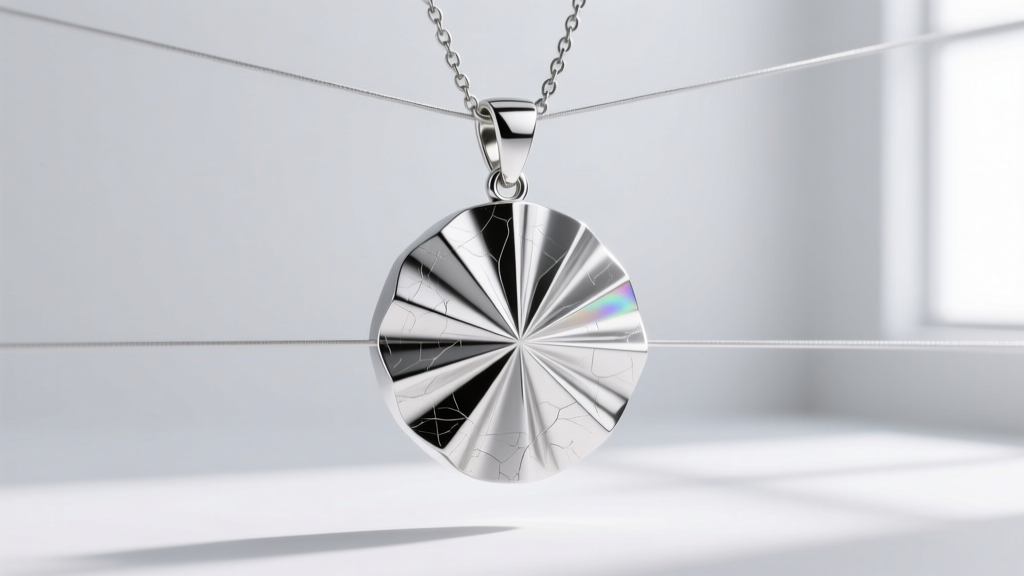
The manufacturing method dictates the pendant's survival rate. Most mass-market silver V necklaces are produced via investment casting. While casting captures intricate details, it is prone to shrinkage porosity—microscopic voids that form as the metal cools and contracts. If these voids occur near the bottom vertex, the pendant becomes highly susceptible to snapping under lateral tension.
Conversely, die-struck V pendants are formed by forcing silver sheet metal between high-pressure steel dies. This process compresses the crystalline grain structure of the silver, aligning the molecules and creating a significantly denser, more impact-resistant vertex. For a sharp, elongated V design, a die-struck manufacturing approach increases the tensile strength at the vertex by up to 40% compared to cast equivalents.
Bail Integration and Weak Points
The bail (the loop that connects the pendant to the chain) is the second major failure point. Many minimalist V necklaces utilize a 'drill-hole' bail, where a hole is punched directly through the top corners of the V. This removes structural material from an already high-stress area. An expertly engineered v necklace silver piece will feature a separately cast or soldered hidden bail on the posterior, preserving the continuous structural integrity of the front-facing V silhouette.
Chain Pairing and Clasp Mechanics for V-Pendants
The chain is not merely a delivery system for the pendant; it dictates the kinetic movement and wear-pattern of the V-sharp edges. The internal diameter of the chain links must be precisely calibrated to the bail to prevent excessive friction, which can saw through the silver over time.
| Chain Type | Friction Profile | Structural Suitability | Recommended Thickness |
|---|---|---|---|
| Box Chain | High (sharp internal edges) | Poor; acts as a file against the bail | N/A |
| Snake Chain | Low (smooth surface) | Poor; prone to permanent kinking if bent | N/A |
| Wheat (Spiga) Chain | Very Low (rounded woven links) | Excellent; distributes weight evenly | 1.2mm - 1.5mm |
| Rolo / Cable Chain | Moderate | Good; classic look but can catch on sharp V-corners | 1.0mm - 1.2mm |
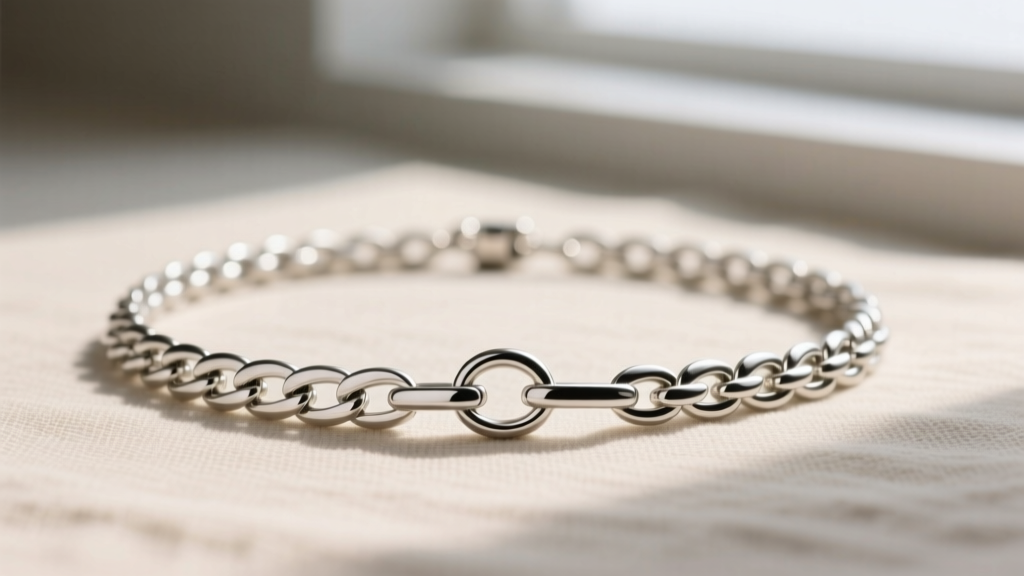
As detailed by the Gemological Institute of America (GIA), silver is a relatively soft metal on the Mohs scale. Therefore, pairing a silver V pendant with a hardened steel or platinum chain will result in severe galvanic and abrasive wear on the silver bail. Always pair a silver pendant with a chain of equal or slightly lower hardness, such as a 1.5mm Argentium Wheat chain, to ensure harmonious wear.
Pricing Matrix and Authenticity Verification
Understanding the pricing structure of silver jewelry requires looking beyond the spot price of the raw metal. The value of a v necklace silver piece is heavily weighted toward the engineering, finishing, and hallmarking processes.
- Mass-Produced Cast 925 ($35 - $60): High porosity risk at the vertex, standard copper-sterling alloy, prone to rapid sulfide tarnishing. Usually stamped with a generic '925'.
- Artisan Die-Struck 925 ($80 - $140): Superior grain compression, hand-polished geometric edges, durable structure. Look for a registered maker's mark alongside the '925' stamp.
- Argentium 960 Premium ($150 - $250+): Tarnish-resistant germanium alloy, fusion-weldable bails, hypoallergenic properties. Authenticated by the '960' stamp or the registered Argentium unicorn hallmark, as verified by assay offices like the London Assay Office.
Maintenance: Preventing Sulfide Tarnish on Geometric Edges
Maintaining the razor-sharp edges of a silver V pendant requires specific protocols. Traditional liquid silver dips contain harsh thiourea compounds that strip away microscopic layers of silver. Over time, this chemical erosion will round off the sharp geometric corners of the V, ruining the intended architectural silhouette.
Instead, utilize a two-tier mechanical cleaning approach. First, use a microfiber cloth impregnated with jeweler's rouge to gently buff the flat planes of the V. Second, for the tight interior angle of the vertex where tarnish accumulates due to trapped skin oils and environmental sulfur, use a wooden toothpick wrapped in a silver-polishing cloth. This allows you to mechanically remove sulfide buildup from the vertex without applying the abrasive pressure that would dull the outer edges. By respecting the metallurgy and structural physics of the piece, your silver V necklace will retain its precise geometric integrity for decades.


