Technical Guide to Choosing a Boys Baseball Necklace
An expert technical guide to boys baseball necklaces, covering NFHS safety rules, breakaway clasps, titanium grades, and sweat-resistant materials.

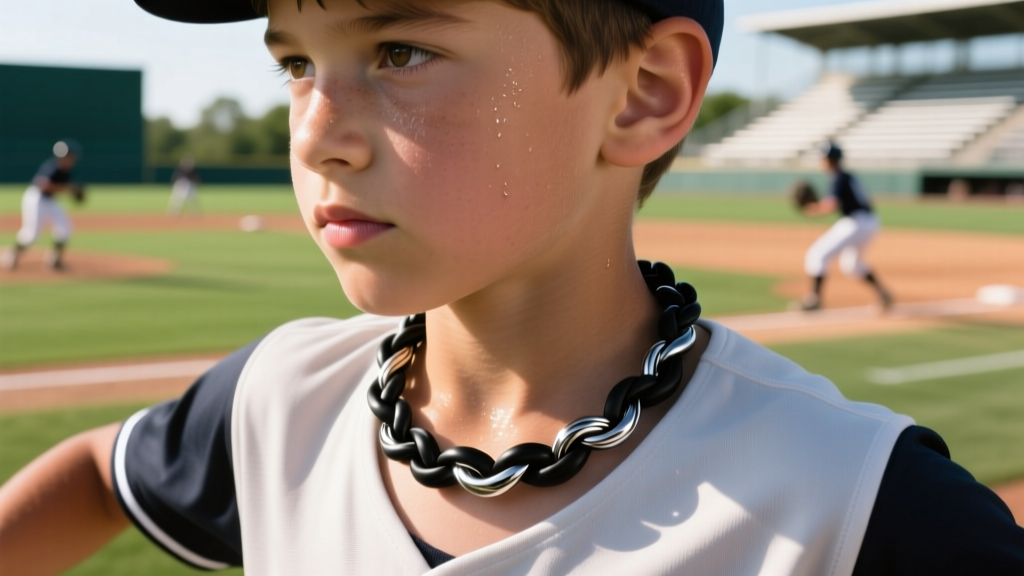
The intersection of youth sports, personal expression, and athletic superstition has made the boys baseball necklace a ubiquitous sight on diamonds across the country. From braided silicone cords to ionized titanium pendants, these accessories are more than just fashion statements; they are deeply embedded in baseball culture. However, selecting the right neckwear for a young athlete requires navigating a complex matrix of league safety regulations, metallurgical durability, and biomechanical constraints. In 2026, as youth sports organizations continue to tighten safety protocols, parents and players must look beyond the aesthetic and evaluate the technical specifications of sports jewelry.
This expert deep dive explores the material science, safety engineering, and regulatory landscape surrounding baseball necklaces, ensuring you make an informed, safe, and durable choice for the season ahead.
Navigating Little League and NFHS Jewelry Regulations
Before purchasing any sports jewelry, it is critical to understand the regulatory environment. The Little League Rulebook and the NFHS Baseball Rules maintain strict, often uncompromising stances on jewelry. Under NFHS Rule 1-5-12, jewelry is strictly prohibited for high school players during live gameplay. Umpires will issue warnings and subsequent ejections for visible chains or pendants.
For younger demographics, local Little League and recreational divisions often enforce similar bans to prevent catastrophic degloving injuries or strangulation hazards. However, exceptions are frequently made for religious medals or medical alert tags, provided they are taped to the body or worn securely beneath the uniform. If a league permits a boys baseball necklace during warm-ups, practice, or under-the-jersey wear, the inclusion of a certified breakaway mechanism is non-negotiable.
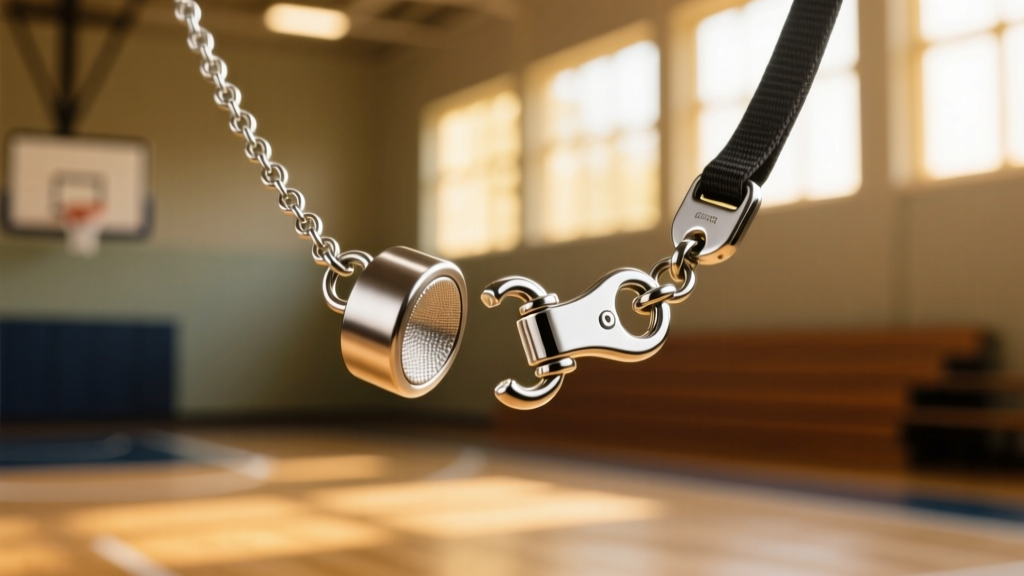
According to the CPSC Children's Jewelry Safety Guide and ASTM F2923-14 standards, children's neckwear should incorporate a clasp that releases under 5 to 15 pounds of tensile force. Magnetic breakaway clasps and engineered polymer weak-links are the industry standard for 2026, ensuring that if a pendant is snagged on a chain-link fence or a sliding opponent, the cord snaps before it compromises the athlete's airway or cervical spine.
Material Science: Metallurgy and Polymers in Sports Jewelry
Baseball is a high-sweat, high-dirt environment. The pH of human sweat ranges from 4.5 to 7.0 and is laden with chloride ions, which are highly corrosive to base metals. A necklace that survives a week at the beach may disintegrate after a month of summer baseball. Here is a technical breakdown of the materials used in high-performance sports necklaces.
316L Surgical Stainless Steel vs. 304 Steel
Many budget-friendly sports pendants are stamped as "stainless steel," but they often utilize 304-grade alloy. While 304 is fine for indoor use, it lacks molybdenum, making it highly susceptible to pitting and crevice corrosion when exposed to the chlorides in sweat. A premium boys baseball necklace will specify 316L surgical stainless steel. The addition of 2-3% molybdenum in 316L drastically increases its resistance to localized corrosion, ensuring the pendant remains untarnished and hypoallergenic throughout a grueling 60-game season.
Grade 23 Titanium (6Al-4V)
For athletes with nickel sensitivities or those seeking ultra-lightweight gear, titanium is the apex material. Specifically, Grade 23 (also known as Ti 6Al-4V ELI) offers an unparalleled strength-to-weight ratio. It is entirely inert, meaning it will not react with sweat, sunscreen, or insect repellent. Furthermore, titanium is non-magnetic and non-conductive, eliminating any theoretical risks near stadium electrical equipment.
Cordage: Braided Silicone vs. Leather
Traditional leather cords degrade rapidly when saturated with sweat and dirt, losing up to 40% of their tensile strength within a single season due to collagen breakdown. Modern sports necklaces utilize braided silicone or thermoplastic polyurethane (TPU). When sourcing a silicone cord, look for a Shore A hardness rating between 60 and 70, which provides the ideal balance of flexibility and snap-resistance.
Material Comparison Matrix
| Material | Corrosion Resistance | Weight Profile | Estimated Lifespan (Active Sports) | Price Range |
|---|---|---|---|---|
| 304 Stainless Steel | Low (Prone to pitting) | Heavy | 1-2 Months | $10 - $20 |
| 316L Surgical Steel | High (Chloride resistant) | Medium | 2-3 Years | $25 - $45 |
| Grade 23 Titanium | Extreme (Fully inert) | Ultra-Light | 5+ Years | $50 - $90 |
| Braided Silicone | High (Waterproof) | Featherlight | 1-2 Seasons | $15 - $30 |
Biomechanics and Sizing: Avoiding Helmet Interference
The length of a boys baseball necklace is not merely a stylistic choice; it is a matter of biomechanical safety and equipment compatibility. A standard men's chain length of 22 to 24 inches is highly dangerous for youth baseball. A pendant hanging at the xiphoid process (lower sternum) will violently bounce during sprinting, causing micro-trauma to the chest wall, and poses a severe snag hazard when sliding into bases.

More critically, long necklaces interfere with protective equipment. When a batter puts on their helmet, a long chain can become tangled in the chin strap or the ear flaps, creating a distraction or a choking risk if the helmet is forcefully removed. The ideal length for a youth baseball necklace (ages 8-12) is 16 to 18 inches. This keeps the pendant seated securely in the sternal notch (the hollow at the base of the neck), minimizing pendulum motion during sprints and ensuring it clears the hardware of batting helmets and catcher's masks.
Additionally, pendant weight should be strictly monitored. A heavy metal medallion exceeding 25 grams can cause cervical fatigue over the course of a double-header. Opt for hollow-back pendants or thin-gauge titanium stamps (1.5mm to 2.0mm thickness) to keep the total pendant weight under 10 grams.
The Science of "Ionized" Titanium Necklaces
No technical guide to baseball jewelry would be complete without addressing the massive market for "ionized" or "aqua-titanium" necklaces. Popularized by brands like Phiten, these necklaces claim that embedding microscopic titanium particles into the cord or pendant aligns the body's electrical currents, reducing muscle stiffness and improving swing mechanics.
From a metallurgical and physiological standpoint, the scientific consensus remains skeptical. Peer-reviewed sports science journals have repeatedly found no statistically significant difference in muscle recovery or biomechanical output between athletes wearing ionized titanium and those wearing a placebo. However, from a materials perspective, these necklaces are generally safe, lightweight, and highly durable. If a young athlete finds a psychological edge or a comforting superstition in wearing one, the placebo effect can be a powerful tool in sports psychology, provided the cord features a safe breakaway clasp.
Sanitization and Corrosion Prevention Protocols
Even the most robust 316L steel or silicone necklaces require maintenance. The accumulation of dead skin cells, infield dirt, and sunscreen creates a biofilm on the pendant and cord that can harbor staphylococcus bacteria, leading to contact dermatitis or folliculitis on the chest.
Implement a weekly cleaning protocol: soak the necklace in a solution of warm water and a mild, non-ionic surfactant (like baby shampoo) for 10 minutes. Use a soft-bristled toothbrush to agitate the crevices of the pendant. Avoid harsh chemicals, bleach, or ultrasonic cleaners, as these can degrade the polymer coatings on silicone cords and strip the protective oxide layer off lower-grade metals. By treating the necklace as a piece of athletic equipment rather than mere jewelry, players can ensure it remains safe, hygienic, and durable from opening day to the championship finals.


