Small Rosary Necklace Value Guide: Budget vs Fine 2026
Discover the true value of a small rosary necklace in 2026. Compare budget, mid-tier, and fine jewelry pricing, materials, and chain durability.

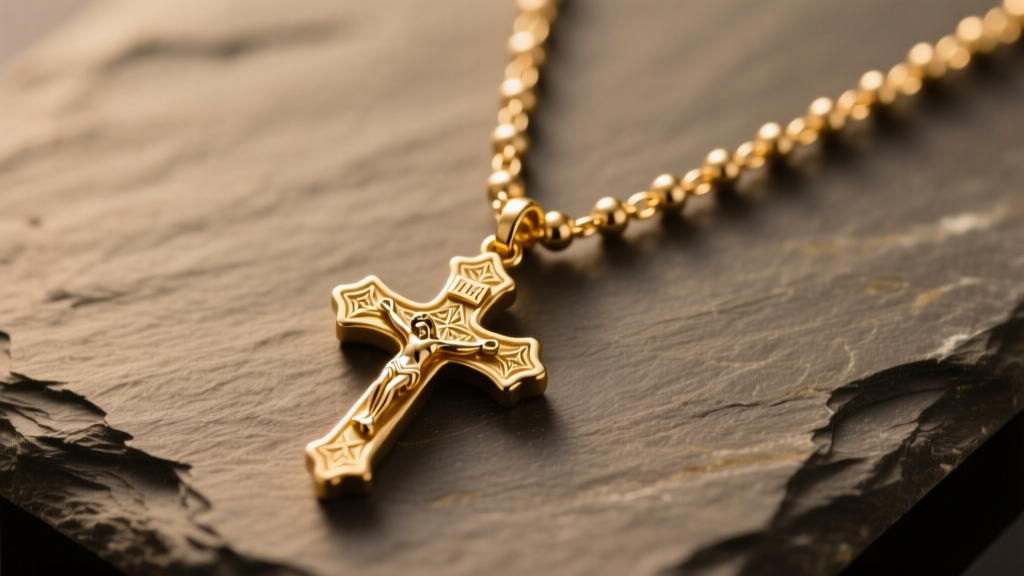
The small rosary necklace has evolved from a strictly traditional religious artifact into one of the most sought-after layering pieces in contemporary jewelry. By 2026, the minimalist beaded chain paired with a micro-crucifix or saint medal is a staple in both fine jewelry collections and fast-fashion accessory lines. However, this surge in popularity has created a highly saturated market where the line between genuine heirloom value and overpriced costume jewelry is easily blurred.
As a senior jewelry appraiser and trend analyst, I frequently see consumers overpaying for fragile, plated bead chains that snap within weeks, while simultaneously missing out on the exceptional value offered by mid-tier solid gold alternatives. This comprehensive budget and value assessment will break down the exact anatomy, material grades, chain gauges, and 2026 pricing matrices you need to know before purchasing a small rosary necklace.
The Anatomy of a Small Rosary Necklace
Unlike a traditional five-decade rosary used for prayer, which is often bulky and features a centerpiece and terminal crucifix, a "small rosary necklace" is adapted for continuous, everyday wear. It typically consists of a 16-inch to 18-inch continuous beaded chain (or a chain with beaded stations) and a single, simplified crucifix or religious medal.
The primary value driver in these pieces is not just the precious metal weight, but the manufacturing complexity. Creating a uniform, smooth bead chain requires precise machining. Cheaper manufacturers often leave microscopic burrs on the beads or use hollow spheres to save on gold weight, which severely compromises the structural integrity of the necklace.
Material Breakdown: Where Your Money Actually Goes
When assessing the budget versus fine jewelry spectrum, the base metal and finishing techniques dictate both the price and the lifespan of the piece. According to the Gemological Institute of America (GIA), the alloy composition in gold jewelry directly impacts its tensile strength and tarnish resistance—two critical factors for a necklace worn close to the skin's natural oils and sweat.
Sterling Silver (925) and the Tarnish Trap
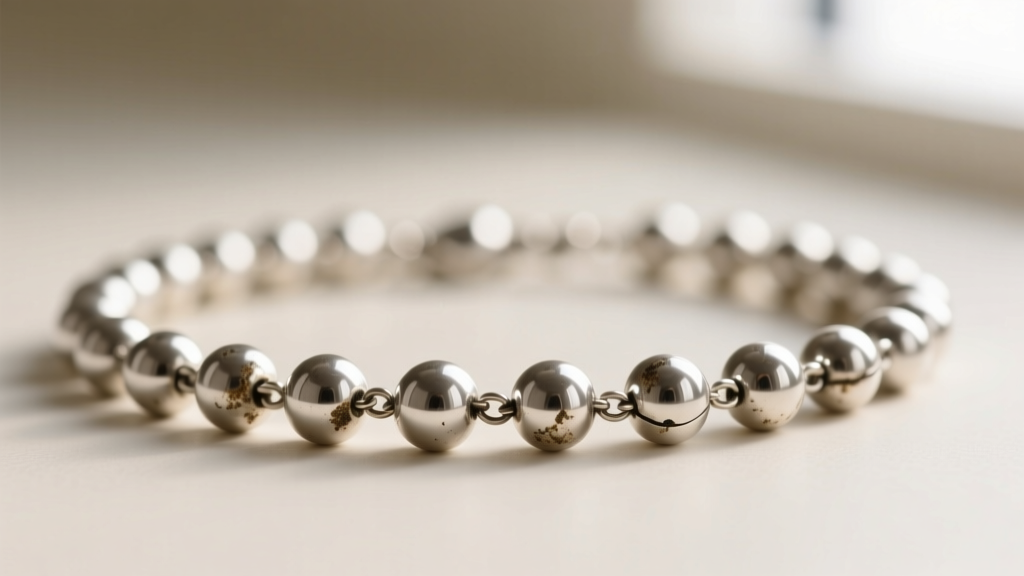
Sterling silver is the entry point for budget-conscious buyers, typically ranging from $30 to $60. While silver is a precious metal, it is highly reactive to sulfur and moisture. Because bead chains have an incredibly high surface area and hundreds of tiny crevices between the spheres, a silver small rosary necklace will accumulate tarnish in the gaps that is nearly impossible to polish out without an ultrasonic cleaner. If you choose silver, ensure it features a thick rhodium plating to delay oxidation.
Gold Vermeil and Plated: The High-Failure Zone
Gold-plated or vermeil brass/silver chains are heavily marketed on social media for $40 to $90. From a value perspective, these are almost always a poor investment for bead chains. The friction between the beads as the chain moves against the collarbone acts like mild sandpaper, wearing away the microscopic layer of gold plating within a few months. Once the base metal is exposed, it turns the skin green and cannot be easily repaired.
Solid 10k and 14k Gold: The Value Sweet Spot
Solid gold is the only material that guarantees a small rosary necklace can be worn in the shower, at the gym, and to sleep without degrading. As noted in Blue Nile's Gold Education Guide, 14k gold (58.5% pure gold) offers the perfect balance of rich color and structural durability. While the upfront cost is higher, the cost-per-wear over a decade makes it vastly superior to replacing a $50 plated chain every six months.
2026 Pricing Tiers: Budget, Mid-Range, and Heirloom
Due to the sustained elevation of raw gold prices heading into 2026, the pricing landscape for solid gold jewelry has shifted. A lightweight 2-gram 14k gold chain that retailed for $120 in 2021 now commands closer to $220. Below is a realistic value matrix to help you benchmark pricing when shopping.
| Tier | Material & Build | 2026 Price Range | Value Proposition | Expected Lifespan |
|---|---|---|---|---|
| Budget | Plated Brass / Thin Silver | $25 - $65 | Low. Good for temporary trends, poor for daily wear. | 3 - 8 Months |
| Mid-Tier | Solid 10k Gold / Heavy Vermeil | $110 - $180 | Moderate. 10k offers great durability but lacks deep color. | 2 - 5 Years |
| Fine (Sweet Spot) | Solid 14k Gold (1.5mm - 2.0mm) | $220 - $380 | High. Excellent longevity, holds scrap value, waterproof. | Lifetime |
| Heirloom | Solid 18k Gold / Platinum | $450 - $800+ | Premium. Softer metal (18k) prone to denting, but highest prestige. | Lifetime |
Chain Gauge and the "Station Hack" for Maximum Durability
The most common point of failure in any small rosary necklace is the chain itself. Traditional bead chains (also known as ball chains) are constructed by linking small metal spheres together with short, straight wire connectors. These wire connectors are highly susceptible to metal fatigue. If you sleep in a standard 1.5mm bead chain, the lateral pressure of your body weight bending the chain will eventually snap the wire link.
Understanding Gauge and Millimeter Thickness
- 1.2mm - 1.5mm: Extremely fragile. Suitable only for lightweight plastic or hollow resin crucifixes. Will snap under 2-3 lbs of tension.
- 2.0mm - 2.5mm: The minimum recommended thickness for a solid gold bead chain meant for daily, active wear. Can withstand up to 8 lbs of tension.
- 3.0mm+: Very durable, but often too bulky and heavy to maintain the "delicate" aesthetic of a small rosary necklace.
The Beaded Station Alternative
If you want the aesthetic of a rosary without the structural vulnerability of a full bead chain, look for a beaded station chain. This design uses a highly durable, traditional cable chain (which distributes tension evenly and rarely snaps) and solders solid gold beads at one-inch intervals. This provides the exact same visual rhythm and light-reflecting properties of a rosary, but with the tensile strength of a standard cable chain. It is the ultimate "value hack" for active individuals who refuse to take their jewelry off.
The Weakest Link: Jump Rings and Clasp Hardware
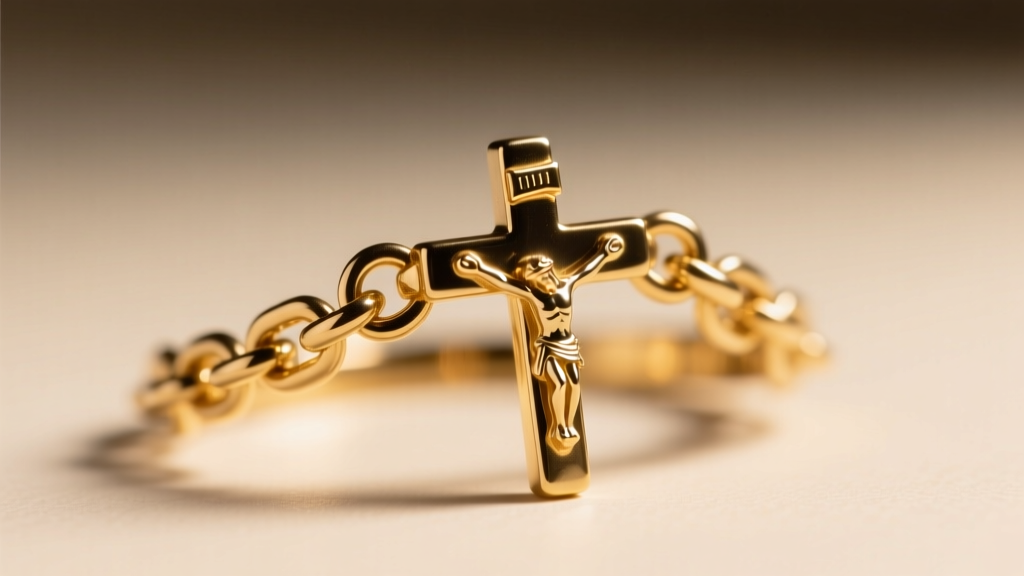
A chain is only as strong as its hardware. When evaluating a small rosary necklace in the $200+ range, you must inspect the jump ring (the tiny loop connecting the crucifix to the chain) and the clasp.
Soldered vs. Open Jump Rings
In budget necklaces, the jump ring holding the crucifix is often left "open" (meaning there is a microscopic slit where the wire ends meet). Over time, the chain can work its way into this slit and separate, causing you to lose the pendant. High-value fine jewelry will feature a laser-soldered jump ring, creating a continuous, unbroken circle of metal. Always ask the jeweler if the pendant ring is soldered before purchasing.
Spring Ring vs. Lobster Clasp
Spring ring clasps are the hallmark of budget jewelry. They contain a tiny internal spring that frequently fails, gets stuck, or breaks under tension. For any small rosary necklace crafted in solid gold, a lobster clasp is mandatory. Lobster clasps feature a solid, one-piece spring mechanism that is vastly superior in longevity and ease of use, especially when you are trying to unclasp a delicate chain from the back of your neck.
Final Verdict: How to Maximize Your Investment
The small rosary necklace is a beautiful, deeply personal piece of jewelry, but navigating the 2026 market requires a discerning eye. To achieve the best budget-to-value ratio, bypass the gold-plated and sterling silver bead chains entirely. Instead, allocate your budget toward a solid 14k gold beaded station chain or a 2.0mm solid bead chain featuring a laser-soldered crucifix and a lobster clasp.
By prioritizing structural engineering—like chain gauge and soldered hardware—over sheer metal purity (like 18k or 24k gold), you secure a piece that not only retains its spiritual and aesthetic significance but also survives the rigors of daily wear without ending up in a jewelry repair shop. True value in jewelry is measured not just by what you pay today, but by what the piece costs you per year of faithful, beautiful service.


