Money Necklaces: Beginner's Guide to Dollar Pendants
Discover how to style and buy money necklaces. Our beginner's guide covers metal grades, chain pairings, and pricing for dollar sign pendants.


The Evolution of the Money Necklace
Money necklaces have transcended their origins as purely ostentatious displays of wealth to become sophisticated symbols of financial motivation, hustle culture, and personal milestones. While the dollar sign pendant was popularized in the 1980s and 1990s by hip-hop pioneers like Eric B. & Rakim and Slick Rick, the 2026 iteration of the money necklace is far more versatile. Today, you will find everything from minimalist, beveled-edge currency symbols meant for subtle layering to massive, micro-pave diamond-encrusted medallions designed for stage performances. For beginners stepping into the world of statement jewelry, navigating the sea of metal purities, chain styles, and stone qualities can be overwhelming. This guide breaks down the exact specifications you need to know to purchase a high-quality money necklace that retains its value and aesthetic appeal over time.
Choosing Your Metal: Beyond the Shine
The foundation of any durable pendant is its metallurgy. When shopping for money necklaces, you will primarily encounter three tiers of metal construction, each with distinct failure modes and lifespan expectations.
Sterling Silver and Rhodium Plating
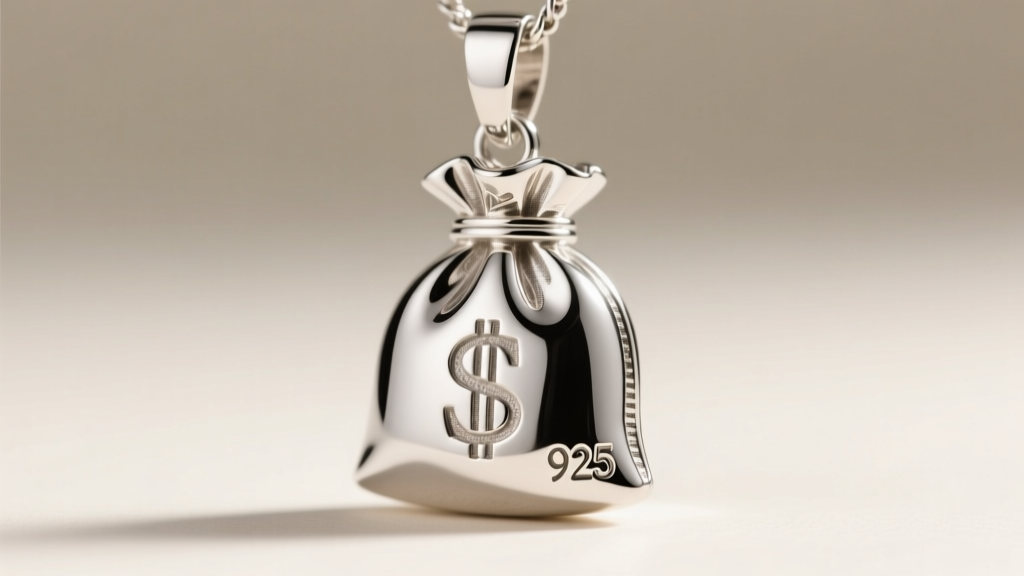
Solid 925 sterling silver is an excellent entry point, but raw silver is highly susceptible to sulfur-induced tarnishing. High-end silver money pendants are plated with a microscopic layer of rhodium—a platinum-group metal that provides a brilliant, tarnish-resistant white-gold-like finish. If a retailer does not explicitly state that their silver is rhodium-plated, expect the pendant to oxidize and darken within months of contact with skin oils and humidity.
Gold Vermeil vs. Flash Plating
According to the Federal Trade Commission's Jewelry Guides, gold vermeil must feature a minimum of 2.5 microns of gold layered over a sterling silver base. This thickness allows the pendant to withstand years of friction against clothing and skin. Conversely, standard "gold-plated" brass or copper pendants often feature a "flash" layer of just 0.5 microns. Flash-plated money necklaces will inevitably rub off, exposing the base metal and causing green skin discoloration. Always verify the micron thickness before purchasing gold-tone fashion jewelry.
Solid 10k and 14k Gold
For a lifetime piece, solid gold is mandatory. 14k gold (58.3% pure gold) is the industry standard, offering a rich yellow hue and excellent scratch resistance. However, 10k gold (41.7% pure gold) is actually harder and more durable due to its higher alloy content. If you are buying a large, heavy dollar sign pendant that will swing and bump against zippers or desks, 10k gold will resist bending and denting far better than 18k or 24k gold, which are too soft for heavy everyday pendants.
Chain Pairings: Framing the Dollar Sign
A money pendant is only as good as the chain that carries it. The visual weight of your pendant must be balanced by the correct chain style and width. The critical mechanical detail here is the bail-to-chain ratio. The bail (the loop at the top of the pendant) must have an inner diameter at least 1mm to 2mm larger than the width of your chain to allow the pendant to lay flat and slide freely.
- Cuban Link Chains (3mm - 5mm): The undisputed king of hip-hop jewelry. A 4mm Cuban link provides a flat, interlocking surface that prevents the pendant from twisting backward. It offers a masculine, structured look that perfectly complements angular dollar sign pendants.
- Rope Chains (2mm - 4mm): The twisted segments of a rope chain catch light from multiple angles, creating a continuous sparkle that draws the eye down to the pendant. This is ideal for plain metal pendants that need a bit of extra visual texture.
- Figaro Chains (3mm - 5mm): Featuring a pattern of three short links followed by one elongated link, the Figaro chain adds a vintage, old-school flair. It pairs exceptionally well with money bag pendants or antique-finish currency medallions.
Iced Out vs. Plain Metal: A Stone-by-Stone Breakdown
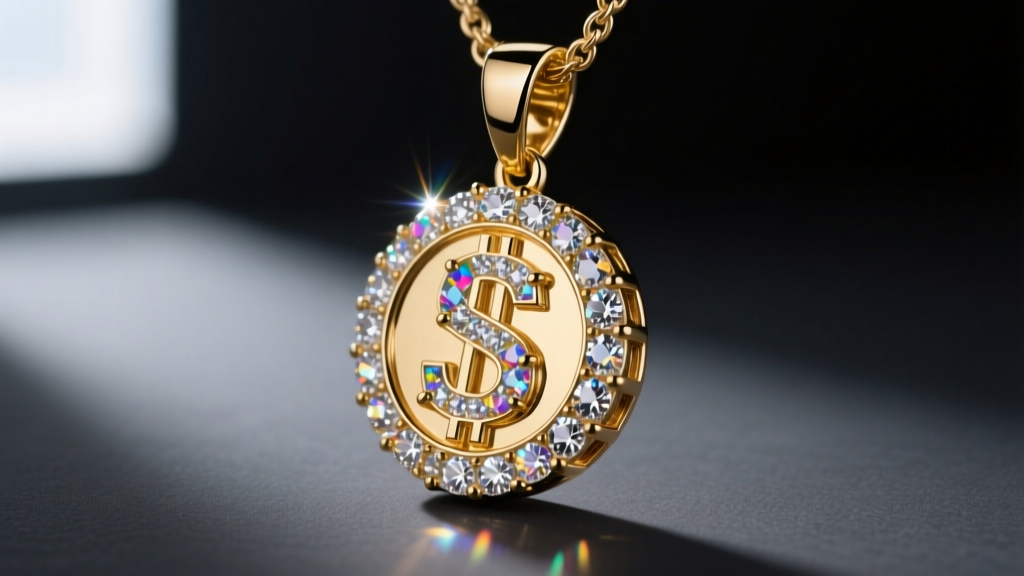
Deciding between a plain metal casting and an "iced out" (diamond-encrusted) money necklace drastically alters both the price and the maintenance requirements. If you opt for stones, the setting technique is just as important as the stones themselves. Avoid pendants where stones are glued into bezels; these will cloud quickly and fall out. Always look for micro-pave prong settings, where tiny metal beads hold the stones, allowing maximum light return from the pavilion (bottom) of the stone.
Pro Tip: If you are buying an iced-out dollar pendant, inspect the back of the piece. High-quality manufacturers will leave the back open or feature intricate honeycomb gallery work to let light pass through the stones. A solid, closed metal back usually indicates glued-in cubic zirconia.
When selecting the stones for your money necklace, you generally have three options. The Gemological Institute of America (GIA) provides extensive data on diamond simulants, highlighting the distinct optical and physical properties of each.
| Stone Type | Mohs Hardness | Refractive Index (Brilliance) | Longevity & Maintenance | Avg. Price Impact |
|---|---|---|---|---|
| Cubic Zirconia (CZ) | 8.0 - 8.5 | 2.15 (High) | Prone to surface scratching; absorbs oils and becomes cloudy within 1-2 years of daily wear. | Low ($) |
| Moissanite | 9.25 | 2.65 (Very High) | Extremely durable; resists scratching and oil absorption. Exhibits intense "disco ball" fire. | Medium ($$) |
| Lab-Grown Diamond | 10.0 | 2.42 (Optimal) | Identical physical properties to mined diamonds. Will never scratch or cloud. Retains heirloom value. | High ($$$) |
Sizing and Proportions for Everyday Wear
One of the most common mistakes beginners make is purchasing a money necklace that is disproportionately large for their frame and wardrobe. Pendant sizing is measured vertically from the top of the bail to the bottom of the dollar sign.
- Small (15mm - 25mm): Ideal for layering with other delicate chains or wearing tucked slightly under a collar. This size offers a subtle nod to financial ambition without dominating your outfit. Perfect for professional environments.
- Medium (30mm - 45mm): The sweet spot for everyday streetwear. A 40mm dollar sign pendant resting on a 20-inch or 22-inch chain sits perfectly on the sternum, visible over crewneck t-shirts and hoodies.
- Large (50mm - 80mm+): Reserved for stage performances, music videos, or high-impact fashion statements. Pendants of this size require heavy chains (6mm+) and reinforced bails to support the sheer weight of the metal and stones.
Real-World Pricing Tiers in 2026
Understanding the market pricing will protect you from overpaying for base metals disguised as solid gold. Here is what you should expect to pay for a quality money necklace in the current market:
- Entry-Level ($50 - $150): 925 Sterling silver with rhodium plating, or heavy gold vermeil. Stones will be AAA-grade Cubic Zirconia. Expect excellent visual appeal, but plan to replace the piece every few years as plating wears or stones cloud.
- Mid-Tier ($350 - $900): Solid 10k or 14k gold (plain metal or with CZ accents). This tier offers lifetime durability for the metal. You are paying for the raw gold weight and superior casting techniques, such as diamond-cut bevels that catch the light without needing gemstones.
- Premium ($1,500 - $5,000+): Solid 14k or 18k gold featuring micro-pave Moissanite or Lab-Grown Diamonds. These pieces are hand-set by jewelers, feature open-back gallery designs, and come with certificates of authenticity for the gold weight and stone carat totals.
Maintenance and Tarnish Prevention
To keep your money necklace looking pristine, remove it before showering, swimming in chlorinated pools, or applying colognes and lotions. For plain gold pendants, a simple soak in warm water with a few drops of mild dish soap, followed by a gentle brushing with a baby-hair toothbrush, will restore its factory shine. For iced-out pieces, avoid ultrasonic cleaners if the stones are fracture-filled or if the setting prongs are loose; instead, use a specialized jewelry cleaning pen to carefully wipe the girdle of each stone.


