Yemaya Necklace Value Guide: Is the Ocean Pendant Worth It?
Assessing the true value of a Yemaya necklace. We break down pricing tiers, material grades, and how to avoid overpaying for faux oceanic gems.

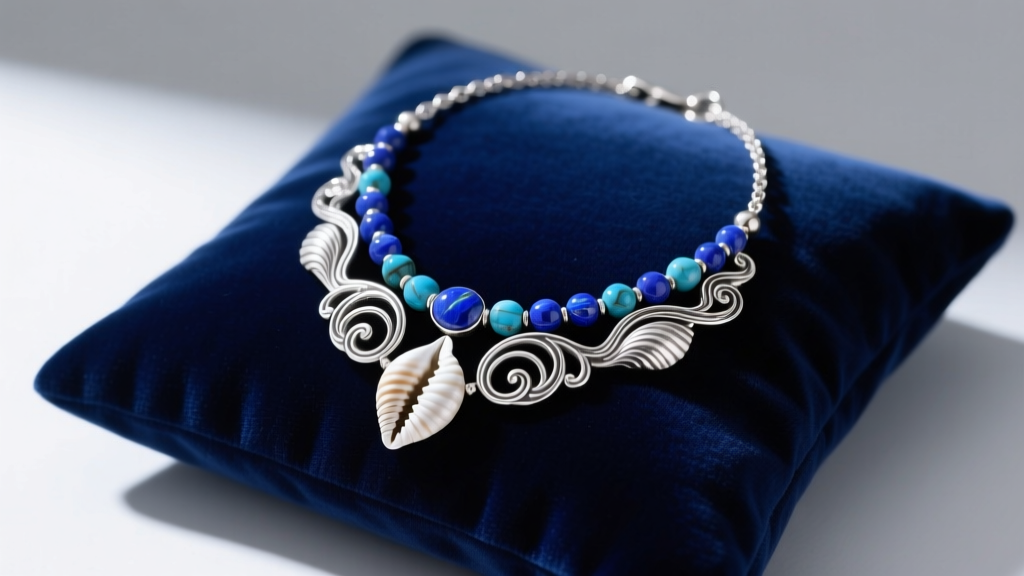
The Spiritual and Material Weight of a Yemaya Necklace
Yemaya, the revered Yoruba Orisha of the ocean and motherhood, has inspired a massive wave of spiritual jewelry. As of 2026, the market for a Yemaya necklace has expanded far beyond traditional beaded strands, evolving into intricate pendants featuring cowrie shells, lapis lazuli, and silver wave motifs. However, this surge in popularity has created a deeply fragmented market. For every authentically crafted artisan piece, there are dozens of mass-produced, resin-cast imitations designed to capitalize on the aesthetic without honoring the material integrity or cultural weight of the deity. When you are investing in spiritual jewelry, the materials matter just as much as the intention. This comprehensive value assessment breaks down exactly what you should expect to pay, which materials justify premium pricing, and how to identify structural failure points before you buy.
Decoding the Pricing Tiers: What Are You Actually Paying For?
The price of a Yemaya necklace can range anywhere from $15 to over $800. This massive variance is not arbitrary; it is directly tied to material sourcing, metallurgical quality, and labor. Understanding these tiers is the first step in making an informed budget assessment.
| Market Tier | Price Range | Core Materials | Hardware & Chain | Expected Lifespan |
|---|---|---|---|---|
| Mass-Market | $15 - $45 | Resin shells, dyed howlite, glass beads | Brass, silver-plated copper, 0.8mm cable chain | 6-12 months |
| Artisan / Mid-Tier | $80 - $180 | Genuine cowrie, Afghan lapis lazuli | Solid 925 Sterling Silver, 1.2mm rope chain | 5+ years |
| Fine Jewelry | $300 - $900+ | Carved shell cameo, sapphire, turquoise | 14k/18k Solid Gold, custom box chains | Generational |
The Hidden Costs of Mass Production
In the sub-$50 tier, manufacturers cut corners in ways that directly impact the wearer. The most common failure mode in cheap Yemaya pendants is the use of industrial epoxy to attach the shell or stone to the metal bail. Epoxy degrades when exposed to the natural oils in human skin and the UV radiation from sunlight, often resulting in the stone detaching within the first year. Furthermore, the chains provided in this tier are typically 0.8mm copper plated with a microscopic layer of silver. Once that plating wears off—usually around the clasp and jump rings—the underlying copper oxidizes, leaving a green residue on your neck and rendering the chain unwearable.
Material Authentication: Spotting Faux Lapis and Resin Shells
A traditional Yemaya necklace heavily features the colors of the ocean: deep blues and stark whites. Unscrupulous sellers frequently substitute genuine lapis lazuli and natural cowrie shells with cheap alternatives. Knowing how to authenticate these materials is crucial for budget-conscious buyers who still demand genuine energy and quality.
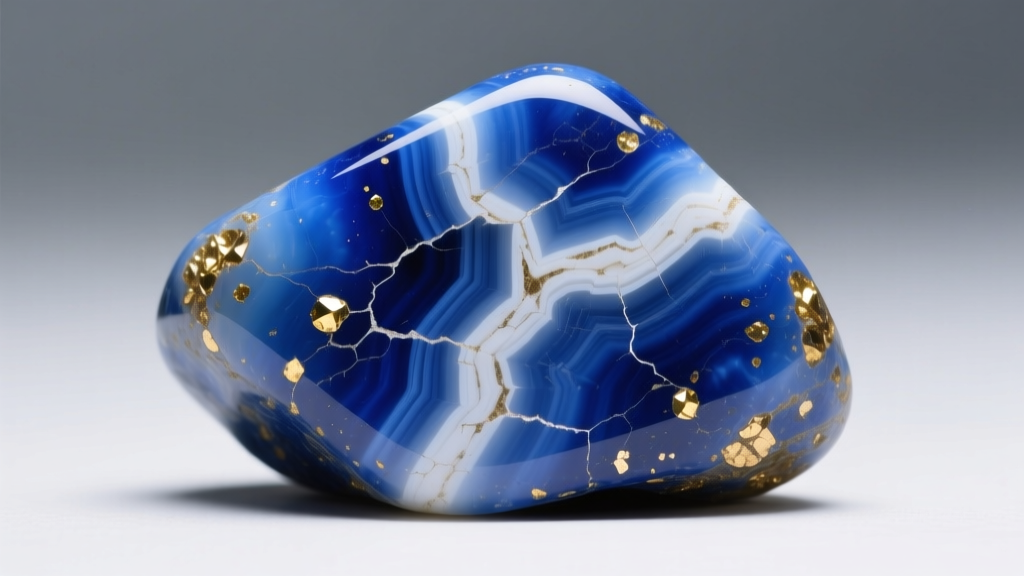
Lapis Lazuli vs. Dyed Howlite
Genuine lapis lazuli is a metamorphic rock prized for its deep celestial blue, which is caused by the presence of lazurite. According to the Gemological Institute of America (GIA), high-quality lapis often contains calcite (white streaks) and pyrite (golden flecks). In the mass-market tier, sellers frequently use howlite—a naturally white, porous stone—that has been pressure-dyed blue. You can spot dyed howlite by examining the crevices of the bead; if the blue color pools and darkens in the natural cracks of the stone, or if the white streaks look artificially painted rather than organically integrated, you are looking at a faux stone. Genuine Afghan lapis commands a premium, but Chilean lapis, which often has more visible calcite, offers a beautiful, budget-friendly alternative that is still 100% authentic.
Natural Cowrie vs. Cast Resin
The cowrie shell is deeply sacred in Yoruba tradition, representing wealth, fertility, and the protective embrace of Yemaya. Natural cowrie shells possess a distinct, pearlescent luster and microscopic growth lines that catch the light irregularly. Resin-cast shells, on the other hand, are perfectly symmetrical, unnaturally glossy, and feel slightly warm to the touch compared to the cool, dense feel of real calcium carbonate. If a pendant features multiple identical shells with zero natural asymmetry, it is almost certainly a synthetic mold.
Longevity and Wearability: The Saltwater Factor
Because Yemaya is the mother of the ocean, many wearers feel compelled to wear their necklaces in the water or intentionally cleanse them in saltwater. From a metallurgical and gemological standpoint, this requires careful consideration of your materials.
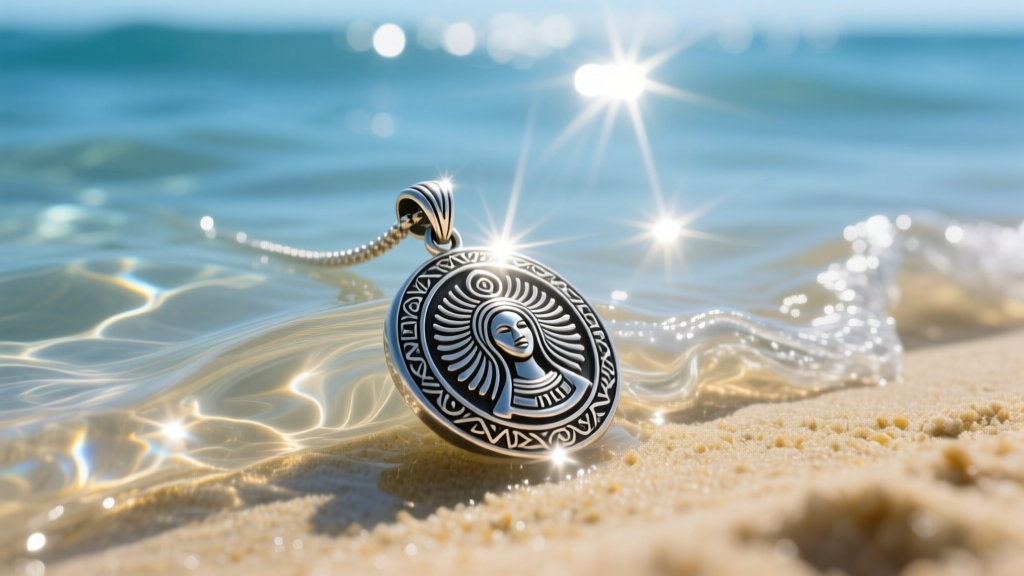
Natural cowrie shells are composed primarily of calcium carbonate. While they are born in the ocean, prolonged exposure to acidic environments—including human sweat and highly concentrated saltwater cleanses—can slowly dissolve the shell's outer enamel layer, leaving it chalky and brittle over time. If you plan to wear your Yemaya necklace daily and expose it to water, you must opt for a high-grade 925 sterling silver setting that utilizes prongs or a bezel setting rather than glue. According to Jewelers of America, sterling silver will naturally tarnish when exposed to moisture and sulfur, but it can be easily polished. Conversely, silver-plated brass will permanently pit and corrode if subjected to saltwater.
When investing in spiritual jewelry, the physical resilience of the piece should mirror the enduring nature of the intention behind it. A necklace that falls apart in six months disrupts the spiritual connection it was meant to foster.
Chain Gauges and Clasp Mechanics
The pendant is only half the equation; the chain dictates the overall value and safety of your Yemaya necklace. For pendants weighing between 10 and 20 grams (typical for a medium cowrie shell wrapped in silver wire), a 1.2mm to 1.5mm rope chain or mariner chain is the minimum requirement for structural integrity. Avoid box chains in the lower price tiers, as the thin 0.9mm box chains are notorious for kinking and snapping under the pendulum-like weight of a shell pendant. Additionally, inspect the clasp. A premium artisan piece will feature a solid lobster clasp with a heavy-duty jump ring that is soldered shut. Mass-market pieces use thin, unsoldered jump rings that easily pull apart when the necklace catches on clothing.
Final Verdict: Budgeting for Your Yemaya Pendant
So, is a Yemaya necklace worth the investment? The answer depends entirely on where you place your budget. If you are looking for a temporary fashion accessory, the $30 mass-market tier will suffice, provided you accept that the resin shells and plated chains will need replacing within a year. However, if you are seeking a genuine spiritual tool and a lasting piece of jewelry, the $80 to $180 artisan tier offers the highest return on investment. In this sweet spot, you secure genuine organic materials, solid 925 sterling silver hardware, and mechanical settings that will withstand years of daily wear. By prioritizing material authenticity over brand markups, you can acquire a beautiful, energetically aligned Yemaya necklace that honors both your budget and the profound history of the Orisha.


