How to Clean and Care for a Bridal Necklace for Rent
Renting your wedding jewelry? Learn expert care, cleaning, and packaging tips to protect your bridal necklace for rent and secure your full deposit.


Securing the perfect luxury jewelry piece for your wedding day often leads modern brides to the booming rental market. Whether you are borrowing an Art Deco platinum and diamond collar or a contemporary high-karat gold pendant, renting allows you to wear museum-quality pieces without the five-figure price tag. However, wearing a bridal necklace for rent comes with strict custodial responsibilities. Rental agreements in 2026 are backed by sophisticated microscopic inspections upon return, meaning even minor cosmetic damage or improper cleaning can result in forfeiting a deposit that ranges from $500 to over $5,000.
This comprehensive guide details the exact protocols for inspecting, wearing, safely cleaning, and packaging your rented bridal necklace to ensure it is returned in pristine condition and your deposit remains fully intact.
The Financial Reality of Rental Jewelry Deposits
When you rent high-end jewelry, you are not just borrowing a beautiful accessory; you are assuming temporary liability for an asset. Most luxury rental platforms require a security hold or an upfront deposit equivalent to a significant percentage of the item's appraised replacement value. The most common reason brides lose a portion of their deposit is not outright loss or theft, but unauthorized cleaning damage and transit tangling.
Commercial jewelry dips, ultrasonic cleaners, and steam machines are strictly prohibited for rental pieces. These methods can loosen the adhesives in pavé settings, fracture included diamonds, or strip the delicate patina off antique metals. According to the American Gem Society, improper chemical exposure is a leading cause of structural degradation in vintage jewelry. Your goal during the rental period is preservation and gentle surface maintenance, not deep restorative cleaning.
Pre-Wear Inspection Protocol: Documenting the Baseline
The moment your bridal necklace for rent arrives via insured courier, you must conduct a thorough baseline inspection. Do not wait until the morning of your wedding to open the box. Upon unboxing, follow this three-step verification process:
- The Loupe Test: Use a 10x jeweler's loupe to inspect the prongs, especially on older vintage pieces. Look for lifted or worn prongs that could catch on your wedding gown.
- Clasp Mechanics: Test the clasp repeatedly. Antique barrel clasps and push-pull safety catches can be finicky. Ensure the safety chain (if present) is intact and not fraying at the solder joints.
- Photographic Evidence: Take high-resolution, macro-photographs of the clasp, the central pendant, and any existing micro-scratches on the gold or platinum. Email these time-stamped photos to the rental company's support desk immediately to establish a pre-wear condition report.
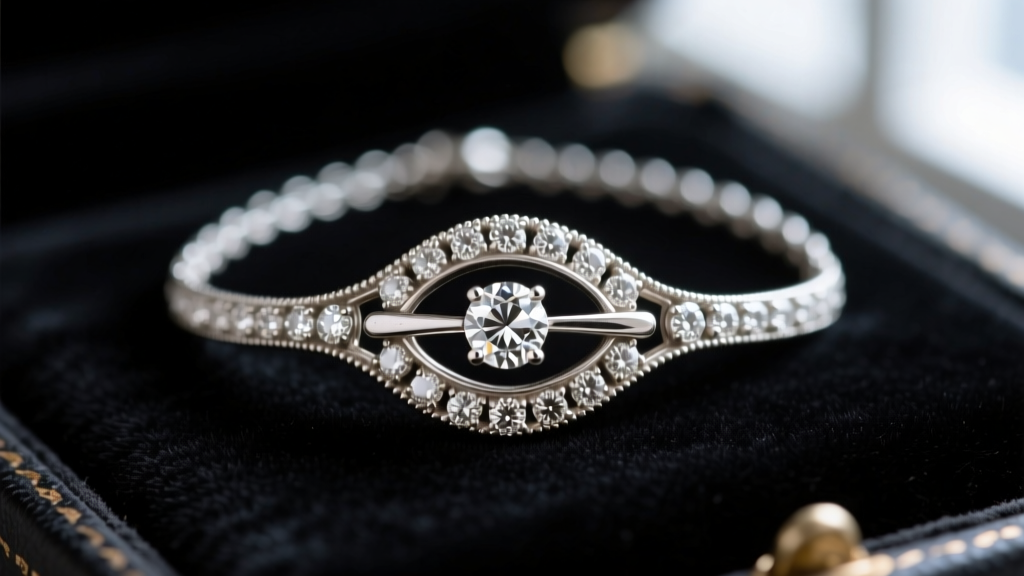
Wedding Day Chemistry: Managing Sweat, Cosmetics, and Metals
The environment of a wedding day is inherently hostile to fine jewelry. Hairspray, setting powders, and human perspiration create a chemical gauntlet that can dull diamonds and degrade organic gems. The golden rule of wedding day styling is "Last On, First Off." Your bridal necklace for rent must be the very last item you put on after your hair, makeup, and perfume have fully set, and the first item you remove before you change into your reception dress or begin eating.
Organic materials require extreme vigilance. If your rental necklace features pearls, coral, or turquoise, you must be acutely aware of your body chemistry. The Gemological Institute of America (GIA) notes that pearls are highly sensitive to acids. Human sweat has a pH that can range from 4.5 to 7.0; prolonged contact can etch the nacre of a pearl and degrade the silk thread used in vintage knotted necklaces, potentially leading to catastrophic strand failure.
Wedding Day Hazard Mitigation Matrix
| Hazard | Material at Risk | Immediate Mitigation Strategy |
|---|---|---|
| Aerosol Hairspray | Porous gems (Pearls, Opals, Turquoise) | Shield the neck area with a silk scarf during styling. If exposed, wipe gently with a dry, lint-free microfiber cloth immediately. |
| Perfume & Body Mist | High-Karat Gold, Enamel, Silk Thread | Apply fragrance to pulse points (wrists, behind knees) at least 20 minutes before clasping the necklace. |
| Perspiration | Diamonds (dulling), Pearls (etching) | Keep blotting papers handy. Avoid touching the central pendant with lotion-coated fingers throughout the day. |
| Friction from Tulle/Lace | Delicate Milgrain, Micro-Pavé | Ensure the necklace rests on bare skin or smooth silk, avoiding direct friction against heavily beaded or rough lace necklines. |
Post-Ceremony Safe Cleaning: What You CAN and CANNOT Do
After a long night of dancing and celebrations, your bridal necklace for rent will inevitably accumulate a layer of skin oils, cosmetic residue, and environmental dust. While the rental company will perform a professional ultrasonic and steam cleaning upon receipt, you are contractually obligated to return the piece free of heavy surface grime.
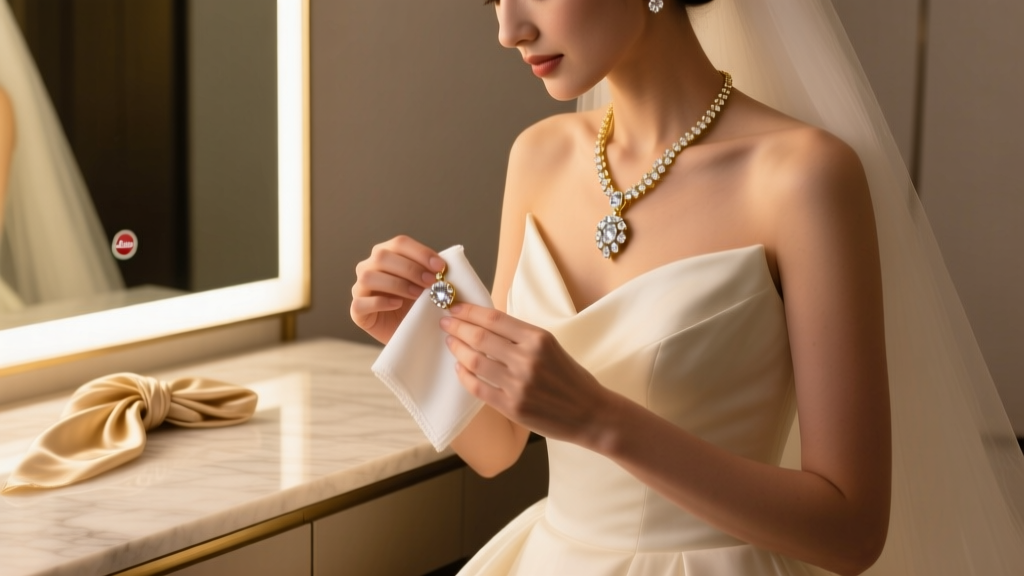
What you CANNOT do:
- Never submerge a rented necklace in water, especially if it features silk-knotted pearls, opals, or emeralds (which are often oil-treated and can fracture or dry out).
- Never use toothpaste, baking soda, or abrasive household cleaners. These contain silica and calcium carbonate particles that will inflict permanent micro-scratches on 18k gold and polished platinum.
- Never use tissue paper, paper towels, or cotton balls. Wood pulp fibers in paper products are surprisingly abrasive and will leave microscopic scratches and lint caught in the pavé settings.
What you CAN do:
The only approved method for a renter to clean the piece is dry or barely damp surface wiping. Use a pristine, optical-grade microfiber cloth (the kind used for camera lenses or eyeglasses). Gently buff the metal and the surface of the diamonds to remove oils. If there is stubborn cosmetic buildup on the metal (avoiding the gemstones), slightly dampen a corner of the cloth with distilled water—never tap water, which contains chlorine and hard minerals—and gently wipe the metal chain. Allow it to air dry completely before packaging.
Secure Packaging and Transit Protection
The final, and often most overlooked, phase of rental jewelry care is the return shipment. Transit damage is a primary cause of deposit disputes. Necklaces are highly susceptible to tangling, and a tangled chain pulled forcefully can snap delicate solder rings or warp antique links.
To prevent this, utilize the "Straw Threading Technique." Unclasp the necklace and thread the chain through a standard, clean plastic drinking straw. Clasp the necklace on the other side of the straw. This rigid barrier makes it physically impossible for the chain to knot or tangle inside the shipping box.
Place the straw-secured necklace inside the original anti-tarnish pouch provided by the rental company. Do not discard the silica gel packets or anti-tarnish strips included in the original packaging, as these regulate humidity and prevent silver or lower-karat gold alloys from oxidizing during transit. Finally, ensure the necklace is placed in the rigid, crush-proof outer shipping box provided, sealing it with the pre-paid, insured return label. By following these meticulous care, cleaning, and packaging protocols, you guarantee that your borrowed masterpiece is preserved for the next bride, and your security deposit is refunded without delay.


